Texture · Easy
Wattle stitch
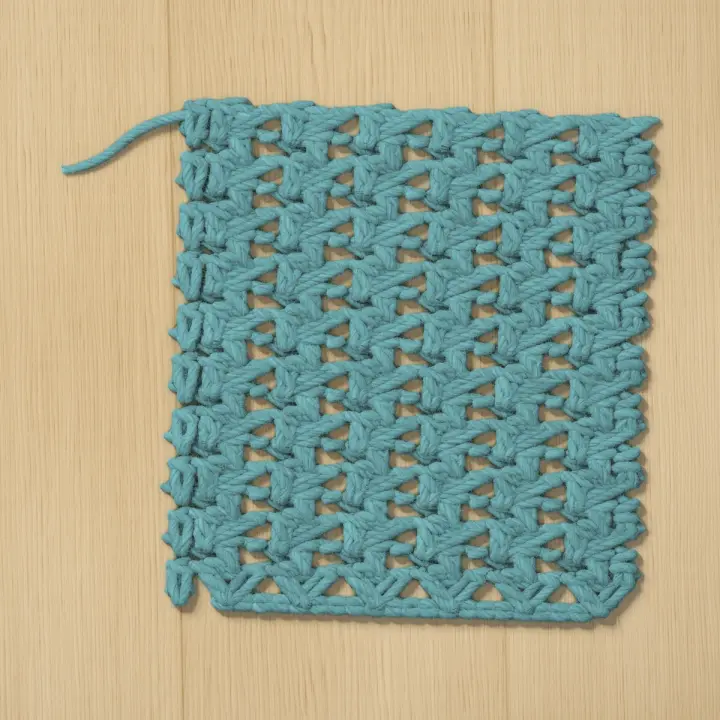
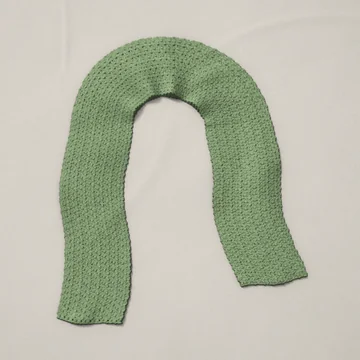
Wattle stitch is small groups of three: a single crochet (UK double crochet), one chain and a double crochet (UK treble), all worked into one place. On every row after the first, each group goes into the chain space of the group below it. One row repeats, and the fabric is close and textured.
How to work it
A single crochet, a chain and a double crochet in one place

Work a single crochet, chain 1, and work a double crochet into the same place as the single crochet. That is one group. On the first row, skip two chains of the foundation chain and work the next group into the chain after them.
Into the chain space of the group below

On every later row, work a group into each chain space of the row below: a single crochet, chain 1 and a double crochet, all under the one chain. The two stitches of the group below are passed over.
The stitch pattern, row by row
- Multiple
- Chain a multiple of 3 plus 2 (11 or more).
- Starting chain
- The rows here are written for a chain of 20, which is 6 times the multiple of 3, plus 2.
- The ch 1 at the start of a row does not count as a stitch.
- Row 1 is the right side.
- A stitch worked into a chain space passes over any stitches that lie before the space; they are left unworked.
- Stitches in parentheses, or several of one stitch, are all worked into the one place named after them.
- The two chains skipped at the start of row 1 are not worked into; the first of them stays as a small loop at that corner, where every later row has its turning chain.
- Foundation. Ch 20.
- Row 1 (RS). (sc, ch 1, dc) in 3rd ch from hook, [sk next 2 chs, (sc, ch 1, dc) in next ch] 5 times, sk next ch, sc in next ch (7 sc, 6 dc, 6 ch-1 sps).
- Row 2. Ch 1, turn; [(sc, ch 1, dc) in next ch-1 sp] 6 times, sc in last st (7 sc, 6 dc, 6 ch-1 sps).
Repeat row 2 for the pattern.
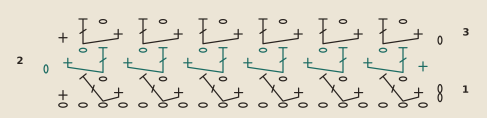
What each symbol meansHow to read a chart
Abbreviations in these rows
- ch
- chain stitch
- sc
- single crochet (UK double crochet)
- dc
- double crochet (UK treble)
- RS
- right side
- sk
- skip
- sp
- space
- st
- stitch
At a glance
- Used for
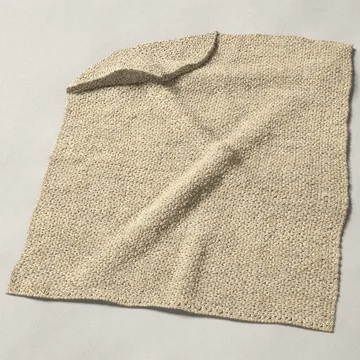
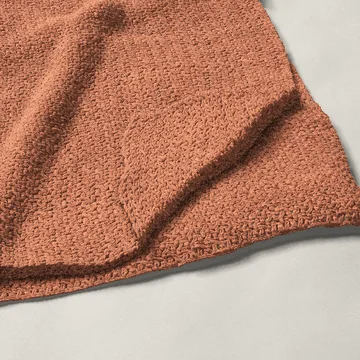
- dishcloths and washcloths; blankets and baby blankets
- Multiple
- The chain is a multiple of 3 plus 2 (11 or more).
- Row repeat
- Row 2.
- One group
- A single crochet, chain 1 and a double crochet, all in one place
- Where a group goes
- Into the chain space of the group below
- Start and end of a row
- A row begins with a chain 1 that does not count and ends with one single crochet in the last stitch.
A group puts a short stitch and a tall stitch into one place with a chain between them, and the next group is worked two stitches further on. Every row is the same row, and the work is turned each time, so the two sides of the fabric look alike.
Published rows differ at the two ends. Others start from a chain that is a multiple of 3 and skip two chains before the last stitch of the first row; the rows here skip one, which is why their chain is a multiple of 3 plus 2. Some end each row with a half double crochet (UK half treble), and some count the turning chain as the first stitch. The groups between the edges are the same in all of them.
When it goes wrong
- I cannot find the chain space.
- It is the gap under the single chain at the middle of each group, between the single crochet and the double crochet. Put the hook under the chain, not into it.
- My rows lose a group.
- The first group of a row goes into the first chain space, and the row ends with a single crochet in the last stitch of the row below. Count the groups at the end of each row: the number does not change.
Left-handed
The pictures show the hook held in the right hand. For the left hand, read each picture as its mirror image.
Variations
- Two single crochets in a group. With a single crochet in place of the double crochet, the group is a single crochet, a chain and a single crochet: the group of spider stitch.
- No chain in the group. A single crochet and a double crochet worked into one stitch with no chain between them, and one stitch skipped, are the pairs of suzette stitch.
Patterns that use it
Questions
- What is the multiple for wattle stitch?
- For the rows here, a chain that is a multiple of 3 plus 2. Other published rows use a multiple of 3 and end the first row differently, so use the multiple given with the rows you follow.
- Is wattle stitch good for beginners?
- It uses only the chain, the single crochet and the double crochet, and one row repeats. The one new thing is working a whole group into a chain space.
- What is wattle stitch used for?
- Dishcloths and washcloths, blankets and baby blankets.