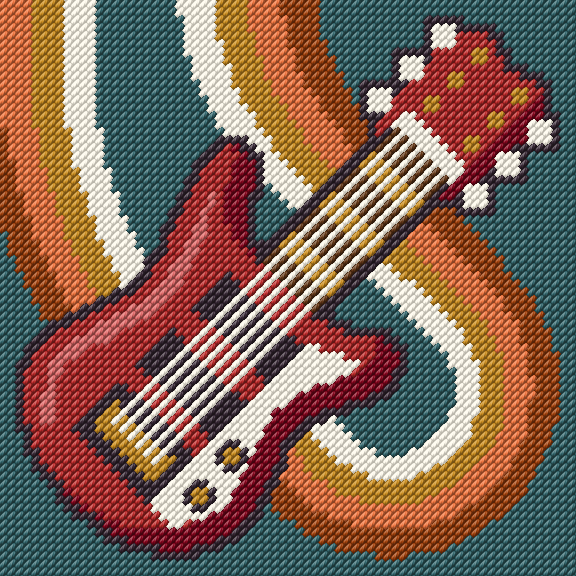
Retro electric guitar needlepoint pattern
Advanced · 10 colors · 4 × 4 in · 18 mesh · 5,184 stitches
Download free PDFPDF, US Letter · 39 KBFor your own stitching, gifts and handmade pieces you sell. Do not resell or share this PDF or copies of it. Selling, classes and kits: the rules
You will need
- Canvas: 18 mesh, cut 8 × 8 in
- Needle: tapestry, size 22
- Thread: 10 colors of six-strand floss, 4 to 6 strands in the needle, about 11 skeins in all (an estimate)
- Thread: 10 colors of pearl cotton size 5, 1 strand in the needle, about 10 skeins in all (an estimate)
- Thread: 10 colors of Persian wool, 1 strand in the needle, about 10 skeins in all (an estimate)
On 13 mesh, easier to see: 5.5 × 5.5 in
- Size: the piece comes out 5.5 × 5.5 in
- Canvas: 13 mesh, cut 9.5 × 9.5 in
- Needle: tapestry, size 20
- Thread: 10 colors of tapestry wool in the nearest shades, 1 strand in the needle, about 11 skeins in all (an estimate)
- Or 10 colors of pearl cotton size 3, 1 strand in the needle, about 10 skeins in all (an estimate)
- Or 10 colors of six-strand floss, 7 or 8 strands in the needle, about 13 skeins in all (an estimate)
- Wool by color, after DMC’s own table of nearest shades: 3808 is wool 7296, 2 skeins; 712 is wool ECRU, 1 skein; 347 is wool 7107, 1 skein; 783 is wool 7473, 1 skein; 3371 is wool 7535, 1 skein; 721 is wool 7947, 1 skein; 919 is wool 7303, 1 skein; 815 is wool 7110, 1 skein; 801 is wool 7801, 1 skein; 3328 is wool 7759, 1 skein.
Make it an ornament. Board, thin batting, backing fabric and twisted cord. Stitch two extra rows all round, carrying the colors of the edge on: the edge of the board takes them. They are in neither the chart nor the counts of thread. How to finish an ornament
Another thread. Stitch it in pearl cotton or Persian wool: the skeins follow
A brick-red electric guitar with a cream guard lies on the slant while ribbons of mustard, orange, rust and cream sweep round its neck. The ground is deep teal, with no border.
Size and details
The chart is 72 × 72 stitches: a square ornament on 18 mesh canvas.
Worked in tent stitch throughout.
Advanced. Many colors, or changes every few stitches: best with a canvas or two behind you.
How the level is set
Advanced: 10 colors. Changes of color are about 3 stitches apart, leaving out the background around the picture. With 10 colors or more, closer than 4.5 apart is Advanced, 4.5 or more is Intermediate, and a design with this many colors is never Beginner.
| Mesh | Stitched size | Canvas to cut |
|---|---|---|
| 10 | 7.2 × 7.2 in 18.3 × 18.3 cm | 11.2 × 11.2 in 28.4 × 28.4 cm |
| 12 | 6 × 6 in 15.2 × 15.2 cm | 10 × 10 in 25.4 × 25.4 cm |
| 13 | 5.5 × 5.5 in 14.1 × 14.1 cm | 9.5 × 9.5 in 24.2 × 24.2 cm |
| 14 | 5.1 × 5.1 in 13.1 × 13.1 cm | 9.1 × 9.1 in 23.2 × 23.2 cm |
| 18 | 4 × 4 in 10.2 × 10.2 cm | 8 × 8 in 20.3 × 20.3 cm |
Mesh is the number of canvas threads to the inch; the row in bold is the mesh this chart is sized for. Canvas to cut includes a margin of 2 in (5.1 cm) of bare canvas on every side. Leave at least that much.
On plastic canvas: 5.1 × 5.1 in on 14 mesh, 7.2 × 7.2 in on 10 and 10.3 × 10.3 in on 7, from one sheet. Take worsted yarn and a size 16 needle on 7 mesh; sport yarn or 12 strands of floss and a size 18 needle on 10; 6 strands of floss and a size 22 needle on 14. Yarn is matched to the list by eye. How to stitch a chart on plastic canvas
Paper for the PDF
Threads and canvas
Six-strand floss: 4 to 6 strands in the needle on 18 mesh, counted at 6, and a skein is 8.7 yd. The numbers in the list are its DMC numbers.
- DMC 3808 Ultra Very Dark Turquoise 1,488 stitches about 11 yards 2 skeins
- DMC 712 Cream 826 stitches about 6 yards 1 skein
- DMC 347 Very Dark Salmon 597 stitches about 5 yards 1 skein
- DMC 783 Medium Topaz 530 stitches about 4 yards 1 skein
- DMC 3371 Black Brown 527 stitches about 4 yards 1 skein
- DMC 721 Medium Orange Spice 461 stitches about 4 yards 1 skein
- DMC 919 Red Copper 400 stitches about 3 yards 1 skein
- DMC 815 Medium Garnet 207 stitches about 2 yards 1 skein
- DMC 801 Dark Coffee Brown 77 stitches about 1 yard 1 skein
- DMC 3328 Dark Salmon 71 stitches about 1 yard 1 skein
5,184 stitches in the chart, about 41 yards in all. The yards are estimates for 18 mesh. The skeins are estimates too, about 11 in all.
Thread colors are approximate screen matches to DMC numbers. Check against real thread before you buy.
The numbers are DMC color numbers, which its six-strand cotton and its pearl cotton share. Wool and silk are numbered differently: match those by eye. For how many strands and which needle, see which thread suits which mesh.
You also need blank needlepoint canvas (mono canvas) in the mesh you choose (see mesh sizes), cut to the size in the table above, and a tapestry needle.
About the yards and skeins
The yards are of thread as it is threaded in the needle: stitched with several strands together, a thread takes that many yards of single strand for every yard listed. For six-strand cotton on 18 mesh, the thread and needle chart gives 4 to 6 strands.
An estimate. The length of thread one stitch uses on the front and back of the canvas, times the number of stitches, plus 30 percent for starting, ending and the tail left in the needle. Each count is estimated as basketweave or continental and rounded up to a whole yard, so the yards in all are a little more than the thread calculator gives for every stitch at once. The 30 percent is this site's own choice. The thread calculator works the same estimate for any count and mesh.
Getting it onto your canvas
This is a counted chart: one square of the chart is one stitch. Find the center of your canvas and the center of the chart (the red arrows above and to the left of the chart), and count out from there, a color at a time.
Nothing is printed on the canvas, so no transfer is needed. How to needlepoint covers the first stitches.
See the chart on this page
The chart is drawn when this is opened.
It opens in the pattern maker, with your colors and your name on it.
Downloads
- Chart for US Letter paper PDF · 2 pages
- Chart for A4 paper PDF · 2 pages
The same chart in squares of about 6 mm, on more pages.
Each file has the thread key, with an estimate of the yards and skeins of each color, and the sizes on its first page, then the chart with a symbol in every square and a heavier line every ten. A chart too large for one page is divided over several, with two rows or columns repeated in gray where the pages join; a page may be turned on its side for a part that is wider than it is tall.
More patterns like this
Advanced 5,184 stitches 4 × 4 in · 10 colors
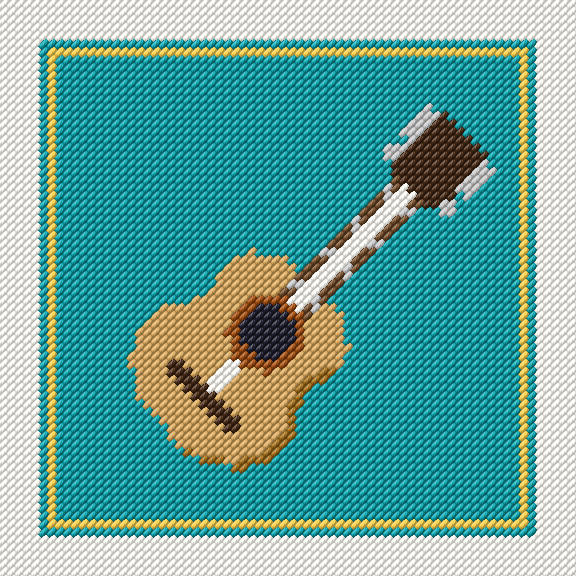
Whimsical guitar
Intermediate 5,184 stitches 4 × 4 in · 16 colors
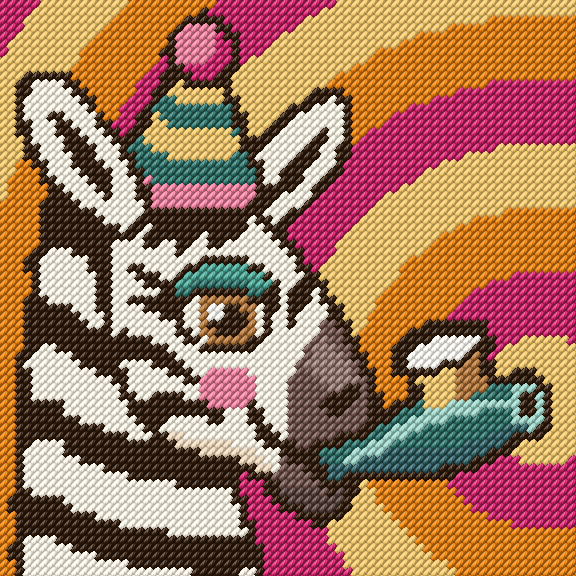
Party animal zebra with a kazoo
Advanced 5,184 stitches 4 × 4 in · 10 colors
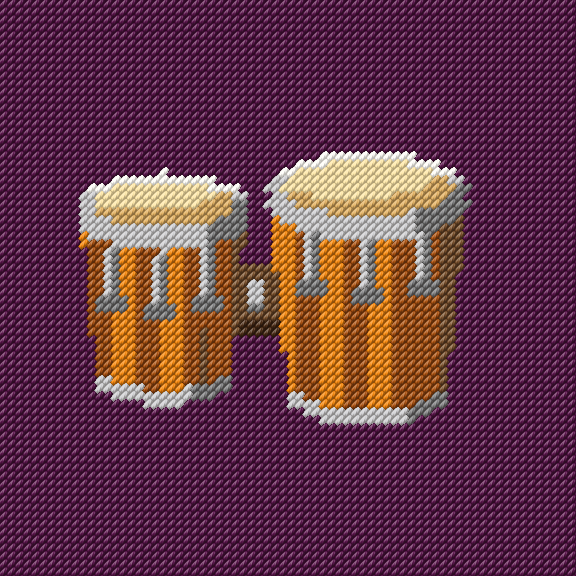
Classic bongo drums
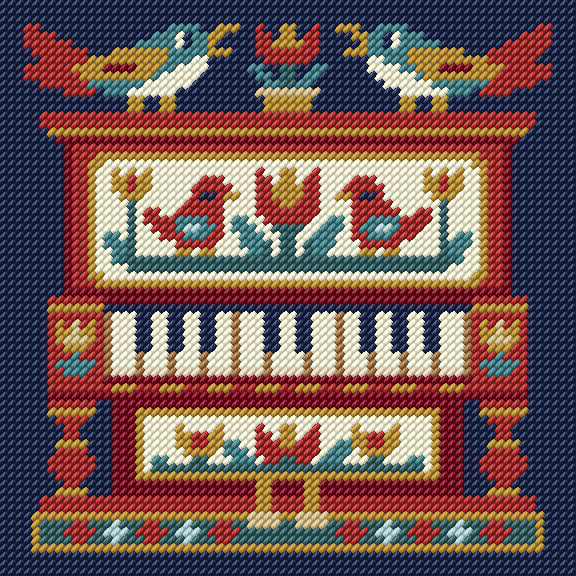
Advanced 5,184 stitches 4 × 4 in · 11 colors
Folk art piano with birds and tulips
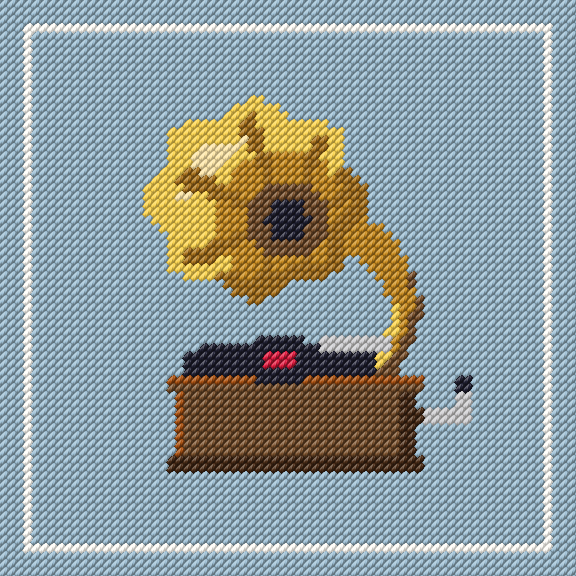
Advanced 5,184 stitches 4 × 4 in · 12 colors
Classic gramophone
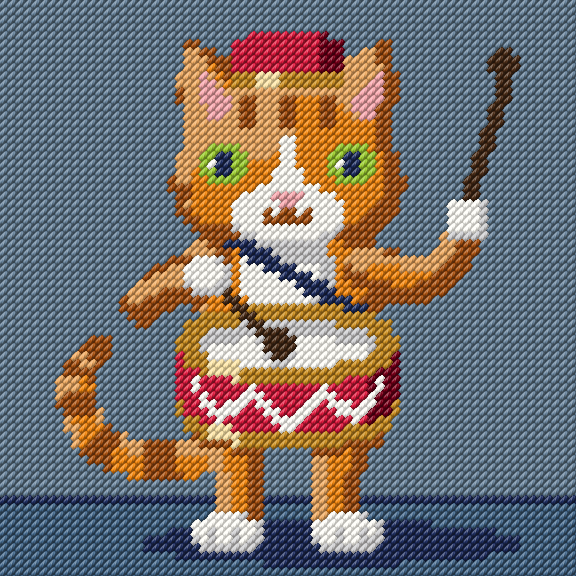
Advanced 5,184 stitches 4 × 4 in · 15 colors
Classic cat drummer
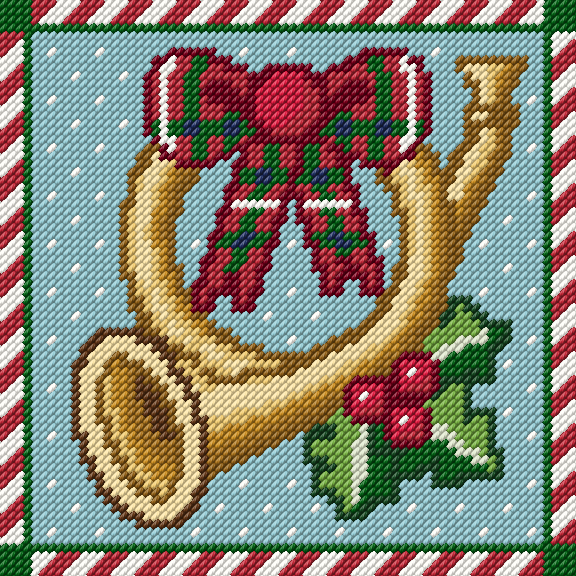
Advanced 5,184 stitches 4 × 4 in · 16 colors
Preppy Christmas horn with plaid bow
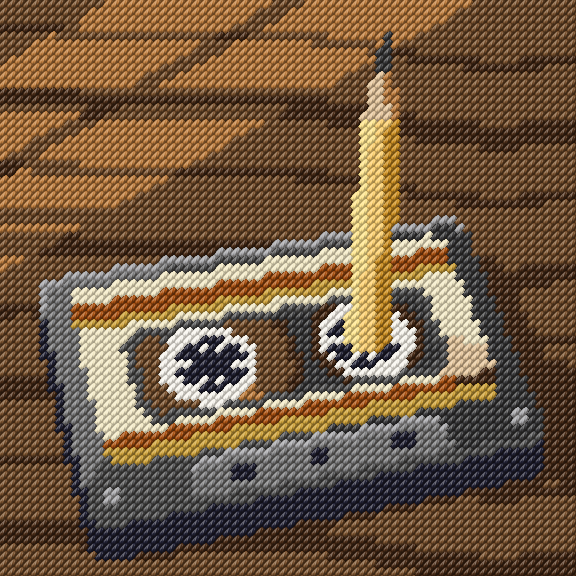
Advanced 5,184 stitches 4 × 4 in · 16 colors
Classic cassette tape and pencil
New to needlepoint? How to needlepoint