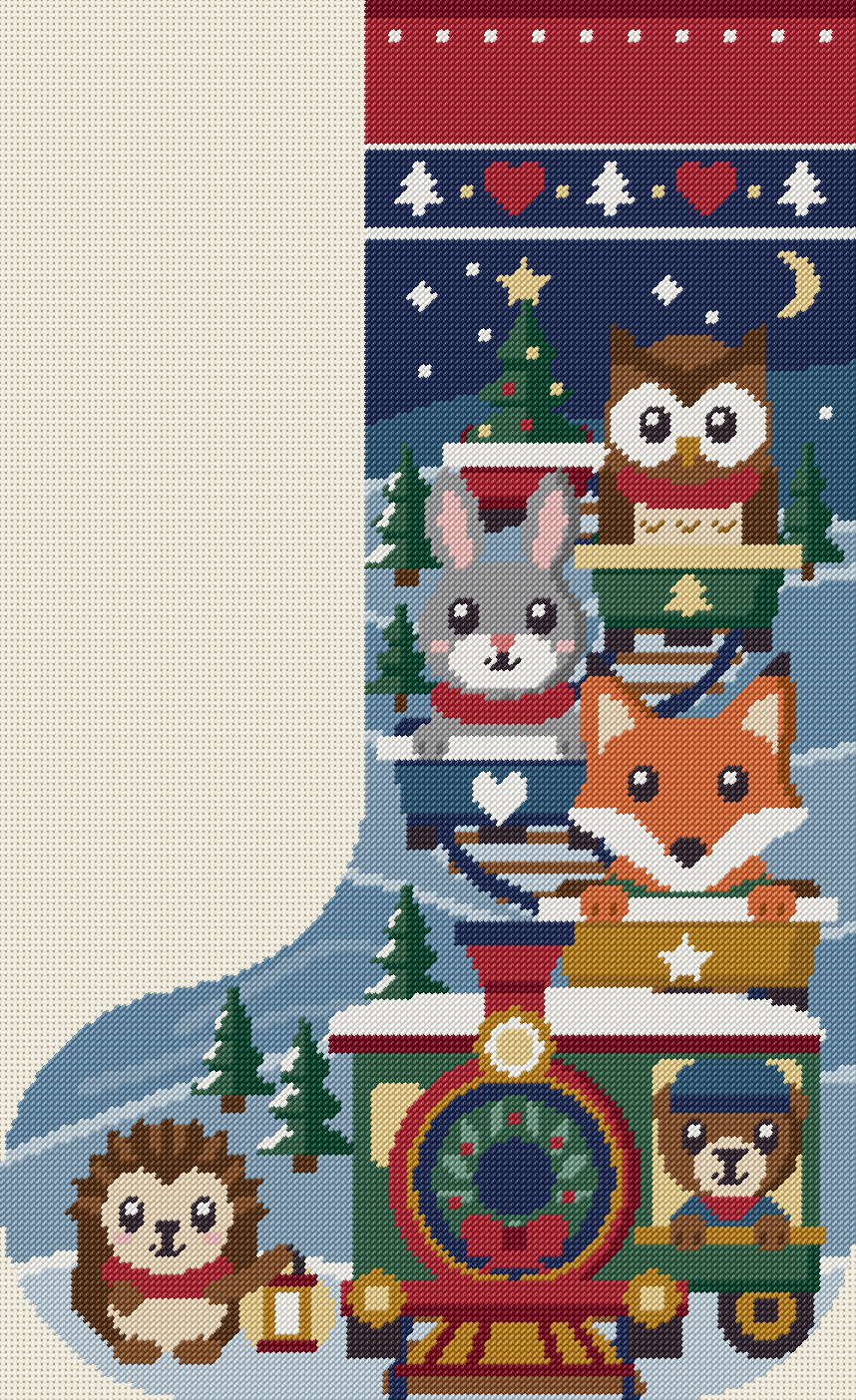
Animal train stocking for a child needlepoint pattern
Intermediate · 24 colors · 11 × 18 in · 13 mesh · 22,920 stitches
Download free PDFPDF, US Letter · 125 KBFor your own stitching, gifts and handmade pieces you sell. Do not resell or share this PDF. What you may do, in full
You will need
- Canvas: 13 mesh, cut 15 × 22 in
- Needle: tapestry, size 20
- Thread: 24 colors of six-strand floss, 7 or 8 strands in the needle, about 50 skeins in all (an estimate)
- Thread: 24 colors of pearl cotton size 3, 1 strand in the needle, about 28 skeins in all (an estimate)
- Thread: 24 colors of tapestry wool, 1 strand in the needle, about 37 skeins in all (an estimate)
- Thread: 24 colors of Persian wool, 2 strands in the needle, about 33 skeins in all (an estimate)
Make it a stocking. Backing and lining fabric, cord or piping, and a loop. Finishers ask for stockings months before Christmas, and most want two extra rows all round. Ask yours before the edge, and stitch a name first. How to finish a stocking · How to make a stocking, start to finish
A little red and green engine comes down a snowy hill at night with a bear driving, and a fox, a rabbit and an owl ride in the wagons behind it. The sky is navy over pale blue snow, under a red cuff with a band of white trees.
Size and details
The chart is 143 × 234 stitches at its widest and tallest: a Christmas stocking on 13 mesh canvas, with 22,920 stitches inside its outline.
Worked in tent stitch throughout.
Put a name on it. The plain part of the cuff is 82 stitches across and 17 down: room for about 6 letters 13 stitches high, 8 letters 10 high or 16 letters 5 high. Three alphabets to copy are in the lettering guide, with how to center a name.
Intermediate. The color changes often enough that you count as you go.
How the level is set
Intermediate: 24 colors. Changes of color are about 4.9 stitches apart, leaving out the plain parts. With 10 colors or more, 4.5 or more apart is Intermediate, closer is Advanced, and a design with this many colors is never Beginner.
| Mesh | Stitched size | Canvas to cut |
|---|---|---|
| 10 | 14.3 × 23.4 in 36.3 × 59.4 cm | 18.3 × 27.4 in 46.5 × 69.6 cm |
| 12 | 11.9 × 19.5 in 30.3 × 49.5 cm | 15.9 × 23.5 in 40.4 × 59.7 cm |
| 13 | 11 × 18 in 27.9 × 45.7 cm | 15 × 22 in 38.1 × 55.9 cm |
| 14 | 10.2 × 16.7 in 25.9 × 42.5 cm | 14.2 × 20.7 in 36.1 × 52.6 cm |
| 18 | 7.9 × 13 in 20.2 × 33 cm | 11.9 × 17 in 30.3 × 43.2 cm |
Mesh is the number of canvas threads to the inch; the row in bold is the mesh this chart is sized for. Canvas to cut includes a margin of 2 in (5.1 cm) of bare canvas on every side. Leave at least that much.
Paper for the PDF
Threads and canvas
Six-strand floss: 7 or 8 strands in the needle on 13 mesh, counted at 8, and a skein is 8.7 yd. The numbers in the list are its DMC numbers.
- DMC 823 Dark Navy Blue 3,288 stitches about 32 yards 5 skeins
- DMC 321 Red 2,815 stitches about 27 yards 5 skeins
- DMC BLANC White 2,148 stitches about 21 yards 4 skeins
- DMC 3755 Baby Blue 1,736 stitches about 17 yards 3 skeins
- DMC 501 Dark Blue Green 1,541 stitches about 15 yards 3 skeins
- DMC 334 Medium Baby Blue 1,453 stitches about 14 yards 3 skeins
- DMC 3841 Pale Baby Blue 1,284 stitches about 13 yards 2 skeins
- DMC 434 Light Brown 944 stitches about 9 yards 2 skeins
- DMC 783 Medium Topaz 907 stitches about 9 yards 2 skeins
- DMC 815 Medium Garnet 903 stitches about 9 yards 2 skeins
- DMC 312 Very Dark Baby Blue 805 stitches about 8 yards 2 skeins
- DMC 500 Very Dark Blue Green 724 stitches about 7 yards 2 skeins
- DMC 801 Dark Coffee Brown 713 stitches about 7 yards 2 skeins
- DMC 721 Medium Orange Spice 712 stitches about 7 yards 2 skeins
- DMC 3371 Black Brown 695 stitches about 7 yards 2 skeins
- DMC 3822 Light Straw 615 stitches about 6 yards 1 skein
- DMC 739 Ultra Very Light Tan 598 stitches about 6 yards 1 skein
- DMC 318 Light Steel Gray 507 stitches about 5 yards 1 skein
- DMC 782 Dark Topaz 165 stitches about 2 yards 1 skein
- DMC 761 Light Salmon 120 stitches about 2 yards 1 skein
- DMC 414 Dark Steel Gray 87 stitches about 1 yard 1 skein
- DMC 503 Medium Blue Green 82 stitches about 1 yard 1 skein
- DMC 920 Medium Copper 68 stitches about 1 yard 1 skein
- DMC 3712 Medium Salmon 10 stitches about 1 yard 1 skein
22,920 stitches inside the outline, about 227 yards in all. The yards are estimates for 13 mesh. The skeins are estimates too, about 50 in all.
Thread colors are approximate screen matches to DMC numbers. Check against real thread before you buy.
The numbers are DMC color numbers, which its six-strand cotton and its pearl cotton share. Wool and silk are numbered differently: match those by eye. For how many strands and which needle, see which thread suits which mesh.
The yards are of thread as it is threaded in the needle: stitched with several strands together, a thread takes that many yards of single strand for every yard listed. For six-strand cotton on 13 mesh, the thread and needle chart gives 7 or 8 strands.
You also need blank needlepoint canvas (mono canvas) in the mesh you choose (see mesh sizes), cut to the size in the table above, and a tapestry needle.
An estimate. The length of thread one stitch uses on the front and back of the canvas, times the number of stitches, plus 30 percent for starting, ending and the tail left in the needle. Each count is estimated as basketweave or continental and rounded up to a whole yard, so the yards in all are a little more than the thread calculator gives for every stitch at once. The 30 percent is this site's own choice. The thread calculator works the same estimate for any count and mesh.
Getting it onto your canvas
This is a counted chart: one square of the chart is one stitch. Find the center of your canvas and the center of the chart (the red arrows above and to the left of the chart), and count out from there, a color at a time.
Nothing is printed on the canvas, so no transfer is needed. How to needlepoint covers the first stitches.
Downloads
- Chart for US Letter paper PDF · 5 pages
- Chart for A4 paper PDF · 5 pages
Each file has the thread key, with an estimate of the yards and skeins of each color, and the sizes on its first page, then the chart with a symbol in every square and a heavier line every ten. A chart too large for one page is divided over several, with two rows or columns repeated in gray where the pages join; a page may be turned on its side for a part that is wider than it is tall.
More patterns like this
Intermediate 11 × 18 in · 24 colors
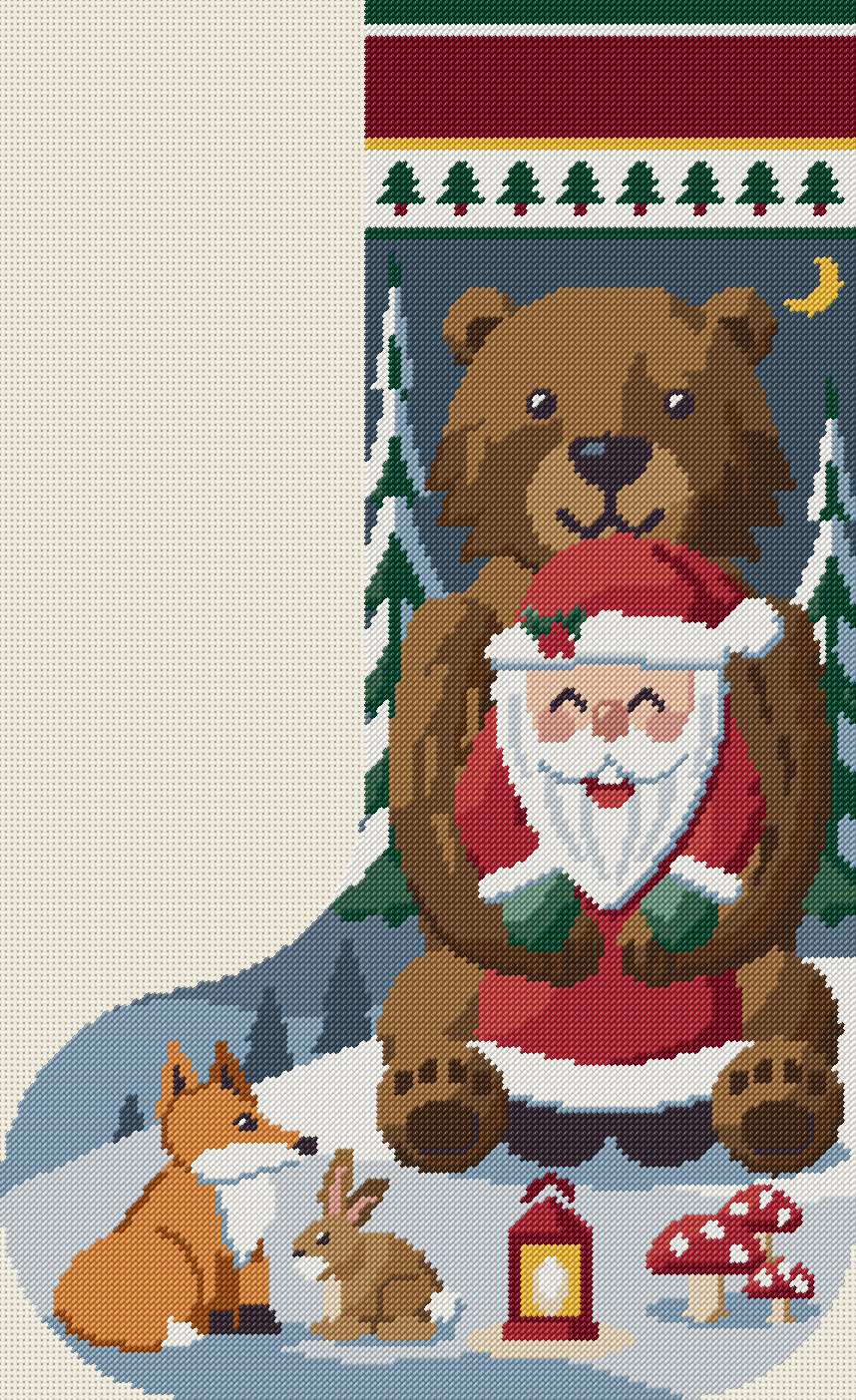
Woodland Santa and bear stocking
Intermediate 11 × 18 in · 24 colors
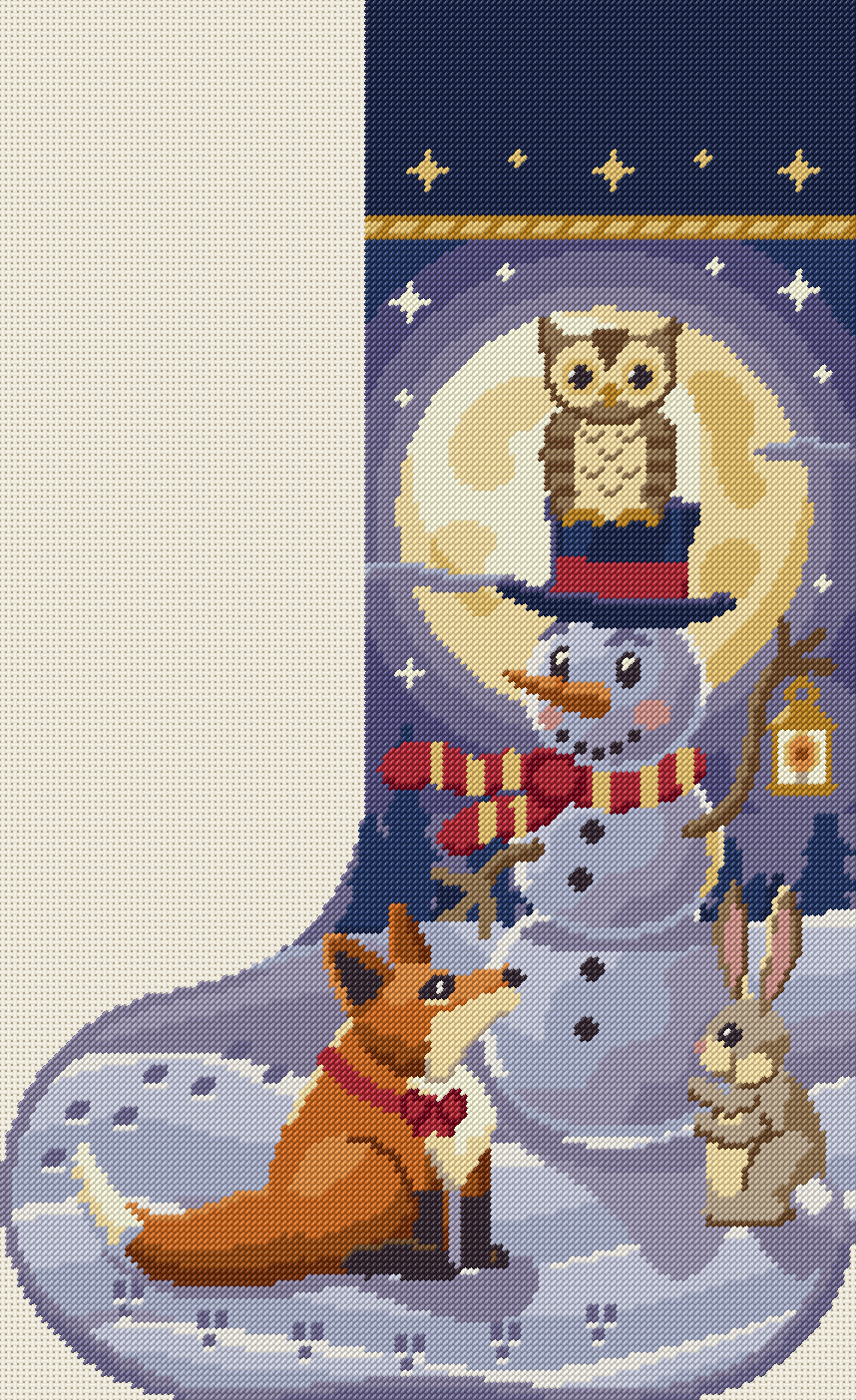
Moonlit snowman and animals stocking
Intermediate 11 × 18 in · 24 colors
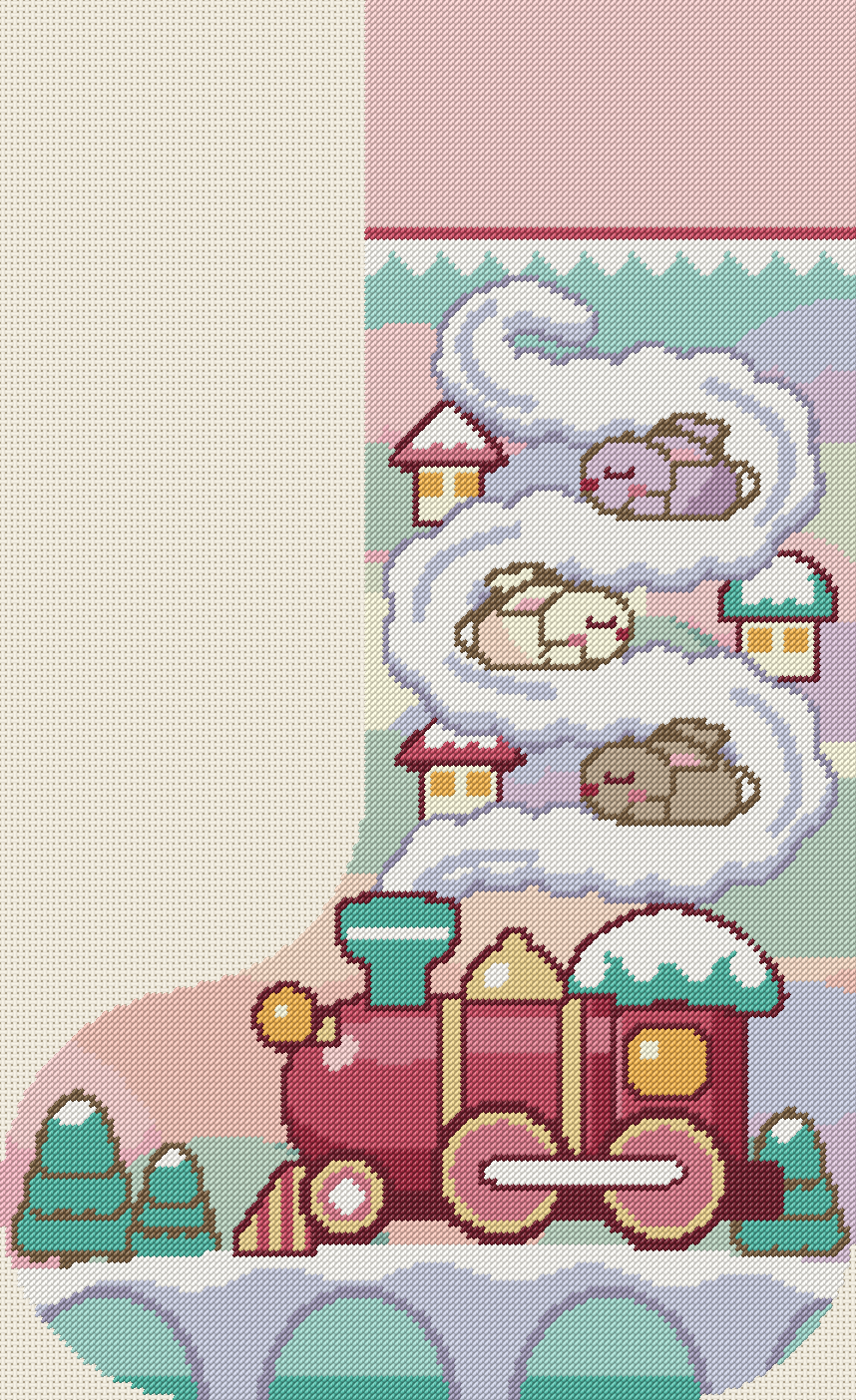
Whimsical steam train stocking
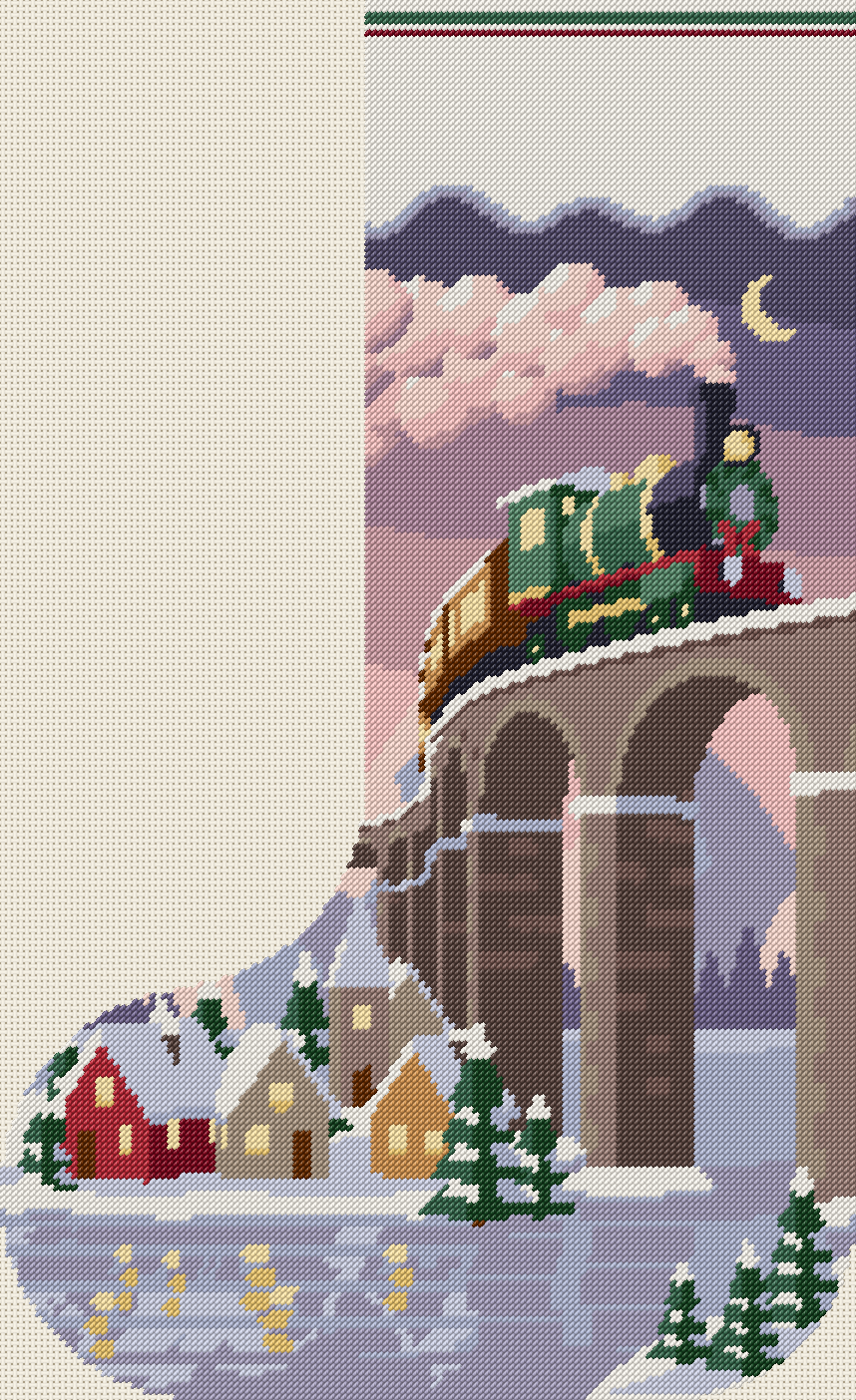
Intermediate 11 × 18 in · 24 colors
Steam train on a snowy viaduct
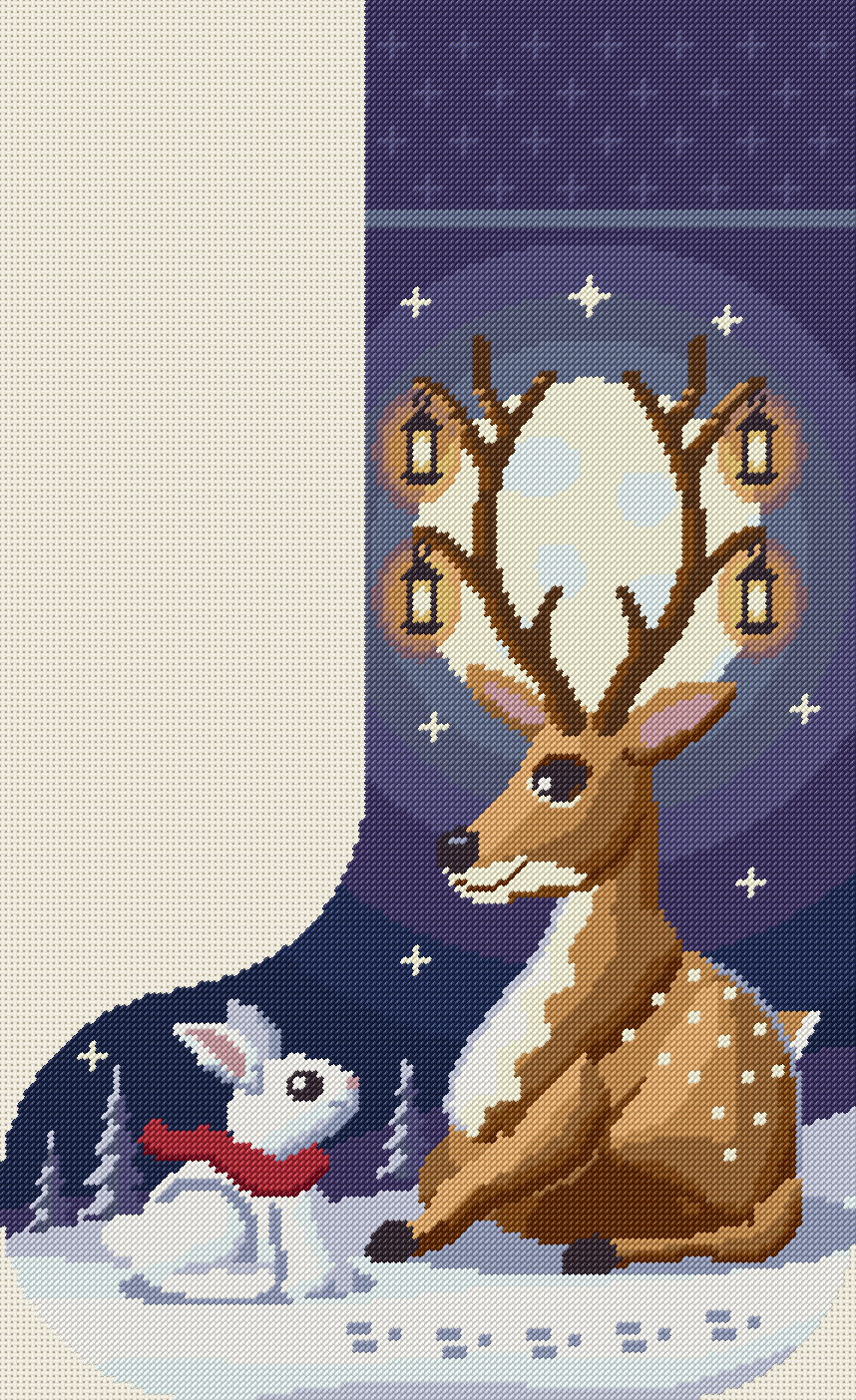
Intermediate 11 × 18 in · 24 colors
Whimsical deer Christmas stocking
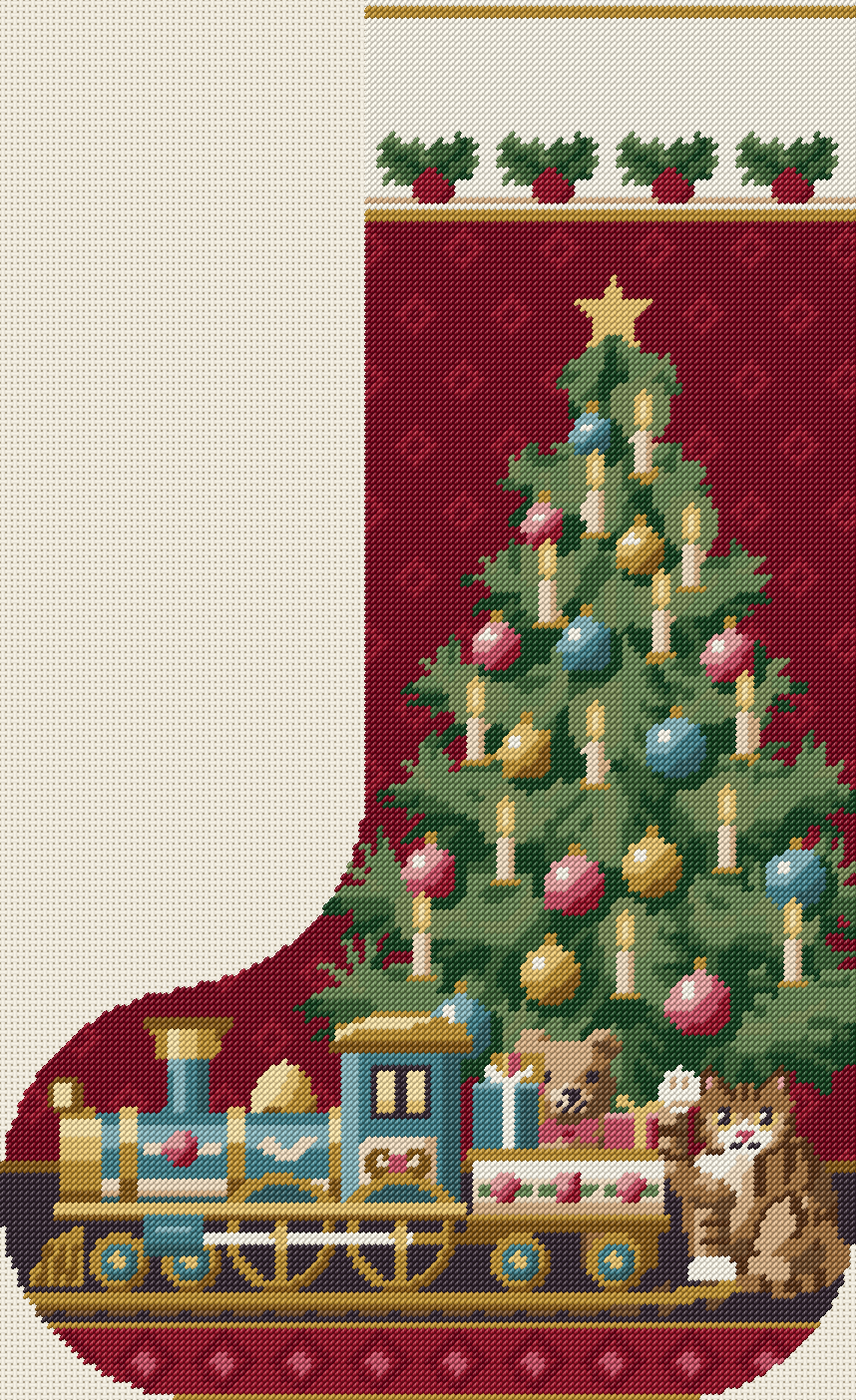
Advanced 11 × 18 in · 22 colors
Vintage toy train and tree
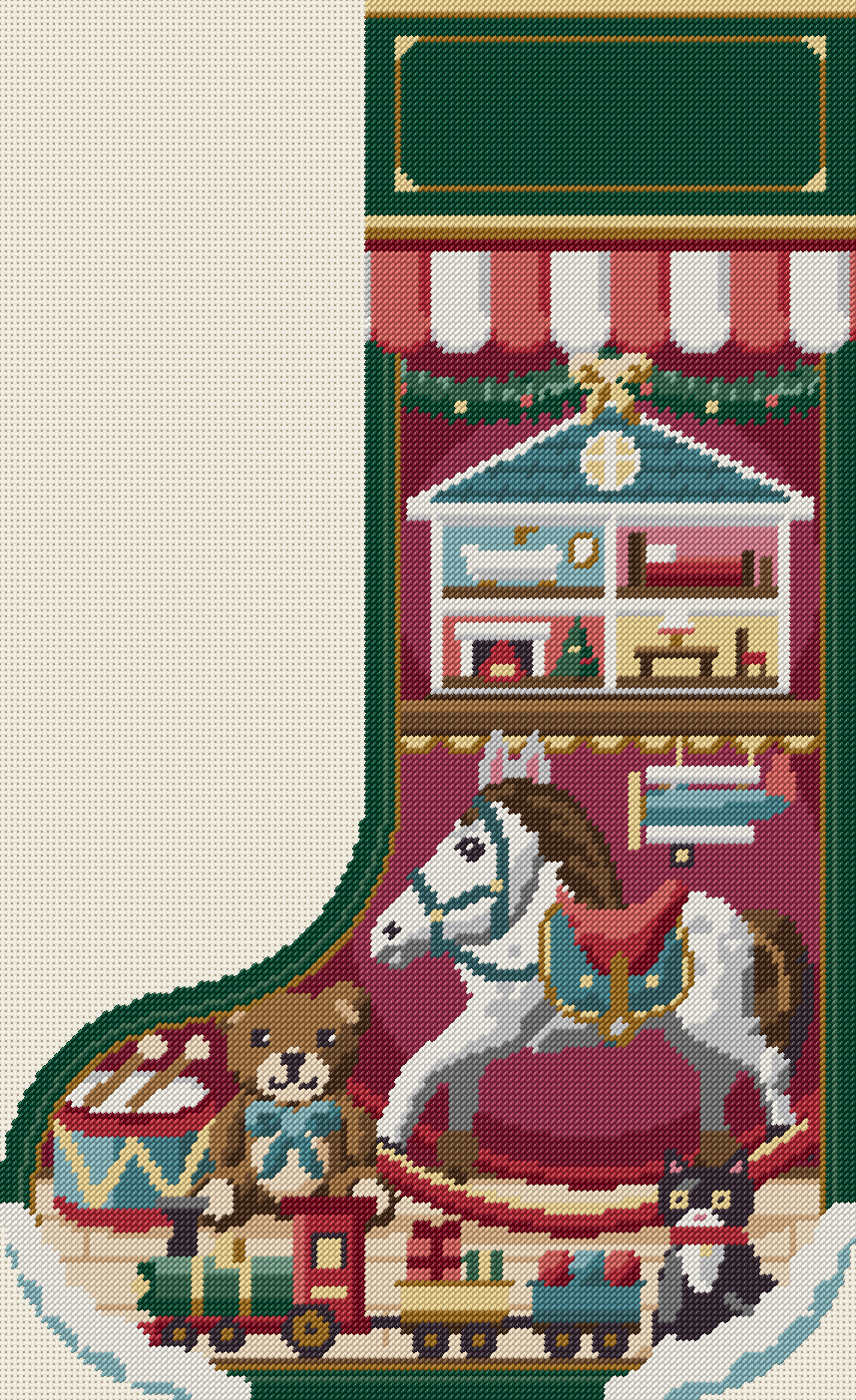
Advanced 11 × 18 in · 23 colors
Toy shop window
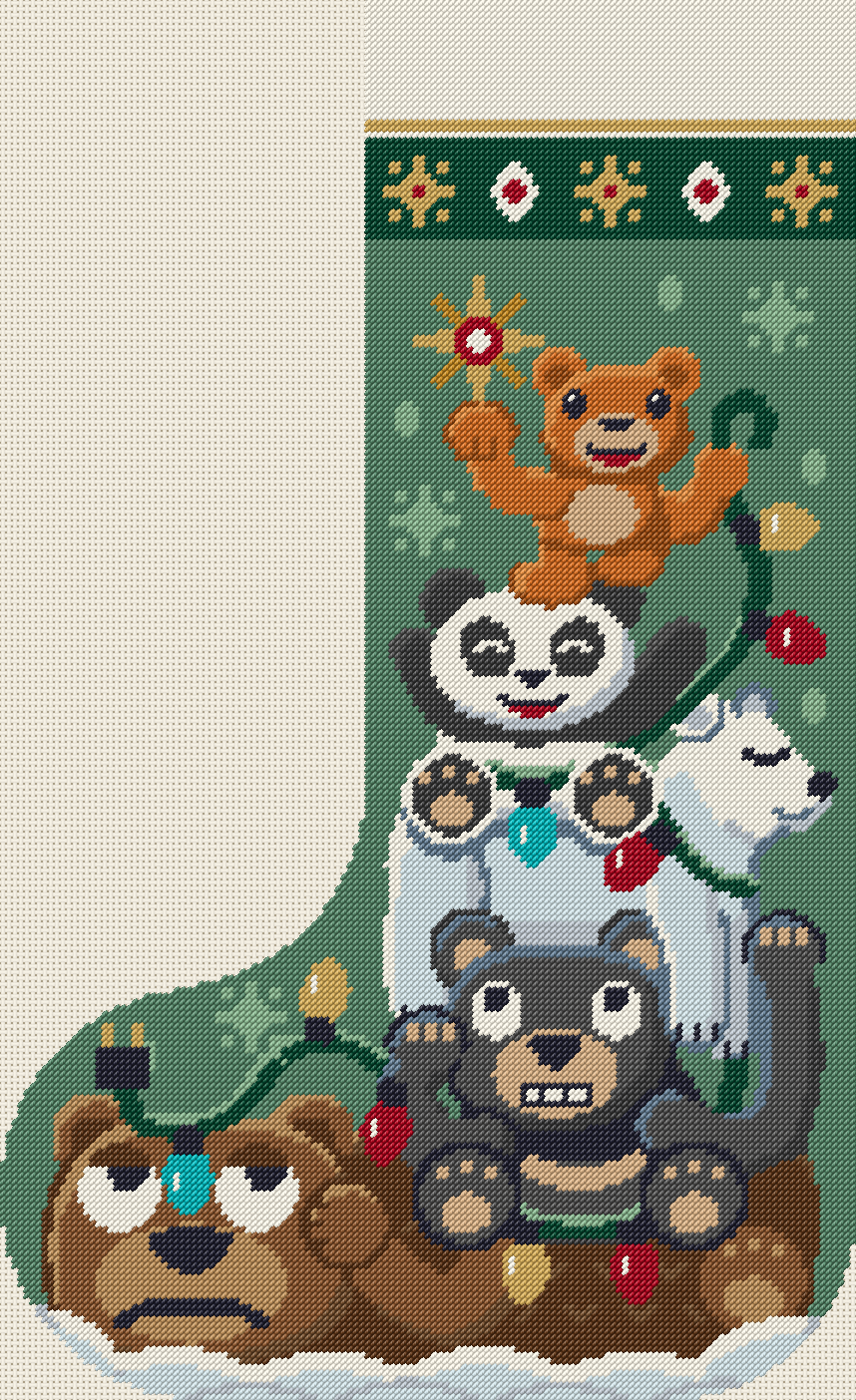
Intermediate 11 × 18 in · 22 colors
Funny stack of bears stocking
New to needlepoint? How to needlepoint