Over-the-collar dog bandana crochet pattern
Crochet, 15½ in across, 2 colors, easy
PDF. Prints on US Letter and A4.
What you need
- Yarn A redabout 30 yd (27 m), an estimatemain color
- Yarn B creamabout 40 yd (37 m), an estimatepart of the bandana and the edging
- Yarn in all
- About 70 yd (64 m) or 35 g, an estimate
- Weight
- Medium weight, 4 on the label (UK aran)
- Hook
- 5 mm (US H-8), or the size that gives you the gauge
- Also
- The dog's own flat collar with a buckle, 1 in (2.5 cm) wide or narrower. Closed, it must be at least 2 in (5 cm) longer around than the bandana is across the top, so that the buckle and the ring for the leash stay outside the hem, a yarn needle, scissors and a tape measure
- Gauge
- 14 stitches and 15 rows to 4 in (10 cm) in linen stitch. How to check it
Instructions Medium
How to read these rows
US terms · Show UK terms
- ch chain, sl st slip stitch, sc single crochet (UK double crochet).
- sk skip, yo yarn over the hook, RS right side, the one that shows.
- 2 sc in next st: both in one stitch. sc in next 39 sts: one in each. ch-1 sp: the gap under the one chain; the hook goes in the gap.
- [ ] 2 times: work what is inside 2 times in all. ( ): all of it goes into the one place.
- (1 sc): the stitches you have when the row is done. How to read a pattern.
- Changing colors. Working in the round.
- The ch 1 at the start of a row or a round does not count as a stitch.
Bandana
Yarns in order of use: A, red; B, cream.
- StartWith A, ch 2.
- Row 1RSSc in 2nd ch from hookleaves (1 sc)
- Row 2Ch 1, turn; (sc, ch 1, sc) in first stleaves (2 sc, 1 ch-1 sp)
- Row 3Ch 1, turn; sc in first st, ch 1, sc in next ch-1 sp, ch 1, sc in last stleaves (3 sc, 2 ch-1 sps)
- Row 4Ch 1, turn; sc in first st, ch 1, sc in next ch-1 sp, ch 1, sk next st, sc in next ch-1 sp, ch 1, sc in last stleaves (4 sc, 3 ch-1 sps)
- Row 5Ch 1, turn; sc in first st, ch 1, sc in next ch-1 sp, repeat: ch 1, sk next st, sc in next ch-1 sp 2 times, ch 1, sc in last stleaves (5 sc, 4 ch-1 sps)
- Row 6Ch 1, turn; sc in first st, ch 1, sc in next ch-1 sp, repeat: ch 1, sk next st, sc in next ch-1 sp 3 times, ch 1, sc in last stleaves (6 sc, 5 ch-1 sps)
- Row 7Ch 1, turn; sc in first st, ch 1, sc in next ch-1 sp, repeat: ch 1, sk next st, sc in next ch-1 sp 4 times, ch 1, sc in last stleaves (7 sc, 6 ch-1 sps)
- Row 8Ch 1, turn; sc in first st, ch 1, sc in next ch-1 sp, repeat: ch 1, sk next st, sc in next ch-1 sp 5 times, ch 1, sc in last stleaves (8 sc, 7 ch-1 sps)
- Row 9Ch 1, turn; sc in first st, ch 1, sc in next ch-1 sp, repeat: ch 1, sk next st, sc in next ch-1 sp 6 times, ch 1, sc in last stleaves (9 sc, 8 ch-1 sps)
- Row 10Ch 1, turn; sc in first st, ch 1, sc in next ch-1 sp, repeat: ch 1, sk next st, sc in next ch-1 sp 7 times, ch 1, sc in last stleaves (10 sc, 9 ch-1 sps)
- Row 11Ch 1, turn; sc in first st, ch 1, sc in next ch-1 sp, repeat: ch 1, sk next st, sc in next ch-1 sp 8 times, ch 1, sc in last stleaves (11 sc, 10 ch-1 sps)
- Row 12Ch 1, turn; sc in first st, ch 1, sc in next ch-1 sp, repeat: ch 1, sk next st, sc in next ch-1 sp 9 times, ch 1, sc in last stleaves (12 sc, 11 ch-1 sps)
- Row 13Ch 1, turn; sc in first st, ch 1, sc in next ch-1 sp, repeat: ch 1, sk next st, sc in next ch-1 sp 10 times, ch 1, sc in last stleaves (13 sc, 12 ch-1 sps)
- Row 14Ch 1, turn; sc in first st, ch 1, sc in next ch-1 sp, repeat: ch 1, sk next st, sc in next ch-1 sp 11 times, ch 1, sc in last stleaves (14 sc, 13 ch-1 sps)
- Row 15Ch 1, turn; sc in first st, ch 1, sc in next ch-1 sp, repeat: ch 1, sk next st, sc in next ch-1 sp 12 times, ch 1, sc in last stleaves (15 sc, 14 ch-1 sps)
- Row 16Ch 1, turn; sc in first st, ch 1, sc in next ch-1 sp, repeat: ch 1, sk next st, sc in next ch-1 sp 13 times, ch 1, sc in last stleaves (16 sc, 15 ch-1 sps)
- Row 17Ch 1, turn; sc in first st, ch 1, sc in next ch-1 sp, repeat: ch 1, sk next st, sc in next ch-1 sp 14 times, ch 1, sc in last stleaves (17 sc, 16 ch-1 sps)
- Row 18Ch 1, turn; sc in first st, ch 1, sc in next ch-1 sp, repeat: ch 1, sk next st, sc in next ch-1 sp 15 times, ch 1, sc in last stleaves (18 sc, 17 ch-1 sps)
- Row 19Ch 1, turn; sc in first st, ch 1, sc in next ch-1 sp, repeat: ch 1, sk next st, sc in next ch-1 sp 16 times, ch 1, sc in last stleaves (19 sc, 18 ch-1 sps)
- Row 20Ch 1, turn; sc in first st, ch 1, sc in next ch-1 sp, repeat: ch 1, sk next st, sc in next ch-1 sp 17 times, ch 1, sc in last stleaves (20 sc, 19 ch-1 sps)
- Row 21Ch 1, turn; sc in first st, ch 1, sc in next ch-1 sp, repeat: ch 1, sk next st, sc in next ch-1 sp 18 times, ch 1, sc in last stleaves (21 sc, 20 ch-1 sps)
- Row 22Ch 1, turn; sc in first st, ch 1, sc in next ch-1 sp, repeat: ch 1, sk next st, sc in next ch-1 sp 19 times, ch 1, sc in last stleaves (22 sc, 21 ch-1 sps)
- Row 23Ch 1, turn; sc in first st, ch 1, sc in next ch-1 sp, repeat: ch 1, sk next st, sc in next ch-1 sp 20 times, ch 1, sc in last stleaves (23 sc, 22 ch-1 sps)
- Row 24Ch 1, turn; sc in first st, ch 1, sc in next ch-1 sp, repeat: ch 1, sk next st, sc in next ch-1 sp 21 times, ch 1, sc in last stleaves (24 sc, 23 ch-1 sps)
The cream band, whose rows still get longer
- Row 25With B, ch 1, turn; sc in first st, ch 1, sc in next ch-1 sp, repeat: ch 1, sk next st, sc in next ch-1 sp 22 times, ch 1, sc in last stleaves (25 sc, 24 ch-1 sps)
- Row 26Ch 1, turn; sc in first st, ch 1, sc in next ch-1 sp, repeat: ch 1, sk next st, sc in next ch-1 sp 23 times, ch 1, sc in last stleaves (26 sc, 25 ch-1 sps)
The hem, whose rows get shorter
- Row 27Ch 1, turn; sk next st, sc in next ch-1 sp, repeat: ch 1, sk next st, sc in next ch-1 sp 24 times, leave remaining st unworkedleaves (25 sc, 24 ch-1 sps)
- Row 28Ch 1, turn; sk next st, sc in next ch-1 sp, repeat: ch 1, sk next st, sc in next ch-1 sp 23 times, leave remaining st unworkedleaves (24 sc, 23 ch-1 sps)
- Row 29Ch 1, turn; sk next st, sc in next ch-1 sp, repeat: ch 1, sk next st, sc in next ch-1 sp 22 times, leave remaining st unworkedleaves (23 sc, 22 ch-1 sps)
- Row 30Ch 1, turn; sk next st, sc in next ch-1 sp, repeat: ch 1, sk next st, sc in next ch-1 sp 21 times, leave remaining st unworkedleaves (22 sc, 21 ch-1 sps)
- Row 31Ch 1, turn; sk next st, sc in next ch-1 sp, repeat: ch 1, sk next st, sc in next ch-1 sp 20 times, leave remaining st unworkedleaves (21 sc, 20 ch-1 sps)
- EndFasten off.
Edging
Yarn B, cream.
- The "first st" of round 1 is the first sc of row 31. In round 1 each sc and each ch-1 space of the row counts as one st: work 1 sc into each sc and 1 sc into each space.
- "Sc in end of each of next 2 rows" means 1 sc in the side edge of each of those two rows, round the stitch or chain that stands there. The side begins with the hem rows, 31 to 27; the 3 sc in one row end come in row 26, the widest, and then rows 25 to 1 lead down to the point, which is the one chain of the foundation. The other side is worked the same way upward.
- Hold the piece with the right side facing you and the last row at the top; the first st is the one at the right-hand corner.
- StartRound 1 goes once around the edge of the piece, right side facing: the 41 sts of the last row, the ends of the 31 rows, the 1 ch of the foundation, the ends of the 31 rows.
- Rnd 1Join B with sl st in first st, ch 1, 2 sc in first st, sc in next 39 sts, 2 sc in next st, sc in end of each of next 2 rows, 2 sc in end of next row, sc in end of each of next 2 rows, 3 sc in end of next row, sc in end of next row, repeat: 2 sc in end of next row, sc in end of each of next 2 rows 8 times, 3 sc in next ch, repeat: sc in end of each of next 2 rows, 2 sc in end of next row 8 times, sc in end of next row, 3 sc in end of next row, sc in end of each of next 2 rows, 2 sc in end of next row, sc in end of each of next 2 rows; join with sl st in first scleaves (130 sc)
- Rnd 2Ch 1, 2 sc in same st as join, sc in next 41 sts, 2 sc in next st, sc in next 7 sts, 3 sc in next st, sc in next 35 sts, 3 sc in next st, sc in next 35 sts, 3 sc in next st, sc in next 7 sts; join with sl st in first scleaves (138 sc)
- EndFasten off.
Assembly
- Weave in all the ends. Lay the piece with its wrong side up and the point toward you.
- Fold the hem, rows 27 to 31 and the edging along them, down onto the wrong side: the fold lies along the top of row 26, from one wide corner to the other. The edging along row 31 now lies on the wrong side of about row 20.
- Cut a length of B about 44 in (112 cm) long. Whip stitch the 45 sc of round 2 that lie along row 31 to the wrong side of the bandana: one stitch through both loops of each sc and through one strand at the back of the stitch that lies under it, so that nothing shows on the front. Most of the 45 lie on red stitches; the first two or three and the last two or three lie on the cream edging of the sides and are sewn to the back of it. Keep the hem flat, begin and end with two stitches in one place, and leave both short ends of the hem open. Weave in the ends of this length.
- Open the collar, push its loose end through the hem from one side to the other and close it.
Finishing
- Weave in the ends with the yarn needle, changing direction once or twice.
About
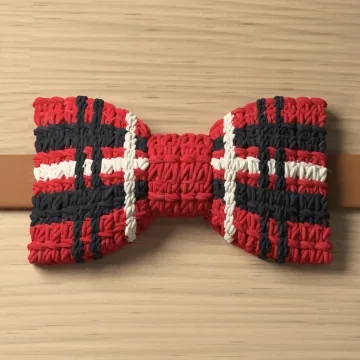
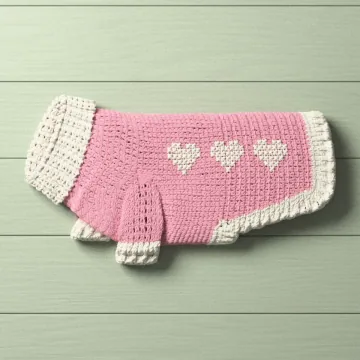
A red bandana in linen stitch with a cream band along the top and a cream edging of two rounds. It is worked from its point upward, and the cream hem at the top is folded down and sewn to make a channel that the dog's own collar runs through, so nothing is tied.