Single crochet
To single crochet, push the hook into the next stitch, pull up a loop, then take the yarn over the hook and pull it through both loops on the hook. It is a short stitch, one step taller than a slip stitch (the shortest stitch), and United Kingdom patterns call it double crochet.
- Abbreviation
- sc
- In UK terms
- double crochet (dc)
- Chart symbol
 a plus sign or an x; both are in use
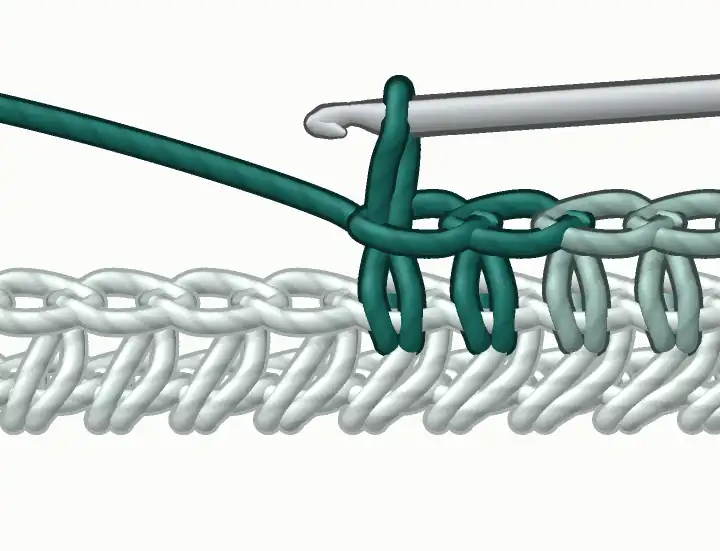
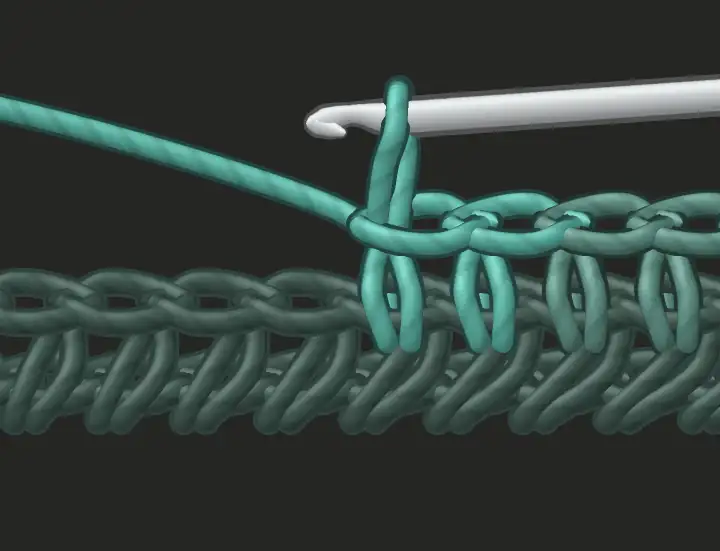
- Hook under both top strands of the next stitch, front to back.
- Yarn over: from behind, over the hook, into its notch.
- Pull the yarn back through the stitch. Two loops.
- Yarn over again.
- Pull through both loops. One single crochet; one loop remains.
- The next stitch is the same.
How to work it
Never held a hook? How to crochet. Red is what is new. Left-handed? Press Left-handed, and every picture turns.
Hook in

These three steps are the stitch, shown part way along a row. (With nothing but a chain on the hook, the hook goes in as steps 4 and 5 show.) Find the next stitch of the row below, the first one you have not yet worked into. Its top is two strands that lie side by side like a V. Push the hook under both strands, from the side that faces you through to the back. The loop you started with is still the only loop on the hook.
Pull up a loop

The head of the hook is now at the back of the work. There, take the yarn that leads to the ball over the hook from back to front: up behind the hook and over its top toward you. Catch it in the head of the hook and draw it back through the stitch, to the side that faces you. There are two loops on the hook.
Close it

Take the yarn over the hook again, the same way, and draw it through both loops on the hook. One loop is left on the hook and the stitch is made.
The first row: count back from the hook

A piece begins with a starting chain: a slip knot and a line of chain stitches, one more than the stitches you want. For 20 stitches, chain 21. Now count back from the hook. The loop on the hook is not a chain. The chain just below it is number 1: skip it. The first single crochet goes into number 2, red in the picture.
The first row: put the hook into a chain

Keep the side of the chain that looks like a row of Vs toward you. Put the hook under the upper strand of the V (1 in the picture), or under that strand and the bump behind it (2). Some patterns ask for the bump alone, with the chain turned over (3). Where the pattern does not say, way 1 will do; choose one and keep to it all along. Then finish as in steps 2 and 3. Work one stitch into each chain, the last into the chain beside the slip knot.
The end of the row: chain 1 and turn

Make one chain: yarn over, and pull it through the loop on the hook. It is red in the picture. Keep the hook in the loop and turn the work sideways, so that the side that was at the back faces you and the hook, which was at the left end of the row, is at the right end. Turn clockwise or counterclockwise, the same way every time.
The next row: begin in the first stitch

The first stitch is the one the chain stands on, red in the picture: the last one you made before you turned. Work the first single crochet into it, under both strands of its top. Skip no stitch, and work nothing into the chain. The last single crochet of the row goes into the last stitch at the far edge.
The chain that is skipped at the start and the chain 1 at each turn are not stitches. A chain of 21 gives 20 stitches, and every row after it has 20.
From the second row on, the hook goes under both strands of the V at the top of the stitch below, unless the pattern asks for the front loop or the back loop only.
Single crochet can be worked in rows that are turned, or round and round without turning.
When it goes wrong
- I chained 21 and my row has 20 stitches.
- That is right. The chain below the loop on the hook is skipped, so a row of single crochet has one stitch fewer than the chain it stands on.
- My piece is getting narrower, or wider.
- A stitch is being lost or added at an edge. Count every row. Work the first stitch of a row into the stitch at the edge you have just turned, which is the last stitch you made, as in step 7. Work nothing into the chain 1, which is not a stitch, and do not leave out the last stitch of the row.
- My starting chain is so tight that the hook will not go into it.
- Many people make their chains too tight. Make the chains loosely. If that does not help, make the chain with a larger hook, and go back to your own hook for the first row.
- I am not sure which way the yarn goes over the hook.
- From the back, over the top, to the front.
- My padded single crochet is not straight at the sides.
- Work as many padded stitches as the plain row under them has: the first into the place its first stitch was worked into, the last into the place of its last. Draw every loop up to the same height, or the edge pulls in. Count at the end of every row.
Left-handed
The pictures show the hook held in the right hand. Press Left-handed, under the moving drawing, and every picture here turns for the left hand. In the words, read left for right.
Patterns that use it
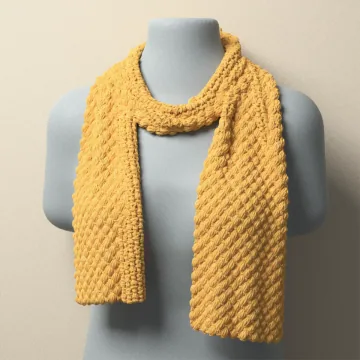
Lemon peel stitch scarf
Beginner 6 3/4 × 60 in
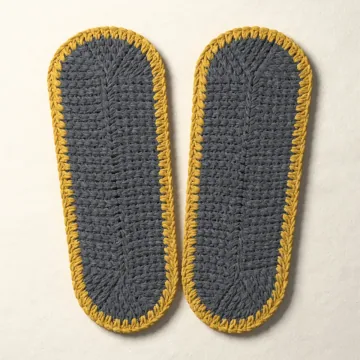
Double slipper soles
Beginner Women's small to men's extra large
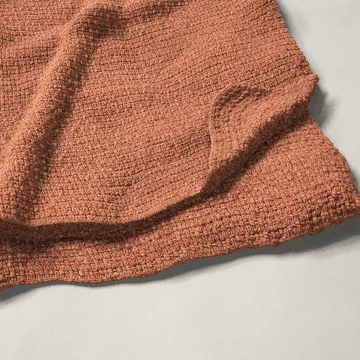
Aligned cobble stitch throw
Beginner 50 1/4 × 60 1/4 in
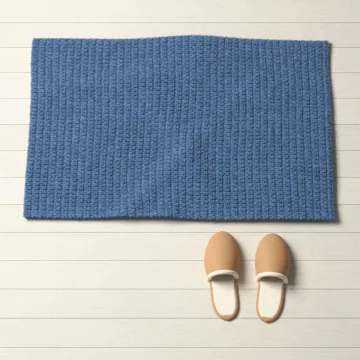
Simple solid rug
Beginner 24 × 36 in
Simple solid baby blanketNo-hook chunky scarf
3,137 patterns use this stitch; these are some of the easiest. Patterns in single crochet only
At a glance
- Level
- Beginner
- Kind
- Basic stitches
- Used for
- first projects: it is the stitch most beginners learn after the chain; edgings and borders, and the base round under a fancier border; toys and other stuffed pieces worked in the round
- Height
- Taller than a slip stitch, shorter than a half double crochet (UK half treble)
- To turn
- Chain 1. It does not count as a stitch.
- On a starting chain
- The first stitch goes in the second chain from the hook. The loop on the hook is not counted.
Tips and variations
Tips
- When a row is finished, count its stitches. Do not count the loop on the hook.
- Work into the very last stitch of the row. It is easy to overlook.
- In turned rows, every other row shows the back of its stitches, which does not look quite like the front. The pictures here draw every row alike.
Variations
- Back loop only. The same stitch with the hook under the back loop alone, the strand of the V that is farther from you. A pattern says so when it wants it.
- Front loop only. The same stitch with the hook under the front loop alone, the strand of the V that is nearer to you. The back loop is left free.
- Ribbing. Rows of single crochet worked in the back loop only make a ridged fabric, and many patterns use it as ribbing. Ribbing can mean other stitches too, so go by the pattern.
- Spike single crochet. A single crochet with the hook pushed in one or more rows below the row you are working, so that a long loop is drawn up over the rows between. Long, deep and elongated single crochet are other names for it.
- Alternating spike. A plain single crochet and a spike by turns along the row. The spike stitch page has rows of this kind.
- Granite stitch. Single crochet and chain 1 by turns, each single crochet in a chain space of the row below. Granite stitch with a single crochet at each edge and alternating spikes both begin on an even number of chains, so bands of the two can stand in one piece.
- Shallow single crochet. Another name for waistcoat stitch: the hook goes into the middle of the stitch below, between its two upright strands, and not under its top.
- Padded single crochet. A row worked over the row before it, so that the old row lies wrapped inside. Work two plain rows, chain 1 and turn. Put the hook into the top of the row before the last, in the very stitch the last row's stitch was worked into, draw the loop up past the last row to the height of the new one, and finish as usual. Do this in every stitch. Then a plain row, then a padded one. The fabric is thick and firm. Another way takes the back loop of the last row and the loop left free in the row below it on the hook together.
- Linked single crochet. Each stitch is joined to the side of the one before, for a dense fabric with no gaps. After a first single crochet, put the hook under the strand at the left side of that stitch (the right side if you are left-handed), then into the next stitch, yarn over and pull up a loop: three loops. Yarn over and pull through all three. Link each stitch to the one just made in the same way. In some patterns a last plain single crochet in the last stitch keeps the count.
Questions
- Is single crochet the same as double crochet?
- In United Kingdom patterns, yes: what the United States calls single crochet (sc) is written double crochet (dc) there. A US double crochet is a taller stitch, which UK patterns call treble.
- Why is the first single crochet in the second chain from the hook?
- The skipped chain stands as tall as the stitch, so the edge of the row is as high as the rest of it. In single crochet that chain is not counted as a stitch.
- How many chains do I need for a row of single crochet?
- One more than the number of stitches you want, because the chain below the loop on the hook is skipped. For 20 stitches, chain 21.
- What does sc, inc mean in a crochet pattern?
- Two things to work, one after the other: sc is one single crochet in the next stitch, and inc is an increase, two single crochets in one stitch. (sc, inc) 6 times uses 12 stitches and makes 18.
- How do I work single crochet over the previous row?
- Put the hook into the place the last row's stitch was worked into, one row down, and draw the loop up over it. One such stitch here and there is a spike; a whole row of them is padded single crochet.
- What does it mean to omit a single crochet?
- Leave it out: pass over that stitch of the row below and work into the next. The row has one stitch fewer, unless the pattern puts a chain in its place.
- Is there a moving picture of single crochet?
- Yes. The drawing at the top of this page shows the stitch one move at a time. Increases and decreases have one on their own pages.