Tie-back daisy headband crochet pattern
Easy · 2 colors · 2 sizes, Women to girls
Size: Women Change size
PDF · US Letter · 6 pages · Change paper
Go to the instructions Row counter
- Size
- About 51¾ in (131 cm) long from point to point and 3½ in (9 cm) wide over the crown, with the edge; each tie about 18 in (46 cm) longTo fit a head of 21 in (53 cm) or more
- Skill
- EasyClusters, simple increases and decreases
- Yarn
- Light (3), about 115 yd (105 m), an estimate
- Hook
- 4 mm (US G-6)
Size 2 choices · Women is pictured
Which size? Headband size chart
Paper for the PDF
For your own crochet, gifts and handmade pieces you sell. Do not resell or share this PDF or copies of it. Selling, classes and kits: the rules
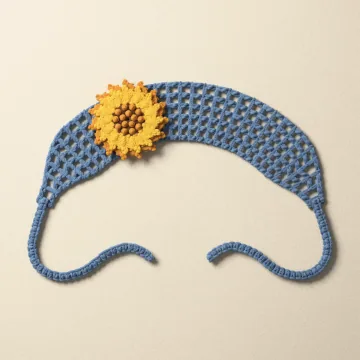
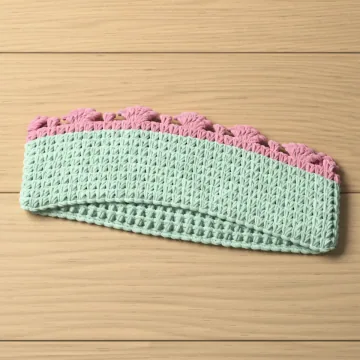
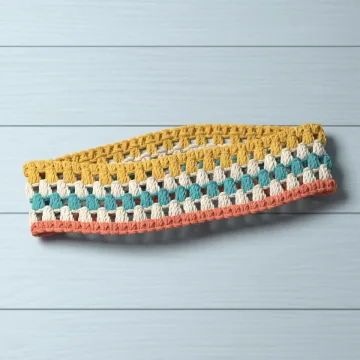
A summer band of cotton with two rows of open daisies, widest over the crown and narrowed in long tapers to ribbon ties that are tied in a bow at the nape. Sky blue, with white daisies and a white edge.
Sizes
- Size
- Women
- Head
- a head of 21 in (53 cm) or more
- Finished size, about
- 51¾ in (131 cm) long, 3½ in (9 cm) wide
- Yarn, an estimate
- about 115 yd (105 m)
Scroll the table sideways to see every column.
Gauge
17 stitches and 19½ rows to 4 in (10 cm) in single crochet.
Check it on the piece itself when the first taper is done, after the third row of 13 stitches that follows the last increase: laid flat, the 13 stitches of a row are about 3 in (7.8 cm) wide, and the last 10 rows are about 2 in (5.2 cm) tall. If they measure more, start again with a smaller hook; if they measure less, with a larger one.
How to measure it
In a thinner or a thicker yarn: how many stitches you need, and how large it comes out.
Before you start
How it is worked: Changing colors
Read the 9 notes
- The ch 1 at the start of a row does not count as a stitch. The ch 3 at the start of a row counts as a dc.
- The band is worked from the point of one tie to the point of the other. Two rows in white make two daisies side by side, of six petals each: the first row draws three petals together, the second row works three more petals into the same place, the top of the CL3.
- Stitches in parentheses are all worked into the one place named after them. "3 sc in next st" puts all 3 stitches in that one place.
- To change yarn, work the last yarn over of the last stitch of the row before with the new yarn. If the old yarn is needed again after only 2 or 4 rows of another yarn, leave it hanging at the edge and bring it loosely up the side when you need it. Otherwise cut it, leaving a tail of about 6 in (15 cm), and leave a tail of the same length on the new yarn.
- Leave a tail of about 6 in (15 cm) when you begin, when you join a yarn and when you fasten off, unless another length is given. The ends that are not sewn with are woven in.
- To join a yarn with a sl st, make a slip knot of it on the hook, put the hook in the place named, yo, and pull through the place and the loop on the hook.
- The part of full width, over the crown, is about 9¼ in (23 cm) long in Women and about 7 in (18 cm) in Girls: 10 blue rows are about 2 in (5.2 cm) tall, and the 2 white rows of a line of daisies about ¾ in (2 cm). Each taper is 16 rows, about 3¼ in (8.5 cm) long. Measure the head round over the ears, take the size whose range it falls in, and let the ties take up the rest; a head of 21 in (53 cm) may take either.
- The edges are worked along the long sides only. The two points of the ties are left as they are.
- Use cotton yarn: it takes up water and stands up to washing.
Instructions
Size: Women Change sizeUS termsUK terms
First read the 9 notes just above.
- “[ ]” is a repeat.
- “( )” goes into one place.
- The count at the end is what the row leaves.
- Tick a row when it is done. Your place is kept in this browser.
- Left-handed? Work everything as it is written, the other way: rows from left to right, rounds clockwise. Left-handed crochet
How to read these rows
Square brackets “[ ]” hold a repeat: work what is inside as many times as it says. Round brackets “( )” inside a line hold stitches that all go into one place. In UK terms sl st is slip stitch, sc is double crochet, dc is treble, sc2tog is double crochet 2 together, sc3tog is double crochet 3 together, sk is miss and yo is yarn round hook.
Band, row 2 in full words: Chain 1, turn; 3 single crochet in next stitch.
Band
Yarns in order of use: A, sky; B, white.
- FoundationWith A, ch 2.
- Row 1RSSc in 2nd ch from hookleaves (1 sc)
- Row 2Ch 1, turn; 3 sc in next stleaves (3 sc)
- Rows 3 to 88Ch 1, turn; sc in each st acrossleaves (3 sc)Next: row 3 of rows 3 to 88
- Row 89Ch 1, turn; 2 sc in next st, sc in next st, 2 sc in next stleaves (5 sc)
- Rows 90 to 92Ch 1, turn; sc in each st acrossleaves (5 sc)Next: row 90 of rows 90 to 92
- Row 93Ch 1, turn; 2 sc in next st, sc in next 3 sts, 2 sc in next stleaves (7 sc)
- Rows 94 to 96Ch 1, turn; sc in each st acrossleaves (7 sc)Next: row 94 of rows 94 to 96
- Row 97Ch 1, turn; 2 sc in next st, sc in next 5 sts, 2 sc in next stleaves (9 sc)
- Rows 98 to 100Ch 1, turn; sc in each st acrossleaves (9 sc)Next: row 98 of rows 98 to 100
- Row 101Ch 1, turn; 2 sc in next st, sc in next 7 sts, 2 sc in next stleaves (11 sc)
- Rows 102 to 104Ch 1, turn; sc in each st acrossleaves (11 sc)Next: row 102 of rows 102 to 104
- Row 105Ch 1, turn; 2 sc in next st, sc in next 9 sts, 2 sc in next stleaves (13 sc)
- Rows 106 to 108Ch 1, turn; sc in each st acrossleaves (13 sc)Next: row 106 of rows 106 to 108
- Row 109With B, ch 3 (counts as dc), turn; repeat: ch 2, CL3 over next 5 sts, ch 2, dc in next st 2 timesleaves (3 dc, 2 CL3, 4 ch-2 sps)
- Row 110Ch 3 (counts as dc), turn; sk next ch-2 sp, (CL, ch 2, CL, ch 2, CL) in next st, sk next ch-2 sp, dc in next st, sk next ch-2 sp, (CL, ch 2, CL, ch 2, CL) in next st, sk next ch-2 sp, dc in top of turning chleaves (3 dc, 6 CL, 4 ch-2 sps)
- Row 111With A, ch 1, turn; sc in first st, sc in next st, sc in next ch-2 sp, sc in next st, sc in next ch-2 sp, sc in next 2 sts, sc in next st, sc in next ch-2 sp, sc in next st, sc in next ch-2 sp, sc in next st, sc in top of turning chleaves (13 sc)
- Row 112Ch 1, turn; sc in each st acrossleaves (13 sc)
- Row 113With B, ch 3 (counts as dc), turn; repeat: ch 2, CL3 over next 5 sts, ch 2, dc in next st 2 timesleaves (3 dc, 2 CL3, 4 ch-2 sps)
- Row 114Ch 3 (counts as dc), turn; sk next ch-2 sp, (CL, ch 2, CL, ch 2, CL) in next st, sk next ch-2 sp, dc in next st, sk next ch-2 sp, (CL, ch 2, CL, ch 2, CL) in next st, sk next ch-2 sp, dc in top of turning chleaves (3 dc, 6 CL, 4 ch-2 sps)
- Row 115With A, ch 1, turn; sc in first st, sc in next st, sc in next ch-2 sp, sc in next st, sc in next ch-2 sp, sc in next 2 sts, sc in next st, sc in next ch-2 sp, sc in next st, sc in next ch-2 sp, sc in next st, sc in top of turning chleaves (13 sc)
- Row 116Ch 1, turn; sc in each st acrossleaves (13 sc)
- Row 117With B, ch 3 (counts as dc), turn; repeat: ch 2, CL3 over next 5 sts, ch 2, dc in next st 2 timesleaves (3 dc, 2 CL3, 4 ch-2 sps)
- Row 118Ch 3 (counts as dc), turn; sk next ch-2 sp, (CL, ch 2, CL, ch 2, CL) in next st, sk next ch-2 sp, dc in next st, sk next ch-2 sp, (CL, ch 2, CL, ch 2, CL) in next st, sk next ch-2 sp, dc in top of turning chleaves (3 dc, 6 CL, 4 ch-2 sps)
- Row 119With A, ch 1, turn; sc in first st, sc in next st, sc in next ch-2 sp, sc in next st, sc in next ch-2 sp, sc in next 2 sts, sc in next st, sc in next ch-2 sp, sc in next st, sc in next ch-2 sp, sc in next st, sc in top of turning chleaves (13 sc)
- Row 120Ch 1, turn; sc in each st acrossleaves (13 sc)
- Row 121With B, ch 3 (counts as dc), turn; repeat: ch 2, CL3 over next 5 sts, ch 2, dc in next st 2 timesleaves (3 dc, 2 CL3, 4 ch-2 sps)
- Row 122Ch 3 (counts as dc), turn; sk next ch-2 sp, (CL, ch 2, CL, ch 2, CL) in next st, sk next ch-2 sp, dc in next st, sk next ch-2 sp, (CL, ch 2, CL, ch 2, CL) in next st, sk next ch-2 sp, dc in top of turning chleaves (3 dc, 6 CL, 4 ch-2 sps)
- Row 123With A, ch 1, turn; sc in first st, sc in next st, sc in next ch-2 sp, sc in next st, sc in next ch-2 sp, sc in next 2 sts, sc in next st, sc in next ch-2 sp, sc in next st, sc in next ch-2 sp, sc in next st, sc in top of turning chleaves (13 sc)
- Row 124Ch 1, turn; sc in each st acrossleaves (13 sc)
- Row 125With B, ch 3 (counts as dc), turn; repeat: ch 2, CL3 over next 5 sts, ch 2, dc in next st 2 timesleaves (3 dc, 2 CL3, 4 ch-2 sps)
- Row 126Ch 3 (counts as dc), turn; sk next ch-2 sp, (CL, ch 2, CL, ch 2, CL) in next st, sk next ch-2 sp, dc in next st, sk next ch-2 sp, (CL, ch 2, CL, ch 2, CL) in next st, sk next ch-2 sp, dc in top of turning chleaves (3 dc, 6 CL, 4 ch-2 sps)
- Row 127With A, ch 1, turn; sc in first st, sc in next st, sc in next ch-2 sp, sc in next st, sc in next ch-2 sp, sc in next 2 sts, sc in next st, sc in next ch-2 sp, sc in next st, sc in next ch-2 sp, sc in next st, sc in top of turning chleaves (13 sc)
- Row 128Ch 1, turn; sc in each st acrossleaves (13 sc)
- Row 129With B, ch 3 (counts as dc), turn; repeat: ch 2, CL3 over next 5 sts, ch 2, dc in next st 2 timesleaves (3 dc, 2 CL3, 4 ch-2 sps)
- Row 130Ch 3 (counts as dc), turn; sk next ch-2 sp, (CL, ch 2, CL, ch 2, CL) in next st, sk next ch-2 sp, dc in next st, sk next ch-2 sp, (CL, ch 2, CL, ch 2, CL) in next st, sk next ch-2 sp, dc in top of turning chleaves (3 dc, 6 CL, 4 ch-2 sps)
- Row 131With A, ch 1, turn; sc in first st, sc in next st, sc in next ch-2 sp, sc in next st, sc in next ch-2 sp, sc in next 2 sts, sc in next st, sc in next ch-2 sp, sc in next st, sc in next ch-2 sp, sc in next st, sc in top of turning chleaves (13 sc)
- Row 132Ch 1, turn; sc in each st acrossleaves (13 sc)
- Row 133With B, ch 3 (counts as dc), turn; repeat: ch 2, CL3 over next 5 sts, ch 2, dc in next st 2 timesleaves (3 dc, 2 CL3, 4 ch-2 sps)
- Row 134Ch 3 (counts as dc), turn; sk next ch-2 sp, (CL, ch 2, CL, ch 2, CL) in next st, sk next ch-2 sp, dc in next st, sk next ch-2 sp, (CL, ch 2, CL, ch 2, CL) in next st, sk next ch-2 sp, dc in top of turning chleaves (3 dc, 6 CL, 4 ch-2 sps)
- Row 135With A, ch 1, turn; sc in first st, sc in next st, sc in next ch-2 sp, sc in next st, sc in next ch-2 sp, sc in next 2 sts, sc in next st, sc in next ch-2 sp, sc in next st, sc in next ch-2 sp, sc in next st, sc in top of turning chleaves (13 sc)
- Rows 136 to 138Ch 1, turn; sc in each st acrossleaves (13 sc)Next: row 136 of rows 136 to 138
- Row 139Ch 1, turn; sc2tog, sc in next 9 sts, sc2togleaves (9 sc, 2 sc2tog)
- Rows 140 to 142Ch 1, turn; sc in each st acrossleaves (11 sc)Next: row 140 of rows 140 to 142
- Row 143Ch 1, turn; sc2tog, sc in next 7 sts, sc2togleaves (7 sc, 2 sc2tog)
- Rows 144 to 146Ch 1, turn; sc in each st acrossleaves (9 sc)Next: row 144 of rows 144 to 146
- Row 147Ch 1, turn; sc2tog, sc in next 5 sts, sc2togleaves (5 sc, 2 sc2tog)
- Rows 148 to 150Ch 1, turn; sc in each st acrossleaves (7 sc)Next: row 148 of rows 148 to 150
- Row 151Ch 1, turn; sc2tog, sc in next 3 sts, sc2togleaves (3 sc, 2 sc2tog)
- Rows 152 to 154Ch 1, turn; sc in each st acrossleaves (5 sc)Next: row 152 of rows 152 to 154
- Row 155Ch 1, turn; sc2tog, sc in next st, sc2togleaves (1 sc, 2 sc2tog)
- Rows 156 to 241Ch 1, turn; sc in each st acrossleaves (3 sc)Next: row 156 of rows 156 to 241
- Row 242Ch 1, turn; sc3togleaves (1 sc3tog)
- EndFasten off.
Right edge
Yarn B, white.
- Lay the piece with the right side up and its last row at the top. Find the side edge on the right and turn the piece a quarter turn to the left, so that this edge is at the top: the end of row 1 is then at its right end and the end of row 242 at its left end. Work along it from right to left. The joining sl st and the first sc both go into the end of row 1, which is the first of the 108 rows named. Each white row gets 2 sc in its end and each blue row 1 sc. "On the right" in the next line is the right of the piece as it lay before the quarter turn: the edge that is now at the top.
- FoundationWork along the ends of the rows on the right of the band, right side facing: 242 row ends.
- Row 1RSJoin B with sl st in end of next row, ch 1, sc in end of each of next 108 rows, repeat: 2 sc in end of each of next 2 rows, sc in end of each of next 2 rows 7 times, sc in end of each of next 106 rowsleaves (256 sc)
- EndFasten off.
Left edge
Yarn B, white.
- Turn the piece half round, right side still facing, so that the other side edge is at the top: the end of row 242 is then at its right end. Work along it from right to left as before. The joining sl st and the first sc both go into the end of row 242. "On the left" in the next line is the left of the piece as it lay at first, with its last row at the top: the edge that is now at the top.
- FoundationWork along the ends of the rows on the left of the band, right side facing: 242 row ends.
- Row 1RSJoin B with sl st in end of next row, ch 1, sc in end of each of next 106 rows, repeat: sc in end of each of next 2 rows, 2 sc in end of each of next 2 rows 7 times, sc in end of each of next 108 rowsleaves (256 sc)
- EndFasten off.
Assembly
- Weave in all the ends.
- To wear it, lay the widest part over the crown of the head and tie the two ties in a bow under the hair at the nape.
Finishing
- Weave in all the ends that are left with the yarn needle, changing direction once or twice.