Cross stitch guide
Cross stitch fabric size chart
The stitched size of a design is its stitches divided by the cloth's stitches to the inch. The cloth to cut is that size plus a margin on every side. The charts below work both out for the common counts, and the last part explains the sizes cloth is sold in, the fat quarter among them.
On this page 15 parts
- The two sums
- Every common count at a glance
- Stitches to centimeters, count by count
- Reading the charts for evenweave and linen
- Size and cloth to cut on 14 count
- Size and cloth to cut on 16 count
- Size and cloth to cut on 18 count
- Size and cloth to cut on 11 count
- How much margin to leave
- The sizes cloth is sold in
- What a fat quarter is
- How many designs a fat quarter holds
- Common mistakes
- Questions people ask
- Where to go next
The two sums
- Stitched size. Divide the design's width in stitches by the stitches to the inch of your cloth. Do the same for the height. On Aida the stitches to the inch are the count. On evenweave and linen worked over two threads, they are half the count.
- Cloth to cut. Add a margin to all four sides. That is twice the margin on the width and twice on the height.
A design 112 by 84 stitches on 14 count is 8 by 6 inches (20.3 by 15.2 cm). With 3 inches (7.5 cm) of margin on every side, cut a piece 14 by 12 inches (36 by 31 cm).
The charts below do both sums. The first gives every common count at a glance. The second turns stitches into centimeters for seven counts side by side. Then each of the four Aida counts has its own chart in inches and centimeters, with the cloth to cut. In those, either number of a pair can be read alone: 100 stitches are the same length across a design as down it.
Every common count at a glance
| Fabric | Stitches to the inch | 100 stitches measure | Tapestry needle | Strands |
|---|---|---|---|---|
| 11 count Aida | 11 | 9 1/8 in (23.1 cm) | Size 22 | 3 |
| 14 count Aida | 14 | 7 1/8 in (18.1 cm) | Size 24 | 2 |
| 16 count Aida | 16 | 6 1/4 in (15.9 cm) | Size 26 | 2 |
| 18 count Aida | 18 | 5 1/2 in (14.1 cm) | Size 26 | 1 or 2 |
| 22 count Hardanger, over one | 22 | 4 1/2 in (11.5 cm) | Size 28 | 1 or 2 |
| 25 count evenweave or linen, over two | 12.5 | 8 in (20.3 cm) | Size 24 | 2 |
| 28 count evenweave or linen, over two | 14 | 7 1/8 in (18.1 cm) | Size 24 | 2 |
| 32 count evenweave or linen, over two | 16 | 6 1/4 in (15.9 cm) | Size 26 | 2 |
Stitches to centimeters, count by count
| Stitches | 11 count Aida | 14 count Aida | 16 count Aida | 18 count Aida | 20 count Aida | 22 count Hardanger, over one | 25 count evenweave or linen, over two |
|---|---|---|---|---|---|---|---|
| 10 | 2.3 cm | 1.8 cm | 1.6 cm | 1.4 cm | 1.3 cm | 1.2 cm | 2.0 cm |
| 20 | 4.6 cm | 3.6 cm | 3.2 cm | 2.8 cm | 2.5 cm | 2.3 cm | 4.1 cm |
| 30 | 6.9 cm | 5.4 cm | 4.8 cm | 4.2 cm | 3.8 cm | 3.5 cm | 6.1 cm |
| 40 | 9.2 cm | 7.3 cm | 6.3 cm | 5.6 cm | 5.1 cm | 4.6 cm | 8.1 cm |
| 50 | 11.5 cm | 9.1 cm | 7.9 cm | 7.1 cm | 6.3 cm | 5.8 cm | 10.2 cm |
| 60 | 13.9 cm | 10.9 cm | 9.5 cm | 8.5 cm | 7.6 cm | 6.9 cm | 12.2 cm |
| 70 | 16.2 cm | 12.7 cm | 11.1 cm | 9.9 cm | 8.9 cm | 8.1 cm | 14.2 cm |
| 80 | 18.5 cm | 14.5 cm | 12.7 cm | 11.3 cm | 10.2 cm | 9.2 cm | 16.3 cm |
| 90 | 20.8 cm | 16.3 cm | 14.3 cm | 12.7 cm | 11.4 cm | 10.4 cm | 18.3 cm |
| 100 | 23.1 cm | 18.1 cm | 15.9 cm | 14.1 cm | 12.7 cm | 11.5 cm | 20.3 cm |
| 120 | 27.7 cm | 21.8 cm | 19.1 cm | 16.9 cm | 15.2 cm | 13.9 cm | 24.4 cm |
| 140 | 32.3 cm | 25.4 cm | 22.2 cm | 19.8 cm | 17.8 cm | 16.2 cm | 28.4 cm |
| 160 | 36.9 cm | 29.0 cm | 25.4 cm | 22.6 cm | 20.3 cm | 18.5 cm | 32.5 cm |
| 180 | 41.6 cm | 32.7 cm | 28.6 cm | 25.4 cm | 22.9 cm | 20.8 cm | 36.6 cm |
| 200 | 46.2 cm | 36.3 cm | 31.8 cm | 28.2 cm | 25.4 cm | 23.1 cm | 40.6 cm |
| 250 | 57.7 cm | 45.4 cm | 39.7 cm | 35.3 cm | 31.8 cm | 28.9 cm | 50.8 cm |
| 300 | 69.3 cm | 54.4 cm | 47.6 cm | 42.3 cm | 38.1 cm | 34.6 cm | 61.0 cm |
Reading the charts for evenweave and linen
Over two threads, an evenweave or linen is the size of the Aida of half its count. So for 28 count over two read the 14 count column, for 32 count over two the 16 count column, and for 36 count over two the 18 count column. 25 count over two has a column of its own, because 12.5 stitches to the inch matches no Aida. The same goes for the four charts below: the 14 count chart is also the chart for 28 count over two.
Size and cloth to cut on 14 count
| Design, in stitches | Stitched size, inches | Stitched size, centimeters | Fabric to cut, inches | Fabric to cut, centimeters |
|---|---|---|---|---|
| 20 × 30 | 1 3/8 × 2 1/8 in | 3.6 × 5.4 cm | 8 × 9 in | 19 × 21 cm |
| 40 × 50 | 2 7/8 × 3 5/8 in | 7.3 × 9.1 cm | 9 × 10 in | 23 × 25 cm |
| 60 × 70 | 4 1/4 × 5 in | 10.9 × 12.7 cm | 11 × 11 in | 26 × 28 cm |
| 80 × 90 | 5 3/4 × 6 3/8 in | 14.5 × 16.3 cm | 12 × 13 in | 30 × 32 cm |
| 100 × 120 | 7 1/8 × 8 5/8 in | 18.1 × 21.8 cm | 14 × 15 in | 34 × 37 cm |
| 140 × 160 | 10 × 11 3/8 in | 25.4 × 29.0 cm | 16 × 18 in | 41 × 45 cm |
| 180 × 200 | 12 7/8 × 14 1/4 in | 32.7 × 36.3 cm | 19 × 21 in | 48 × 52 cm |
| 250 × 300 | 17 7/8 × 21 3/8 in | 45.4 × 54.4 cm | 24 × 28 in | 61 × 70 cm |
The fabric to cut leaves 3 inches (7.5 cm) on every side for framing, rounded up to a whole inch or centimeter. For a design of another size, open the fabric calculator on 80 × 90 stitches at this count and change the numbers.
Size and cloth to cut on 16 count
| Design, in stitches | Stitched size, inches | Stitched size, centimeters | Fabric to cut, inches | Fabric to cut, centimeters |
|---|---|---|---|---|
| 20 × 30 | 1 1/4 × 1 7/8 in | 3.2 × 4.8 cm | 8 × 8 in | 19 × 20 cm |
| 40 × 50 | 2 1/2 × 3 1/8 in | 6.3 × 7.9 cm | 9 × 10 in | 22 × 23 cm |
| 60 × 70 | 3 3/4 × 4 3/8 in | 9.5 × 11.1 cm | 10 × 11 in | 25 × 27 cm |
| 80 × 90 | 5 × 5 5/8 in | 12.7 × 14.3 cm | 11 × 12 in | 28 × 30 cm |
| 100 × 120 | 6 1/4 × 7 1/2 in | 15.9 × 19.1 cm | 13 × 14 in | 31 × 35 cm |
| 140 × 160 | 8 3/4 × 10 in | 22.2 × 25.4 cm | 15 × 16 in | 38 × 41 cm |
| 180 × 200 | 11 1/4 × 12 1/2 in | 28.6 × 31.8 cm | 18 × 19 in | 44 × 47 cm |
| 250 × 300 | 15 5/8 × 18 3/4 in | 39.7 × 47.6 cm | 22 × 25 in | 55 × 63 cm |
The fabric to cut leaves 3 inches (7.5 cm) on every side for framing, rounded up to a whole inch or centimeter. For a design of another size, open the fabric calculator on 80 × 90 stitches at this count and change the numbers.
Size and cloth to cut on 18 count
| Design, in stitches | Stitched size, inches | Stitched size, centimeters | Fabric to cut, inches | Fabric to cut, centimeters |
|---|---|---|---|---|
| 20 × 30 | 1 1/8 × 1 5/8 in | 2.8 × 4.2 cm | 8 × 8 in | 18 × 20 cm |
| 40 × 50 | 2 1/4 × 2 3/4 in | 5.6 × 7.1 cm | 9 × 9 in | 21 × 23 cm |
| 60 × 70 | 3 3/8 × 3 7/8 in | 8.5 × 9.9 cm | 10 × 10 in | 24 × 25 cm |
| 80 × 90 | 4 1/2 × 5 in | 11.3 × 12.7 cm | 11 × 11 in | 27 × 28 cm |
| 100 × 120 | 5 1/2 × 6 5/8 in | 14.1 × 16.9 cm | 12 × 13 in | 30 × 32 cm |
| 140 × 160 | 7 3/4 × 8 7/8 in | 19.8 × 22.6 cm | 14 × 15 in | 35 × 38 cm |
| 180 × 200 | 10 × 11 1/8 in | 25.4 × 28.2 cm | 16 × 18 in | 41 × 44 cm |
| 250 × 300 | 13 7/8 × 16 5/8 in | 35.3 × 42.3 cm | 20 × 23 in | 51 × 58 cm |
The fabric to cut leaves 3 inches (7.5 cm) on every side for framing, rounded up to a whole inch or centimeter. For a design of another size, open the fabric calculator on 80 × 90 stitches at this count and change the numbers.
Size and cloth to cut on 11 count
| Design, in stitches | Stitched size, inches | Stitched size, centimeters | Fabric to cut, inches | Fabric to cut, centimeters |
|---|---|---|---|---|
| 20 × 30 | 1 7/8 × 2 3/4 in | 4.6 × 6.9 cm | 8 × 9 in | 20 × 22 cm |
| 40 × 50 | 3 5/8 × 4 1/2 in | 9.2 × 11.5 cm | 10 × 11 in | 25 × 27 cm |
| 60 × 70 | 5 1/2 × 6 3/8 in | 13.9 × 16.2 cm | 12 × 13 in | 29 × 32 cm |
| 80 × 90 | 7 1/4 × 8 1/8 in | 18.5 × 20.8 cm | 14 × 15 in | 34 × 36 cm |
| 100 × 120 | 9 1/8 × 10 7/8 in | 23.1 × 27.7 cm | 16 × 17 in | 39 × 43 cm |
| 140 × 160 | 12 3/4 × 14 1/2 in | 32.3 × 36.9 cm | 19 × 21 in | 48 × 52 cm |
| 180 × 200 | 16 3/8 × 18 1/8 in | 41.6 × 46.2 cm | 23 × 25 in | 57 × 62 cm |
| 250 × 300 | 22 3/4 × 27 1/4 in | 57.7 × 69.3 cm | 29 × 34 in | 73 × 85 cm |
The fabric to cut leaves 3 inches (7.5 cm) on every side for framing, rounded up to a whole inch or centimeter. For a design of another size, open the fabric calculator on 80 × 90 stitches at this count and change the numbers.
How much margin to leave
The charts above leave 3 inches (7.5 cm) on every side, the margin the fabric calculator uses for a piece that will be framed. The margin is what the piece is stretched, mounted and framed by.
Published advice runs from 2 to 3 inches (5 to 7.5 cm) a side for a framed piece, and more for a large one. A hoop finish, a card or an ornament needs less: the calculator allows 2 inches (5 cm) a side for a hoop and 1.5 inches (4 cm) for an ornament or card. When in doubt, leave more. Spare cloth can be trimmed, and missing cloth cannot be added.
The sizes cloth is sold in
Cross stitch cloth is woven in long rolls called bolts and sold three ways.
- Packaged pieces. Small precut pieces, often of Aida. A piece of 15 by 18 inches (38 by 46 cm) is a common one.
- By length off the bolt. By the yard or the meter, or a part of one. You get the full width of the bolt. Aida is commonly 43 inches (110 cm) wide, and evenweave and linen about 55 inches (140 cm).
- Fat cuts. Pieces cut from a length so that they are closer to square.
What a fat quarter is
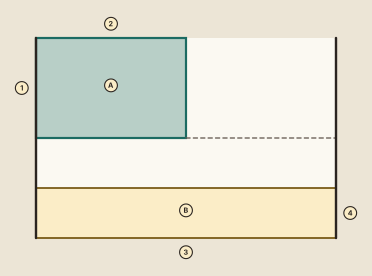
A fat quarter is a quarter of a yard of cloth, cut fat instead of thin. Half a yard is cut from the bolt, and that piece is cut in half across its width. In the picture it is piece A.
- Side 1 is half a yard: 18 inches (45.7 cm).
- Side 2 is half the width of the bolt. Evenweave and linen are woven 54 to 55 inches (about 140 cm) wide, and half of that is 27 inches (68.6 cm).
So a fat quarter of evenweave or linen is 18 by 27 inches (45.7 by 68.6 cm). Aida is woven in more than one width, so its fat quarter varies. Packaged fat quarters of Aida are sold at 18 by 25 inches (45.7 by 63.5 cm), and half of a bolt 43 inches (110 cm) wide is only 21 1/2 inches (54.6 cm). The size follows the bolt, so check the measurements on the label before you buy. Cut by the meter, the same shape is half a meter by half the width: 50 by 55 cm from Aida 110 cm wide.
An ordinary quarter yard is piece B: the full width (side 3) but only 9 inches (22.9 cm) deep (side 4). It has the same area and is too narrow for most designs. That is why needlework cloth is cut fat.
How many designs a fat quarter holds
Take a fat quarter of 18 by 27 inches (45.7 by 68.6 cm), the evenweave and linen size, and keep 3 inches (7.5 cm) of margin on every side. The stitching can then fill 12 by 21 inches (30.5 by 53.3 cm). That is one design of up to:
- 168 by 294 stitches on 14 count, or on 28 count over two
- 192 by 336 stitches on 16 count, or on 32 count over two
- 216 by 378 stitches on 18 count
- 132 by 231 stitches on 11 count
Or cut it up for small pieces. A design of 50 by 50 stitches on 14 count needs a piece 10 by 10 inches (25 by 25 cm) with a framing margin, so a fat quarter gives two, with a strip left over. With the 1.5 inch (4 cm) margin of an ornament or a card, each piece is 7 by 7 inches (18 by 18 cm), and the same fat quarter gives six.
Common mistakes
- Cutting to the stitched size. There is then nothing to frame with. Always add the margin.
- Adding the margin once. It goes on both sides: a 3 inch (7.5 cm) margin adds 6 inches (15 cm) to the width and 6 to the height.
- Using the count of a linen as its stitches to the inch. Over two threads it is half.
- Assuming every fat quarter is the same size. It depends on how wide the bolt was.
Questions people ask
How do I work out the size in centimeters? Divide the stitches by the stitches to the inch, then multiply by 2.54.
Does the color or the make of the cloth change the size? No. Only the count does, and whether you stitch over one or over two.
My design is between two rows of the chart. What then? Use the calculator: it takes any number of stitches and any count from 6 to 40.
Where to go next
For your own numbers, open the fabric calculator, which starts here on the example above. Each count has its own page with strands and needle: 14 count, 16 count, 18 count, 28 count and the less common counts. If the size you get is wrong for your frame, see resizing a pattern. When the cloth is bought, preparing fabric covers cutting it and neatening the edges.