Cross stitch guide
How to wash and clean cross stitch
Wash a finished piece by hand in cool water with a little mild soap, rinse until the water runs clear, roll it in a towel and dry it flat. Test first that no color will run.
On this page 11 parts
Does it need washing?
Usually, yes. Hands leave a little oil on cloth and thread even when they are clean, and with time that oil can show as marks. A wash takes it out, and it relaxes creases and the ring a hoop leaves. Some stitchers wash every piece before they frame it. Others wash only a piece that looks marked.
Cotton floss on Aida, evenweave or linen can nearly always be washed by hand. Leave these alone until you are sure:
- thread or cloth that was dyed by hand
- silk or wool thread
- beads, charms and special threads you know nothing about
- anything old or precious (see the section on old pieces below)
Will the colors run?
Stranded cotton from the large thread makers is dyed to stay put. Strong reds are the colors to watch, and hand-dyed thread and cloth can bleed.
To test, turn the piece over and dab the darkest stitches on the back with a damp white tissue or a cotton swab. If any color comes off on it, do not put the piece in water. For a thread you are unsure of before you begin, work a few stitches on a scrap of the same cloth and soak the scrap.
How to wash it, step by step
- Clean the sink or bowl you will wash in.
- Fill it with cool water. Makers' care instructions say cold. Some stitchers use lukewarm. Nobody uses hot: heat can draw color out of the thread and shrink the cotton.
- Add a little mild soap and stir it in. A drop or two is enough.
- Rinse the piece under cold running water, then lower it into the bowl.
- Let it soak for 10 to 15 minutes. Swish it about gently now and then. Do not scrub, and do not rub the stitches.
- Rinse in clean, cold water three times or more, until no soap is left and the water stays clear.
- Lift it out without wringing. Lay it flat on a clean, dry towel and roll the towel up with the piece inside. Press along the roll so the towel takes up the water.
- Unroll it and lay it flat on a dry towel. Smooth it into shape with your hands without pulling at the edges. Put it face down if you mean to press it while it is still damp.
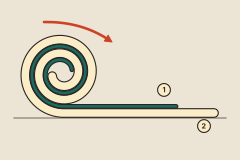
The piece (1) lies flat on the towel (2), and the two are rolled up together.
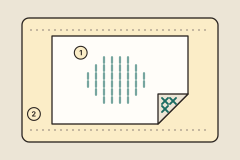
Let it dry flat, in the air. When it is only just damp it is ready to press: how to iron cross stitch has the steps.
If a color runs
Stop washing at once and hold the piece under cold running water. Keep rinsing until the water runs clear. Do not let the piece dry with the stain in it, and do not iron it: heat makes a stain much harder to shift. If a tint is left, soak the piece again in cool, soapy water and rinse again, more than once if need be. Never reach for bleach.
The washing machine
Do not machine wash a piece you mean to frame. The tumbling and the spin are rough on stitches, and thread ends can work loose. Dry cleaning is not advised either.
A bib or a towel that will be laundered in use is a different case. For those, wash the cloth before you stitch, so that it does its shrinking first. A cross stitch quilt is another thing made to be washed: cross stitch quilts covers its first wash.
Which soap
A plain, mild liquid with no bleach in it: dishwashing liquid, a mild detergent, or a clear shampoo with no conditioner. Clear and unscented is the usual advice. Do not use chlorine bleach or a harsh detergent. A wool wash is advised against too.
Washing the cloth before you stitch
Most Aida, evenweave and linen is stitched as it comes. Washing takes out the starch that makes new Aida crisp, and a crisp cloth is easier to count on. Wash first only when the cloth is hand-dyed and might bleed, when it is too stiff for you, or when the finished thing will be laundered. Preparing fabric covers the rest.
Stamped cross stitch
The lines on most stamped kits are printed in ink that dissolves in water, so a soak at the end is how the lines come out. Not every stamped cloth is made that way, so read the instructions that came with the kit before you wet it. Stamped and counted cross stitch explains the two kinds.
Old and yellowed pieces
Museum advice for an old textile is not to wash it. Old cloth tears easily when it is wet, old dyes may not be fixed, and washing a historic piece is work for a textile conservator. What is safe at home is taking off loose dust: cover the nozzle of a vacuum cleaner with fine net or a piece of hosiery and hold it just above the cloth. If you do not know what an old piece is made of, do not soak it. For mold, yellowing and marks, see removing stains from cross stitch.
Stiffening and blocking
A washed piece is softer than it was, because the starch has gone. If the piece has dried out of square, block it: pin it out straight on a board while it is damp and let it dry there. It is the method needlepoint uses, told step by step in how to block needlepoint.
What to do next
Press the piece, then finish it. How to frame a cross stitch goes from the clean piece to the wall, and how to finish and display cross stitch lists every other way to finish one.