Cross stitch guide
Organizing floss and supplies
Keep every color with its number, and keep it clean, dry and out of the sun. Bobbins, floss drops, bags and boxes all do that. A dozen skeins and a full range of colors call for different answers, and so does your patience for winding.
On this page 8 parts
Why a part-used skein needs a home
A new skein is tidy. A part-used one is not: the thread tangles, and once the skein gets thin its paper bands slide off. The band is where the color number is, and without the number you cannot tell one dark green from the next. Every method below does the same two jobs. It stops the tangle, and it keeps the number with the thread.
Four ways to store floss
| Method | What it is | Good for | The catch |
|---|---|---|---|
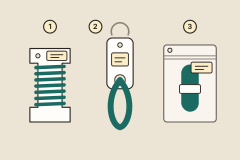
| Bobbins (1) | A small flat piece of card or plastic. You wind the whole skein round it and write the number at the top. Bobbins stand in rows in a box with compartments. | A big collection, with every color in view. | Winding takes time, and the thread comes off the bobbin with kinks in it. |
| Floss drops (2) | A tag with a hole. You loop the thread through the hole and write the number on the tag. The tags hang on a ring. | The colors of one project. Nothing to wind, and no creases. | Meant for a project, not for a whole collection. |
| Bags (3) | One small bag for each color, with the number on the bag. The skein goes in whole, and so do cut lengths. | Mixed skeins and leftovers. A handful of colors to carry. | A large collection in bags is bulky, and finding one color means digging. |
| Whole skeins in boxes or drawers | Skeins left as they are and filed by number or by color family in small lidded boxes or shallow drawers. | A full range of colors with no winding at all. | The band can still slip off a part-used skein, and the number goes with it. |
A bobbin winder, a small crank that holds the bobbin, makes winding faster.
Labeling by number
- Write the number on the bobbin, tag or bag before you take the band off the skein.
- If you use more than one maker's thread, write the maker too. A number means a different color from each maker.
- Choose one order and keep to it. Number order makes a color quick to find when a key asks for it. Order by color family is better when you are choosing colors by eye.
- When a length is left over, put it back with its number: wind it onto its bobbin, or drop it into its bag.
Keeping one project's threads together
When you start a design, pull its colors out of the main store and keep them as a set until the last stitch.
- A ring. Bobbins and drops have a hole for this. Thread the project's colors onto one ring.
- A thread card. Print the pattern's key on card, punch a hole beside each symbol, and loop each color through its own hole. The symbol, the number and the thread now sit side by side.
- A project bag. One bag for the cloth, the chart, the needle and that project's threads. A small project in a bag is also the easiest thing to carry: nothing else has to come with you.
Project bags, cases and travel kits
A project bag does not have to be made for stitching. Any bag, case or zip wallet will do if it has room for the cloth, the chart, the threads, a needle and small scissors.
Inside it, give the small things a place of their own. Put the threads on a ring or in a small bag of their own, and the needle in a needle case or on a needle minder.
A travel kit is the same bag kept packed, ready to pick up on the way out. If you are flying, read cross stitch on a plane before you pack the scissors.
Keeping track of what you own
The cheapest thread is the skein you already have. On this site the thread checklist is a list of DMC colors to tick off as you own them. Paste the DMC numbers from a chart into the thread shopping list and it shows which of them you already own and which to buy.
Storing patterns and charts
Every cross stitch pattern on this site is a PDF. Keep the file, and print a working copy that you are free to mark, fold and wear out. If it is spoiled, print it again. Keeping your place on a chart covers marking the paper as you stitch.
Where to keep it all
Floss keeps for many years if it is clean, dry and out of direct sunlight. Sun fades the colors, and damp shut in with the thread can turn to mold. A closed box in a cupboard is better than a clear box on a windowsill.
Where to go next
Tick off your colors on the thread checklist, then see what to do with leftover floss for the odd lengths that pile up. Cross stitch thread and floss explains the numbers and the makers.