Cross stitch guide
Types of cross stitch
By method there are two kinds: counted cross stitch, worked from a chart onto blank cloth, and stamped cross stitch, worked over a design printed on the cloth. By look there are many, from samplers and silhouettes to pixel art and full coverage pictures. The stitch is the same in all of them.
Two kinds by method
Counted cross stitch. The cloth is blank and the design is a chart. You count squares on the chart and stitch them onto the cloth. Most patterns are counted, and every cross stitch pattern on this site is.
Stamped cross stitch. The design is printed on the cloth in ink that washes out, and you stitch over it. There is nothing to count.
Stamped vs counted cross stitch compares the two and says which suits whom.
The styles, by look
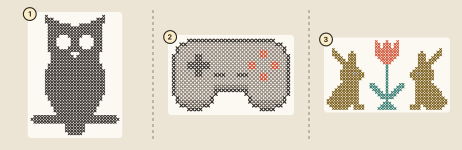
A style is how a design is drawn, not how it is stitched. These are the ones you will meet most, each with the patterns here that show it.
Samplers
A sampler gathers several things on one cloth: an alphabet, a border, small motifs, often a saying. Stitchers once kept samplers as a record of patterns to copy, and later girls stitched them to learn. The samplers here gather small pictures or letters on one cloth: a home, a season, an alphabet. See the sampler patterns.
Silhouettes
A silhouette shows its subject as a solid shape in a single color (1 in the picture). Any detail, such as the owl's eyes, is left as bare cloth. With one thread, there are no color changes to make. See the silhouette patterns.
Pixel art
Pixel art and cross stitch are both made of squares on a grid, so one turns into the other square for square. A pixel art design keeps its hard steps and flat colors on purpose, with the look of an old video game (2). See the pixel art patterns.
One color
The whole design is stitched in a single thread, so there is no key to follow. Stitching in red alone on white cloth is an old tradition in several countries. See the one color and monochrome patterns.
Full coverage
Stitches cover the whole cloth, background included, so the finished piece looks like a painting or a photograph. These are large, shaded designs in many colors. Full coverage cross stitch explains how to manage one.
Folk and primitive
Folk cross stitch comes from the borders and motifs once stitched on household linen and clothes, in geometric and floral patterns. See the folk art patterns. Primitive designs are flat and deliberately plain, in muted old colors, with stiff simple shapes and no shading (3). See the primitive patterns.
Modern
A modern design is flat and reduced to simple shapes, in few colors, with plenty of bare cloth around it. Short sayings, often funny ones, belong here too. See the modern patterns, the minimalist patterns and the sayings.
And more
Other looks have pages of their own: geometric, Nordic and Scandinavian, vintage and cartoons.
Neighbors with their own rules
Two old kinds of counted embroidery sit next to cross stitch.
- Blackwork is stitched in one dark color on light cloth, in small repeating patterns made of straight line stitches, not crosses.
- Assisi work turns a design inside out: the background is filled with cross stitch and the subject is left as bare cloth with an outline round it.
A cross stitch chart can also call for other stitches, such as backstitch and French knots. Basic and specialty stitches sets them out.
Which type to start with
Start with a counted chart in full crosses and few colors. A silhouette or a one color design is the simplest of all: one thread and nothing to match. The Easy patterns here are four colors or fewer and 1,000 stitches or fewer.
Where to go next
Browse every style and subject from the cross stitch hub, or read What is cross stitch? for the craft's history.