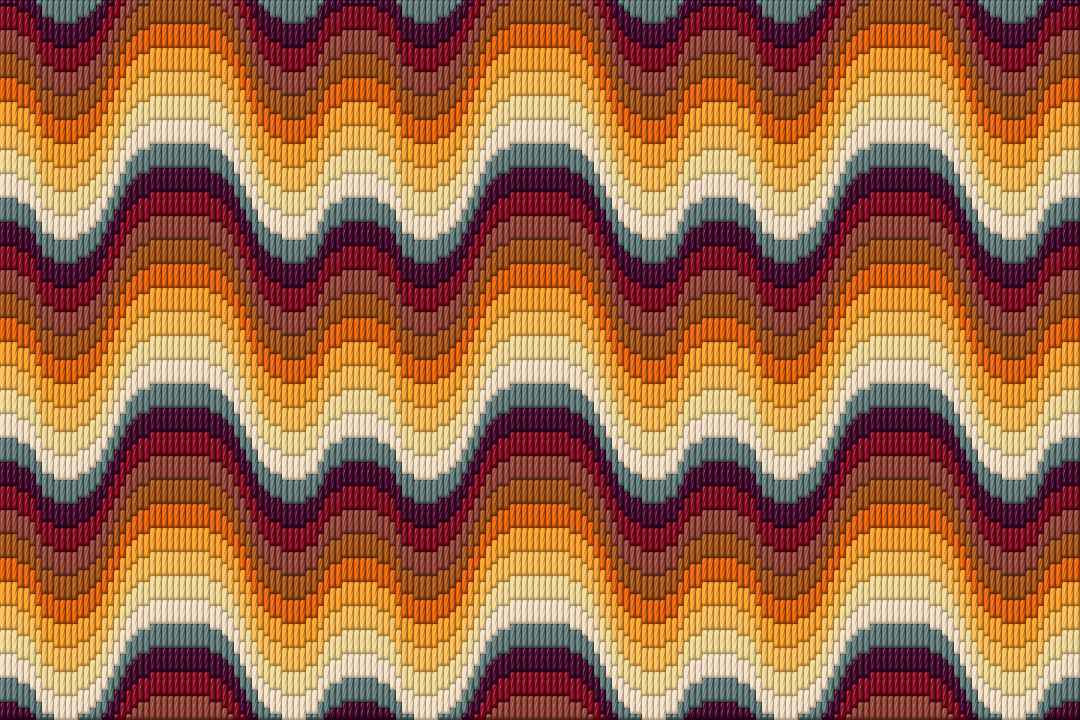
Autumn bargello ripple placemat needlepoint pattern
Intermediate · 10 colors · 18 × 12 in · 10 mesh · 5,526 stitches · upright stitches over 4
Download free PDFPDF, US Letter · 90 KBFor your own stitching, gifts and handmade pieces you sell. Do not resell or share this PDF or copies of it. Selling, classes and kits: the rules
You will need
- Canvas: 10 mesh, cut 22 × 16 in
- Needle: tapestry, size 16 or 18
- Thread: 10 colors of six-strand floss, 8 to 10 strands in the needle, about 40 skeins in all (an estimate)
- Thread: 10 colors of pearl cotton size 3, 2 strands in the needle, about 30 skeins in all (an estimate)
- Thread: 10 colors of tapestry wool, 1 strand in the needle, about 30 skeins in all (an estimate)
- Thread: 10 colors of Persian wool, 3 strands in the needle, about 30 skeins in all (an estimate)
When it is stitched. A finisher, or the fabric and cord to make it up yourself. Ask before you stitch the edge: some finishes take two extra rows, which are worked in tent stitch, outside the pattern. Ways to finish needlepoint
Another thread. Stitch it in six-strand floss, tapestry wool or Persian wool: the skeins follow
Rounded bargello ripples roll across an autumn placemat, a tall wave then a low one, with the tall crest in the middle. The bands run plum, wine, brick, rust, pumpkin, amber, gold, straw and cream, then smoky teal, with no border.
Size and details
The chart is 180 × 120 canvas threads: a placemat on 10 mesh canvas.
Worked in upright stitches over 4 canvas threads; some along the top and bottom edges are shorter, to end at the edge.
Intermediate. The color changes often enough that you count as you go.
How the level is set
Intermediate: 10 colors. The chart is in long upright stitches over more than 1 canvas thread, and every band of color is the same shape as the band above it, so only the first has to be followed from the chart. With 8 colors or more, that is Intermediate, and with fewer it is Beginner.
| Mesh | Stitched size | Canvas to cut |
|---|---|---|
| 10 | 18 × 12 in 45.7 × 30.5 cm | 22 × 16 in 55.9 × 40.6 cm |
| 12 | 15 × 10 in 38.1 × 25.4 cm | 19 × 14 in 48.3 × 35.6 cm |
| 13 | 13.8 × 9.2 in 35.2 × 23.4 cm | 17.8 × 13.2 in 45.3 × 33.6 cm |
| 14 | 12.9 × 8.6 in 32.7 × 21.8 cm | 16.9 × 12.6 in 42.8 × 31.9 cm |
| 18 | 10 × 6.7 in 25.4 × 16.9 cm | 14 × 10.7 in 35.6 × 27.1 cm |
Mesh is the number of canvas threads to the inch; the row in bold is the mesh this chart is sized for. Canvas to cut includes a margin of 2 in (5.1 cm) of bare canvas on every side. Leave at least that much.
Paper for the PDF
Threads and canvas
Pearl cotton size 3: 2 strands in the needle on 10 mesh, and a skein is 16.4 yd. DMC pearl cotton goes by the same numbers, for the shades it is made in.
- DMC 35 Very Dark Fuchsia 2,160 squares about 18 yards 3 skeins
- DMC 815 Medium Garnet 2,160 squares about 18 yards 3 skeins
- DMC 355 Dark Terra Cotta 2,160 squares about 18 yards 3 skeins
- DMC 920 Medium Copper 2,160 squares about 18 yards 3 skeins
- DMC 946 Medium Burnt Orange 2,160 squares about 18 yards 3 skeins
- DMC 741 Medium Tangerine 2,160 squares about 18 yards 3 skeins
- DMC 742 Light Tangerine 2,160 squares about 18 yards 3 skeins
- DMC 3822 Light Straw 2,160 squares about 18 yards 3 skeins
- DMC 739 Ultra Very Light Tan 2,160 squares about 18 yards 3 skeins
- DMC 3768 Dark Gray Green 2,160 squares about 18 yards 3 skeins
21,600 squares in the chart, one canvas thread each, about 180 yards in all. The yards are estimates for 10 mesh. The skeins are estimates too, about 30 in all.
Thread colors are approximate screen matches to DMC numbers. Check against real thread before you buy.
The numbers are DMC color numbers, which its six-strand cotton and its pearl cotton share. Wool and silk are numbered differently: match those by eye. For how many strands and which needle, see which thread suits which mesh.
You also need blank needlepoint canvas (mono canvas) in the mesh you choose (see mesh sizes), cut to the size in the table above, and a tapestry needle.
About the yards and skeins
The yards are of thread as it is threaded in the needle: stitched with several strands together, a thread takes that many yards of single strand for every yard listed. For six-strand cotton on 10 mesh, the thread and needle chart gives 8 to 10 strands.
An estimate. The length of thread one stitch uses on the front and back of the canvas, times the number of stitches, plus 30 percent for starting, ending and the tail left in the needle. Each count is estimated as upright over 4 canvas threads and rounded up to a whole yard, so the yards in all are a little more than the thread calculator gives for every stitch at once. The 30 percent is this site's own choice. The thread calculator works the same estimate for any count and mesh.
Getting it onto your canvas
This is a counted chart of long stitches: one square of the chart is one canvas thread, and each outlined bar is one stitch, over 4 threads where it is not cut short. Find the center of your canvas and the center of the chart (the red arrows above and to the left of the chart). Start there with the row of stitches outlined in red in the file: work it out to both edges and check it against the chart. Then repeat the same line in the next color, above and below. Every other row follows it.
Nothing is printed on the canvas, so no transfer is needed. The bargello stitch shows how one is made, and What is bargello? how a piece goes. Long stitches show less canvas in pearl cotton or wool than in floss: the thread can be chosen over the list.
See the chart on this page
The chart is drawn when this is opened.
Downloads
- Chart for US Letter paper PDF · 5 pages
- Chart for A4 paper PDF · 5 pages
The same chart in squares of about 6 mm, on more pages.
Each file has the thread key, with an estimate of the yards and skeins of each color, and the sizes on its first page, then the chart with every stitch outlined, its symbol in the middle, and a heavier line every ten. A chart too large for one page is divided over several, with two rows or columns repeated in gray where the pages join; a page may be turned on its side for a part that is wider than it is tall.
More patterns like this
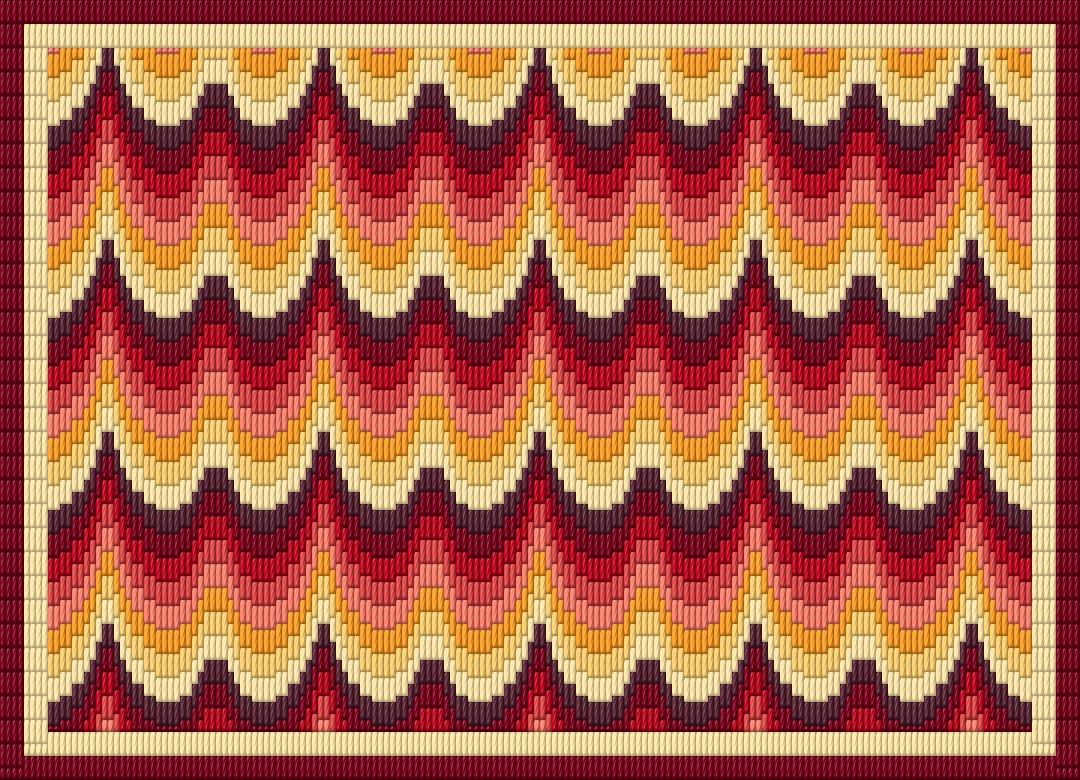
Intermediate 18 × 13 in · 8 colors
Bargello sunset placemat
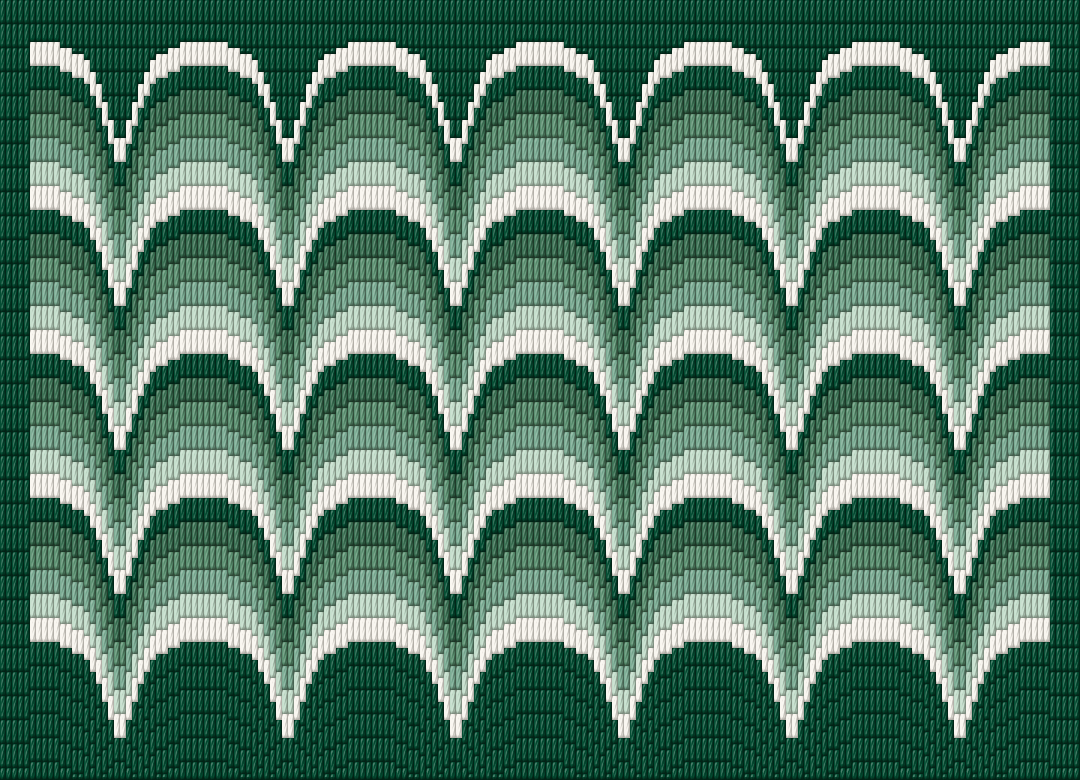
Intermediate 18 × 13 in · 6 colors
Scallop placemat in greens

Intermediate 4.6 × 30.8 in · 8 colors
Bargello flame bell pull in reds
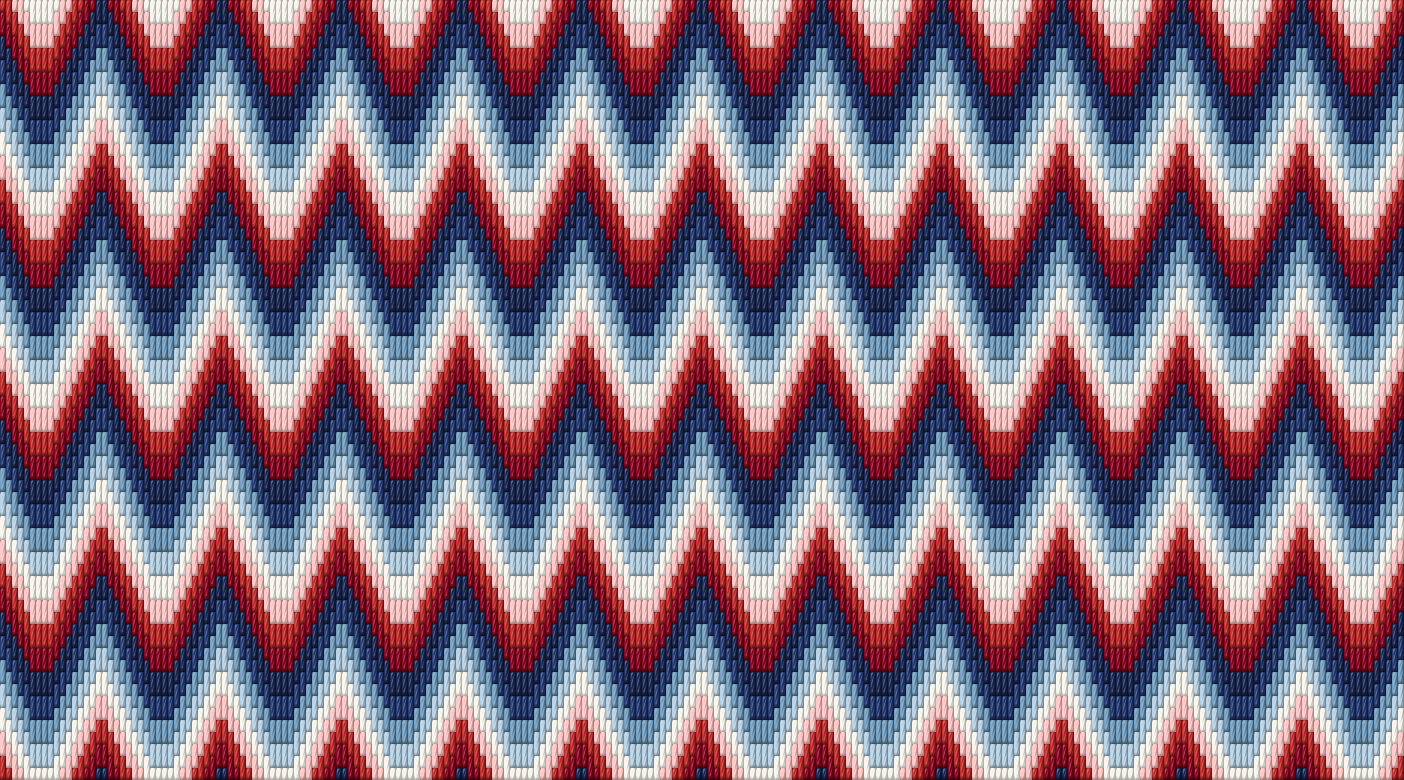
Intermediate 18 × 10 in · 8 colors
Bargello zigzag book cover, navy and red
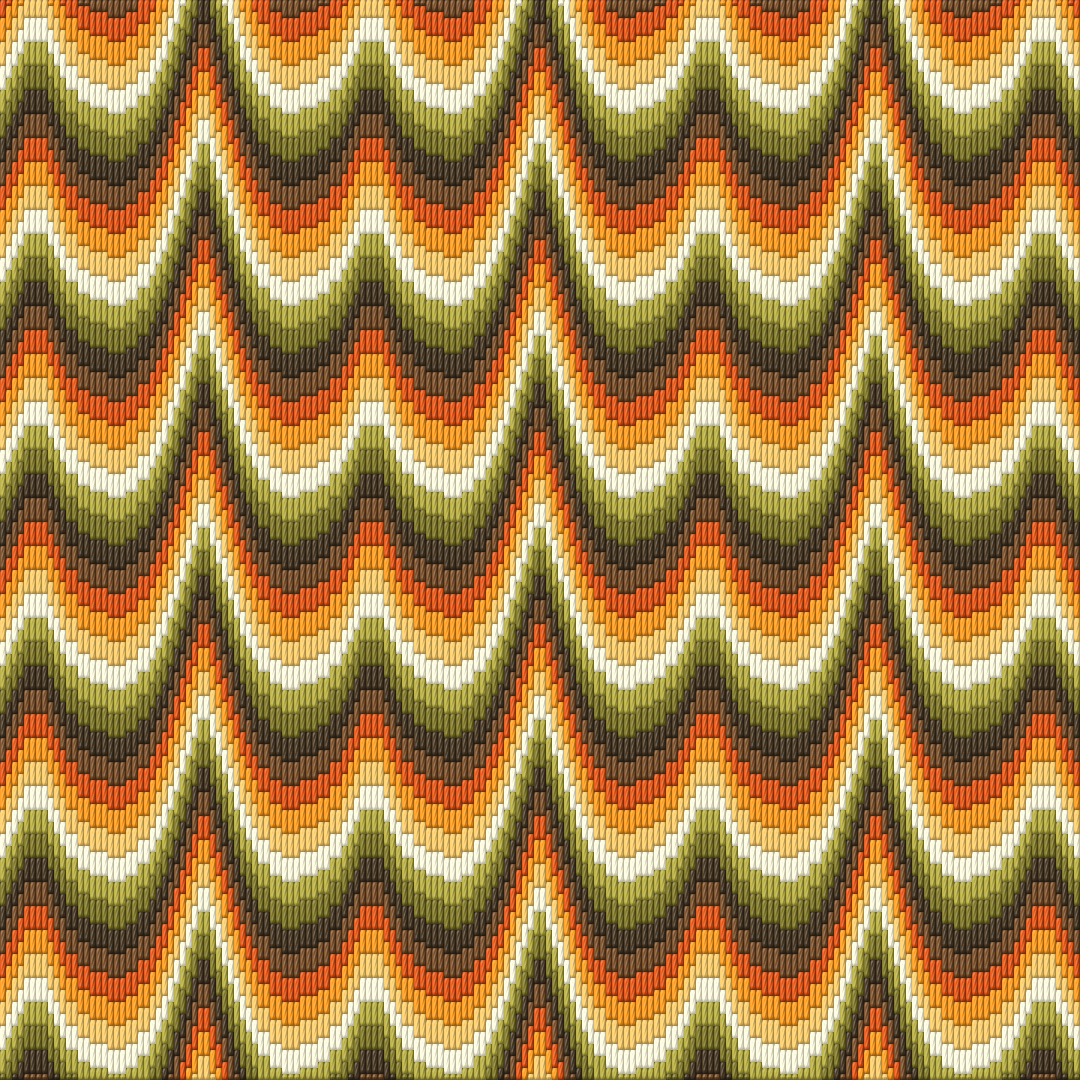
Intermediate 18 × 18 in · 8 colors
Vintage bargello chair seat, tall flames
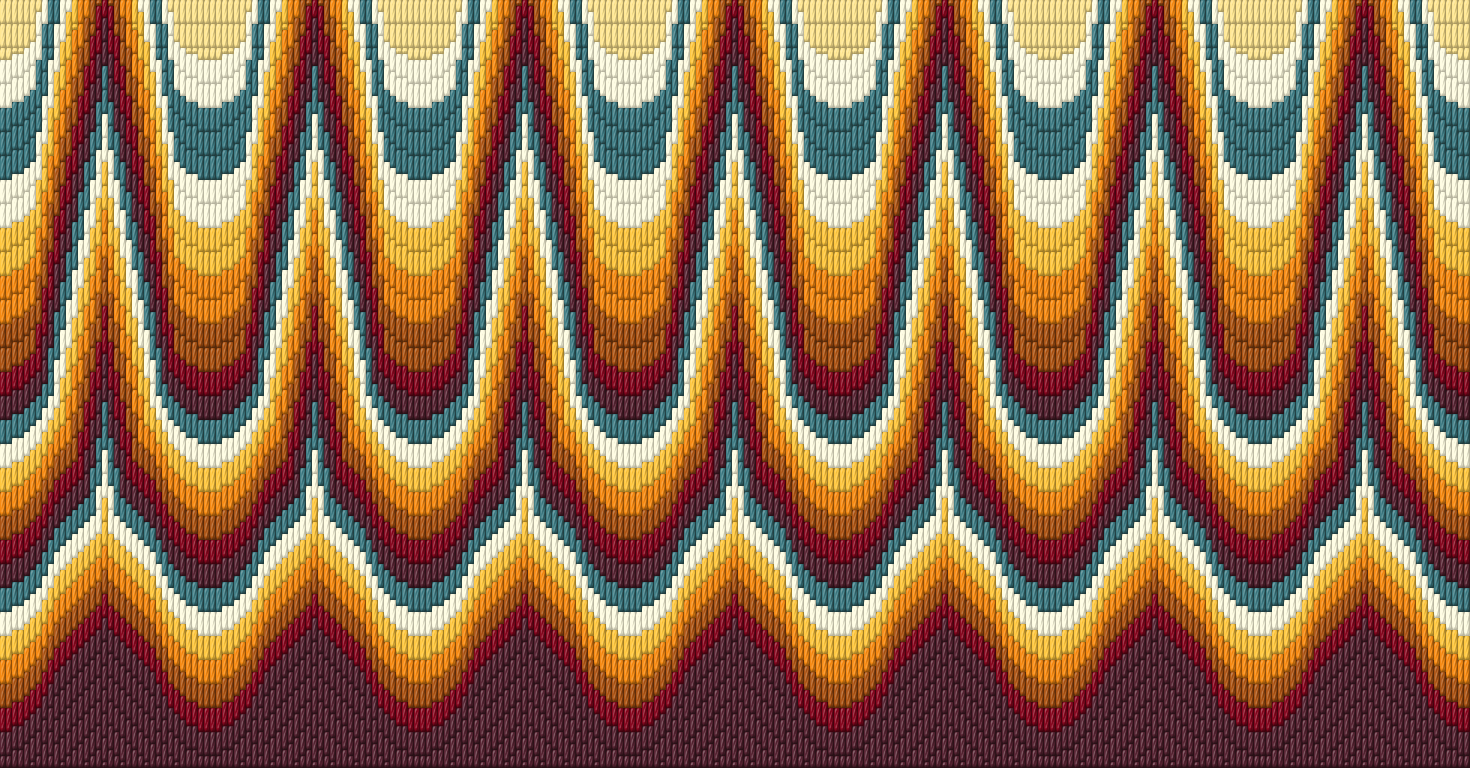
Intermediate 18.8 × 9.8 in · 8 colors
Retro bargello flame lampshade
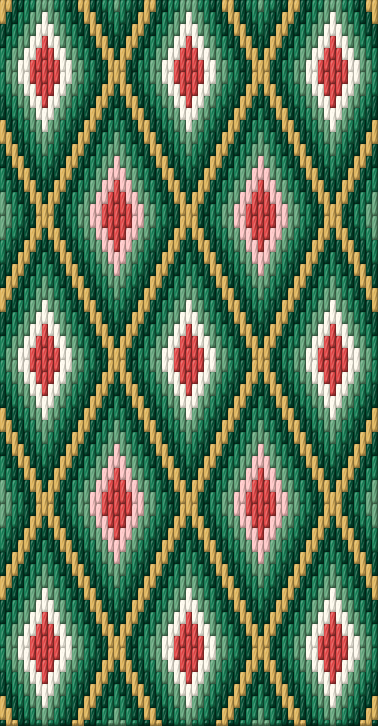
Intermediate 3.5 × 6.7 in · 7 colors
Bargello diamond eyeglass case
Intermediate 10 × 2.2 in · 5 colors
Bargello headband
New to needlepoint? How to needlepoint