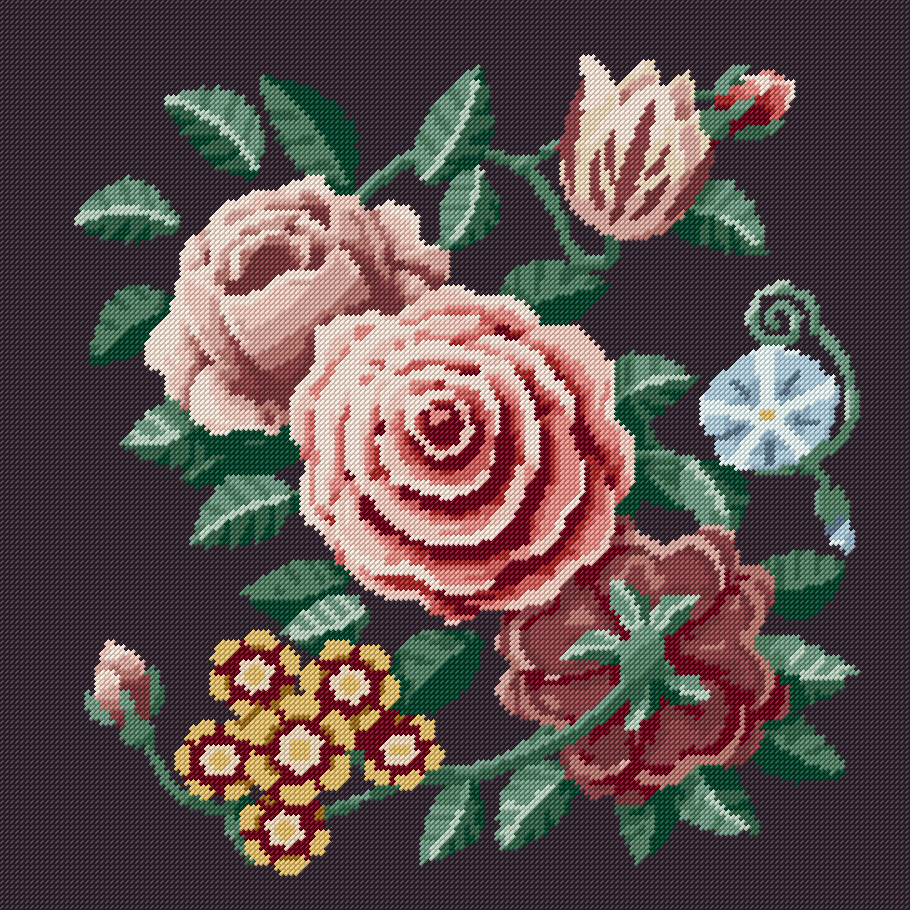
Fine petit point rose pillow, Victorian needlepoint pattern
Advanced · 23 colors · 14 × 14 in · 13 mesh · 33,124 stitches
Download free PDFPDF, US Letter · 205 KBFor your own stitching, gifts and handmade pieces you sell. Do not resell or share this PDF or copies of it. Selling, classes and kits: the rules
You will need
- Canvas: 13 mesh, cut 18 × 18 in
- Needle: tapestry, size 20
- Thread: 23 colors of six-strand floss, 7 or 8 strands in the needle, about 61 skeins in all (an estimate)
- Thread: 23 colors of pearl cotton size 3, 1 strand in the needle, about 32 skeins in all (an estimate)
- Thread: 23 colors of tapestry wool, 1 strand in the needle, about 48 skeins in all (an estimate)
- Thread: 23 colors of Persian wool, 2 strands in the needle, about 41 skeins in all (an estimate)
Make it a pillow. Backing fabric, an insert the size of the stitching or an inch larger, and cord or piping for the edge. The seam takes two rows: stitch two extra rows all round in DMC 3371, the color at its edge. They are in neither the chart nor the counts of thread. How to finish a pillow
Another thread. Stitch it in pearl cotton, tapestry wool or Persian wool: the skeins follow
Three cabbage roses, one full face, one half turned and one seen from behind, sweep in an S with a striped tulip, auriculas and a blue morning glory. The ground is near-black plum, with no border.
Size and details
The chart is 182 × 182 stitches: a pillow on 13 mesh canvas.
Worked in tent stitch throughout.
Advanced. Many colors, or changes every few stitches: best with a canvas or two behind you.
How the level is set
Advanced: 23 colors. Changes of color are about 3 stitches apart, leaving out the background around the picture. With 10 colors or more, closer than 4.5 apart is Advanced, 4.5 or more is Intermediate, and a design with this many colors is never Beginner.
| Mesh | Stitched size | Canvas to cut |
|---|---|---|
| 10 | 18.2 × 18.2 in 46.2 × 46.2 cm | 22.2 × 22.2 in 56.4 × 56.4 cm |
| 12 | 15.2 × 15.2 in 38.5 × 38.5 cm | 19.2 × 19.2 in 48.7 × 48.7 cm |
| 13 | 14 × 14 in 35.6 × 35.6 cm | 18 × 18 in 45.7 × 45.7 cm |
| 14 | 13 × 13 in 33 × 33 cm | 17 × 17 in 43.2 × 43.2 cm |
| 18 | 10.1 × 10.1 in 25.7 × 25.7 cm | 14.1 × 14.1 in 35.8 × 35.8 cm |
Mesh is the number of canvas threads to the inch; the row in bold is the mesh this chart is sized for. Canvas to cut includes a margin of 2 in (5.1 cm) of bare canvas on every side. Leave at least that much.
Paper for the PDF
Threads and canvas
Six-strand floss: 7 or 8 strands in the needle on 13 mesh, counted at 8, and a skein is 8.7 yd. The numbers in the list are its DMC numbers.
- DMC 3371 Black Brown 17,162 stitches about 163 yards 25 skeins
- DMC 814 Dark Garnet 1,560 stitches about 15 yards 3 skeins
- DMC 3770 Very Light Tawny 1,480 stitches about 15 yards 3 skeins
- DMC 501 Dark Blue Green 1,399 stitches about 14 yards 3 skeins
- DMC 500 Very Dark Blue Green 1,384 stitches about 14 yards 3 skeins
- DMC 502 Blue Green 1,361 stitches about 13 yards 2 skeins
- DMC 353 Peach 1,168 stitches about 12 yards 2 skeins
- DMC 503 Medium Blue Green 1,061 stitches about 11 yards 2 skeins
- DMC 3721 Dark Shell Pink 880 stitches about 9 yards 2 skeins
- DMC 221 Very Dark Shell Pink 806 stitches about 8 yards 2 skeins
- DMC 224 Very Light Shell Pink 698 stitches about 7 yards 2 skeins
- DMC 3821 Straw 636 stitches about 7 yards 1 skein
- DMC 352 Light Coral 625 stitches about 6 yards 1 skein
- DMC 223 Light Shell Pink 625 stitches about 6 yards 1 skein
- DMC 504 Very Light Blue Green 493 stitches about 5 yards 1 skein
- DMC 351 Coral 450 stitches about 5 yards 1 skein
- DMC 739 Ultra Very Light Tan 397 stitches about 4 yards 1 skein
- DMC 347 Very Dark Salmon 291 stitches about 3 yards 1 skein
- DMC 827 Very Light Blue 198 stitches about 2 yards 1 skein
- DMC 3756 Ultra Very Light Baby Blue 191 stitches about 2 yards 1 skein
- DMC 813 Light Blue 112 stitches about 2 yards 1 skein
- DMC 782 Dark Topaz 99 stitches about 1 yard 1 skein
- DMC 931 Medium Antique Blue 48 stitches about 1 yard 1 skein
33,124 stitches in the chart, about 325 yards in all. The yards are estimates for 13 mesh. The skeins are estimates too, about 61 in all.
Thread colors are approximate screen matches to DMC numbers. Check against real thread before you buy.
The numbers are DMC color numbers, which its six-strand cotton and its pearl cotton share. Wool and silk are numbered differently: match those by eye. For how many strands and which needle, see which thread suits which mesh.
You also need blank needlepoint canvas (mono canvas) in the mesh you choose (see mesh sizes), cut to the size in the table above, and a tapestry needle.
About the yards and skeins
The yards are of thread as it is threaded in the needle: stitched with several strands together, a thread takes that many yards of single strand for every yard listed. For six-strand cotton on 13 mesh, the thread and needle chart gives 7 or 8 strands.
An estimate. The length of thread one stitch uses on the front and back of the canvas, times the number of stitches, plus 30 percent for starting, ending and the tail left in the needle. Each count is estimated as basketweave or continental and rounded up to a whole yard, so the yards in all are a little more than the thread calculator gives for every stitch at once. The 30 percent is this site's own choice. The thread calculator works the same estimate for any count and mesh.
Getting it onto your canvas
This is a counted chart: one square of the chart is one stitch. Find the center of your canvas and the center of the chart (the red arrows above and to the left of the chart), and count out from there, a color at a time.
Nothing is printed on the canvas, so no transfer is needed. How to needlepoint covers the first stitches.
See the chart on this page
The chart is drawn when this is opened.
It opens in the pattern maker, with your colors and your name on it.
Downloads
- Chart for US Letter paper PDF · 7 pages
- Chart for A4 paper PDF · 6 pages
The same chart in squares of about 6 mm, on more pages.
Each file has the thread key, with an estimate of the yards and skeins of each color, and the sizes on its first page, then the chart with a symbol in every square and a heavier line every ten. A chart too large for one page is divided over several, with two rows or columns repeated in gray where the pages join; a page may be turned on its side for a part that is wider than it is tall.
More patterns like this
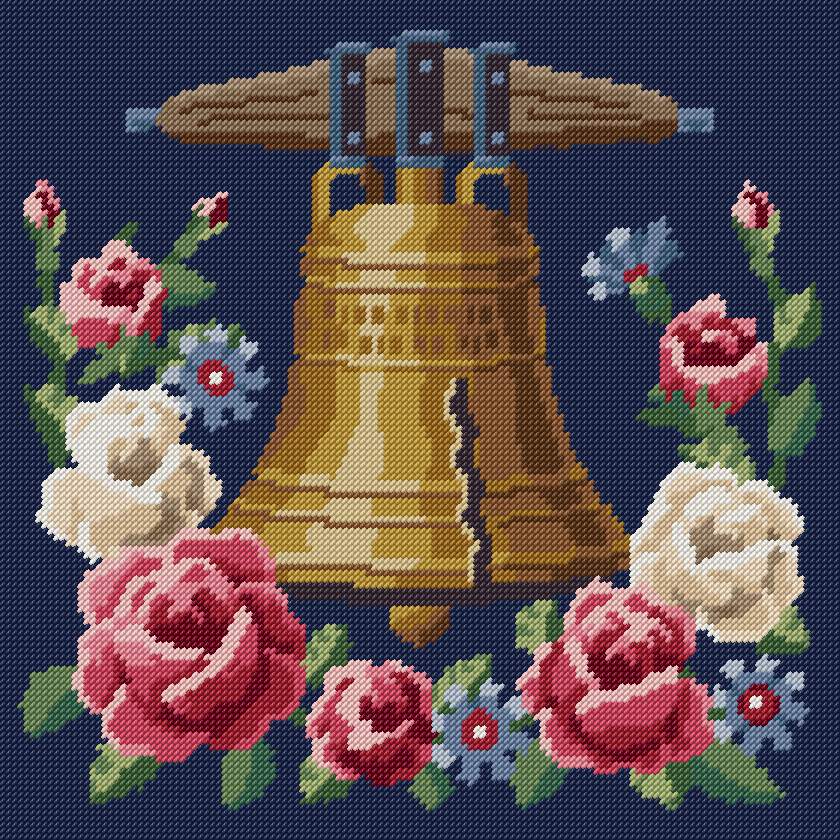
Advanced 19,600 stitches 14 × 14 in · 24 colors
Liberty Bell with red and cream roses
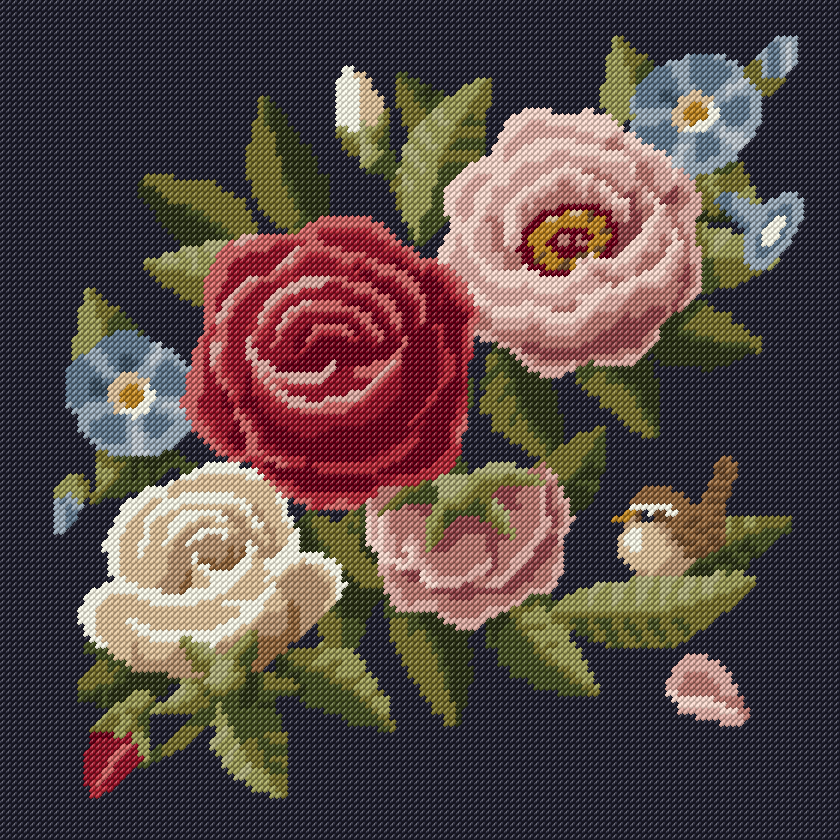
Advanced 19,600 stitches 14 × 14 in · 24 colors
Early 1900s rose bouquet pillow
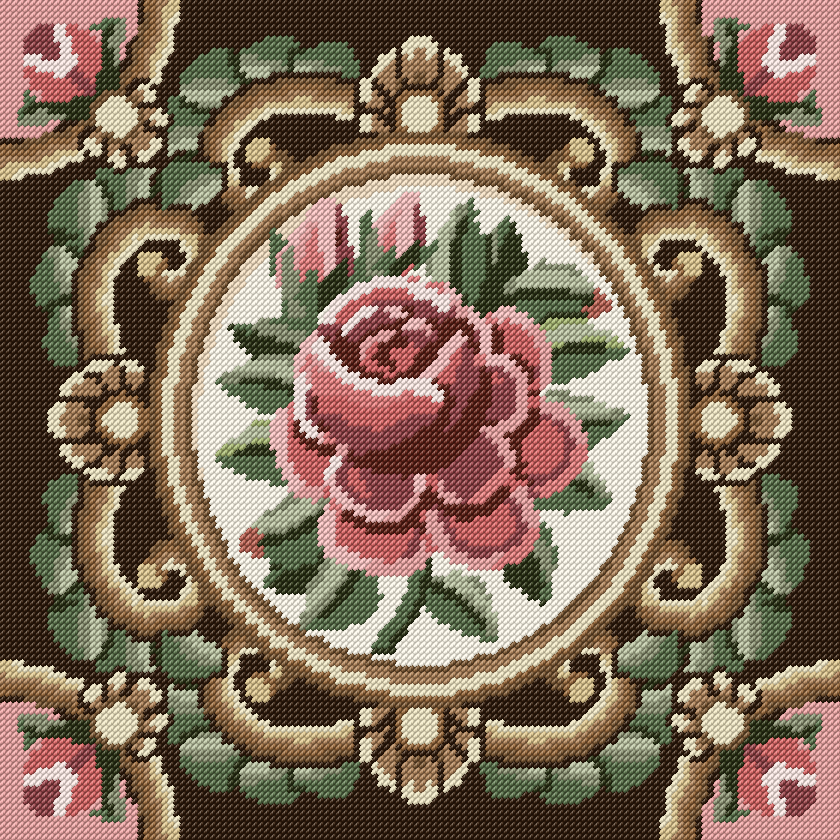
Advanced 19,600 stitches 14 × 14 in · 21 colors
Aubusson rose medallion pillow
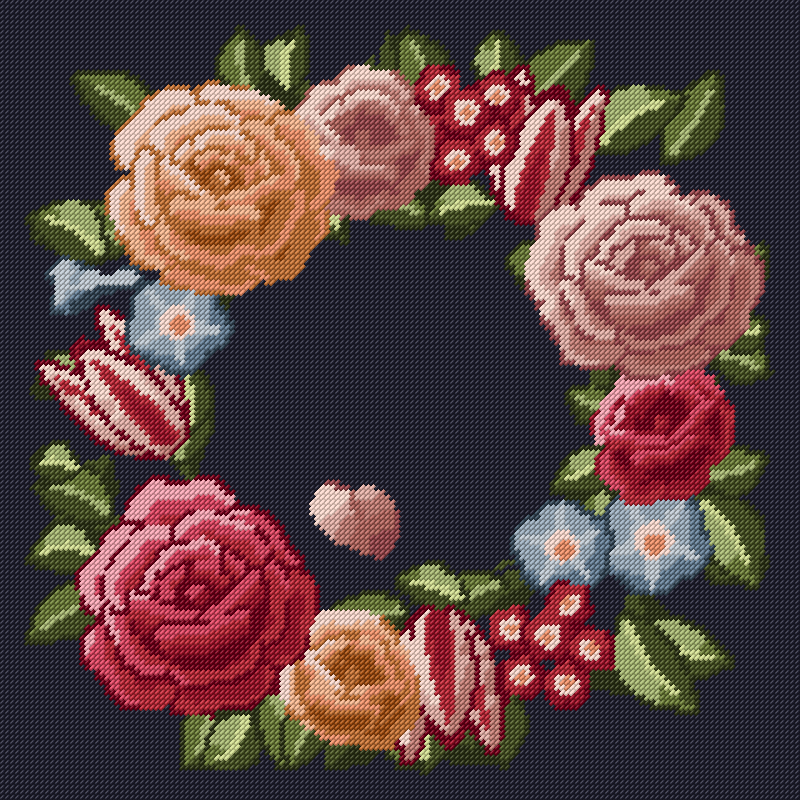
Advanced 25,600 stitches 16 × 16 in · 24 colors
Vintage rose wreath for initials
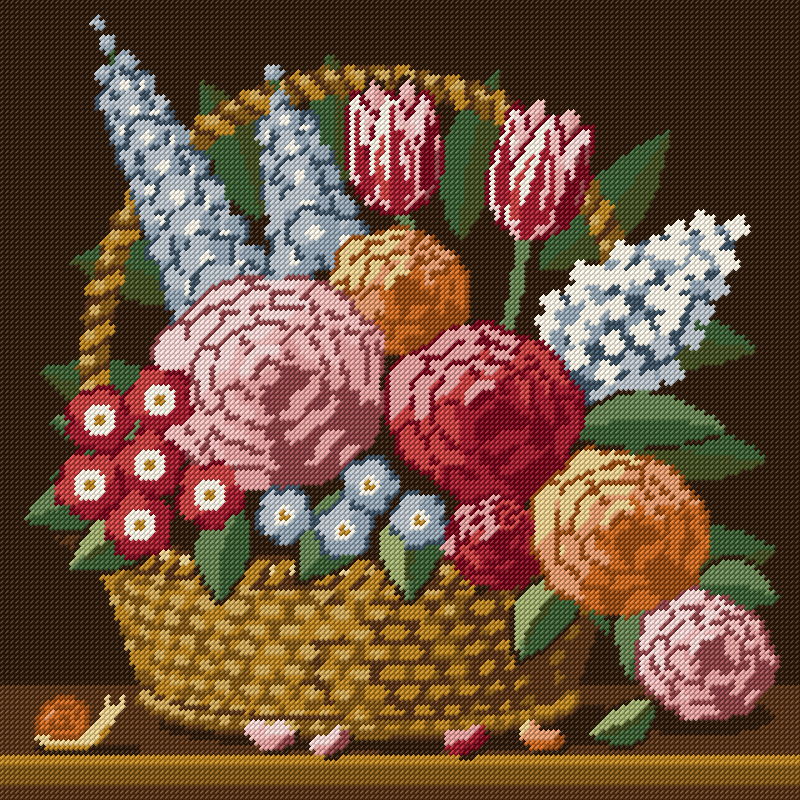
Advanced 25,600 stitches 16 × 16 in · 24 colors
Victorian basket of flowers pillow
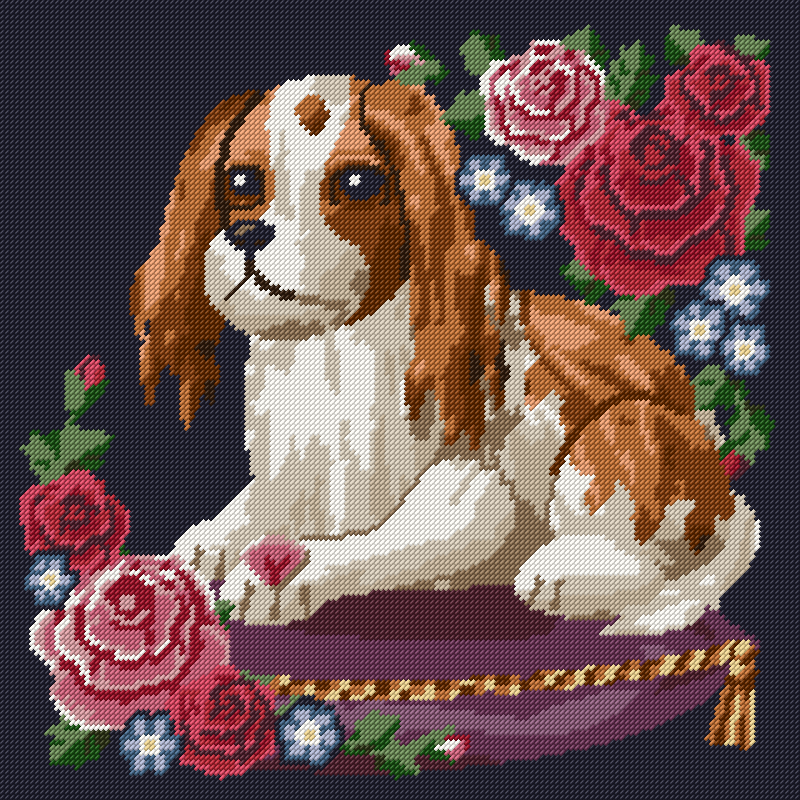
Advanced 25,600 stitches 16 × 16 in · 24 colors
Cavalier spaniel and roses dog pillow
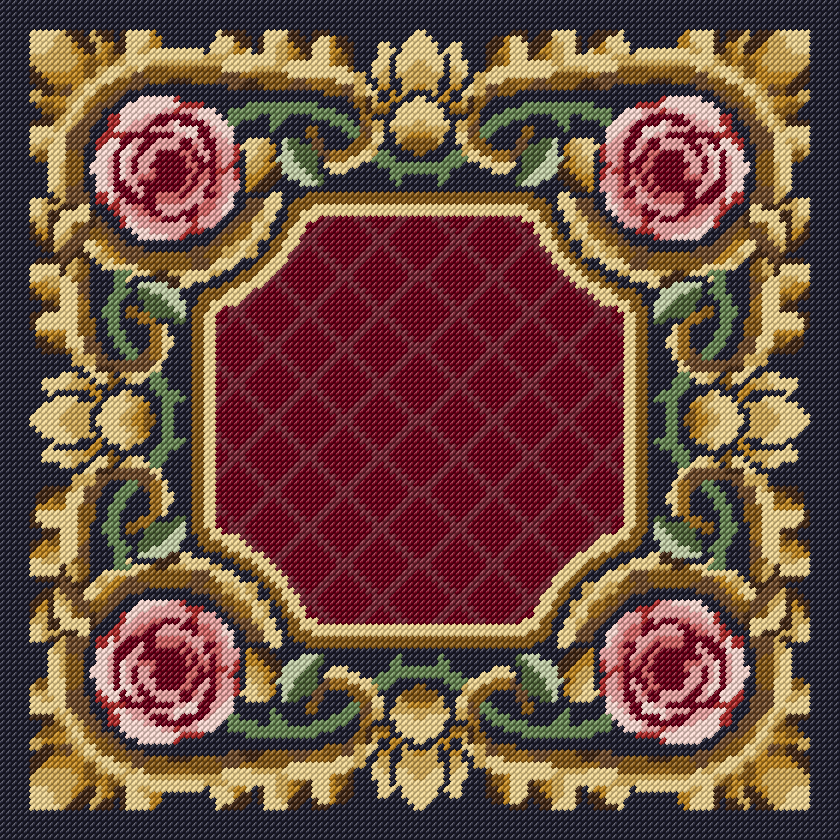
Advanced 19,600 stitches 14 × 14 in · 17 colors
Gilded scroll frame with roses
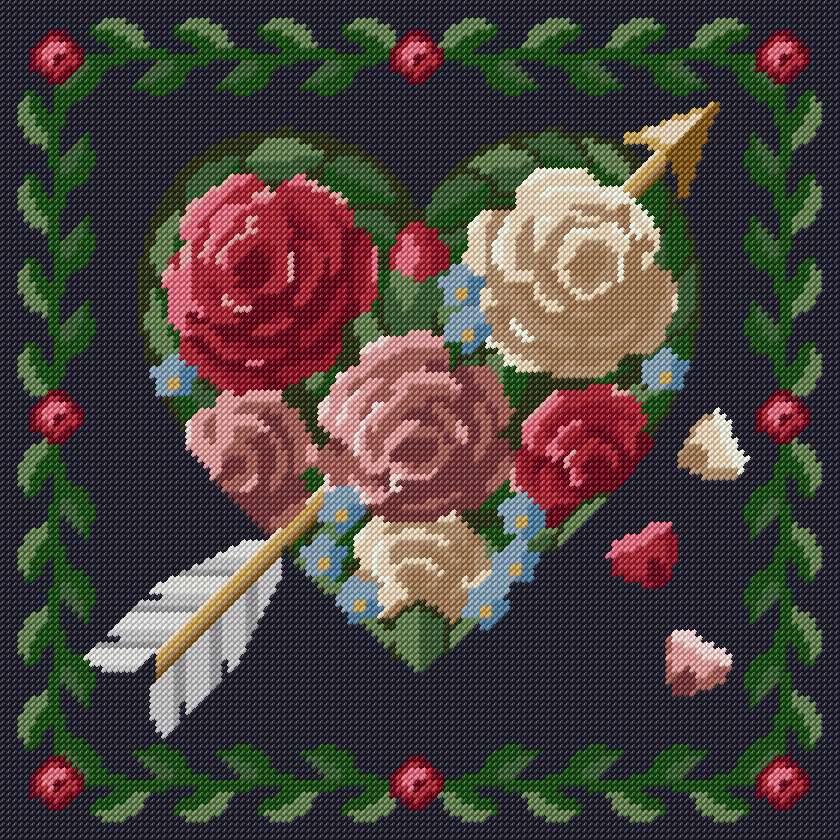
Advanced 19,600 stitches 14 × 14 in · 24 colors
Classic heart and arrow of roses
New to needlepoint? How to needlepoint