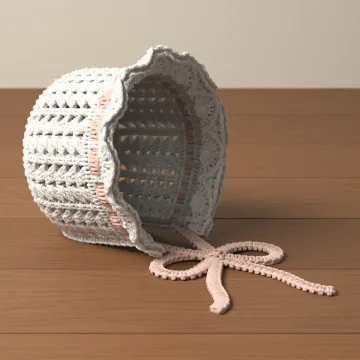
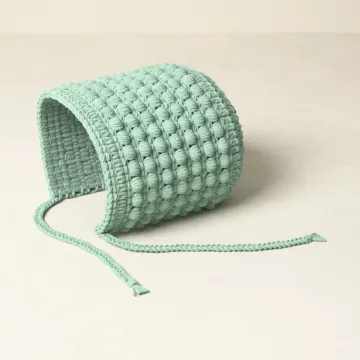
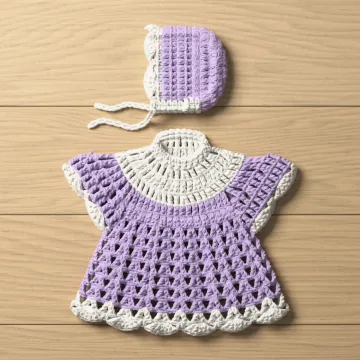
Baby pixie bonnet crochet pattern
Crochet, 12½ in, 2 colors, easy
Size: Baby, 3 to 6 months, head 15 in (38 cm) Change size
NewbornHead 13½ in (34 cm)Finished about 11½ in (29 cm)Baby3 to 6 months, head 15 in (38 cm)Finished about 12½ in (32 cm)Baby6 to 12 months, head 16½ in (42 cm)Finished about 13½ in (34 cm)ToddlerHead 18 in (46 cm)Finished about 15 in (38 cm)
Which size? Hat size chart Choose by the head, not the age: at six months many heads are about 17 in (43 cm) around.
PDF. Prints on US Letter and A4.
What you need
- Yarn A sageabout 55 yd (50 m), an estimatethe bonnet
- Yarn B creamabout 25 yd (23 m), an estimatethe front band, the neck edge and the ties
- Yarn in all
- About 80 yd (73 m) or 30 g, an estimate
- Weight
- Light weight, 3 on the label (UK DK)
- Hook
- 4.5 mm (US 7), or the size that gives you the gauge
- Also
- A soft tape measure, a yarn needle and scissors
- Gauge
- 15 stitches and 16 rows to 4 in (10 cm) in moss stitch, each single crochet and each chain counted as a stitch. How to check it
Instructions Baby, 3 to 6 months, head 15 in (38 cm)
How to read these rows
US terms · Show UK terms
- ch chain, sc single crochet (UK double crochet).
- sk skip, sc2tog 2 sc made into one, dc2tog 2 dc made into one, yo yarn over the hook, RS right side, the one that shows.
- ch-1 sp: the gap under the one chain; the hook goes in the gap.
- [ ] 9 times: work what is inside 9 times in all.
- (19 sc): the stitches you have when the row is done. How to read a pattern.
- Changing colors.
- The chain at the start of a row does not count as a stitch. After the turn the first stitch of the row goes into the stitch nearest the hook, which is the last stitch of the row before, and the last goes into the first stitch of the row before, so that every row has the same number of stitches; the chains skipped at the start of row 1 do not count either.
Yarns in order of use: A, sage; B, cream, to finish.
- StartCh 20.
- Row 1RSSc in 2nd ch from hook and in each ch acrossleaves (19 sc)
- Row 2Ch 1, turn; sc in next st, repeat: ch 1, sk next st, sc in next st 9 timesleaves (10 sc, 9 ch-1 sps)
- Row 3Ch 1, turn; sc in next st, repeat: sc in next ch-1 sp, ch 1, sk next st 8 times, sc in next ch-1 sp, sc in next stleaves (11 sc, 8 ch-1 sps)
- Row 4Ch 1, turn; sc in next st, repeat: ch 1, sk next st, sc in next ch-1 sp 8 times, ch 1, sk next st, sc in next stleaves (10 sc, 9 ch-1 sps)
- Row 5Ch 1, turn; sc in next st, repeat: sc in next ch-1 sp, ch 1, sk next st 8 times, sc in next ch-1 sp, sc in next stleaves (11 sc, 8 ch-1 sps)
- Row 6Ch 1, turn; sc in next st, repeat: ch 1, sk next st, sc in next ch-1 sp 8 times, ch 1, sk next st, sc in next stleaves (10 sc, 9 ch-1 sps)
- Row 7Ch 1, turn; sc in next st, repeat: sc in next ch-1 sp, ch 1, sk next st 8 times, sc in next ch-1 sp, sc in next stleaves (11 sc, 8 ch-1 sps)
- Row 8Ch 1, turn; sc in next st, repeat: ch 1, sk next st, sc in next ch-1 sp 8 times, ch 1, sk next st, sc in next stleaves (10 sc, 9 ch-1 sps)
- Row 9Ch 1, turn; sc in next st, repeat: sc in next ch-1 sp, ch 1, sk next st 8 times, sc in next ch-1 sp, sc in next stleaves (11 sc, 8 ch-1 sps)
- Row 10Ch 1, turn; sc in next st, repeat: ch 1, sk next st, sc in next ch-1 sp 8 times, ch 1, sk next st, sc in next stleaves (10 sc, 9 ch-1 sps)
- Stop and measure now, after row 10.Lay the piece flat without stretching it and measure it along a row: it should be about 5 in (13 cm) long. Then measure across the rows: the 10 rows should measure about 2½ in (6 cm) from the outer side of row 1 to the outer side of row 10. If the 10 rows measure more, begin again with a smaller hook; if less, with a larger one. If the 10 rows measure right and the row is longer or shorter than it should be, keep the hook: the bonnet only comes out that much deeper or shallower.
- Row 11Ch 1, turn; sc in next st, repeat: sc in next ch-1 sp, ch 1, sk next st 8 times, sc in next ch-1 sp, sc in next stleaves (11 sc, 8 ch-1 sps)
- Row 12Ch 1, turn; sc in next st, repeat: ch 1, sk next st, sc in next ch-1 sp 8 times, ch 1, sk next st, sc in next stleaves (10 sc, 9 ch-1 sps)
- Row 13Ch 1, turn; sc in next st, repeat: sc in next ch-1 sp, ch 1, sk next st 8 times, sc in next ch-1 sp, sc in next stleaves (11 sc, 8 ch-1 sps)
- Row 14Ch 1, turn; sc in next st, repeat: ch 1, sk next st, sc in next ch-1 sp 8 times, ch 1, sk next st, sc in next stleaves (10 sc, 9 ch-1 sps)
- Row 15Ch 1, turn; sc in next st, repeat: sc in next ch-1 sp, ch 1, sk next st 8 times, sc in next ch-1 sp, sc in next stleaves (11 sc, 8 ch-1 sps)
- Row 16Ch 1, turn; sc in next st, repeat: ch 1, sk next st, sc in next ch-1 sp 8 times, ch 1, sk next st, sc in next stleaves (10 sc, 9 ch-1 sps)
- Row 17Ch 1, turn; sc in next st, repeat: sc in next ch-1 sp, ch 1, sk next st 8 times, sc in next ch-1 sp, sc in next stleaves (11 sc, 8 ch-1 sps)
- Row 18Ch 1, turn; sc in next st, repeat: ch 1, sk next st, sc in next ch-1 sp 8 times, ch 1, sk next st, sc in next stleaves (10 sc, 9 ch-1 sps)
- Row 19Ch 1, turn; sc in next st, repeat: sc in next ch-1 sp, ch 1, sk next st 8 times, sc in next ch-1 sp, sc in next stleaves (11 sc, 8 ch-1 sps)
- Row 20Ch 1, turn; sc in next st, repeat: ch 1, sk next st, sc in next ch-1 sp 8 times, ch 1, sk next st, sc in next stleaves (10 sc, 9 ch-1 sps)
- Row 21Ch 1, turn; sc in next st, repeat: sc in next ch-1 sp, ch 1, sk next st 8 times, sc in next ch-1 sp, sc in next stleaves (11 sc, 8 ch-1 sps)
- Row 22Ch 1, turn; sc in next st, repeat: ch 1, sk next st, sc in next ch-1 sp 8 times, ch 1, sk next st, sc in next stleaves (10 sc, 9 ch-1 sps)
- Row 23Ch 1, turn; sc in next st, repeat: sc in next ch-1 sp, ch 1, sk next st 8 times, sc in next ch-1 sp, sc in next stleaves (11 sc, 8 ch-1 sps)
- Row 24Ch 1, turn; sc in next st, repeat: ch 1, sk next st, sc in next ch-1 sp 8 times, ch 1, sk next st, sc in next stleaves (10 sc, 9 ch-1 sps)
- Row 25Ch 1, turn; sc in next st, repeat: sc in next ch-1 sp, ch 1, sk next st 8 times, sc in next ch-1 sp, sc in next stleaves (11 sc, 8 ch-1 sps)
- Row 26Ch 1, turn; sc in next st, repeat: ch 1, sk next st, sc in next ch-1 sp 8 times, ch 1, sk next st, sc in next stleaves (10 sc, 9 ch-1 sps)
- Row 27Ch 1, turn; sc in next st, repeat: sc in next ch-1 sp, ch 1, sk next st 8 times, sc in next ch-1 sp, sc in next stleaves (11 sc, 8 ch-1 sps)
- Row 28Ch 1, turn; sc in next st, repeat: ch 1, sk next st, sc in next ch-1 sp 8 times, ch 1, sk next st, sc in next stleaves (10 sc, 9 ch-1 sps)
- Row 29Ch 1, turn; sc in next st, repeat: sc in next ch-1 sp, ch 1, sk next st 8 times, sc in next ch-1 sp, sc in next stleaves (11 sc, 8 ch-1 sps)
- Row 30Ch 1, turn; sc in next st, repeat: ch 1, sk next st, sc in next ch-1 sp 8 times, ch 1, sk next st, sc in next stleaves (10 sc, 9 ch-1 sps)
- Row 31Ch 1, turn; sc in next st, repeat: sc in next ch-1 sp, ch 1, sk next st 8 times, sc in next ch-1 sp, sc in next stleaves (11 sc, 8 ch-1 sps)
- Row 32Ch 1, turn; sc in next st, repeat: ch 1, sk next st, sc in next ch-1 sp 8 times, ch 1, sk next st, sc in next stleaves (10 sc, 9 ch-1 sps)
- Row 33Ch 1, turn; sc in next st, repeat: sc in next ch-1 sp, ch 1, sk next st 8 times, sc in next ch-1 sp, sc in next stleaves (11 sc, 8 ch-1 sps)
- Row 34Ch 1, turn; sc in next st, repeat: ch 1, sk next st, sc in next ch-1 sp 8 times, ch 1, sk next st, sc in next stleaves (10 sc, 9 ch-1 sps)
- Row 35Ch 1, turn; sc in next st, repeat: sc in next ch-1 sp, ch 1, sk next st 8 times, sc in next ch-1 sp, sc in next stleaves (11 sc, 8 ch-1 sps)
- Row 36Ch 1, turn; sc in next st, repeat: ch 1, sk next st, sc in next ch-1 sp 8 times, ch 1, sk next st, sc in next stleaves (10 sc, 9 ch-1 sps)
- Row 37Ch 1, turn; sc in next st, repeat: sc in next ch-1 sp, ch 1, sk next st 8 times, sc in next ch-1 sp, sc in next stleaves (11 sc, 8 ch-1 sps)
- Row 38Ch 1, turn; sc in next st, repeat: ch 1, sk next st, sc in next ch-1 sp 8 times, ch 1, sk next st, sc in next stleaves (10 sc, 9 ch-1 sps)
- Row 39Ch 1, turn; sc in next st, repeat: sc in next ch-1 sp, ch 1, sk next st 8 times, sc in next ch-1 sp, sc in next stleaves (11 sc, 8 ch-1 sps)
- Row 40Ch 1, turn; sc in next st, repeat: ch 1, sk next st, sc in next ch-1 sp 8 times, ch 1, sk next st, sc in next stleaves (10 sc, 9 ch-1 sps)
- Row 41Ch 1, turn; sc in next st, repeat: sc in next ch-1 sp, ch 1, sk next st 8 times, sc in next ch-1 sp, sc in next stleaves (11 sc, 8 ch-1 sps)
- Row 42Ch 1, turn; sc in next st, repeat: ch 1, sk next st, sc in next ch-1 sp 8 times, ch 1, sk next st, sc in next stleaves (10 sc, 9 ch-1 sps)
- Row 43Ch 1, turn; sc in next st, repeat: sc in next ch-1 sp, ch 1, sk next st 8 times, sc in next ch-1 sp, sc in next stleaves (11 sc, 8 ch-1 sps)
- Row 44Ch 1, turn; sc in next st, repeat: ch 1, sk next st, sc in next ch-1 sp 8 times, ch 1, sk next st, sc in next stleaves (10 sc, 9 ch-1 sps)
- Row 45Ch 1, turn; sc in next st, repeat: sc in next ch-1 sp, ch 1, sk next st 8 times, sc in next ch-1 sp, sc in next stleaves (11 sc, 8 ch-1 sps)
- Row 46Ch 1, turn; sc in next st, repeat: ch 1, sk next st, sc in next ch-1 sp 8 times, ch 1, sk next st, sc in next stleaves (10 sc, 9 ch-1 sps)
- Row 47Ch 1, turn; sc in next st, repeat: sc in next ch-1 sp, ch 1, sk next st 8 times, sc in next ch-1 sp, sc in next stleaves (11 sc, 8 ch-1 sps)
- Row 48Ch 1, turn; sc in next st, repeat: ch 1, sk next st, sc in next ch-1 sp 8 times, ch 1, sk next st, sc in next stleaves (10 sc, 9 ch-1 sps)
- Row 49Ch 1, turn; sc in next st, repeat: sc in next ch-1 sp, ch 1, sk next st 8 times, sc in next ch-1 sp, sc in next stleaves (11 sc, 8 ch-1 sps)
- Row 50Ch 1, turn; sc in next 2 sts, repeat: sc in next ch-1 sp, sc in next st 8 times, sc in next stleaves (19 sc)
- EndFasten off, leaving a tail of 25 in (64 cm) for the seam.
Assembly
- Back seam: the piece has two long edges, made of the ends of its rows. The back edge is the one where the long tail hangs; the front edge is the other one, where the beginning tail hangs. Fold the piece in half with the right side in (the right side is the one that faced you in row 1), so that the last row lies against the beginning chain and the two halves of the back edge lie on each other. With the long tail whip stitch the back edge together from the corner where that tail hangs up to the fold, the end of one row to the end of one row, 25 rows on each side. Fasten off and turn the bonnet right side out. Seam and fold meet in the point at the back of the head: push it out with a finger. The long edge that is still open is the front, round the face; the beginning chain and the last row lie beside each other as the neck.
- Front band, in yarn B, worked in rows. Hold the bonnet with the right side toward you and the front edge at the top. Row 1 (RS): join yarn B with a slip stitch in the end of row 50, the last row of the bonnet, which lies at the right-hand corner, ch 1, 1 single crochet in the end of each row, the first of them in the same place as the slip stitch (50 sc). Rows 2 to 4: ch 1, turn; single crochet in the back loop only of each stitch across (50 sc). Back loop only: of the two loops at the top of a stitch work under the one that lies farther from you. Fasten off.
- Neck edge and ties, in yarn B, worked once along the neck. Hold the bonnet with the right side toward you and the neck edge at the top. First tie: join yarn B with a slip stitch in the right-hand front corner, in the outer end of the front band, ch 46, slip stitch in the 2nd chain from the hook and in each chain back to the bonnet (45 slip stitches). Neck: ch 1, 1 single crochet in the end of each of the 4 rows of the front band, the first of them in the same place as the slip stitch that joined the yarn (4 sc); along the first short edge [1 single crochet in the next stitch, sc2tog over the next 2 stitches] 6 times, 1 single crochet in the last stitch (13 sc); pass the seam without a stitch and work along the second short edge in the same way (13 sc); 1 single crochet in the end of each of the 4 rows of the front band (4 sc): 34 single crochet in all. One of the two short edges is the beginning chain: there the stitches go into the chains, one chain counting as one stitch. The sc2tog, single crochet 2 together, is worked so: pull up a loop in each of the next 2 stitches, yarn over and pull through all 3 loops (UK dc2tog). Second tie: ch 46, slip stitch in the 2nd chain from the hook and in each chain back to the bonnet (45 slip stitches), slip stitch in the last single crochet. Fasten off. The neck edge should measure about 9 in (23 cm) and each tie about 12 in (30 cm).
Finishing
- Weave in every end on the inside of the bonnet.
About
A pixie bonnet from one strip of moss stitch, single crochet (UK double crochet) and chains, seamed to a soft point, with a ridged band, in Light (3) yarn. It is written in 4 sizes, for heads from 13½ in (34 cm) to 18 in (46 cm) round. Every row is written with its stitch count.