Cluster stitch
A cluster stitch is several unfinished stitches closed together with one pull through every loop on the hook. The one met most often is the 3-dc cluster: three unfinished stitches of double crochet (UK treble) in one stitch or space, closed under one top. A bobble is a bigger cluster, usually of five stitches, that pushes out from the fabric. A puff is made of long loops in place of unfinished stitches. A popcorn is made of finished stitches, gathered by taking the hook out and putting it back through the first.
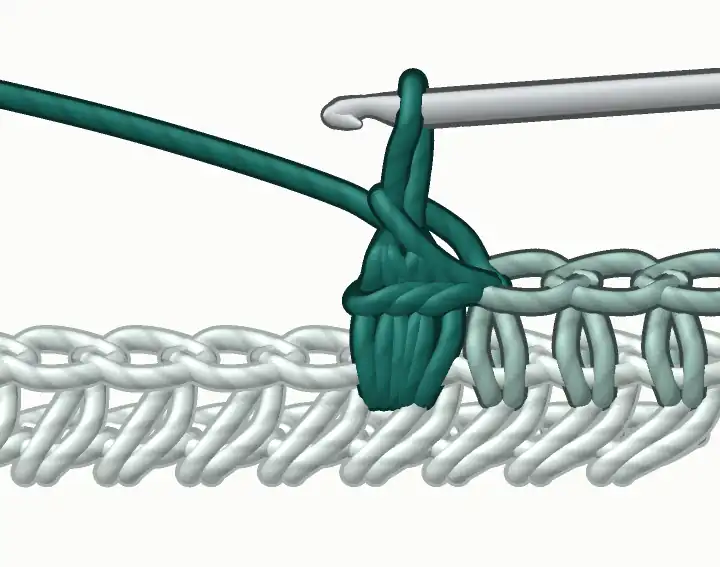
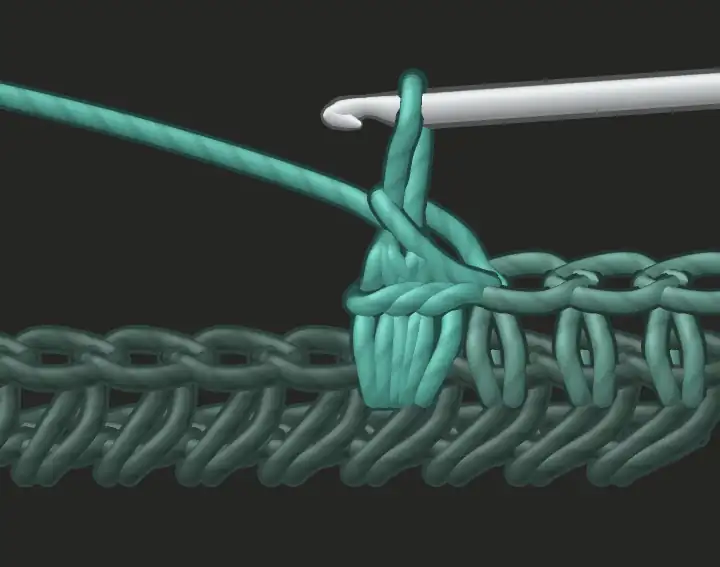
- Yarn over, hook in, yarn over, pull up. Three loops.
- Yarn over, pull through two. Stop: two loops remain.
- Same stitch, the same again. Three loops remain.
- Once more in the same stitch. Four loops remain.
- Yarn over, pull through all four. Three share one top.
How to work it
Never held a hook? How to crochet. Red is what is new. Left-handed? Press Left-handed, and every picture turns.
Start a double crochet and stop early

Yarn over, put the hook into the stitch or space, yarn over and pull up a loop: three loops are on the hook. Yarn over and pull through two of them. Two loops are left. Stop there: the stitch stays unfinished. In the picture the red loop is the one left by the unfinished stitch.
Two more in the same place

Do the same twice more in the same place. Each unfinished stitch leaves one more loop on the hook: three loops, then four.
Close the cluster

Yarn over and pull through all four loops at once. The three stitches are held under one top and count as one stitch. In rows of clusters a chain 1 follows.
The same closing over several stitches

A pattern may put the unfinished stitches into the next three stitches, one in each, and close them the same way. Then three stitches become one and the row gets narrower. That is a decrease, written dc3tog.
The stitch pattern, row by row
- Multiple
- Chain a multiple of 2 (8 or more).
- Starting chain
- The rows here are written for a chain of 20, which is 10 times the multiple of 2.
- The ch 4 at the start of a row counts as a dc and a ch-1 sp. The last stitch of the next row is worked into its 3rd ch.
- The ch 1 at the start of a row does not count as a stitch.
- Row 1 is the right side.
- A stitch worked into a chain space passes over any stitches that lie before the space; they are left unworked.
- Foundation. Ch 20.
- Row 1 (RS). Sc in 2nd ch from hook, sc in next ch, [ch 1, sk next ch, sc in next ch] 8 times, sc in next ch (11 sc, 8 ch-1 sps).
- Row 2. Ch 4 (counts as dc and ch-1 sp), turn; [CL in next ch-1 sp, ch 1] 8 times, sk next st, dc in last st (2 dc, 8 CL, 9 ch-1 sps).
- Row 3. Ch 1, turn; sc in first st, sc in next ch-1 sp, [ch 1, sc in next ch-1 sp] 8 times, sc in 3rd ch of turning ch (11 sc, 8 ch-1 sps).
Repeat rows 2 and 3 for the pattern.
What each symbol meansHow to read a chart
Abbreviations in these rows
- ch
- chain stitch
- sc
- single crochet (UK double crochet)
- dc
- double crochet (UK treble)
- RS
- right side
- sk
- skip
- sp
- space
- st
- stitch
- yo
- yarn over
- CL
- cluster: [yo, insert hook in the st or sp, yo, pull up a loop, yo, pull through 2 loops] 3 times in the same place, yo, pull through all 4 loops on hook.
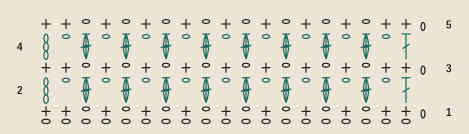
Read the chart from the bottom up. A row's number stands where the row begins: odd rows run from right to left, even rows from left to right. An oval is a chain, a plus sign a single crochet, a tall T with one slash a double crochet, and three slim strokes under one bar a cluster.
A pattern that uses clusters says what its cluster is, usually in a list of special stitches before the rows: how many stitches, of what kind, and where they go. Read it every time, because the word covers many stitches. A cluster can have two, three, four or more stitches, and they can be half double crochet (UK half treble), double crochet or treble crochet (UK double treble).
A 3-dc cluster and a bobble are made the same way. The bobble has more stitches, usually five, and is set between short stitches so that it stands out. Many patterns use the two names for the same stitch.
Whether the stitch count changes depends on where the unfinished stitches stand. All in one stitch or space, they take the place of one stitch and the count stays the same. Spread over several stitches, they turn that many stitches into one, which is how a decrease is made.
In the rows on this page every cluster is worked into a chain space and followed by one chain. The next row puts a single crochet into the space under each of those chains. In row 2, sk next st passes over the single crochet beside the last one, and the double crochet at the end goes into the last single crochet. The space between the ch 4 and the first cluster, and the one after each cluster, make 9 spaces for 8 clusters.
When it goes wrong
- My rows are getting narrower.
- The unfinished stitches went into separate stitches, which is a decrease. For a cluster that keeps the count, put every one of them into the same stitch or space.
- I do not know when to close the cluster.
- Count the loops. A cluster of three stitches is ready when four loops are on the hook: one for each unfinished stitch and the one you began with.
Left-handed
The pictures show the hook held in the right hand. Press Left-handed, under the moving drawing, and every picture here turns for the left hand. In the words, read left for right.
Patterns that use it
At a glance
- Level
- Easy
- Kind
- Puffs, bobbles and clusters
- Used for
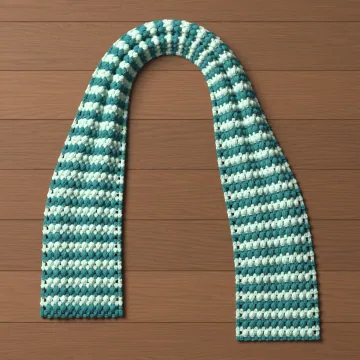
- rows of clusters with chains between them, for blankets and scarves; a dense, textured fabric
- Abbreviation
- CL. Patterns also write cl, 3-dc cluster or dc3tog, and some use no abbreviation.
- In UK terms
- cluster, the same name. A 3-dc cluster is three unfinished trebles.
- Loops on the hook
- 4 before closing a cluster of three stitches; 5 for four stitches; 6 for five. One for each unfinished double crochet or treble crochet (UK double treble), and the one you began with. An unfinished half double crochet (UK half treble) leaves two
- Multiple
- The chain is a multiple of 2 (8 or more).
- Row repeat
- Rows 2 and 3.
- Edges
- Straight. Row 2 and every even row begins with chain 4: the first three chains count as the double crochet at the edge, and the fourth is the top of a space. The row after it ends with a single crochet in the third of those four chains, counted up from the bottom. Row 3 and every odd row begins with chain 1, which does not count: its first single crochet goes in the first stitch, and nothing goes into that chain.
- Hat, clusters around
- A cluster and a chain take 2 stitches. At 14 stitches to 4 in (10 cm): baby 24 clusters, 13¾ in (35 cm) around; toddler 30, 17 in (44 cm); child 32, 18¼ in (46 cm); woman 37, 21 in (54 cm); man 38, 21¾ in (55 cm)
Variations
- Bobble stitch. A cluster of five unfinished stitches of double crochet in one stitch, made on a wrong-side row so that it pushes out on the right side.
- Puff stitch. Long loops pulled up in one stitch and closed together.
- Popcorn stitch. Finished stitches of double crochet in one stitch, gathered by taking the hook out of the loop and putting it back through the first of them.
- Double crochet decrease. The same closing over two or more stitches, used to make a row narrower.
- Crossed clusters. Chain a multiple of 3 plus 2 and work a row of single crochet (UK double crochet). Next row: ch 3, which counts as a double crochet, turn; [skip 1, cluster in the next stitch, then a cluster back in the stitch you skipped, double crochet in the next] across, so that each pair lies crossed. Go back with a row of single crochet, one in each stitch. Clusters of two legs or of three are both printed.
- Twin clusters. Two clusters under one top. Three unfinished double crochets in one stitch, skip one, three more in the next, then one pull through all seven loops; chain 2. Patterns print it over a multiple of 3, with a row of single crochet between.
- Single crochet clusters. On a row of single crochet and chains: pull up a loop in one chain space and a loop in the next, close the three loops, chain 1, and begin again in the space you have just used. A dense cloth.
- Forked clusters. Half double crochets with one leg in each of two stitches. They are told under forked stitches.
Questions
- What does 3-dc cluster mean?
- Three double crochet stitches worked into the same place, each left unfinished, and closed together at the top with one pull through all four loops. Together they count as one stitch.
- Is a cluster the same as dc3tog?
- The move is the same: three double crochets worked together. In one stitch or space it makes a cluster and the stitch count stays the same. Over three stitches it is a decrease.
- Is a cluster stitch the same as a bobble?
- They are made the same way, and many patterns use either name. A bobble usually has five stitches and stands out more.
- How do I crochet a cluster stitch hat?
- From the brim: chain an even number, join it into a ring and work a round of single crochet. Then take two rounds in turn: cluster, chain 1 and skip 1 all round, and a round of single crochet in every cluster and every chain space. Close each round with a slip stitch. For the crown leave out some of the chains between clusters, evenly, and then work decreases. From the crown: 6 clusters in a ring, with a chain after each as in every round. Then two clusters in each space (12), two in every second space and one in the others (18), two in every third (24) and two in every fourth (30), and stop at your number. Before a round that is worked into spaces, slip stitch into the first space.
- How do I begin a round of cluster stitch?
- Chain 2 or 3, which lifts the yarn, and work the whole first cluster; the chain does not count. Close the round with a slip stitch in the top of the first cluster, not in the chain. Some patterns let the chain stand for one leg of the first cluster instead and call it a beginning cluster (beg CL): chain 3, then two unfinished double crochets, closed through three loops. For a cluster of four it is chain 3 and three of them.
- How do I crochet a hexagon of clusters?
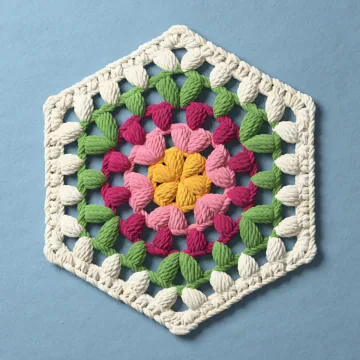
- Work in joined rounds, with six corners. Round 1: in a ring, [cluster, ch 1] 6 times. Round 2: in each space (cluster, ch 1, cluster), with ch 1 between the pairs: 12 clusters. Round 3 makes the corners: (cluster, ch 3, cluster) in one space, one cluster in the next, and so on around, with 1 or 2 chains between, for 18. After that each ch-3 space gets a corner and each other space one cluster, so every round has 6 more: 24, then 30. A last round of single crochet makes the six sides straight. The cluster granny hexagon among our patterns has every round, with counts.
- What is a quadruple cluster?
- A cluster of four, also written 4-dc cluster: four unfinished double crochets in one place and one pull through five loops. Do not mix it up with a cluster of quadruple trebles, a much taller stitch; the special stitches of the pattern say which it is.
- How do I make a treble crochet cluster (tr-cl)?
- As the steps have it, with a taller leg (UK double treble). For each leg yarn over twice, pull up a loop, and pull through two loops two times. Then stop. Three legs leave four loops on the hook, the same as before: close them with one pull. Chain 4 lifts the yarn at the start of a round.
- How do I crochet a cozy blanket of clusters?
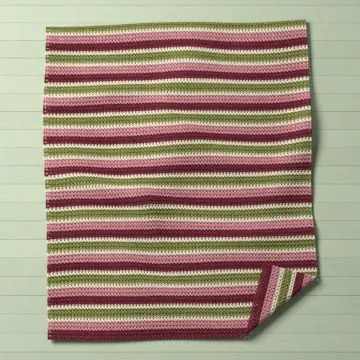
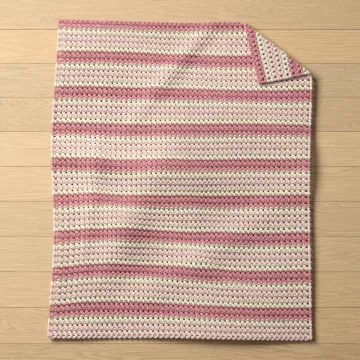
- Use the rows on this page: a cluster in every chain space, then a row of single crochet and chains. The clusters pack the cloth, so it is thick, and a bulky yarn makes it thicker. Any even number of chains will do. Our cluster stitch throw and baby blanket have these rows in several sizes, with every row counted.