Cross stitch guide
Adding beads to cross stitch
A bead takes the place of one stitch. Bring the needle up at the bottom left of the square, thread the bead on, and go down at the top right. A second leg across the other diagonal locks the bead so that it sits upright.
On this page 6 parts
What you need
- Seed beads. These are the small round glass beads that charts ask for. The usual size is written 11/0. The numbers run backward: a 15/0 bead is smaller than an 11/0, and an 8/0 is larger.
- A needle that passes through the bead. A beading needle is very thin and always fits. A very fine needle of another kind can work for 11/0 beads, such as a size 28 tapestry needle or a fine sharp needle, if the bead slides over its eye. The smaller beads need the beading needle. Test one bead on your needle before you begin.
- Thread. One or two strands of ordinary floss. Match it to the bead, or to the fabric if you are using many bead colors and do not want to keep changing thread. Fine nylon beading thread is the other choice. It is slippery, so fasten its ends with extra care.
When to add the beads
Most stitchers add beads last, when the cross stitch and the backstitch are finished. The beads are then out of the way of the working thread, and the piece can be washed and pressed before they go on. Some sew each bead as they come to it. Either works. Read the chart's key first: it names the beads and shows where each one goes.
Sew on a bead
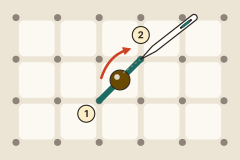
- Fasten the thread on the back, under stitches that are already there.
- Bring the needle up at the bottom left corner of the square (1).
- Thread one bead onto the needle and let it slide down to the cloth.
- Take the needle down at the top right corner (2). This is a half stitch with a bead on it. The bead now sits in the square, leaning along the stitch.
Work the half stitch of every bead in the same direction, as you do the first legs of your crosses, so that the beads all tilt alike.
Lock it with the second leg
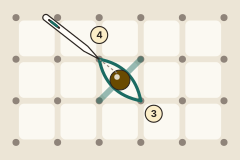
A bead held by one half stitch can rock. The second leg of the cross stops it.
- Bring the needle up at the bottom right corner (3).
- With two strands in the needle, part them and lay one strand on each side of the bead. With one strand, pass the needle through the bead a second time.
- Take the needle down at the top left corner (4) and pull snug.
The bead now sits upright in the middle of its square and does not wobble.
Common mistakes
- The needle will not go through. Do not force it. Change to a beading needle.
- Beads tilt in different directions. Some half stitches lean one way and some the other. Keep them all the same.
- A bead hangs loose. The thread is slack. Pull each stitch snug as you make it, and add the second leg.
- Ironing over the beads. Never put the iron on them. Press the piece before the beads go on, or iron around them afterward.
Where to go next
Metallic and specialty threads gives a design its other kind of shine. For a small raised dot made of thread alone, learn the French knot. The needle size chart explains needle numbers, and how to wash cross stitch covers cleaning the piece before the beads go on.