Cross stitch guide
Blended threads in cross stitch
A blend is two colors stitched as one. Where a key gives two color numbers for one symbol, thread one strand of each color into the same needle and stitch as usual. The two strands lie side by side and the eye mixes them into a shade in between.
On this page 6 parts
What a blend is on a chart
Most symbols on a chart stand for one color. A blend is a symbol that stands for two. In the key it has two color numbers beside it instead of one. Some stitchers call the technique tweeding.
Designers use blends to get more shades out of the same threads. Two colors blended give a third color, halfway between them, without another skein to buy. It is used most in shading, where one color has to melt into the next.
How to stitch a blend
- Read the key. It gives the two numbers, and how many strands of each. On 14 count the usual blend is one strand of each color, in place of two strands of one.
- Cut a length of each color and pull one strand from each.
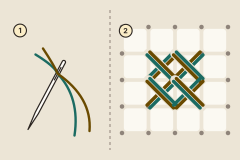
- Lay the two strands together, ends level, and thread them through the needle as one (1 in the picture).
- Begin with a tail held under your first stitches. A loop start does not work here: it needs one strand folded in half, and a blend is two different strands.
- Stitch your crosses in the usual way (2 in the picture).
Keeping a blend even
Two strands of different colors do not always land the same way round: in one stitch the dark strand lies on the left, in the next it lies on the right. So a blend looks a little flecked close up, and that is normal. Three habits keep it tidy:
- Keep both strands at the same tension. After each pull, check that one strand has not left a loop standing while the other went tight.
- Lay the strands flat. Guide them with the needle or a fingertip so that they lie side by side and do not twist over each other.
- Let the needle hang every few stitches, so that the two strands unwind.
If you would rather use one color
You do not have to blend. Any color in a chart can be changed, and a blend is no exception: pick a single color that sits between the two and use two strands of it. The shading will be a little flatter, and the stitching simpler.
Blends with metallic thread
A key may also blend cotton with a fine metallic thread, such as a blending filament, for a faint sparkle. The method is the same, with one strand of the filament added to the cotton in the needle. If the two threads will not behave together, stitch the cotton first and add the metallic on top. Metallic and specialty threads has the details.
Where to go next
How to read a cross stitch pattern explains the rest of the key. How many strands gives the strands for your fabric, and cross stitch thread and floss shows how to pull one strand from a length without a tangle. The stitch itself is in how to cross stitch.