Cross stitch guide
Changing colors and carrying thread
To change color, end the old thread under a few stitches on the back and start the new one the same way you start any thread. Carry a thread across the back only for a few squares, and never carry a dark thread behind cloth that will stay bare.
On this page 6 parts
How to change color
- End the old thread. Take the needle to the back, slide it under the last four to six stitches, and snip the end close. Use stitches of the same color or one near it.
- Thread the new color and find its first square on the chart.
- Start it without a knot. If finished stitches lie beside that square, run the needle under a few of them on the back and begin. If they do not, leave a short tail on the back and work the first stitches over it.
That is the whole of it. How to start and end a thread shows each of those moves with pictures.
If a good length is still on the needle when a color's stitches run out, do not waste it. End it and keep the length for later, or leave it waiting on the front of the cloth near where that color comes next. That second habit is called parking.
When you may carry a thread
Carrying means taking the thread across the back from one group of stitches to the next without ending it. It saves an end and a start. It is safe in two cases.
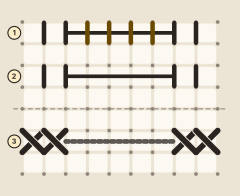
- Behind stitches (1). Where the cloth between the two groups is already stitched, slide the needle under those stitches on the back. They hold the thread flat and hide it. Where that part will be stitched later, lay the thread flat against the back and the stitches that come will cover it.
- For a very short hop. Across bare cloth, a few squares at most.
How far
Guides do not agree on one number, so here is what they say.
| Where the thread runs | What guides allow |
|---|---|
| Behind bare cloth | Nothing at all, by the strictest. Three to five squares, by the rest |
| Behind stitches, or squares that will be stitched | Four to six stitches |
When in doubt, end the thread. Two ends woven in cost a moment. A shadow on the front cannot be taken out once the piece is framed.
Why a dark thread is not carried behind bare cloth
Cross stitch cloth is full of holes, and it is thin enough to see a dark line through. A dark thread lying behind bare, pale cloth shows on the front as a faint shadow joining two parts of the design (2 and 3 in the picture). The same happens the other way round, with a pale thread behind dark cloth.
Two things make it worse:
- Open cloth. Linen and evenweave have more space between their threads than Aida, so a carry shows more.
- A dark thread under pale stitches. Even behind stitching, a dark thread can show through light ones. Look at the front before you go on.
Two small habits
- Keep a carried thread flat against the back, neither slack nor tight. Pulled tight, it draws the cloth in.
- Plan the order of work so that the next stitch of a color is close. What order to cross stitch in helps with that.
Where to go next
The back of your cross stitch explains when carries and ends matter and when they do not. For a first piece with few changes of color, the easy patterns have four colors or fewer.