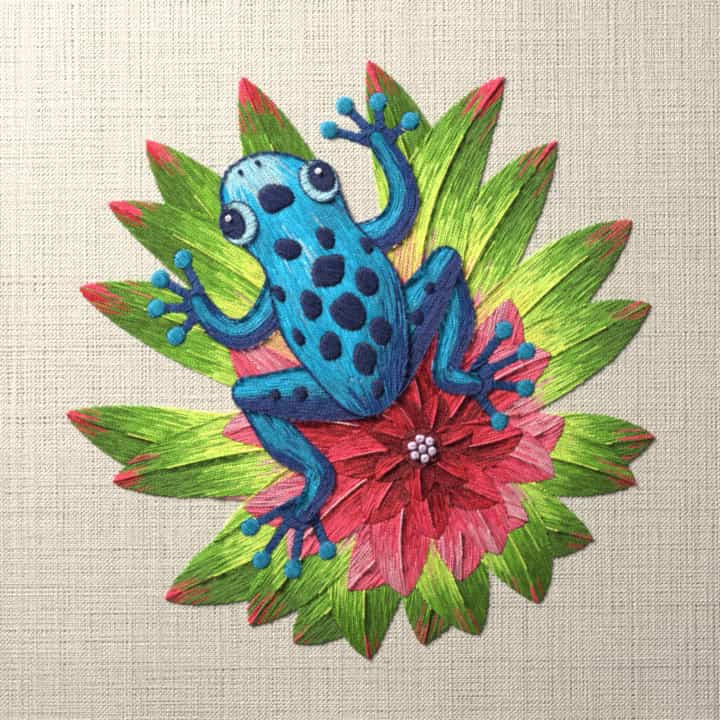
Blue dart frog on a bromeliad hand embroidery pattern
Advanced · 23 colors · 5 kinds of stitch
Download free PDFPDF, US Letter · 159 KBFor your own stitching, gifts and handmade pieces you sell. Do not resell or share this PDF. What you may do, in full
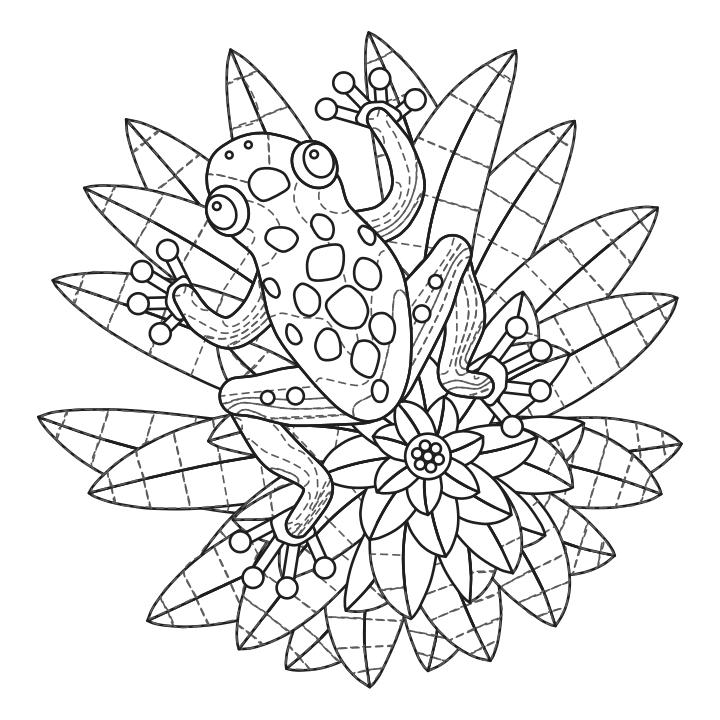
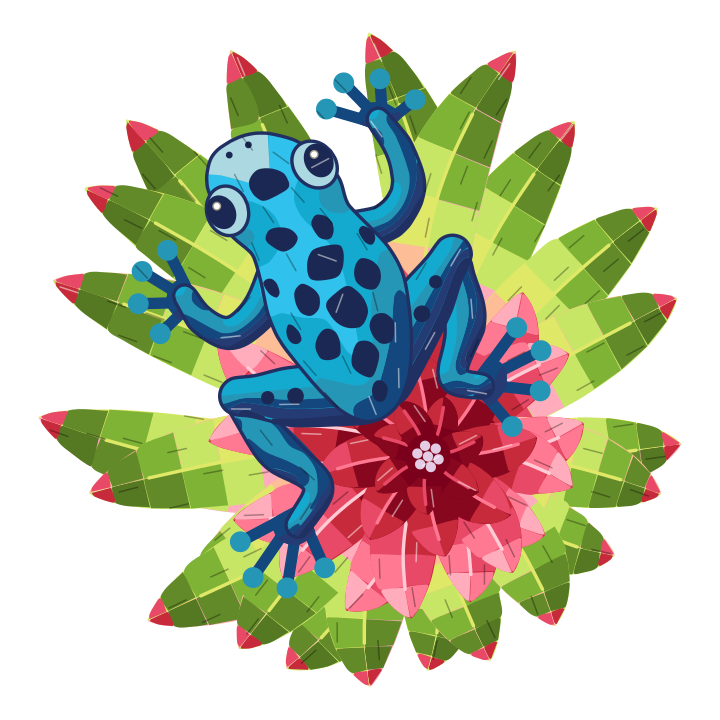
A blue poison dart frog is seen from above, stepping out of the red heart of a bromeliad, with two hands reaching up the leaves and two folded hind legs behind. Back, head, legs and every leaf are long and short stitch, so the plant runs from garnet through coral and lime to green with a red tip. The spots, eyes and toe pads are padded satin stitch, and the toes and palms are satin stitch. A line of split stitch draws the edge of the frog and the vein of each leaf. French knots make the lilac flowers in the cup, the nostrils and the light in each eye. In the picture of where the colors go, the fine lines show which way the stitches lie.
Size and details
Advanced. Uses long and short stitch over much of the design, padded satin stitch, 23 colors and a great deal of stitching.
23 colors of floss and 5 kinds of stitch:
| Hoop | Inches | Centimeters | Satin stitch up to |
|---|---|---|---|
| 3 in (8 cm) | 1.9 × 1.9 in | 4.8 × 4.8 cm | 1/8 in (3 mm) |
| 4 in (10 cm) | 2.8 × 2.9 in | 7.1 × 7.4 cm | 3/16 in (5 mm) |
| 5 in (13 cm) | 3.8 × 3.8 in | 9.7 × 9.7 cm | 1/4 in (6 mm) |
| 6 in (15 cm) | 4.7 × 4.8 in | 11.9 × 12.2 cm | 5/16 in (8 mm) |
| 8 in (20 cm) | 6.6 × 6.7 in | 16.8 × 17 cm | 7/16 in (11 mm) |
- In a 3, 4 or 5 inch hoop the French knots are drawn smaller than about 2 mm (a little over 1/16 in). Use one strand of floss for them there, or choose a larger hoop.
The pattern is drawn inside a circle about half an inch (1.3 cm) smaller all around than the hoop.
What you need
- DMC 907 Light Parrot GreenOuter leaves (shade 9 of 10)
- DMC 815 Medium GarnetHeart bracts and inner bracts (dark), outer leaves (shade 1 of 10)
- DMC 321 RedInner bracts (middle dark), outer leaves (shade 2 of 10), heart bracts (light)
- DMC 3801 Very Dark MelonInner bracts (middle light), outer leaves (shade 5 of 10) and 2 more parts
- DMC 3706 Medium MelonOuter leaves (shade 7 of 10), inner bracts (lightest)
- DMC 906 Medium Parrot GreenOuter leaves (shade 6 of 10)
- DMC 905 Dark Parrot GreenOuter leaves (shade 4 of 10)
- DMC 904 Very Dark Parrot GreenOuter leaves (shade 3 of 10)
- DMC 3819 Light Moss GreenOuter leaves (shade 10 of 10), midribs (lightest)
- DMC 3825 Pale PumpkinOuter leaves (shade 8 of 10)
- DMC 814 Dark GarnetInner bracts and heart bracts (darkest), cup
- DMC 3705 Dark MelonInner bracts (light), midribs (dark)
- DMC 3708 Light MelonMidribs (light)
- DMC 211 Light LavenderLilac flowers
- DMC 797 Royal BlueHind feet, front feet, hind legs and front legs (middle), back and head (darkest)
- DMC 995 Dark Electric BlueFront legs, hind legs, front feet and hind feet (light), back and head (dark)
- DMC 336 Navy BlueHind legs, front legs, hind feet and front feet (dark)
- DMC 3843 Electric BlueBack and head (middle), hind legs and front legs (lightest)
- DMC 823 Dark Navy BlueHind legs edge, back edge and front legs edge, hind legs and front legs (darkest)
- DMC 939 Very Dark Navy BlueSpots, eyes and nostrils
- DMC 996 Medium Electric BlueBack and head (light)
- DMC 3761 Light Sky BlueEyelids, back and head (lightest)
- DMC B5200 Snow WhiteEye lights
Skeins: 3 for outer leaves (shade 9 of 10), 2 for inner bracts (middle dark), outer leaves (shade 2 of 10), heart bracts (light), 2 for inner bracts (middle light), outer leaves (shade 5 of 10) and 2 more parts, 2 for outer leaves (shade 7 of 10), inner bracts (lightest), 3 for outer leaves (shade 10 of 10), midribs (lightest) and 2 for outer leaves (shade 8 of 10); one of each other color. An estimate for the largest size, the 8 inch hoop: the length of each line and the area of each filled shape, a fifth added for tails and ends, a tenth of every 8 m (8.7 yd) skein kept spare.
The floss is six-strand cotton; the stitch guide says how many strands to use. You also need a hoop, an embroidery needle (a size 7 to 9 suits two or three strands) and plain cotton or linen fabric. To frame the piece in its hoop, cut a square 3 inches (8 cm) wider than the hoop: a 9 inch (23 cm) square for a 6 inch hoop.
When it is stitched, how to finish a hoop shows how to back it for the wall.
Stitch guide
- Put the pattern on the fabric (how to transfer a pattern) and the fabric in the hoop.
- Stitch the filled parts first, what lies behind before what lies in front of it.
- Then stitch the lines: stems, veins and outlines over the edges of the filled parts.
- Keep the knots for the end, so that the hoop and your hand do not flatten them.
Start each thread with a small knot on the back or one of the knotless starts, and end it by running the needle under the backs of a few stitches (starting and ending a thread). Use the strands this list gives, also where a page about a stitch names another number.
- Long and short stitch 1 strandOuter leaves, inner bracts, heart bracts, hind legs, front legs, back and head
- Split stitch 1 to 2 strandsMidribs, hind legs edge, front legs edge, back edge
- Satin stitch 2 strandsCup, hind feet, front feet
- French knot 1 to 2 strands, two wrapsLilac flowers, eye lights, nostrils
- Padded satin stitch 2 strandsHind feet, front feet, spots, eyelids, eyes
Getting it onto your fabric
The PDF holds the pattern twice at actual size: once as drawn, and once mirrored for an iron-on transfer pen. Print it at 100% with scaling off and check the one-inch square (25.4 mm) with a ruler before you trace. How to transfer a pattern explains tracing, carbon paper and the other ways. The files are under Downloads.
Downloads
- Download free PDF PDF, US Letter, 3 pages, for a 6 inch (15 cm) hoop
- Download free PDF, A4 PDF, A4, 3 pages, for a 6 inch (15 cm) hoop
More patterns like this
Advanced 3–8 in hoop · 24 colors
Big green frog on a lily pad
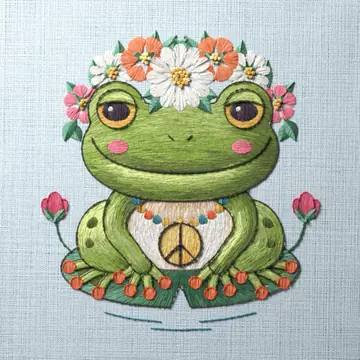
Advanced 3–8 in hoop · 23 colors
Hippie frog in a flower crown
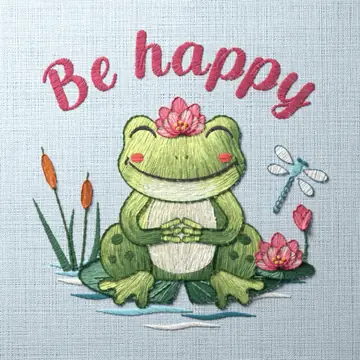
Advanced 3–8 in hoop · 23 colors
Be happy
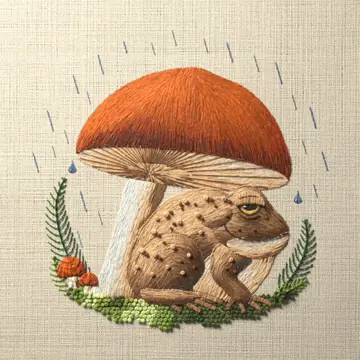
Advanced 3–8 in hoop · 21 colors
Toad under a mushroom
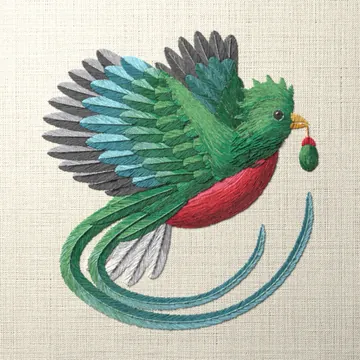
Advanced 3–8 in hoop · 22 colors
Guatemalan bird: a quetzal in flight
Advanced 3–8 in hoop · 20 colors
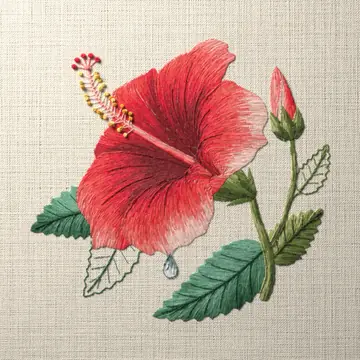
Red hibiscus, a Hawaiian flower
Advanced 3–8 in hoop · 24 colors
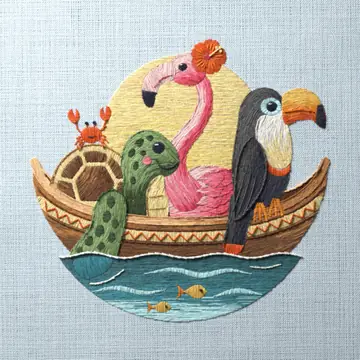
Tropical friends in a canoe
Advanced 3–8 in hoop · 24 colors
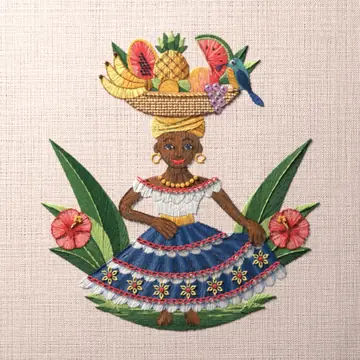
Woman with a fruit basket on her head
New to hand embroidery? Starting hand embroidery, step by step