Small easy salmon nigiri sushi hand embroidery pattern
Easy · 7 colors · 4 × 2.2 in · 5 kinds of stitch
Download free PDFPDFPrints on US Letter and A4You may sell what you make from it by hand, in small quantities. The PDF itself is not to be sold or shared. Selling, classes and kits: the rulesNew to it? Next: how to start
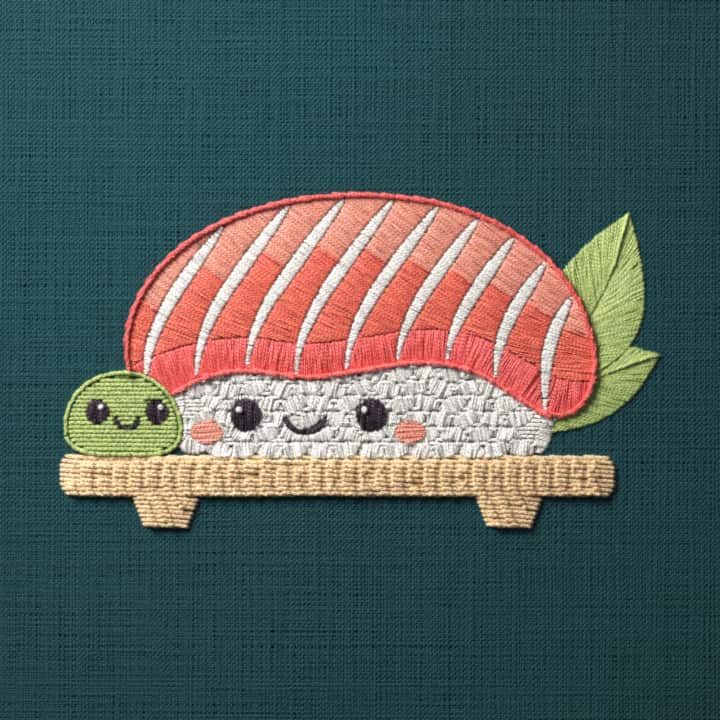
A thick slice of salmon droops over a smiling pillow of rice on a low wooden board, beside a small round dab of wasabi with a smile of its own and in front of two green leaves.
Size and details
Easy. In a hoop of 6 inches or less: short satin stitches, no shading; in a larger hoop the widest satin stitches are long.
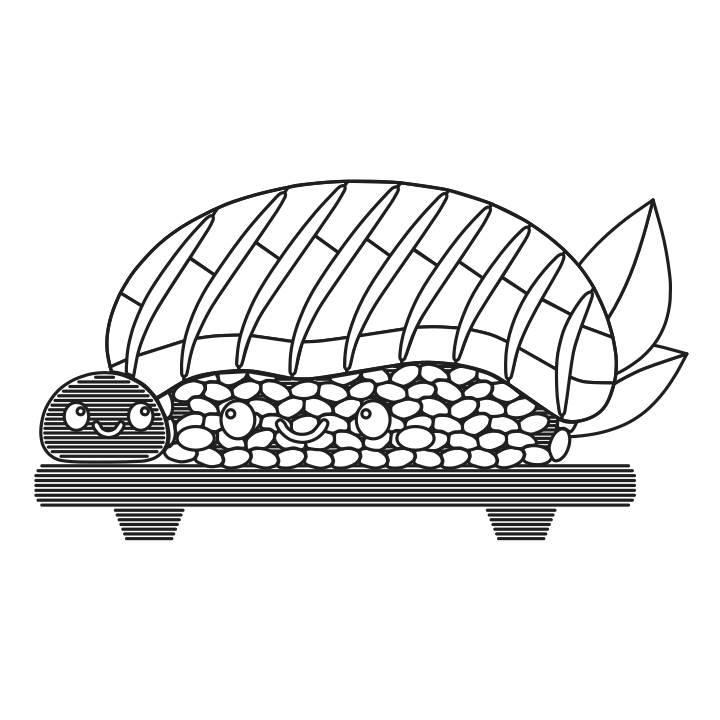
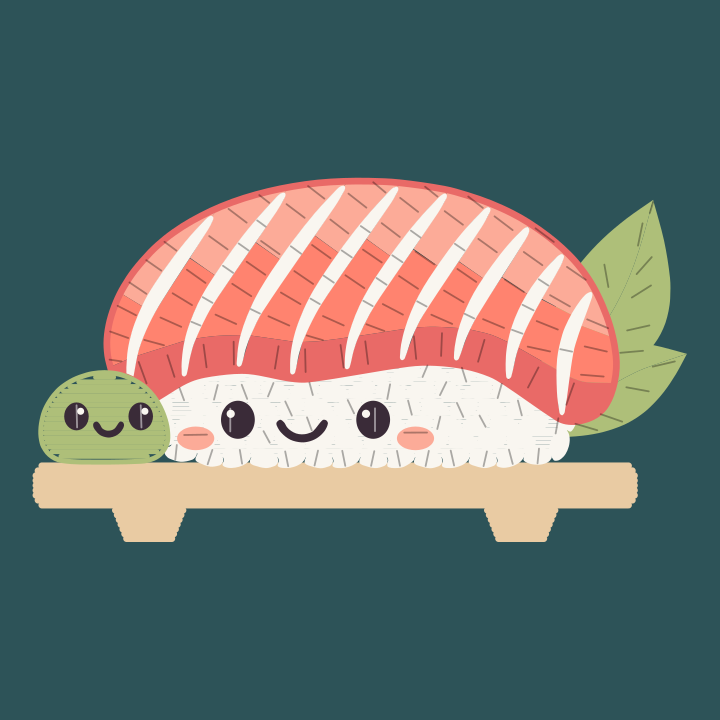
The salmon is short bands of satin stitch, pale apricot above and deeper below, parted by white satin stitch lines, with stem stitch round its edge. The rice is satin stitch grains over a ground of split stitch. The wasabi is rows of split stitch, the leaves are fishbone stitch, the board is stem stitch, and each eye has one French knot for its light. It is drawn for teal cloth. In the picture of where the colors go, the fine lines show which way the stitches lie.
| Hoop | Inches | Centimeters | Satin stitch up to |
|---|---|---|---|
| 3 in (8 cm) | 1.6 × 0.9 in | 4.1 × 2.3 cm | 1/8 in (3 mm) |
| 4 in (10 cm) | 2.4 × 1.3 in | 6.1 × 3.3 cm | 3/16 in (5 mm) |
| 5 in (13 cm) | 3.2 × 1.8 in | 8.1 × 4.6 cm | 1/4 in (6 mm) |
| 6 in (15 cm) | 4 × 2.2 in | 10.2 × 5.6 cm | 5/16 in (8 mm) |
| 8 in (20 cm) | 5.6 × 3.1 in | 14.2 × 7.9 cm | 3/8 in (10 mm) |
- In a 3, 4 or 5 inch hoop the French knots are drawn smaller than about 2 mm (a little over 1/16 in). Use one strand of floss for them there, or choose a larger hoop.
What you need
- Fabric
- Plain cotton or linen in teal, cut 9 in (23 cm) square. On white cloth its palest threads do not show: choose other colors under Options. A pencil line does not show on it: see how to transfer a pattern to dark fabric.
- Needle
- Embroidery needle, size 9 for 1 strand, size 7 for 2 or 3, size 5 for 4 (a lower number is a thicker needle).
- Floss
- 7 colors of six-strand cotton, listed below. DMC is a brand: another brand in a like color will do.
- Marker
- A pen or a sheet that suits the fabric: how to transfer a pattern says which.
Floss
- 1DMC 471 Very Light Avocado GreenLeaves and wasabi
- 2DMC 738 Very Light TanBoard and board feet
- 3DMC 3865 Winter WhiteRice, rice grains, fat lines and eye lights
- 4DMC 3341 ApricotSalmon (lighter), cheeks
- 5DMC 3340 Medium ApricotSalmon (darker)
- 6DMC 351 CoralSalmon front and salmon edge
- 7DMC 3371 Black BrownEyes and smiles
Skeins: one of each color is enough. An estimate for the 6 inch hoop, from the length of each line and the area of each filled shape, with a fifth added for tails.
How to stitch it
- New to hand embroidery? Start here.
- Print at 100%, trace the pattern onto the fabric, and put it in the hoop: inner ring under, drawing up, tight as a drum.
- Floss is six strands. Cut 18 inches (45 cm), pull out the number given one at a time, and lay them together.
- Inside a filled shape start with two or three tiny stitches, which the filling covers. Start a line with a small knot on the back. End each thread by running the needle under the backs of a few stitches.
- Each small ring is one French knot.
- A number under “Where colors go” is a color of the list. The fine lines on the colors show which way the stitches lie.
Stitch in this order
Filled parts from the back of the picture forward, then lines and knots. Where a stitch page names another number of strands, use the number here.
- Fishbone stitch 2 strandsLeaves
- Satin stitch 2 strandsRice grains, salmon, salmon front, fat lines, eyes, smiles, cheeks
- Stem stitch 4 strandsBoard, board feet, salmon edge
- Split stitch4 strands: wasabi3 strands: rice
- French knot 1 strand, two wrapsEye lights
When it is done, take off any lines that still show and finish the hoop.
More patterns like this
Advanced 3–8 in hoop · 18 colors
Pho noodle bowl with herbs and lime
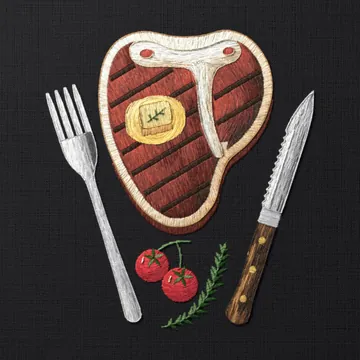
Advanced 3–8 in hoop · 22 colors
Steak with fork and steak knife
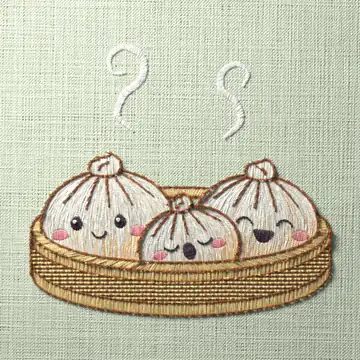
Intermediate 3–8 in hoop · 7 colors
Kawaii dumpling faces
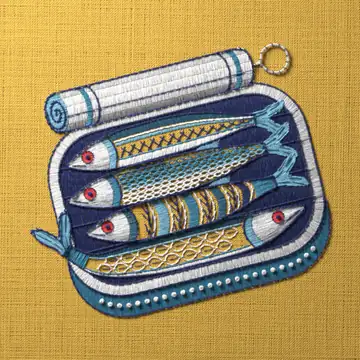
Advanced 3–8 in hoop · 10 colors
Patterned sardines in an open tin
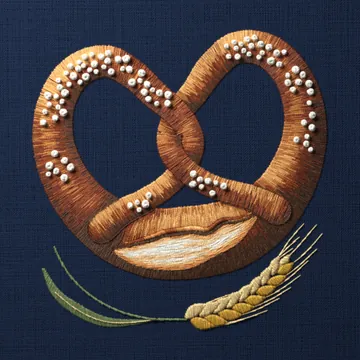
Advanced 3–8 in hoop · 10 colors
Salted soft pretzel
Advanced prints 3–14 in · 14 colors
Tamale in an open corn husk
Advanced prints 3–14 in · 21 colors
Rice bowl by a snowy window
Advanced 3–8 in hoop · 22 colors
Funny chicken drumstick in a dip bath
New to hand embroidery? Starting hand embroidery, step by step