Bless your heart sweet tea jar hand embroidery pattern
Advanced · 22 colors · 3.1 × 4.5 in · 4 kinds of stitch
Download free PDFPDFPrints on US Letter and A4You may sell what you make from it by hand, in small quantities. The PDF itself is not to be sold or shared. Selling, classes and kits: the rules
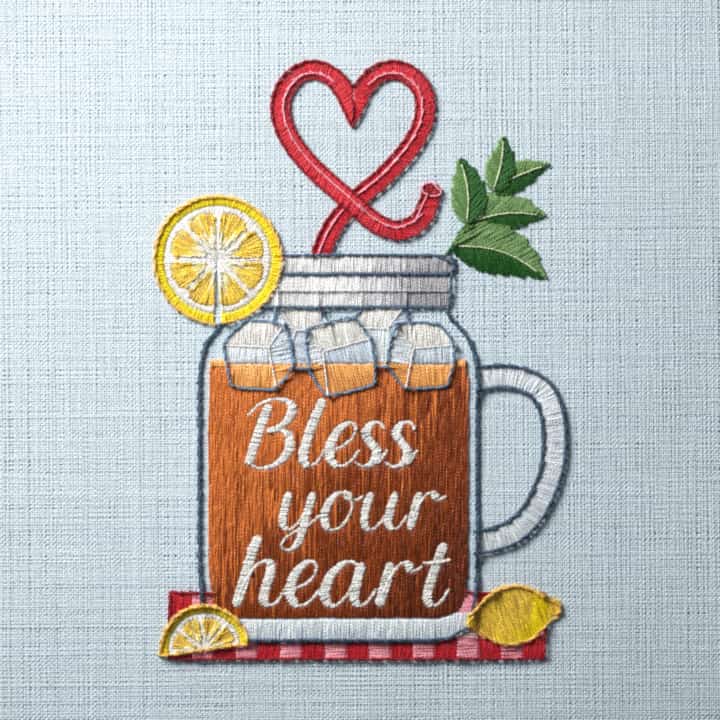
A glass Mason jar of sweet tea stands on a red gingham mat with the words Bless your heart in white script across the tea. A red straw loops into a heart above the silver screw band, with a lemon wheel on the lip and mint on the other side.
Size and details
Advanced. Uses long and short stitch, satin stitch over about a fifth of the cloth in a 6 inch hoop, 22 colors and a great deal of stitching; from a 6 inch hoop up some of the satin stitches are long.
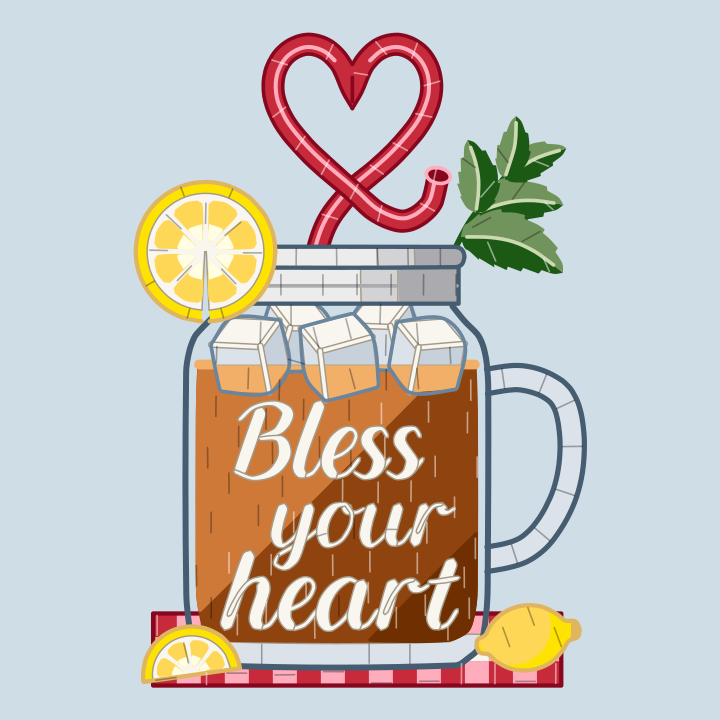
The tea, the lemon flesh and the whole lemon are long and short stitch. Satin stitch fills the letters, the straw, the ice, the mint, the screw band, the handle and every check. The jar, the lemons and the mat are outlined in stem stitch, and split stitch edges the ice and the straw. It is drawn for pale blue linen. In the picture of where the colors go, the fine lines show which way the stitches lie.
| Hoop | Inches | Centimeters | Satin stitch up to |
|---|---|---|---|
| 3 in (8 cm) | 1.2 × 1.8 in | 3 × 4.6 cm | 1/8 in (3 mm) |
| 4 in (10 cm) | 1.9 × 2.7 in | 4.8 × 6.9 cm | 3/16 in (5 mm) |
| 5 in (13 cm) | 2.5 × 3.6 in | 6.4 × 9.1 cm | 1/4 in (6 mm) |
| 6 in (15 cm) | 3.1 × 4.5 in | 7.9 × 11.4 cm | 3/8 in (10 mm) |
| 8 in (20 cm) | 4.3 × 6.3 in | 10.9 × 16 cm | 1/2 in (13 mm) |
- In an 8 inch hoop the widest satin stitch shape is 1/2 in (13 mm) across. Satin stitches longer than about 12 mm (just under 1/2 in) tend to work loose: divide the shape into sections, or work it in long and short stitch.
On a towel. Wash and dry the towel first. To start with, put the bottom of the design 2 to 3 inches (5 to 7.5 cm) above the hem, in the middle or in a lower corner. Keep the stitches low, and press from the back. How to embroider a towel has every step, and the placement chart has the figures for other towels.
What you need
- Fabric
- Plain cotton or linen in pale blue, cut 9 in (23 cm) square. On white cloth its palest threads do not show: choose other colors under Options.
- Needle
- Embroidery needle, size 9 for 1 strand, size 7 for 2 or 3, size 5 for 4 (a lower number is a thicker needle).
- Floss
- 22 colors of six-strand cotton, listed below. DMC is a brand: another brand in a like color will do.
- Marker
- A pen or a sheet that suits the fabric: how to transfer a pattern says which.
Floss
- 1DMC 321 RedHeart straw and gingham checks
- 2DMC 3706 Medium MelonGingham half checks and straw light, straw mouth (lighter)
- 3DMC 3865 Winter WhiteWords, lemon pith and gingham white, ice cubes (lightest), ice edges (lighter)
- 4DMC 815 Medium GarnetStraw edge and mat edge, straw mouth (darker)
- 5DMC 3753 Ultra Very Light Antique BlueJar glass, ice cubes (light)
- 6DMC 930 Dark Antique BlueJar outline, band edge (darker)
- 7DMC 3345 Dark Hunter GreenMint leaves (darker), mint stems
- 8DMC 3347 Medium Yellow GreenMint leaves (lighter)
- 9DMC 3348 Light Yellow GreenMint veins
- 10DMC 400 Dark MahoganyTea (middle)
- 11DMC 300 Very Dark MahoganyTea (dark)
- 12DMC 3776 Light MahoganyTea (light)
- 13DMC 3854 Medium Autumn GoldIce cubes (darkest), tea surface
- 14DMC 3752 Very Light Antique BlueIce cubes (dark)
- 15DMC 931 Medium Antique BlueIce edges (darker)
- 16DMC 762 Very Light Pearl GrayScrew band (light)
- 17DMC 318 Light Steel GrayScrew band (dark), band edge (lighter)
- 18DMC 415 Pearl GrayScrew band (middle)
- 19DMC 973 Bright CanaryLemon rind, whole lemon (light)
- 20DMC 726 Light TopazLemon flesh (darker), whole lemon (middle)
- 21DMC 3823 Ultra Pale YellowLemon flesh (lighter)
- 22DMC 3820 Dark StrawLemon edge, whole lemon (dark)
Skeins: one of each color is enough. An estimate for the 6 inch hoop, from the length of each line and the area of each filled shape, with a fifth added for tails.
How to stitch it
- New to hand embroidery? Start here.
- Print at 100%, trace the pattern onto the fabric, and put it in the hoop: inner ring under, drawing up, tight as a drum.
- Floss is six strands. Cut 18 inches (45 cm), pull out the number given one at a time, and lay them together.
- Begin with no knot on the back where it is seen and washed, as on a towel, a napkin or clothes; for a piece in a hoop a small knot is fine. End each thread by whipping it around the backs of four or five stitches, with one small hitch.
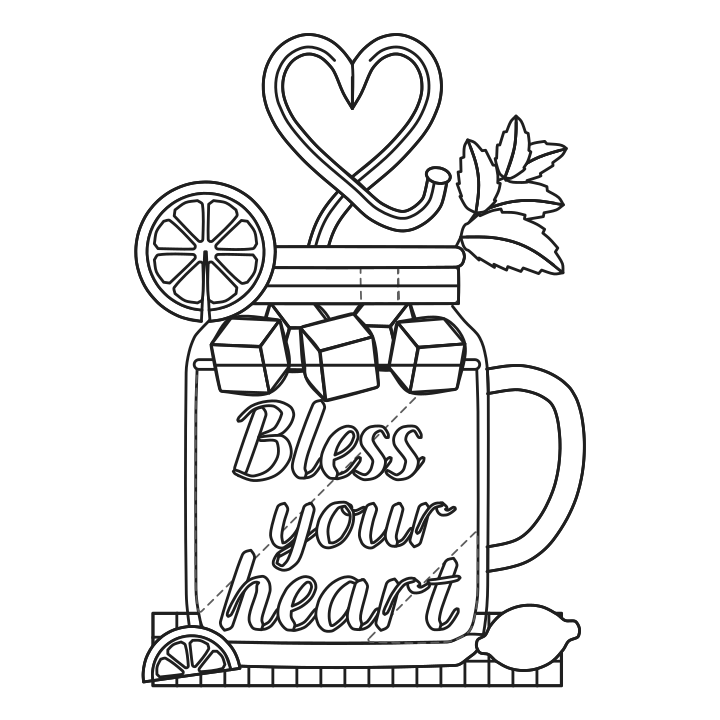
- A fine broken line inside a shape is where two shades meet: trace it, do not stitch it.
- A number under “Where colors go” is a color of the list. The fine lines on the colors show which way the stitches lie.
Stitch in this order
Filled parts from the back of the picture forward, then lines. Where a stitch page names another number of strands, use the number here.
- Satin stitch 2 strandsGingham checks, gingham half checks, gingham white, jar glass, heart straw, straw mouth, mint leaves, tea surface, ice cubes, screw band, lemon rind, lemon pith, words
- Long and short stitch 1 strandTea, lemon flesh, whole lemon
- Stem stitch4 strands: mint stems3 or 4 strands: jar outline2 strands: mat edge, band edge, lemon edge1 strand: straw light
- Split stitch2 strands: straw edge1 or 2 strands: ice edges1 strand: straw mouth, mint veins, band edge
When it is done, take off any lines that still show and finish the hoop. A guide to this kind of work: Stitches for letters, words and names.
More patterns like this
Advanced 3–8 in hoop · 18 colors
Sweet tea with a cup of flowers
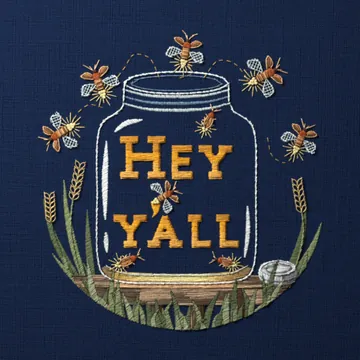
Advanced prints 3–14 in · 22 colors
Hey y’all
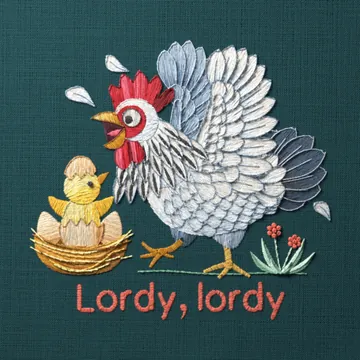
Advanced 3–8 in hoop · 24 colors
Lordy, lordy flustered hen
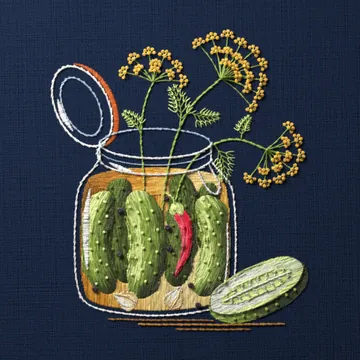
Advanced 3–8 in hoop · 23 colors
Dill pickle jar with dill flowers
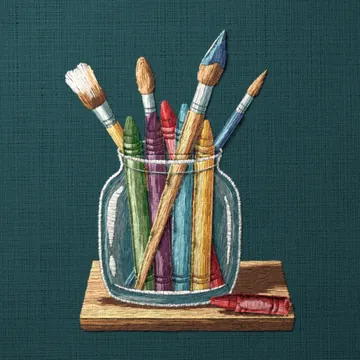
Advanced 3–8 in hoop · 24 colors
Jar of crayons and brushes
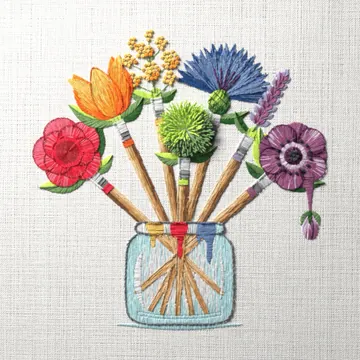
Advanced prints 3–14 in · 24 colors
Art teacher’s jar of blooming brushes
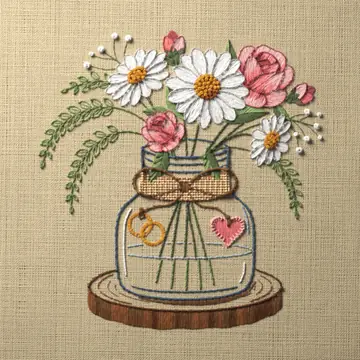
Advanced 3–8 in hoop · 16 colors
Rustic wedding mason jar with flowers
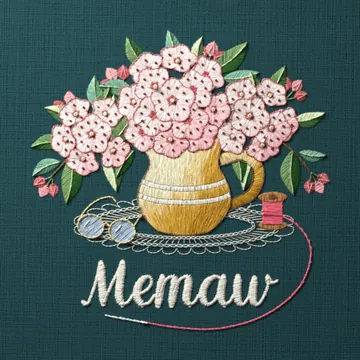
Advanced prints 3–14 in · 22 colors
Memaw in laurel
New to hand embroidery? Starting hand embroidery, step by step