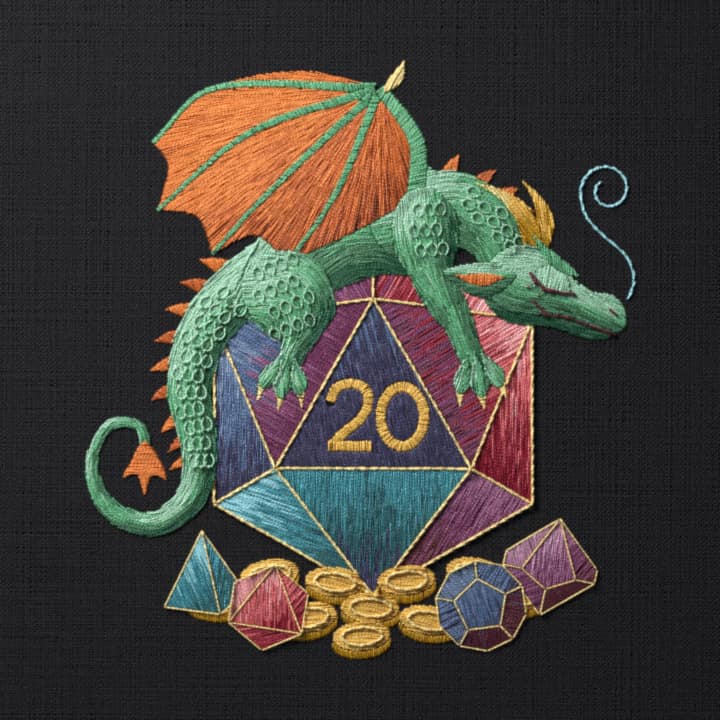
Dragon asleep on a D20 with dice hand embroidery pattern
Advanced · 22 colors · 6 kinds of stitch
Download free PDFPDF, US Letter · 80 KBFor your own stitching, gifts and handmade pieces you sell. Do not resell or share this PDF. What you may do, in full
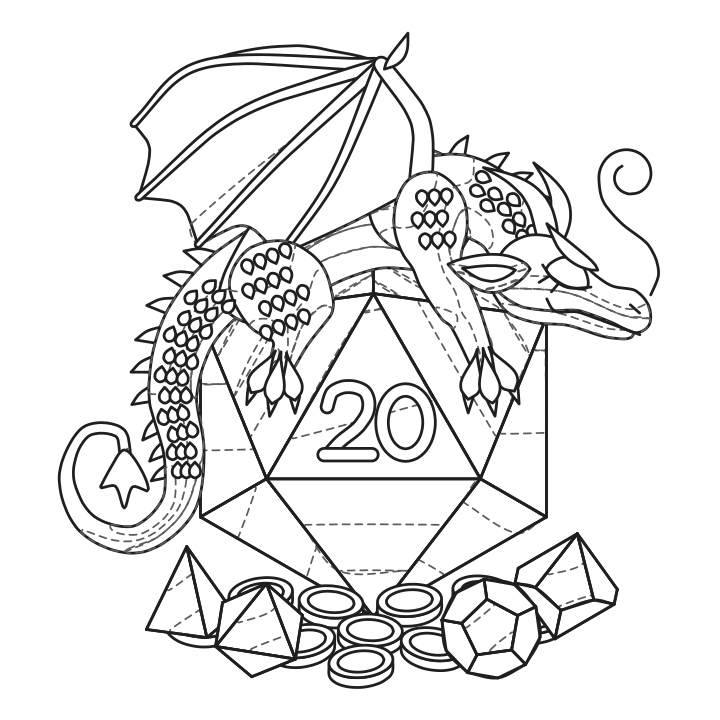
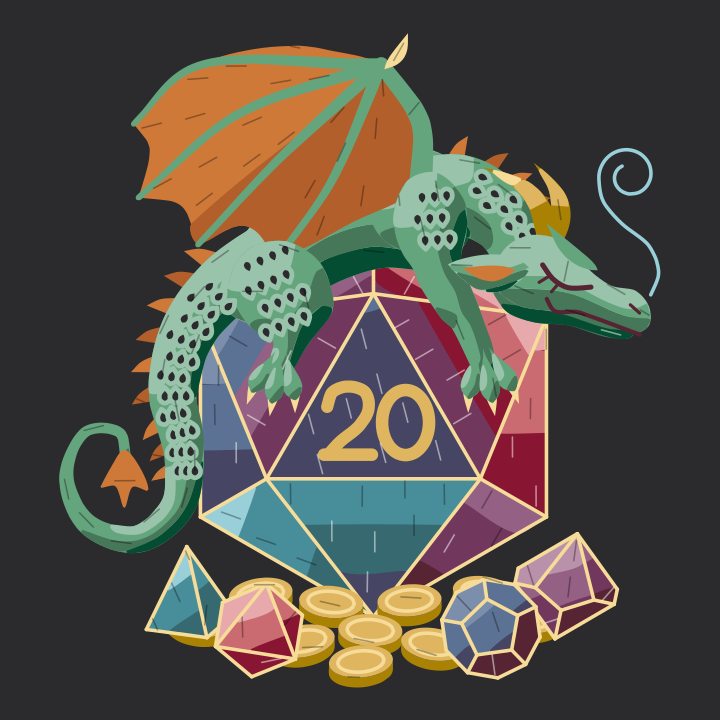
The die is seen straight on, so its outline is a true hexagon with one front triangle marked with a gold 20. The dragon is draped over the top with its eyes shut, one wing raised, its paws hanging down and a curl of sleepy breath rising from its nose. The die, the dragon and the wing are long and short stitch, the scales are lazy daisy stitch, and the number, wing bones and coins are satin stitch. Split stitch draws the breath and picks out every edge of the five dice, and stem stitch draws the closed eye. It is drawn for charcoal linen. In the picture of where the colors go, the fine lines show which way the stitches lie.
Size and details
Advanced. Uses long and short stitch over much of the design, 22 colors and a great deal of stitching; from a 5 inch hoop up the widest satin stitches are long.
22 colors of floss and 6 kinds of stitch:
- Long and short stitch
- Split stitch
- Satin stitch
- Lazy daisy stitch
- Stem stitch
- Straight stitch
- Which stitch goes where
| Hoop | Inches | Centimeters | Satin stitch up to |
|---|---|---|---|
| 3 in (8 cm) | 1.7 × 1.8 in | 4.3 × 4.6 cm | 3/16 in (5 mm) |
| 4 in (10 cm) | 2.5 × 2.7 in | 6.4 × 6.9 cm | 1/4 in (6 mm) |
| 5 in (13 cm) | 3.4 × 3.7 in | 8.6 × 9.4 cm | 3/8 in (10 mm) |
| 6 in (15 cm) | 4.2 × 4.6 in | 10.7 × 11.7 cm | 7/16 in (11 mm) |
| 8 in (20 cm) | 5.9 × 6.4 in | 15 × 16.3 cm | 5/8 in (16 mm) |
- In an 8 inch hoop the widest satin stitch shape is 5/8 in (16 mm) across. Satin stitches longer than about 12 mm (just under 1/2 in) tend to work loose: divide the shape into sections, or work it in long and short stitch.
- In a 3 or 4 inch hoop the shortest lazy daisy loops are drawn smaller than about 2 mm (a little over 1/16 in). Use one strand of floss for them there, or choose a larger hoop.
The pattern is drawn inside a circle about half an inch (1.3 cm) smaller all around than the hoop.
What you need
- DMC 3836 Light GrapeDie facets (shade 11 of 13), ten-sided die (lightest)
- DMC 3834 Dark GrapeDie facets (shade 4 of 13), ten-sided die (dark)
- DMC 3835 Medium GrapeDie facets (shade 6 of 13), ten-sided die (light)
- DMC 3688 Medium MauveDie facets (shade 12 of 13), eight-sided die (light)
- DMC 3685 Very Dark MauveDie facets (shade 2 of 13), eight-sided die (dark)
- DMC 3687 MauveDie facets (shade 9 of 13), eight-sided die (middle)
- DMC 3838 Dark Lavender BlueDie facets (shade 7 of 13), twelve-sided die (light), front facet (lighter)
- DMC 3839 Medium Lavender BlueDie facets (shade 10 of 13), twelve-sided die (lightest)
- DMC 791 Very Dark Cornflower BlueFront facet (darker), die facets (shade 3 of 13), twelve-sided die (dark)
- DMC 3810 Dark TurquoiseDie facets (shade 8 of 13), four-sided die (middle)
- DMC 3808 Ultra Very Dark TurquoiseDie facets (shade 5 of 13), four-sided die (dark)
- DMC 3766 Light Peacock BlueSleepy breath, die facets (shade 13 of 13), four-sided die (light)
- DMC 154 Very Dark GrapeTwelve-sided die and ten-sided die (darkest) and 4 more parts
- DMC 3822 Light StrawFacet edges, small dice edges, coin rims, claws and wing claw, horns (light)
- DMC 3820 Dark StrawCoins (lighter), number, horns (middle)
- DMC 3829 Very Dark Old GoldCoins (darker), horns (dark)
- DMC 3776 Light MahoganyWing and back spines (lighter), tail tip and ear lining
- DMC 301 Medium MahoganyWing and back spines (darker)
- DMC 3816 Celadon GreenTail, legs, neck, body, jaw and ear (light), wing bones and brow, head (middle)
- DMC 500 Very Dark Blue GreenBody, tail, legs, neck and ear (darkest), jaw (dark)
- DMC 3815 Dark Celadon GreenLegs, body, tail, neck, head and ear (dark), jaw (middle)
- DMC 3817 Light Celadon GreenBody, tail, legs, neck and ear (lightest), head (light), scales and eyelid
Skeins: one of each color is enough. An estimate for the largest size, the 8 inch hoop: the length of each line and the area of each filled shape, a fifth added for tails and ends, a tenth of every 8 m (8.7 yd) skein kept spare.
The floss is six-strand cotton; the stitch guide says how many strands to use. You also need a hoop, an embroidery needle (a size 7 to 9 suits two or three strands) and plain cotton or linen fabric. To frame the piece in its hoop, cut a square 3 inches (8 cm) wider than the hoop: a 9 inch (23 cm) square for a 6 inch hoop.
When it is stitched, how to finish a hoop shows how to back it for the wall.
Stitch guide
- Put the pattern on the fabric (how to transfer a pattern) and the fabric in the hoop.
- Stitch the filled parts first, what lies behind before what lies in front of it.
- Then stitch the lines: stems, veins and outlines over the edges of the filled parts.
Start each thread with a small knot on the back or one of the knotless starts, and end it by running the needle under the backs of a few stitches (starting and ending a thread). Use the strands this list gives, also where a page about a stitch names another number.
- Long and short stitch 1 strandDie facets, front facet, four-sided die, eight-sided die, ten-sided die, twelve-sided die, tail, body, neck, wing, legs, horns, jaw, head, ear
- Split stitch 1 to 2 strandsFacet edges, coin rims, small dice edges, sleepy breath
- Satin stitch 2 strandsNumber, coins, back spines, tail tip, wing bones, wing claw, claws, ear lining, eyelid, brow
- Lazy daisy stitch 1 strandScales
- Stem stitch 2 to 3 strandsMouth, lash line
- Straight stitch 1 to 3 strandsLash line, nostril
Getting it onto your fabric
The PDF holds the pattern twice at actual size: once as drawn, and once mirrored for an iron-on transfer pen. Print it at 100% with scaling off and check the one-inch square (25.4 mm) with a ruler before you trace. How to transfer a pattern explains tracing, carbon paper and the other ways. The files are under Downloads.
Downloads
- Download free PDF PDF, US Letter, 3 pages, for a 6 inch (15 cm) hoop
- Download free PDF, A4 PDF, A4, 3 pages, for a 6 inch (15 cm) hoop
More patterns like this
Advanced 3–8 in hoop · 23 colors
King and queen of hearts cards
Advanced 3–8 in hoop · 23 colors
Magic dice bag spilling stars
Advanced 3–8 in hoop · 24 colors
Dice between two sprigs
Advanced 3–8 in hoop · 12 colors
Dartboard seen face on
Advanced 3–8 in hoop · 8 colors
Ring of six dominoes
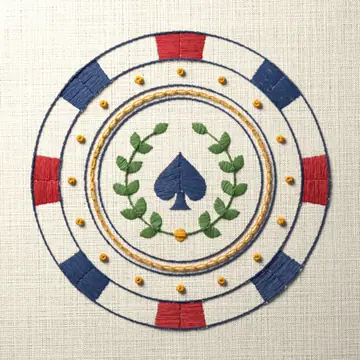
Intermediate 3–8 in hoop · 4 colors
Poker chip with spade and wreath
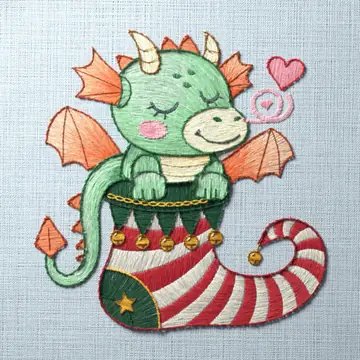
Advanced 3–8 in hoop · 23 colors
Baby dragon in a jester stocking
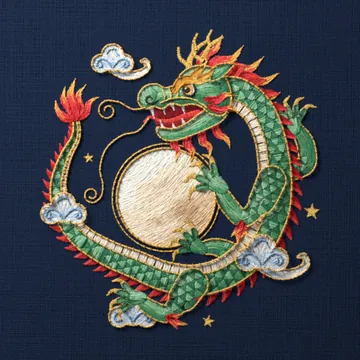
Advanced 3–8 in hoop · 21 colors
Korean style dragon around the moon
New to hand embroidery? Starting hand embroidery, step by step