Grumpy tabby cat in a daisy crown hand embroidery pattern
Advanced · 23 colors · 4.1 × 4.4 in · 7 kinds of stitch
Download free PDFPDFPrints on US Letter and A4You may sell what you make from it by hand, in small quantities. The PDF itself is not to be sold or shared. Selling, classes and kits: the rules
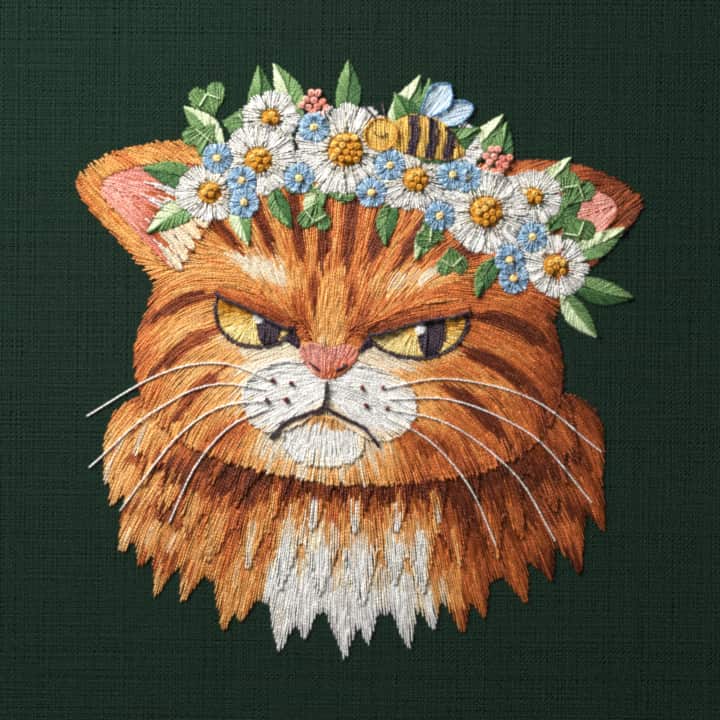
A ginger tabby with a round, low head glares to the side from under heavy lids while a crown of daisies, forget-me-nots and clover slips over one ear. A bee is asleep against the biggest daisy.
Size and details
Advanced. Uses long and short stitch over much of the design, dozens of French knots, 23 colors and a great deal of stitching.
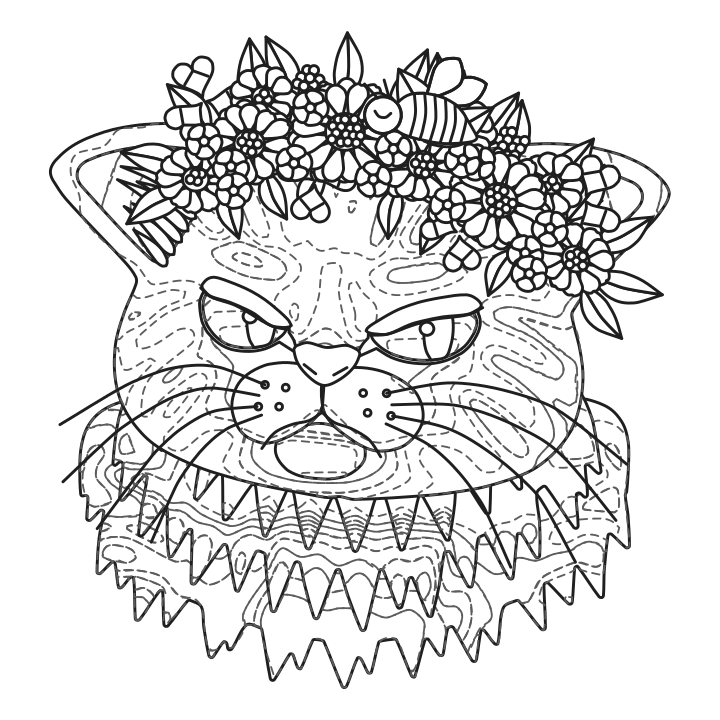
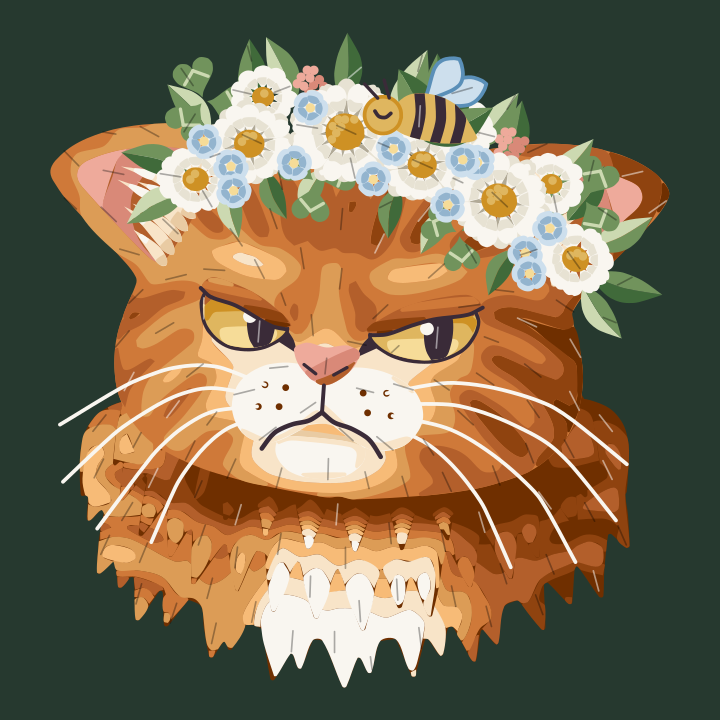
The fur, ears, eyes, nose and daisy petals are long and short stitch, worked outward from the nose on the face and downward on the ruff. The forget-me-nots, clover leaves, pupils and bee are satin stitch, the leaves are fishbone stitch, and the daisy hearts and clover blossoms are French knots. The mouth is split stitch, and so are the whiskers, worked last. It is drawn for dark green linen. In the picture of where the colors go, the fine lines show which way the stitches lie.
| Hoop | Inches | Centimeters | Satin stitch up to |
|---|---|---|---|
| 3 in (8 cm) | 1.6 × 1.7 in | 4.1 × 4.3 cm | 1/8 in (3 mm) |
| 4 in (10 cm) | 2.5 × 2.6 in | 6.4 × 6.6 cm | 3/16 in (5 mm) |
| 5 in (13 cm) | 3.3 × 3.5 in | 8.4 × 8.9 cm | 1/4 in (6 mm) |
| 6 in (15 cm) | 4.1 × 4.4 in | 10.4 × 11.2 cm | 5/16 in (8 mm) |
| 8 in (20 cm) | 5.8 × 6.1 in | 14.7 × 15.5 cm | 7/16 in (11 mm) |
- In a 3, 4, 5 or 6 inch hoop the French knots are drawn smaller than about 2 mm (a little over 1/16 in). Use one strand of floss for them there, or choose a larger hoop.
What you need
- Fabric
- Plain cotton or linen in dark green, cut 9 in (23 cm) square. On white cloth its palest threads do not show: choose other colors under Options. A pencil line does not show on it: see how to transfer a pattern to dark fabric.
- Needle
- Embroidery needle, size 9 for 1 strand, size 7 for 2 or 3, size 5 for 4 (a lower number is a thicker needle).
- Floss
- 23 colors of six-strand cotton, listed below. DMC is a brand: another brand in a like color will do.
- Marker
- A pen or a sheet that suits the fabric: how to transfer a pattern says which.
Floss
- 1DMC 300 Very Dark MahoganyRuff and shoulders (shade 1 of 8), face (shade 1 of 7), whisker dots, eyelids (darkest)
- 2DMC 400 Dark MahoganyRuff and shoulders (shade 2 of 8), face (shade 2 of 7), eyelids (dark)
- 3DMC 301 Medium MahoganyRuff and shoulders (shade 3 of 8), face (shade 3 of 7) and 4 more parts
- 4DMC 3776 Light MahoganyFace (shade 4 of 7), ruff and shoulders (shade 4 of 8), eyelids (light)
- 5DMC 977 Light Golden BrownFace (shade 5 of 7), ruff and shoulders (shade 5 of 8), eyelids (lightest)
- 6DMC 3827 Pale Golden BrownFace (shade 6 of 7), ruff and shoulders (shade 6 of 8), chin (darkest)
- 7DMC 739 Ultra Very Light TanFace (shade 7 of 7), ear tufts (middle) and 3 more parts
- 8DMC 3865 Winter WhiteDaisies (light), muzzle (lighter), ruff and shoulders (shade 8 of 8) and 4 more parts
- 9DMC 3778 Light Terra CottaInner ears and nose (middle), clover blossoms (darker)
- 10DMC 758 Very Light Terra CottaInner ears and nose (light), clover blossoms (lighter)
- 11DMC 738 Very Light TanEar tufts and chin (dark)
- 12DMC 3371 Black BrownEye rims, pupils, bee stripes, lid line, mouth and bee feelers and 2 more parts
- 13DMC 3820 Dark StrawEyes (light), bee, daisy hearts (lighter)
- 14DMC 783 Medium TopazDaisy hearts (darker), eyes (dark), bee face (lighter)
- 15DMC 3822 Light StrawEyes (lightest), forget-me-not eyes
- 16DMC 3348 Light Yellow GreenLeaves (light), clover marks
- 17DMC 3347 Medium Yellow GreenLeaves (middle), clover leaves
- 18DMC 3346 Hunter GreenLeaves (dark)
- 19DMC 822 Light Beige GrayDaisies (middle)
- 20DMC 3023 Light Brown GrayDaisies (dark)
- 21DMC 3841 Pale Baby BlueForget-me-nots (lighter), bee wings
- 22DMC 3755 Baby BlueForget-me-nots (darker)
- 23DMC 322 Dark Baby BlueBee wing edges
Skeins: 2 of DMC 300 and 2 of DMC 3776; one of each other color. An estimate for the 6 inch hoop, from the length of each line and the area of each filled shape, with a fifth added for tails.
How to stitch it
- New to hand embroidery? Start here.
- Print at 100%, trace the pattern onto the fabric, and put it in the hoop: inner ring under, drawing up, tight as a drum.
- Floss is six strands. Cut 18 inches (45 cm), pull out the number given one at a time, and lay them together.
- Inside a filled shape start with two or three tiny stitches, which the filling covers. Start a line with a small knot on the back. End each thread by running the needle under the backs of a few stitches.
- Each small ring is one French knot. A fine broken line inside a shape is where two shades meet: trace it, do not stitch it.
- A number under “Where colors go” is a color of the list. The fine lines on the colors show which way the stitches lie.
Stitch in this order
Filled parts from the back of the picture forward, then lines and knots. Where a stitch page names another number of strands, use the number here.
- Long and short stitch 1 strandRuff and shoulders, inner ears, face, ear tufts, eyes, eyelids, chin, muzzle, nose, daisies
- Satin stitch 2 strandsEye rims, pupils, eye lights, clover leaves, daisy hearts, forget-me-nots, bee wings, bee, bee stripes
- Fishbone stitch 2 strandsLeaves
- Split stitch3 or 4 strands: mouth3 strands: lid line1 strand: bee wing edges, bee face, whiskers
- Straight stitch2 strands: nostrils, bee feelers1 strand: clover marks
- Back stitch 1 strandBee face
- French knot two wraps2 strands: clover blossoms, daisy hearts, forget-me-not eyes1 strand: whisker dots
When it is done, take off any lines that still show and finish the hoop. A guide to this kind of work: Stitches for fur, hair and feathers.
More patterns like this
Advanced 3–8 in hoop · 18 colors
Busy doing nothing
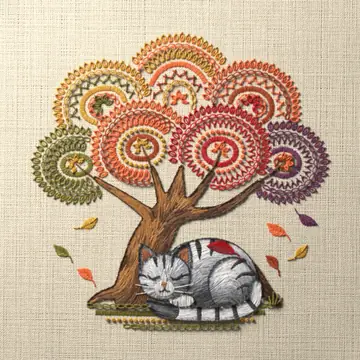
Advanced prints 3–14 in · 16 colors
Cat asleep under an autumn tree
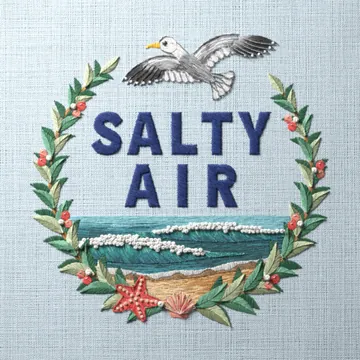
Advanced prints 3–14 in · 24 colors
Salty air in laurel
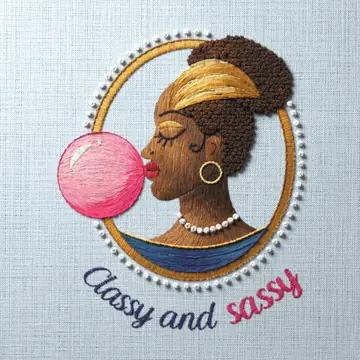
Advanced 3–8 in hoop · 22 colors
Classy and sassy
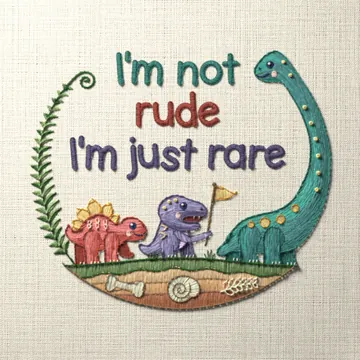
Advanced 3–8 in hoop · 22 colors
I’m not rude I’m just rare, dinosaurs
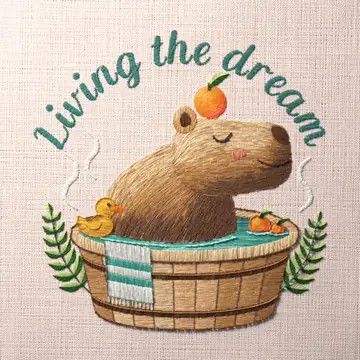
Advanced prints 3–14 in · 19 colors
Living the dream
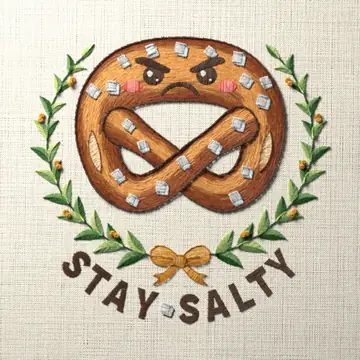
Advanced prints 3–14 in · 19 colors
Stay salty in laurel
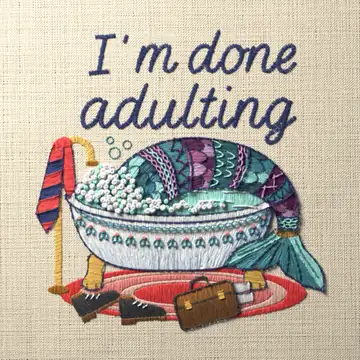
Advanced 3–8 in hoop · 18 colors
I’m done adulting
New to hand embroidery? Starting hand embroidery, step by step