Halloween letters with vines and bats hand embroidery pattern
Intermediate · 12 colors · 27 letters
Download letter A (free PDF)PDF, US Letter · 25 KBFor your own stitching, gifts and handmade pieces you sell. Do not resell or share this PDF. What you may do, in full
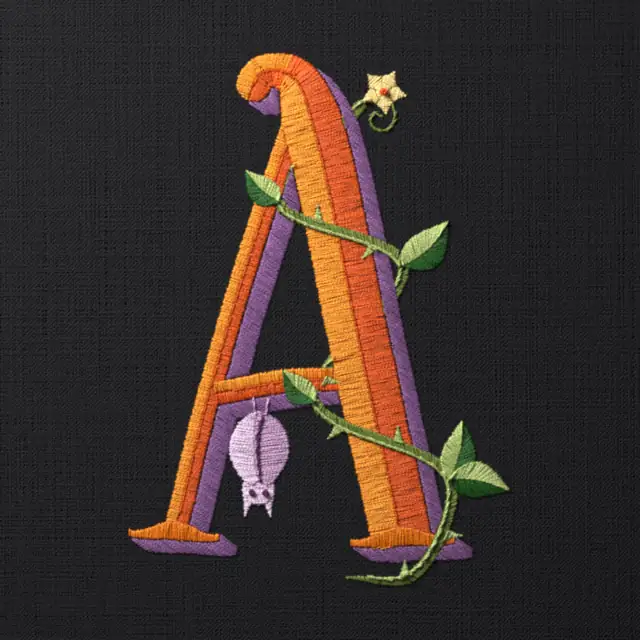
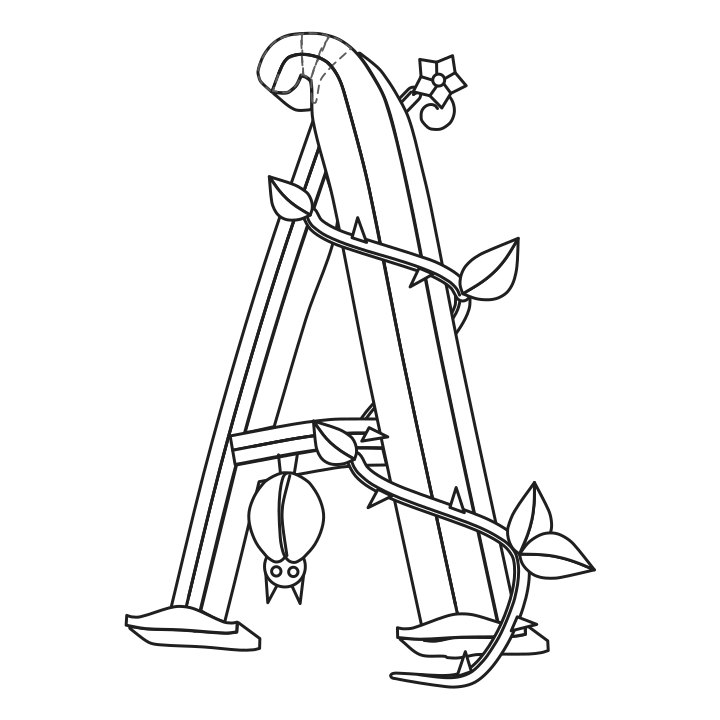
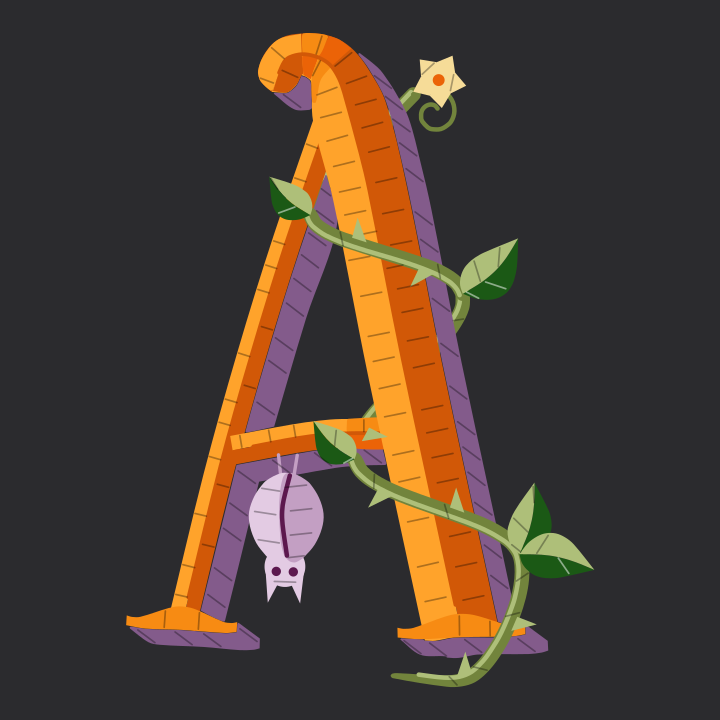
The letter A of the set. Each stroke of a letter is two narrow columns of satin stitch in light and dark orange that meet on a back stitch line, with a purple satin stitch shade to the right and below. A thorny vine with fishbone stitch leaves and a stem stitch light winds in front of each letter and behind it; the bats, spiders and pumpkins are satin stitch, with French knot eyes on the bats and spiders. A letter alone stands about 70 of 100 parts of the field tall: near 2 3/8 inches in a 4 inch hoop and 3 7/8 inches in a 6 inch hoop. It is drawn for charcoal linen.
Size and details
Intermediate. Satin stitch over about a fifth of the cloth in a 6 inch hoop and twelve colors.
Intermediate. Satin stitch over about a quarter of the cloth in a 6 inch hoop and eleven colors.
Intermediate. Twelve colors; from a 6 inch hoop up the widest satin stitches are long.
Intermediate. Satin stitch over about a quarter of the cloth in a 6 inch hoop and nine colors.
Intermediate. Satin stitch over about a fifth of the cloth in a 6 inch hoop and nine colors.
Intermediate. Satin stitch over about a quarter of the cloth in a 6 inch hoop and twelve colors.
Intermediate. Nine colors.
Intermediate. Satin stitch over about a sixth of the cloth in a 6 inch hoop and twelve colors; from a 6 inch hoop up some of the satin stitches are long.
Intermediate. Satin stitch over about a fifth of the cloth in a 6 inch hoop and twelve colors; from a 6 inch hoop up some of the satin stitches are long.
Intermediate. Twelve colors.
Intermediate. Satin stitch over about a sixth of the cloth in a 6 inch hoop and nine colors.
Intermediate. Satin stitch over about a fifth of the cloth in a 6 inch hoop and eleven colors.
12 colors of floss and 6 kinds of stitch:
11 colors of floss and 6 kinds of stitch:
12 colors of floss and 5 kinds of stitch:
9 colors of floss and 5 kinds of stitch:
11 colors of floss and 5 kinds of stitch:
| Hoop | Inches | Centimeters | Satin stitch up to |
|---|---|---|---|
| 3 in (8 cm) | 1.2 × 1.7 in | 3 × 4.3 cm | 1/8 in (3 mm) |
| 4 in (10 cm) | 1.8 × 2.6 in | 4.6 × 6.6 cm | 3/16 in (5 mm) |
| 5 in (13 cm) | 2.4 × 3.4 in | 6.1 × 8.6 cm | 1/4 in (6 mm) |
| 6 in (15 cm) | 3.1 × 4.3 in | 7.9 × 10.9 cm | 5/16 in (8 mm) |
| 8 in (20 cm) | 4.3 × 6 in | 10.9 × 15.2 cm | 7/16 in (11 mm) |
- In a 3, 4 or 5 inch hoop the French knots are drawn smaller than about 2 mm (a little over 1/16 in). Use one strand of floss for them there, or choose a larger hoop.
- In a 3 or 4 inch hoop the French knots are drawn smaller than about 2 mm (a little over 1/16 in). Use one strand of floss for them there, or choose a larger hoop.
- In an 8 inch hoop the widest satin stitch shape is 9/16 in (14 mm) across. Satin stitches longer than about 12 mm (just under 1/2 in) tend to work loose: divide the shape into sections, or work it in long and short stitch.
- In a 3, 4, 5 or 6 inch hoop the French knots are drawn smaller than about 2 mm (a little over 1/16 in). Use one strand of floss for them there, or choose a larger hoop.
- In a 3, 4 or 5 inch hoop the French knot is drawn smaller than about 2 mm (a little over 1/16 in). Use one strand of floss for it there, or choose a larger hoop.
- In an 8 inch hoop the widest satin stitch shape is 1/2 in (13 mm) across. Satin stitches longer than about 12 mm (just under 1/2 in) tend to work loose: divide the shape into sections, or work it in long and short stitch.
- In a 3, 4 or 5 inch hoop the French knots are drawn smaller than about 2 mm (a little over 1/16 in). Use one strand of floss for them there, or choose a larger hoop.
- In a 3, 4, 5, 6 or 8 inch hoop the French knots are drawn smaller than about 2 mm (a little over 1/16 in). Use one strand of floss for them there, or choose a larger hoop.
- In an 8 inch hoop the widest satin stitch shape is 1/2 in (13 mm) across. Satin stitches longer than about 12 mm (just under 1/2 in) tend to work loose: divide the shape into sections, or work it in long and short stitch.
- In a 3, 4, 5 or 6 inch hoop the French knots are drawn smaller than about 2 mm (a little over 1/16 in). Use one strand of floss for them there, or choose a larger hoop.
- In an 8 inch hoop the widest satin stitch shape is 9/16 in (14 mm) across. Satin stitches longer than about 12 mm (just under 1/2 in) tend to work loose: divide the shape into sections, or work it in long and short stitch.
- In a 3, 4 or 5 inch hoop the French knots are drawn smaller than about 2 mm (a little over 1/16 in). Use one strand of floss for them there, or choose a larger hoop.
The pattern is drawn inside a circle about half an inch (1.3 cm) smaller all around than the hoop.
What you need
- DMC 469 Avocado GreenVine and tendrils
- DMC 471 Very Light Avocado GreenVine light and thorns, leaves (lighter)
- DMC 208 Very Dark LavenderShade side
- DMC 900 Dark Burnt OrangeLetter (darkest), spine of the letter
- DMC 741 Medium TangerineLetter (lightest)
- DMC 970 Light PumpkinSerifs, letter (light)
- DMC 946 Medium Burnt OrangeLetter (dark), blossom hearts
- DMC 3345 Dark Hunter GreenLeaves (darker)
- DMC 3822 Light StrawBlossoms
- DMC 210 Medium LavenderBat wings (darker), bat feet
- DMC 211 Light LavenderBat wings (lighter), bat
- DMC 550 Very Dark VioletWing ribs and eyes
- DMC 469 Avocado GreenVine and tendrils
- DMC 471 Very Light Avocado GreenLeaves (lighter), vine light and thorns
- DMC 208 Very Dark LavenderShade side
- DMC 900 Dark Burnt OrangeLetter (darkest), spine of the letter
- DMC 946 Medium Burnt OrangeLetter (dark)
- DMC 970 Light PumpkinLetter (light), serifs
- DMC 741 Medium TangerineLetter (lightest)
- DMC 3345 Dark Hunter GreenLeaves (darker)
- DMC 211 Light LavenderSpider legs and spider thread, spider (lighter)
- DMC 210 Medium LavenderSpider (darker)
- DMC 550 Very Dark VioletSpider mark and eyes
- DMC 469 Avocado GreenVine and tendrils
- DMC 471 Very Light Avocado GreenLeaves (lighter), vine light and thorns
- DMC 208 Very Dark LavenderShade side, bat wings (darker)
- DMC 900 Dark Burnt OrangeLetter (darkest), spine of the letter
- DMC 946 Medium Burnt OrangeLetter (dark), blossom hearts
- DMC 970 Light PumpkinLetter (light)
- DMC 741 Medium TangerineLetter (lightest)
- DMC 3345 Dark Hunter GreenLeaves (darker)
- DMC 3822 Light StrawBlossoms
- DMC 210 Medium LavenderBat wings (lighter)
- DMC 211 Light LavenderBat
- DMC 550 Very Dark VioletBat outline and eyes
- DMC 469 Avocado GreenVine and tendrils
- DMC 471 Very Light Avocado GreenLeaves (lighter), vine light, thorns and pumpkin stalk
- DMC 208 Very Dark LavenderShade side
- DMC 900 Dark Burnt OrangeLetter and pumpkin (darkest), spine of the letter and pumpkin ribs
- DMC 946 Medium Burnt OrangeLetter and pumpkin (dark), blossom hearts
- DMC 970 Light PumpkinLetter and pumpkin (light), serifs
- DMC 741 Medium TangerineLetter and pumpkin (lightest)
- DMC 3822 Light StrawBlossoms
- DMC 3345 Dark Hunter GreenLeaves (darker)
- DMC 469 Avocado GreenVine and tendrils
- DMC 471 Very Light Avocado GreenVine light, thorns and pumpkin stalk, leaves (lighter)
- DMC 208 Very Dark LavenderShade side
- DMC 970 Light PumpkinSerifs, letter and pumpkin (light)
- DMC 741 Medium TangerineLetter and pumpkin (lightest)
- DMC 946 Medium Burnt OrangeLetter and pumpkin (dark), blossom hearts
- DMC 900 Dark Burnt OrangeLetter and pumpkin (darkest), spine of the letter and pumpkin ribs
- DMC 3345 Dark Hunter GreenLeaves (darker)
- DMC 3822 Light StrawBlossoms
- DMC 469 Avocado GreenVine and tendrils
- DMC 471 Very Light Avocado GreenLeaves (lighter), vine light and thorns
- DMC 208 Very Dark LavenderShade side
- DMC 970 Light PumpkinSerifs, letter (light)
- DMC 741 Medium TangerineLetter (lightest)
- DMC 946 Medium Burnt OrangeLetter (dark), blossom hearts
- DMC 900 Dark Burnt OrangeLetter (darkest), spine of the letter
- DMC 3345 Dark Hunter GreenLeaves (darker)
- DMC 3822 Light StrawBlossoms
- DMC 211 Light LavenderSpider legs and spider thread, spider (lighter)
- DMC 210 Medium LavenderSpider (darker)
- DMC 550 Very Dark VioletSpider mark and eyes
- DMC 469 Avocado GreenVine and tendrils
- DMC 471 Very Light Avocado GreenLeaves (lighter), vine light and thorns
- DMC 208 Very Dark LavenderShade side, bat wings (darker)
- DMC 900 Dark Burnt OrangeLetter (darkest), spine of the letter
- DMC 946 Medium Burnt OrangeLetter (dark), blossom hearts
- DMC 970 Light PumpkinLetter (light), serifs
- DMC 741 Medium TangerineLetter (lightest)
- DMC 3345 Dark Hunter GreenLeaves (darker)
- DMC 3822 Light StrawBlossoms
- DMC 210 Medium LavenderBat wings (lighter)
- DMC 211 Light LavenderBat
- DMC 550 Very Dark VioletBat outline and eyes
- DMC 469 Avocado GreenVine and tendrils
- DMC 471 Very Light Avocado GreenLeaves (lighter), vine light and thorns
- DMC 208 Very Dark LavenderShade side
- DMC 741 Medium TangerineLetter (lightest)
- DMC 970 Light PumpkinSerifs, letter (light)
- DMC 900 Dark Burnt OrangeLetter (darkest), spine of the letter
- DMC 946 Medium Burnt OrangeLetter (dark), blossom hearts
- DMC 3345 Dark Hunter GreenLeaves (darker)
- DMC 3822 Light StrawBlossoms
- DMC 210 Medium LavenderBat wings (darker), bat feet
- DMC 211 Light LavenderBat wings (lighter), bat
- DMC 550 Very Dark VioletWing ribs and eyes
- DMC 469 Avocado GreenVine and tendrils
- DMC 471 Very Light Avocado GreenLeaves (lighter), vine light, pumpkin stalk and thorns
- DMC 208 Very Dark LavenderShade side
- DMC 900 Dark Burnt OrangeLetter (darker), pumpkin (darkest), spine of the letter and pumpkin ribs
- DMC 741 Medium TangerineLetter (lighter), pumpkin (lightest)
- DMC 970 Light PumpkinSerifs, pumpkin (light)
- DMC 3345 Dark Hunter GreenLeaves (darker)
- DMC 3822 Light StrawBlossoms
- DMC 946 Medium Burnt OrangePumpkin (dark), blossom hearts
- DMC 469 Avocado GreenVine and tendrils
- DMC 471 Very Light Avocado GreenLeaves (lighter), vine light and thorns
- DMC 208 Very Dark LavenderShade side, bat wings (darker)
- DMC 900 Dark Burnt OrangeLetter (darkest), spine of the letter
- DMC 946 Medium Burnt OrangeLetter (dark), blossom hearts
- DMC 970 Light PumpkinSerifs, letter (light)
- DMC 741 Medium TangerineLetter (lightest)
- DMC 3345 Dark Hunter GreenLeaves (darker)
- DMC 3822 Light StrawBlossoms
- DMC 210 Medium LavenderBat wings (lighter)
- DMC 211 Light LavenderBat
- DMC 550 Very Dark VioletBat outline and eyes
- DMC 469 Avocado GreenVine and tendrils
- DMC 471 Very Light Avocado GreenLeaves (lighter), vine light and thorns
- DMC 208 Very Dark LavenderShade side
- DMC 900 Dark Burnt OrangeLetter (darker), spine of the letter
- DMC 741 Medium TangerineLetter (lighter)
- DMC 970 Light PumpkinSerifs
- DMC 3822 Light StrawBlossoms
- DMC 946 Medium Burnt OrangeBlossom hearts
- DMC 3345 Dark Hunter GreenLeaves (darker)
- DMC 211 Light LavenderSpider legs and spider thread, spider (lighter)
- DMC 210 Medium LavenderSpider (darker)
- DMC 550 Very Dark VioletSpider mark and eyes
- DMC 469 Avocado GreenVine and tendrils
- DMC 471 Very Light Avocado GreenLeaves (lighter), vine light, thorns and pumpkin stalk
- DMC 208 Very Dark LavenderShade side, bat wings (darker)
- DMC 970 Light PumpkinSerifs, letter and pumpkin (light)
- DMC 946 Medium Burnt OrangePumpkin and letter (dark), blossom hearts
- DMC 900 Dark Burnt OrangeLetter and pumpkin (darkest), spine of the letter and pumpkin ribs
- DMC 741 Medium TangerineLetter and pumpkin (lightest)
- DMC 3345 Dark Hunter GreenLeaves (darker)
- DMC 3822 Light StrawBlossoms
- DMC 210 Medium LavenderBat wings (lighter)
- DMC 211 Light LavenderBat
- DMC 550 Very Dark VioletBat outline and eyes
- DMC 469 Avocado GreenVine and tendrils
- DMC 471 Very Light Avocado GreenVine light and thorns, leaves (lighter)
- DMC 208 Very Dark LavenderShade side, bat wings (darker)
- DMC 900 Dark Burnt OrangeLetter (darker), spine of the letter
- DMC 741 Medium TangerineLetter (lighter)
- DMC 970 Light PumpkinSerifs
- DMC 3345 Dark Hunter GreenLeaves (darker)
- DMC 3822 Light StrawBlossoms
- DMC 946 Medium Burnt OrangeBlossom hearts
- DMC 210 Medium LavenderBat wings (lighter)
- DMC 211 Light LavenderBat
- DMC 550 Very Dark VioletBat outline and eyes
- DMC 469 Avocado GreenVine and tendrils
- DMC 471 Very Light Avocado GreenLeaves (lighter), vine light, thorns and pumpkin stalk
- DMC 208 Very Dark LavenderShade side
- DMC 900 Dark Burnt OrangeLetter (darker), spine of the letter and pumpkin ribs, pumpkin (darkest)
- DMC 741 Medium TangerineLetter (lighter), pumpkin (lightest)
- DMC 970 Light PumpkinSerifs, pumpkin (light)
- DMC 3345 Dark Hunter GreenLeaves (darker)
- DMC 3822 Light StrawBlossoms
- DMC 946 Medium Burnt OrangePumpkin (dark), blossom hearts
- DMC 469 Avocado GreenVine and tendrils
- DMC 471 Very Light Avocado GreenLeaves (lighter), vine light and thorns
- DMC 208 Very Dark LavenderShade side
- DMC 900 Dark Burnt OrangeLetter (darkest), spine of the letter
- DMC 946 Medium Burnt OrangeLetter (dark), blossom hearts
- DMC 970 Light PumpkinLetter (light)
- DMC 741 Medium TangerineLetter (lightest)
- DMC 3345 Dark Hunter GreenLeaves (darker)
- DMC 3822 Light StrawBlossoms
- DMC 211 Light LavenderSpider legs and spider thread, spider (lighter)
- DMC 210 Medium LavenderSpider (darker)
- DMC 550 Very Dark VioletSpider mark and eyes
- DMC 469 Avocado GreenVine and tendrils
- DMC 471 Very Light Avocado GreenLeaves (lighter), vine light, thorns and pumpkin stalk
- DMC 208 Very Dark LavenderShade side
- DMC 900 Dark Burnt OrangeLetter and pumpkin (darkest), spine of the letter and pumpkin ribs
- DMC 946 Medium Burnt OrangePumpkin and letter (dark), blossom hearts
- DMC 970 Light PumpkinLetter and pumpkin (light), serifs
- DMC 741 Medium TangerineLetter and pumpkin (lightest)
- DMC 3345 Dark Hunter GreenLeaves (darker)
- DMC 3822 Light StrawBlossoms
- DMC 469 Avocado GreenVine and tendrils
- DMC 471 Very Light Avocado GreenLeaves (lighter), vine light and thorns
- DMC 208 Very Dark LavenderShade side, bat wings (darker)
- DMC 741 Medium TangerineLetter (lightest)
- DMC 900 Dark Burnt OrangeLetter (darkest), spine of the letter
- DMC 946 Medium Burnt OrangeLetter (dark), blossom hearts
- DMC 970 Light PumpkinLetter (light)
- DMC 3822 Light StrawBlossoms
- DMC 3345 Dark Hunter GreenLeaves (darker)
- DMC 210 Medium LavenderBat wings (lighter)
- DMC 211 Light LavenderBat
- DMC 550 Very Dark VioletBat outline and eyes
- DMC 469 Avocado GreenVine and tendrils
- DMC 471 Very Light Avocado GreenVine light and thorns, leaves (lighter)
- DMC 208 Very Dark LavenderShade side, bat wings (darker)
- DMC 900 Dark Burnt OrangeLetter (darkest), spine of the letter
- DMC 946 Medium Burnt OrangeLetter (dark), blossom hearts
- DMC 970 Light PumpkinSerifs, letter (light)
- DMC 741 Medium TangerineLetter (lightest)
- DMC 3345 Dark Hunter GreenLeaves (darker)
- DMC 3822 Light StrawBlossoms
- DMC 210 Medium LavenderBat wings (lighter)
- DMC 211 Light LavenderBat
- DMC 550 Very Dark VioletBat outline and eyes
- DMC 469 Avocado GreenVine
- DMC 471 Very Light Avocado GreenLeaves (lighter), vine light, thorns and pumpkin stalk
- DMC 208 Very Dark LavenderShade side
- DMC 900 Dark Burnt OrangeLetter and pumpkin (darkest), spine of the letter and pumpkin ribs
- DMC 946 Medium Burnt OrangeLetter and pumpkin (dark), blossom hearts
- DMC 970 Light PumpkinLetter and pumpkin (light)
- DMC 741 Medium TangerineLetter and pumpkin (lightest)
- DMC 3345 Dark Hunter GreenLeaves (darker)
- DMC 3822 Light StrawBlossoms
- DMC 469 Avocado GreenVine and tendrils
- DMC 471 Very Light Avocado GreenLeaves (lighter), vine light and thorns
- DMC 208 Very Dark LavenderShade side
- DMC 970 Light PumpkinSerifs, letter (light)
- DMC 946 Medium Burnt OrangeLetter (dark), blossom hearts
- DMC 900 Dark Burnt OrangeLetter (darkest), spine of the letter
- DMC 741 Medium TangerineLetter (lightest)
- DMC 3345 Dark Hunter GreenLeaves (darker)
- DMC 3822 Light StrawBlossoms
- DMC 211 Light LavenderSpider legs and spider thread, spider (lighter)
- DMC 210 Medium LavenderSpider (darker)
- DMC 550 Very Dark VioletSpider mark and eyes
- DMC 469 Avocado GreenVine and tendrils
- DMC 471 Very Light Avocado GreenLeaves (lighter), vine light, thorns and pumpkin stalk
- DMC 208 Very Dark LavenderShade side
- DMC 900 Dark Burnt OrangeLetter and pumpkin (darkest), spine of the letter and pumpkin ribs
- DMC 946 Medium Burnt OrangePumpkin and letter (dark), blossom hearts
- DMC 970 Light PumpkinSerifs, letter and pumpkin (light)
- DMC 741 Medium TangerineLetter and pumpkin (lightest)
- DMC 3345 Dark Hunter GreenLeaves (darker)
- DMC 3822 Light StrawBlossoms
- DMC 469 Avocado GreenVine and tendrils
- DMC 471 Very Light Avocado GreenLeaves (lighter), vine light, pumpkin stalk and thorns
- DMC 208 Very Dark LavenderShade side
- DMC 900 Dark Burnt OrangeLetter (darker), spine of the letter and pumpkin ribs, pumpkin (darkest)
- DMC 741 Medium TangerineLetter (lighter), pumpkin (lightest)
- DMC 970 Light PumpkinSerifs, pumpkin (light)
- DMC 3345 Dark Hunter GreenLeaves (darker)
- DMC 3822 Light StrawBlossoms
- DMC 946 Medium Burnt OrangePumpkin (dark), blossom hearts
- DMC 469 Avocado GreenVine and tendrils
- DMC 471 Very Light Avocado GreenVine light, thorns and pumpkin stalk, leaves (lighter)
- DMC 208 Very Dark LavenderShade side
- DMC 900 Dark Burnt OrangeLetter (darker), spine of the letter and pumpkin ribs, pumpkin (darkest)
- DMC 741 Medium TangerineLetter (lighter), pumpkin (lightest)
- DMC 970 Light PumpkinSerifs, pumpkin (light)
- DMC 3345 Dark Hunter GreenLeaves (darker)
- DMC 3822 Light StrawBlossoms
- DMC 946 Medium Burnt OrangePumpkin (dark), blossom hearts
- DMC 469 Avocado GreenVine and tendrils
- DMC 471 Very Light Avocado GreenLeaves (lighter), vine light and thorns
- DMC 208 Very Dark LavenderShade side, bat wings (darker)
- DMC 970 Light PumpkinLetter (light), serifs
- DMC 946 Medium Burnt OrangeLetter (dark), blossom hearts
- DMC 900 Dark Burnt OrangeLetter (darkest), spine of the letter
- DMC 741 Medium TangerineLetter (lightest)
- DMC 3822 Light StrawBlossoms
- DMC 3345 Dark Hunter GreenLeaves (darker)
- DMC 210 Medium LavenderBat wings (lighter)
- DMC 211 Light LavenderBat
- DMC 550 Very Dark VioletBat outline and eyes
- DMC 208 Very Dark LavenderShade side, bat wings (darker)
- DMC 741 Medium TangerineLetter (lightest)
- DMC 900 Dark Burnt OrangeLetter (darkest), spine of the letter
- DMC 946 Medium Burnt OrangeLetter (dark)
- DMC 970 Light PumpkinLetter (light), serifs
- DMC 469 Avocado GreenVine and tendrils
- DMC 471 Very Light Avocado GreenLeaves (lighter), vine light and thorns
- DMC 3345 Dark Hunter GreenLeaves (darker)
- DMC 210 Medium LavenderBat wings (lighter)
- DMC 211 Light LavenderBat
- DMC 550 Very Dark VioletBat outline and eyes
The floss is six-strand cotton; the stitch guide says how many strands to use. You also need a hoop, an embroidery needle (a size 7 to 9 suits two or three strands) and plain cotton or linen fabric. To frame the piece in its hoop, cut a square 3 inches (8 cm) wider than the hoop: a 9 inch (23 cm) square for a 6 inch hoop.
When it is stitched, how to finish a hoop shows how to back it for the wall.
Stitch guide
- Put the pattern on the fabric (how to transfer a pattern) and the fabric in the hoop.
- Stitch the filled parts first, what lies behind before what lies in front of it.
- Then stitch the lines: stems, veins and outlines over the edges of the filled parts.
- Keep the knots for the end, so that the hoop and your hand do not flatten them.
Start each thread with a small knot on the back or one of the knotless starts, and end it by running the needle under the backs of a few stitches (starting and ending a thread). Use the strands this list gives, also where a page about a stitch names another number.
- Satin stitch 2 strandsVine, shade side, letter, serifs, blossoms, thorns, bat, bat wings
- Stem stitch 2 strandsVine light, tendrils, vine, wing ribs
- Back stitch 1 strandSpine of the letter
- Fishbone stitch 2 strandsLeaves
- French knot 1 to 2 strands, two wrapsBlossom hearts, eyes
- Straight stitch 2 strandsBat feet
- Satin stitch 2 strandsVine, shade side, letter, serifs, thorns, spider
- Stem stitch 2 strandsVine light, tendrils
- Back stitch 1 strandSpine of the letter, spider thread, spider legs
- Fishbone stitch 2 strandsLeaves
- Straight stitch 2 strandsSpider mark
- French knot 1 strand, two wrapsEyes
- Satin stitch 2 strandsVine, shade side, letter, blossoms, thorns, bat wings, bat
- Stem stitch 2 strandsVine light, tendrils, vine
- Back stitch 1 strandSpine of the letter, bat outline
- Fishbone stitch 2 strandsLeaves
- French knot 2 strands, two wrapsBlossom hearts, eyes
- Satin stitch 2 strandsVine, shade side, letter, serifs, blossoms, thorns, pumpkin stalk, pumpkin
- Stem stitch 2 strandsVine light, tendrils, vine
- Back stitch 1 strandSpine of the letter, pumpkin ribs
- French knot 2 strands, two wrapsBlossom hearts
- Fishbone stitch 2 strandsLeaves
- Satin stitch 2 strandsVine, shade side, letter, serifs, blossoms, thorns, pumpkin stalk, pumpkin
- Stem stitch 2 strandsVine light, tendrils, vine
- Back stitch 1 strandSpine of the letter, pumpkin ribs
- Fishbone stitch 2 strandsLeaves
- French knot 2 strands, two wrapsBlossom hearts
- Satin stitch 2 strandsVine, shade side, letter, serifs, blossoms, thorns, spider
- Stem stitch 2 strandsVine light, tendrils, vine
- Back stitch 1 strandSpine of the letter, spider thread, spider legs
- Fishbone stitch 2 strandsLeaves
- French knot 1 to 2 strands, two wrapsBlossom hearts, eyes
- Straight stitch 2 strandsSpider mark
- Satin stitch 2 strandsVine, shade side, letter, serifs, blossoms, thorns, bat wings, bat
- Stem stitch 2 strandsVine light, tendrils, vine
- Back stitch 1 strandSpine of the letter, bat outline
- Fishbone stitch 2 strandsLeaves
- French knot 2 strands, two wrapsBlossom hearts, eyes
- Satin stitch 2 strandsVine, shade side, letter, serifs, blossoms, thorns, spider
- Stem stitch 2 strandsVine light, tendrils, vine
- Back stitch 1 strandSpine of the letter, spider thread, spider legs
- French knot 1 to 2 strands, two wrapsBlossom hearts, eyes
- Fishbone stitch 2 strandsLeaves
- Straight stitch 2 strandsSpider mark
- Satin stitch 2 strandsVine, shade side, letter, serifs, blossoms, thorns, pumpkin stalk, pumpkin, bat wings, bat
- Stem stitch 2 strandsVine light, tendrils, vine
- Back stitch 1 strandSpine of the letter, pumpkin ribs, bat outline
- Fishbone stitch 2 strandsLeaves
- French knot 2 strands, two wrapsBlossom hearts, eyes
- Satin stitch 2 strandsVine, shade side, letter, blossoms, thorns, spider
- Stem stitch 2 strandsVine light, tendrils, vine
- Back stitch 1 strandSpine of the letter, spider thread, spider legs
- Fishbone stitch 2 strandsLeaves
- French knot 1 to 2 strands, two wrapsBlossom hearts, eyes
- Straight stitch 2 strandsSpider mark
- Satin stitch 2 strandsVine, shade side, letter, blossoms, thorns, bat wings, bat
- Stem stitch 2 strandsVine light, tendrils, vine
- Back stitch 1 strandSpine of the letter, bat outline
- French knot 2 strands, two wrapsBlossom hearts, eyes
- Fishbone stitch 2 strandsLeaves
- Satin stitch 2 strandsVine, shade side, letter, blossoms, thorns, pumpkin stalk, pumpkin
- Stem stitch 2 strandsVine light, vine
- Back stitch 1 strandSpine of the letter, pumpkin ribs
- Fishbone stitch 2 strandsLeaves
- French knot 2 strands, two wrapsBlossom hearts
- Satin stitch 2 strandsVine, shade side, letter, serifs, blossoms, thorns, bat wings, bat
- Stem stitch 2 strandsVine light, tendrils, vine
- Back stitch 1 strandSpine of the letter, bat outline
- French knot 2 strands, two wrapsBlossom hearts, eyes
- Fishbone stitch 2 strandsLeaves
- Satin stitch 2 strandsShade side, letter, serifs, vine, thorns, bat wings, bat
- Back stitch 1 strandSpine of the letter, bat outline
- Stem stitch 2 strandsVine light, tendrils
- Fishbone stitch 2 strandsLeaves
- French knot 2 strands, two wrapsEyes
Getting it onto your fabric
The PDF holds the pattern twice at actual size: once as drawn, and once mirrored for an iron-on transfer pen. Print it at 100% with scaling off and check the one-inch square (25.4 mm) with a ruler before you trace. How to transfer a pattern explains tracing, carbon paper and the other ways. The files are under Downloads.
Downloads
- Download letter A (free PDF) A, PDF, US Letter, 3 pages, for a 6 inch (15 cm) hoop
- Download letter A, A4 (free PDF) A, PDF, A4, 3 pages, for a 6 inch (15 cm) hoop
More patterns like this
Intermediate 27 letters · 9 colors
Western slab letters
Intermediate 3–8 in hoop · 8 colors
Block letter J with flowers
Intermediate 26 letters · 6 colors
Block letter laurel monogram
Advanced 27 letters · 17 colors
Sunflower letters
Intermediate 27 letters · 5 colors
Drop shadow block letters
Easy 27 letters · 5 colors
Letters with a single sprig
Intermediate 27 letters · 3 colors
Copperplate script letters
Intermediate 3–8 in hoop · 3 colors
Lace frame for a wedding monogram
New to hand embroidery? Starting hand embroidery, step by step