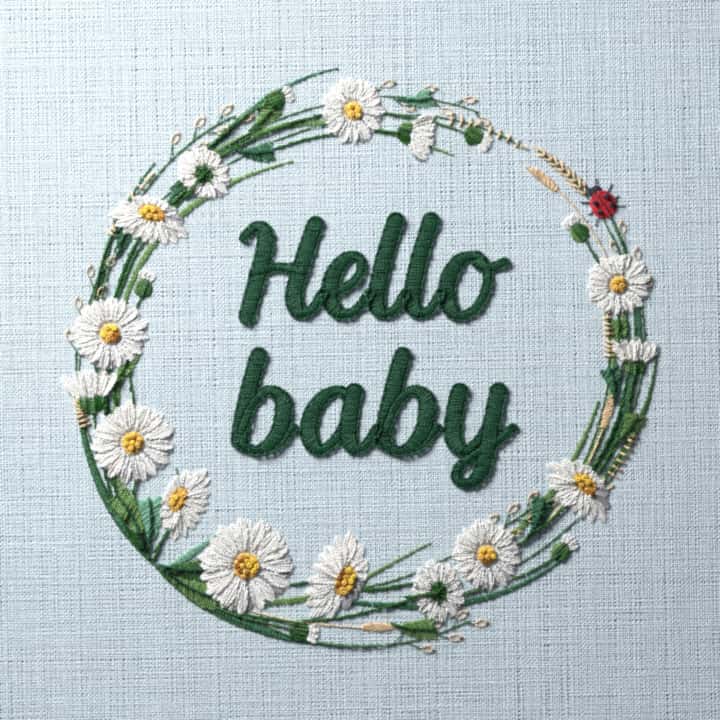
Hello baby in daisies hand embroidery pattern
Advanced · 16 colors · 7 kinds of stitch
Download free PDFPDF, US Letter · 199 KBFor your own stitching, gifts and handmade pieces you sell. Do not resell or share this PDF or copies of it. Selling, classes and kits: the rules
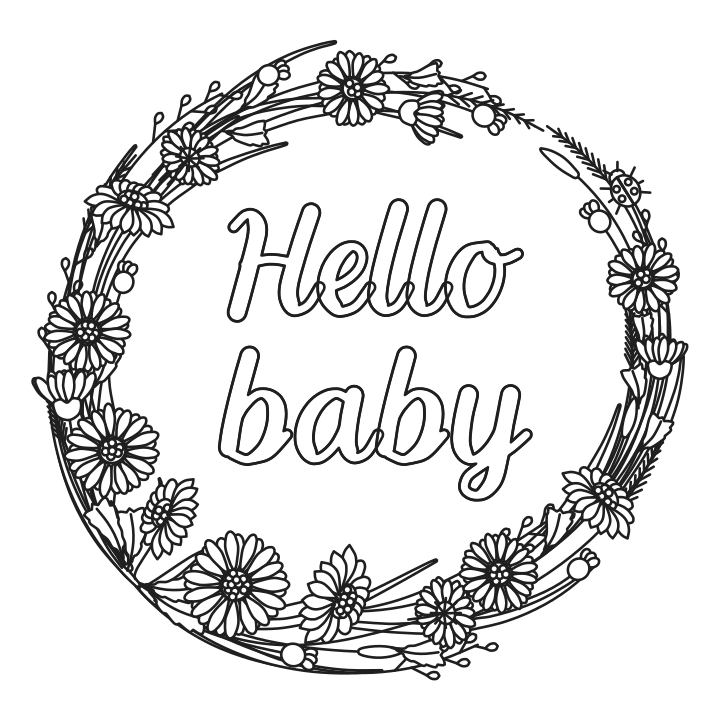
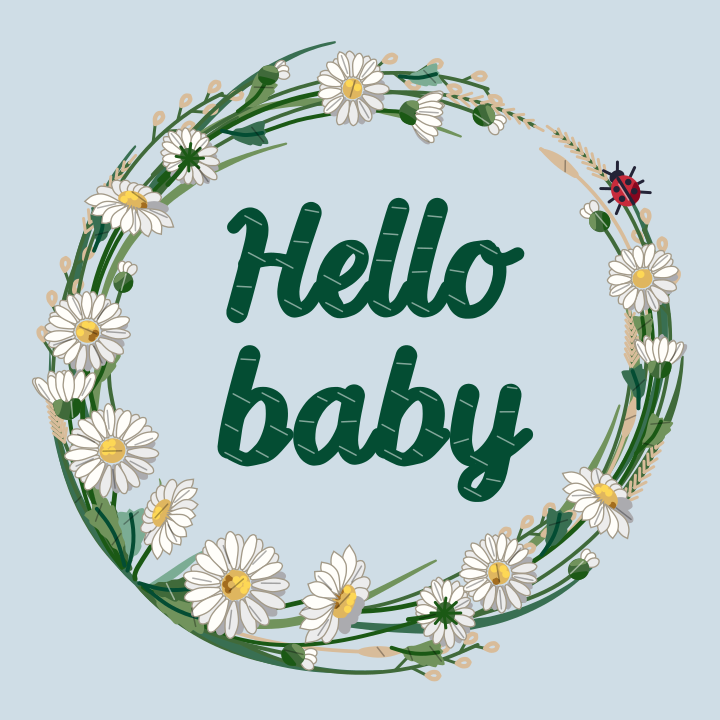
The words “Hello baby” with a ring of daisies and meadow grasses, tallest at the lower left, with one ladybug. The words are worked in satin stitch, in a bold brush hand. Daisies and grasses grow from one tuft at the lower left and sweep both ways into a ring. The daisies are seen from the front, the side, the back, half closed and in bud. Petals, leaves and broad blades are satin stitch, the fine grasses are stem stitch with straight stitch and lazy daisy seed heads, and the yellow hearts are French knots. It is drawn for pale blue linen. In the picture of where the colors go, the fine lines show which way the stitches lie.
Size and details
Advanced. Dozens of French knots, satin stitch over about a quarter of the cloth in a 6 inch hoop, 16 colors and a great deal of stitching.
16 colors of floss and 7 kinds of stitch:
- Satin stitch
- Stem stitch
- Straight stitch
- Lazy daisy stitch
- French knot
- Back stitch
- Split stitch
- Which stitch goes where
| Hoop | Inches | Centimeters | Satin stitch up to |
|---|---|---|---|
| 3 in (8 cm) | 1.9 × 1.9 in | 4.8 × 4.8 cm | 1/8 in (3 mm) |
| 4 in (10 cm) | 2.9 × 2.9 in | 7.4 × 7.4 cm | 3/16 in (5 mm) |
| 5 in (13 cm) | 3.9 × 3.8 in | 9.9 × 9.7 cm | 1/4 in (6 mm) |
| 6 in (15 cm) | 4.9 × 4.8 in | 12.4 × 12.2 cm | 1/4 in (6 mm) |
| 8 in (20 cm) | 6.8 × 6.7 in | 17.3 × 17 cm | 3/8 in (10 mm) |
- In a 3 or 4 inch hoop the French knots and the shortest lazy daisy loops are drawn smaller than about 2 mm (a little over 1/16 in). Use one strand of floss for them there, or choose a larger hoop.
The pattern is drawn inside a circle about half an inch (1.3 cm) smaller all around than the hoop.
What you need
- 1DMC 3347 Medium Yellow GreenGrass blades, daisy leaves and daisy cups (light)
- 2DMC 503 Medium Blue GreenDaisy leaves and grass blades (lightest)
- 3DMC 3346 Hunter GreenGrasses (darker), grass blades (darkest), daisy cups (middle) and 2 more parts
All it stitches
Grasses (darker), grass blades (darkest), daisy cups (middle), daisy stems (lighter), daisy leaves (middle dark) - 4DMC 501 Dark Blue GreenGrass blades (dark), daisy leaves (middle light)
- 5DMC 3046 Medium Yellow BeigeGrass heads, grasses (lighter)
- 6DMC 3345 Dark Hunter GreenDaisy stems (darker), daisy cups and daisy leaves (dark)
- 7DMC 500 Very Dark Blue GreenWords, daisy leaves (darkest)
- 8DMC BLANC WhiteDaisy petals (light)
- 9DMC 762 Very Light Pearl GrayDaisy petals (middle)
- 10DMC 318 Light Steel GrayDaisy petals (dark)
- 11DMC 3820 Dark StrawDaisy hearts (middle)
- 12DMC 726 Light TopazDaisy hearts (light)
- 13DMC 781 Very Dark TopazDaisy hearts (dark)
- 14DMC 310 BlackLadybug legs, ladybug spots and ladybug head
- 15DMC 321 RedLadybug wings (lighter)
- 16DMC 815 Medium GarnetLadybug wings (darker)
Skeins: one of each color is enough. An estimate for the 8 inch hoop, from the length of each line and the area of each filled shape, with a fifth added for tails.
The floss is six-strand cotton; the stitch guide says how many strands to use. You also need a hoop, an embroidery needle (a size 9 or 10 for one strand, 7 to 9 for two or three) and plain cotton or linen fabric, in pale blue, the color it is drawn for. To frame the piece in its hoop, cut a square 3 inches (8 cm) wider than the hoop: a 9 inch (23 cm) square for a 6 inch hoop.
When it is stitched, how to finish a hoop shows how to back it for the wall.
Stitch guide
- Put the pattern on the fabric (how to transfer a pattern) and the fabric in the hoop.
- Stitch the filled parts first, what lies behind before what lies in front of it.
- Then stitch the lines: stems, veins and outlines over the edges of the filled parts.
- Keep the knots for the end, so that the hoop and your hand do not flatten them.
Inside a filled shape start with two or three tiny stitches, which the filling covers: a knot shows as a bump. A line may start with a small knot on the back or one of the knotless starts. End each thread by running the needle under the backs of a few stitches. (Starting and ending a thread shows how.) Use the strands this list gives, and begin as it says, also where a page about a stitch names another number or begins with a knot.
- Satin stitch 2 strandsGrass blades, grass heads, daisy leaves, daisy petals, daisy cups, daisy hearts, ladybug head, ladybug wings, words
- Stem stitch 1 to 3 strands2 or 3 strands: daisy stems2 strands: daisy leaves1 strand: grasses
- Straight stitch 1 to 2 strands2 strands: grass heads1 strand: grasses, daisy cups, ladybug legs
- Lazy daisy stitch 1 strandGrass heads
- French knot 1 strand, two wrapsDaisy hearts, ladybug spots
- Back stitch 1 strandLadybug spots
- Split stitch 2 strandsWords
Getting it onto your fabric
The PDF holds the pattern twice at actual size: once as drawn, and once mirrored for an iron-on transfer pen. Print it at 100% with scaling off and check the one-inch square (25.4 mm) with a ruler before you trace. How to transfer a pattern explains tracing, carbon paper, the sticky wash-away sheet for knits, denim and dark cloth, and the other ways. The files are under Downloads.
Downloads
- Download free PDF PDF, US Letter, 3 pages, for a 6 inch (15 cm) hoop
- Download free PDF, A4 PDF, A4, 3 pages, for a 6 inch (15 cm) hoop
More patterns like this
Advanced prints 3–14 in · 15 colors
It’s a boy in daisies
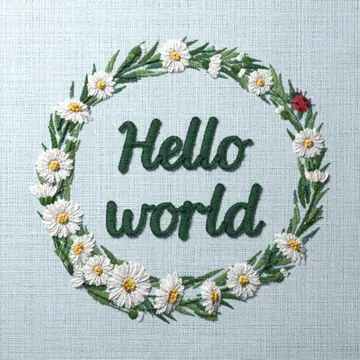
Advanced prints 3–14 in · 15 colors
Hello world in daisies
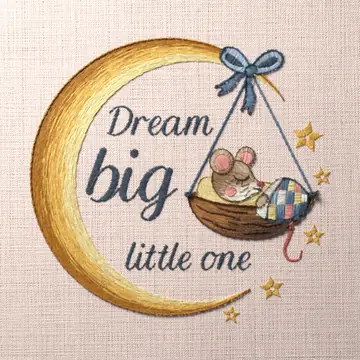
Advanced prints 3–14 in · 16 colors
Dream big little one
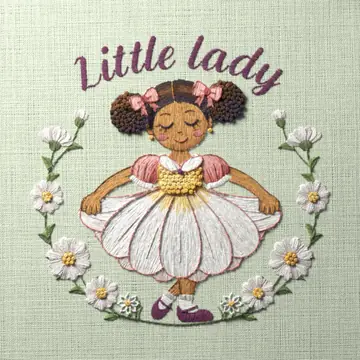
Advanced prints 3–14 in · 17 colors
Little lady in daisies
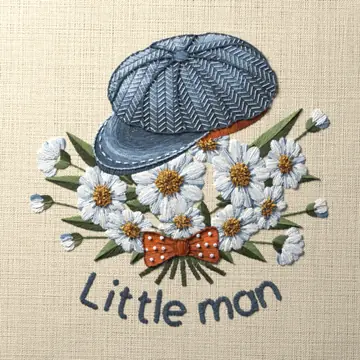
Advanced prints 3–14 in · 14 colors
Little man in daisies
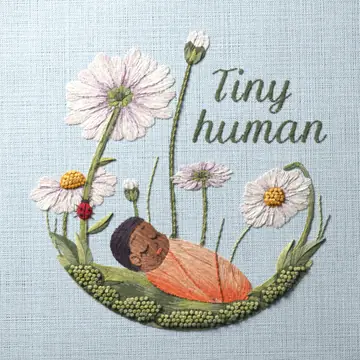
Advanced prints 3–14 in · 19 colors
Tiny human in daisies
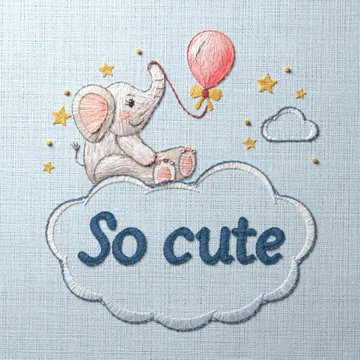
Advanced prints 3–14 in · 19 colors
So cute
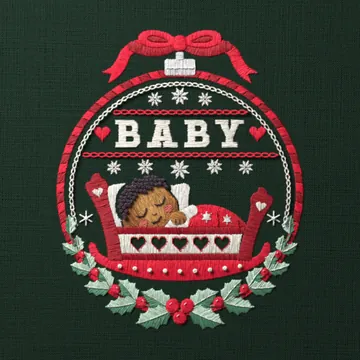
Advanced 3–8 in hoop · 13 colors
Baby in holly
New to hand embroidery? Starting hand embroidery, step by step