Retired and gone fishing at the lake hand embroidery pattern
Advanced · 8 colors · 4.7 × 4.3 in · 7 kinds of stitch
Download free PDFPDFPrints on US Letter and A4You may sell what you make from it by hand, in small quantities. The PDF itself is not to be sold or shared. Selling, classes and kits: the rules
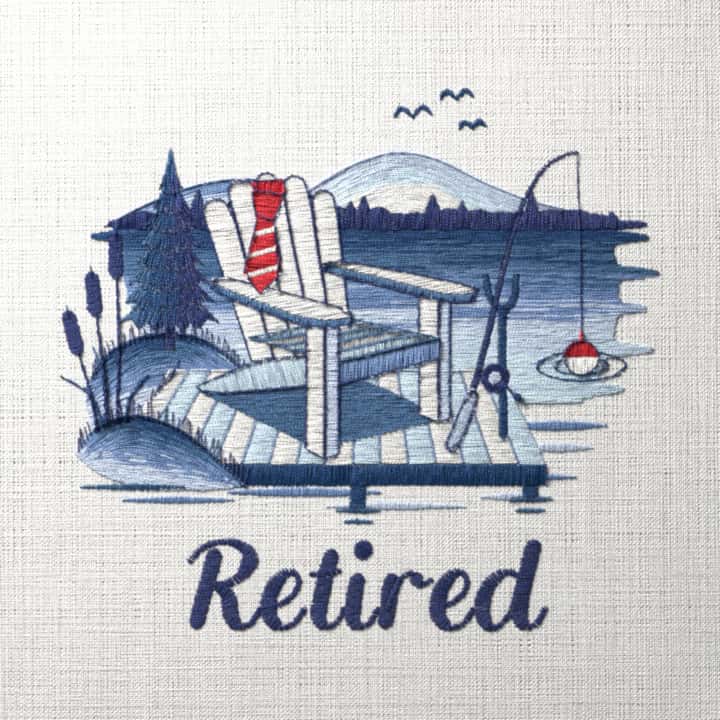
An empty white slatted chair stands on a wooden dock with its seat turned to the open water. A red striped necktie hangs over one slat, and a fishing rod rests in a forked stick with its line falling to a red and white bobber, the only other red. A fir, cattails and two grassy banks stand at the left, with hills and a line of trees behind.
Size and details
Advanced. Uses long and short stitch over much of the design, satin stitch over about a third of the cloth in a 6 inch hoop, eight colors and a great deal of stitching; from a 6 inch hoop up some of the satin stitches are long.
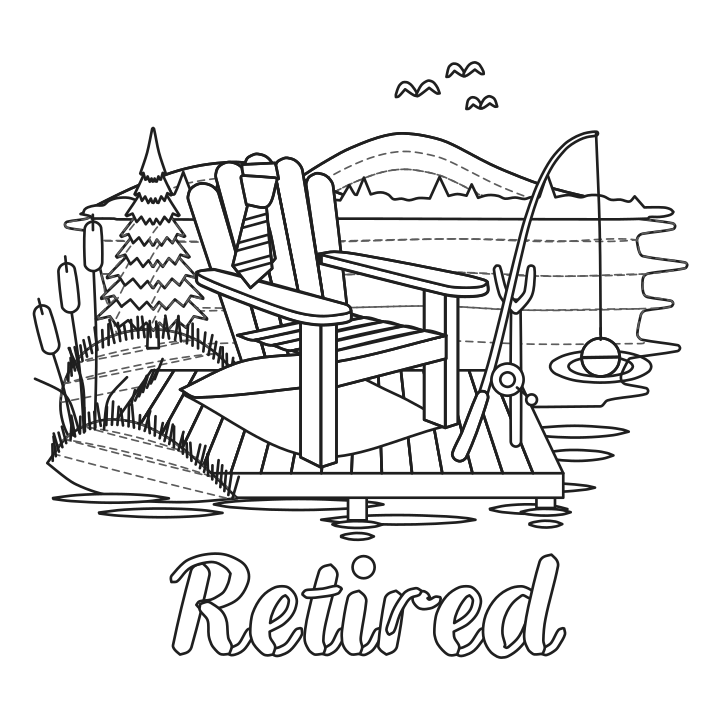
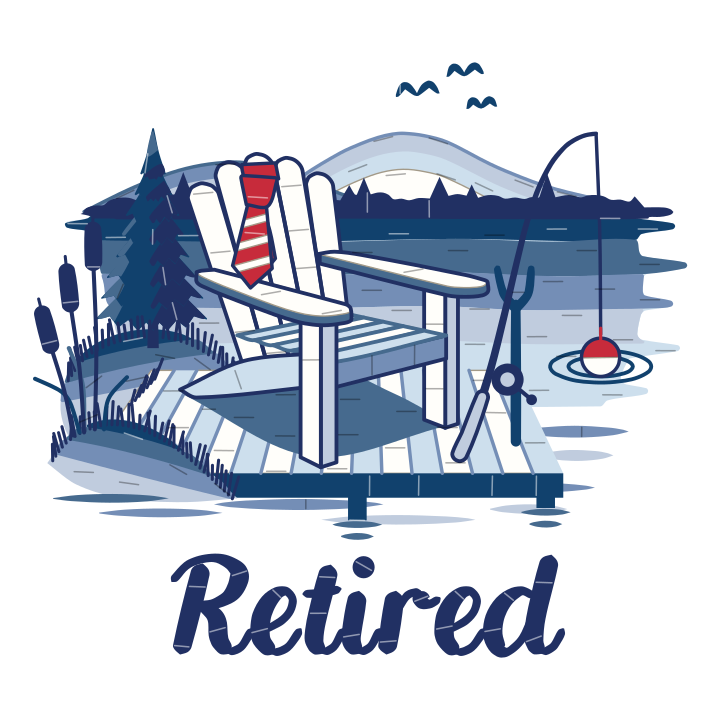
The lake, hills, banks, fir and the shadow under the chair are long and short stitch. The chair, dock, necktie, rod, far trees and the word Retired are satin stitch. The chair is edged in fine stem stitch, the necktie in split stitch, the fishing line is back stitch, the grass is straight stitch, and one French knot ends the reel crank. In the picture of where the colors go, the fine lines show which way the stitches lie.
| Hoop | Inches | Centimeters | Satin stitch up to |
|---|---|---|---|
| 3 in (8 cm) | 1.9 × 1.7 in | 4.8 × 4.3 cm | 1/8 in (3 mm) |
| 4 in (10 cm) | 2.8 × 2.6 in | 7.1 × 6.6 cm | 3/16 in (5 mm) |
| 5 in (13 cm) | 3.8 × 3.5 in | 9.7 × 8.9 cm | 5/16 in (8 mm) |
| 6 in (15 cm) | 4.7 × 4.3 in | 11.9 × 10.9 cm | 3/8 in (10 mm) |
| 8 in (20 cm) | 6.6 × 6 in | 16.8 × 15.2 cm | 1/2 in (13 mm) |
- In an 8 inch hoop the widest satin stitch shape is 1/2 in (13 mm) across. Satin stitches longer than about 12 mm (just under 1/2 in) tend to work loose: divide the shape into sections, or work it in long and short stitch.
- In a 3, 4 or 5 inch hoop the French knot is drawn smaller than about 2 mm (a little over 1/16 in). Use one strand of floss for it there, or choose a larger hoop.
What you need
- Fabric
- Plain cotton or linen, cut 9 in (23 cm) square.
- Needle
- Embroidery needle, size 9 for 1 strand, size 7 for 2 or 3 (a lower number is a thicker needle).
- Floss
- 8 colors of six-strand cotton, listed below. DMC is a brand: another brand in a like color will do.
- Marker
- A pen or a sheet that suits the fabric: how to transfer a pattern says which.
Floss
- 1DMC 800 Pale Delft BlueBank (lightest), lake (light), far hills and chair legs (dark) and 4 more parts
- 2DMC 3841 Pale Baby BlueLake (lightest), dock planks (darker), far hills (light) and 3 more parts
- 3DMC BLANC WhiteBack slats, dock planks (lighter), chair legs and far hills (lightest) and 4 more parts
- 4DMC 799 Medium Delft BlueLake (middle), near hills (dark), plank lines, bank (light) and 3 more parts
- 5DMC 798 Dark Delft BlueLake and bank (dark), chair shadow, chair outline (lighter) and 6 more parts
- 6DMC 796 Dark Royal BlueFir tree (middle), lake, chair legs and bank (darkest), dock side and 5 more parts
- 7DMC 823 Dark Navy BlueChair outline (darker), letters, far trees and grass, fir tree (dark) and 11 more parts
- 8DMC 321 RedNecktie and bobber stem, bobber (darker)
Skeins: one of each color is enough. An estimate for the 6 inch hoop, from the length of each line and the area of each filled shape, with a fifth added for tails.
How to stitch it
- New to hand embroidery? Start here.
- Print at 100%, trace the pattern onto the fabric, and put it in the hoop: inner ring under, drawing up, tight as a drum.
- Floss is six strands. Cut 18 inches (45 cm), pull out the number given one at a time, and lay them together.
- Inside a filled shape start with two or three tiny stitches, which the filling covers. Start a line with a small knot on the back. End each thread by running the needle under the backs of a few stitches.
- Each small ring is one French knot. A fine broken line inside a shape is where two shades meet: trace it, do not stitch it.
- A number under “Where colors go” is a color of the list. The fine lines on the colors show which way the stitches lie.
Stitch in this order
Filled parts from the back of the picture forward, then lines and knots. Where a stitch page names another number of strands, use the number here.
- Long and short stitch 1 strandFar hills, near hills, lake, bank, fir tree, chair shadow
- Satin stitch 2 strandsRipples, far trees, fir trunk, dock posts, post reflections, dock planks, dock side, chair legs, back slats, chair arms, chair apron, chair seat, necktie, necktie stripes, rod holder, fishing rod, rod grip, reel, bobber, cattails, birds, letters
- Split stitch 1 strandFar hills, near hills, plank lines, necktie edge, bobber edge
- Straight stitch3 strands: bobber stem1 strand: grass, cattail tips
- Stem stitch2 strands: reel crank, reeds1 strand: chair outline, rod grip, rings on the water
- Back stitch 1 strandFishing line
- French knot 2 strands, two wrapsReel crank
When it is done, take off any lines that still show and finish the hoop.
More patterns like this
Advanced prints 3–14 in · 13 colors
Retired and cruising ship at sunrise
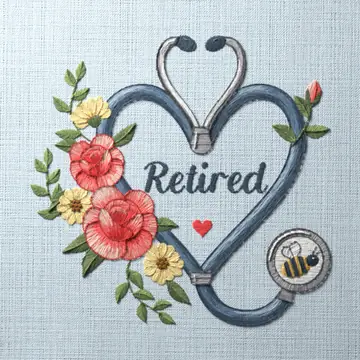
Advanced 3–8 in hoop · 19 colors
Retired nurse stethoscope with flowers
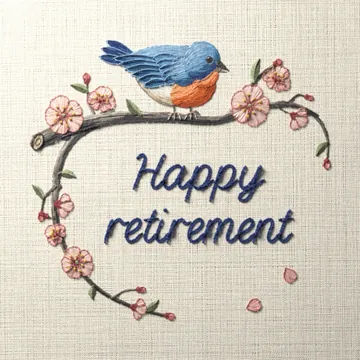
Advanced prints 3–14 in · 20 colors
Happy retirement with a bluebird
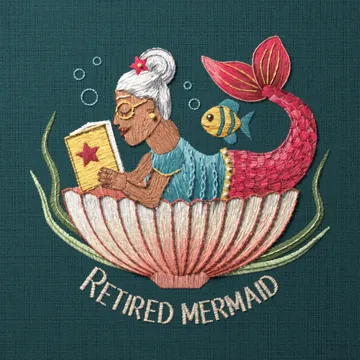
Advanced 3–8 in hoop · 22 colors
Retired mermaid reading on a shell
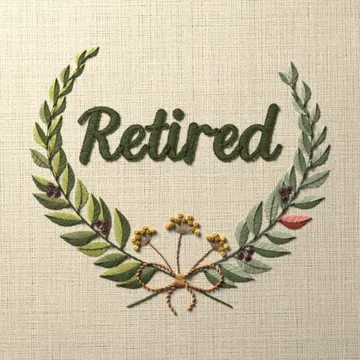
Advanced prints 3–14 in · 15 colors
Retired in laurel
Advanced 3–8 in hoop · 21 colors
Retired teacher pencil flower bookmark
Advanced 3–8 in hoop · 17 colors
Little boy fishing with his puppy
Advanced prints 3–14 in · 19 colors
Gone fishing with a rope and an anchor
New to hand embroidery? Starting hand embroidery, step by step