Seashell letters A to Z hand embroidery pattern
Advanced · 15 colors · 5 kinds of stitch
Download free PDFPDF, US Letter · 98 KBFor your own stitching, gifts and handmade pieces you sell. Do not resell or share this PDF or copies of it. Selling, classes and kits: the rules
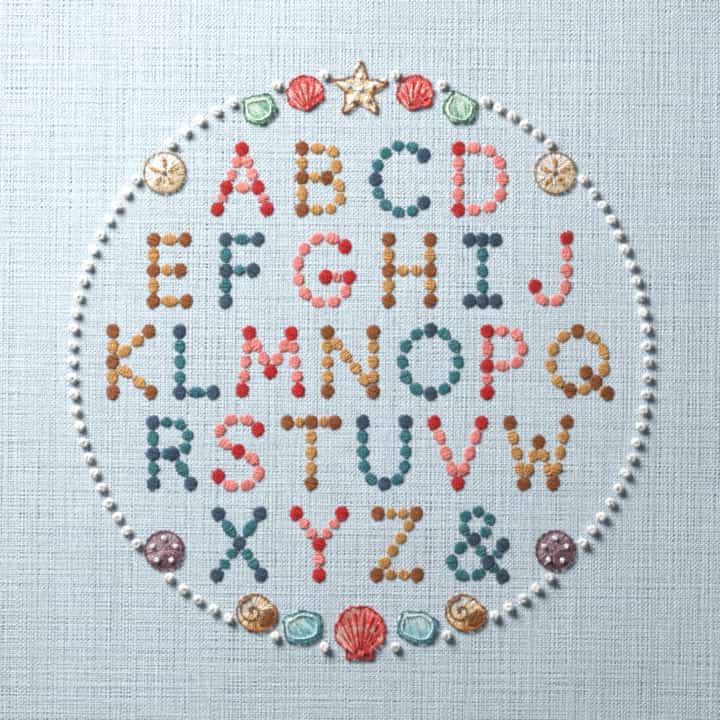
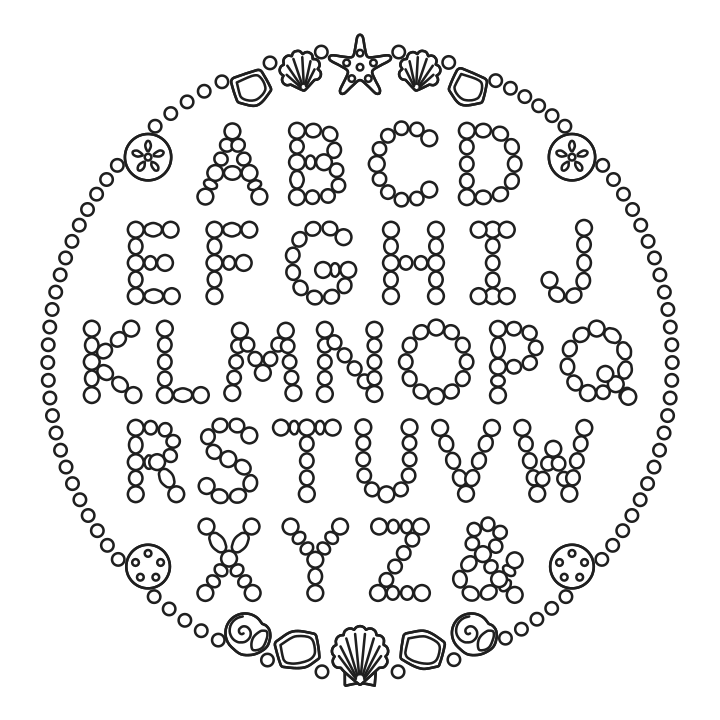
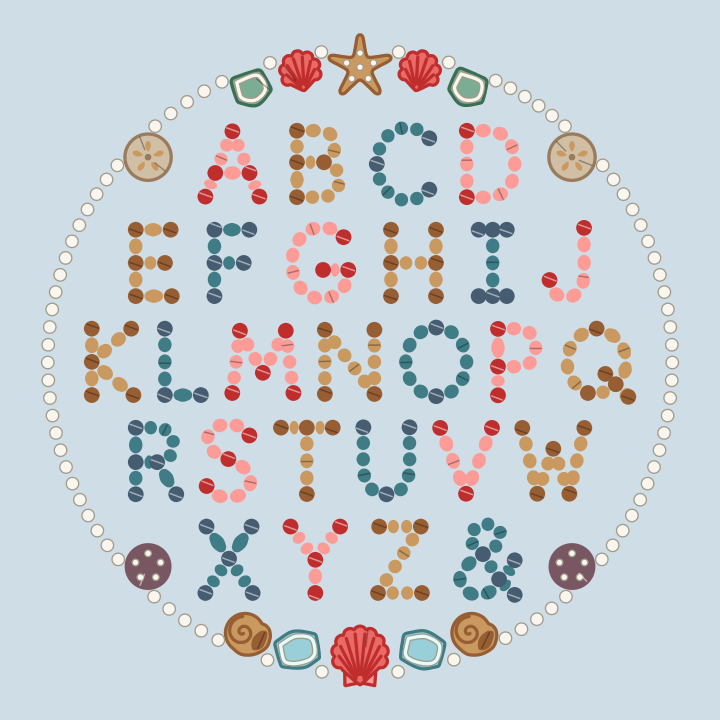
The whole alphabet of seashell letters on one sheet, A to Z and the and sign. On the sheet the small letters are plain ovals of satin stitch in coral, sand and aqua, with a dark round one at every end and join, inside a ring of French knot pearls and little shells. Every stroke is a row of beach finds laid end to end: a scallop shell at each free end, a starfish, sand dollar or sea urchin at most joins, long shells and coral on the straights, small shells and sea glass round the curves. The finds are shaded in one strand of long and short stitch and edged in split stitch; the auger shells and the mouths of the shells are satin stitch, and the ribs of the scallops are back stitch. It is drawn for pale blue linen. In the picture of where the colors go, the fine lines show which way the stitches lie.
Size and details
Advanced. Uses long and short stitch, dozens of French knots, 15 colors and a great deal of stitching.
15 colors of floss and 5 kinds of stitch:
| Hoop | Inches | Centimeters | Satin stitch up to |
|---|---|---|---|
| 3 in (8 cm) | 1.9 × 2 in | 4.8 × 5.1 cm | 1/16 in (1.6 mm) |
| 4 in (10 cm) | 2.9 × 3 in | 7.4 × 7.6 cm | 1/8 in (3 mm) |
| 5 in (13 cm) | 3.9 × 4 in | 9.9 × 10.2 cm | 1/8 in (3 mm) |
| 6 in (15 cm) | 4.8 × 5 in | 12.2 × 12.7 cm | 3/16 in (5 mm) |
| 8 in (20 cm) | 6.8 × 6.9 in | 17.3 × 17.5 cm | 1/4 in (6 mm) |
- In a 3, 4 or 5 inch hoop the French knots are drawn smaller than about 2 mm (a little over 1/16 in). Use one strand of floss for them there, or choose a larger hoop.
The pattern is drawn inside a circle about half an inch (1.3 cm) smaller all around than the hoop.
What you need
- DMC 352 Light CoralSmall shells and scallop shells (light)
- DMC 347 Very Dark SalmonSmall round shells (middle), scallop shells (dark), cockle shells (darker)
- DMC 436 TanSmall shells (middle), moon snails and starfish (lighter), sand dollar petals
- DMC 434 Light BrownSmall round shells (light), moon snails and starfish (darker), shell mouths
- DMC 3809 Very Dark TurquoiseSmall shells and sea glass (dark)
- DMC 930 Dark Antique BlueSmall round shells (dark)
- DMC 351 CoralCockle shells (lighter), scallop shells (middle)
- DMC 3865 Winter WhitePearls, urchin bumps and starfish bumps, light on the glass (darker)
- DMC 3766 Light Peacock BlueSea glass (lightest)
- DMC 747 Very Light Sky BlueLight on the glass (lighter)
- DMC 503 Medium Blue GreenSea glass (light)
- DMC 501 Dark Blue GreenSea glass (darkest)
- DMC 842 Very Light Beige BrownSand dollars (lighter)
- DMC 840 Medium Beige BrownSand dollars (darker), sand dollar hearts
- DMC 3740 Dark Antique VioletSea urchins
Skeins: one of each color is enough. An estimate for the largest size, the 8 inch hoop: the length of each line and the area of each filled shape, a fifth added for tails and ends, a tenth of every 8 m (8.7 yd) skein kept spare.
The floss is six-strand cotton; the stitch guide says how many strands to use. You also need a hoop, an embroidery needle (a size 9 or 10 for one strand, 7 to 9 for two or three) and plain cotton or linen fabric. To frame the piece in its hoop, cut a square 3 inches (8 cm) wider than the hoop: a 9 inch (23 cm) square for a 6 inch hoop.
When it is stitched, how to finish a hoop shows how to back it for the wall.
Stitch guide
- Put the pattern on the fabric (how to transfer a pattern) and the fabric in the hoop.
- Stitch the filled parts first, what lies behind before what lies in front of it.
- Then stitch the lines: stems, veins and outlines over the edges of the filled parts.
- Keep the knots for the end, so that the hoop and your hand do not flatten them.
Inside a filled shape start with two or three tiny stitches, which the filling covers: a knot shows as a bump. A line may start with a small knot on the back or one of the knotless starts. End each thread by running the needle under the backs of a few stitches. (Starting and ending a thread shows how.) Use the strands this list gives, and begin as it says, also where a page about a stitch names another number or begins with a knot.
- Satin stitch 2 strandsSmall shells, small round shells, scallop shells, shell mouths, sand dollar petals
- Split stitch 1 strandScallop shells, starfish, sea glass, light on the glass, moon snails, cockle shells, sand dollars, sea urchins
- Long and short stitch 1 strandScallop shells, starfish, sea glass, moon snails, cockle shells, sand dollars, sea urchins
- Back stitch 1 strandScallop shells, cockle shells
- French knot 1 to 2 strands, two wrapsStarfish bumps, sand dollar hearts, urchin bumps, pearls
Getting it onto your fabric
The PDF holds the pattern twice at actual size: once as drawn, and once mirrored for an iron-on transfer pen. Print it at 100% with scaling off and check the one-inch square (25.4 mm) with a ruler before you trace. How to transfer a pattern explains tracing, carbon paper, the sticky wash-away sheet for knits, denim and dark cloth, and the other ways. The files are under Downloads.
Downloads
- Download free PDF PDF, US Letter, 3 pages, for a 6 inch (15 cm) hoop
- Download free PDF, A4 PDF, A4, 3 pages, for a 6 inch (15 cm) hoop
More patterns like this
Easy prints 3–14 in · 2 colors
Blackwork letters A to Z
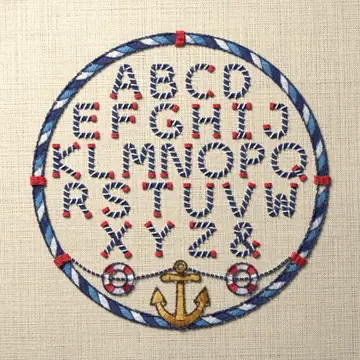
Advanced prints 3–14 in · 16 colors
Nautical rope letters A to Z
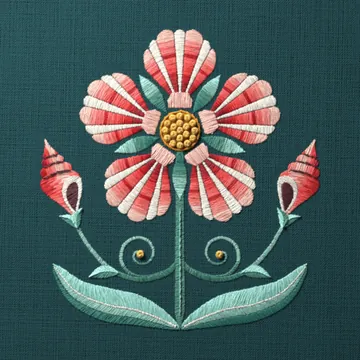
Advanced 3–8 in hoop · 15 colors
Shell flower
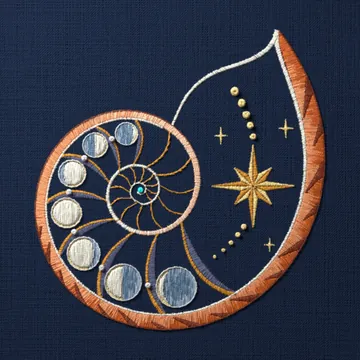
Advanced 3–8 in hoop · 14 colors
Nautilus shell with moon phases
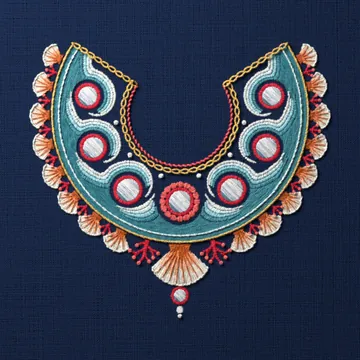
Advanced opening to 7 in · 14 colors
Mirror work neckline for a beach kaftan
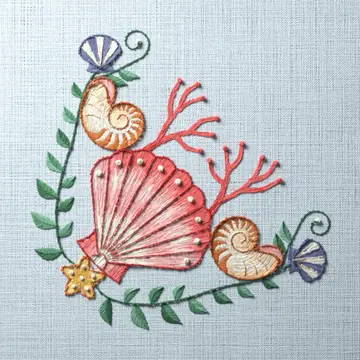
Advanced prints 3–14 in · 17 colors
Vintage seashell pillowcase corner
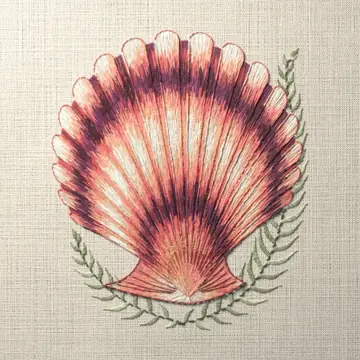
Advanced 3–8 in hoop · 13 colors
Scallop shell
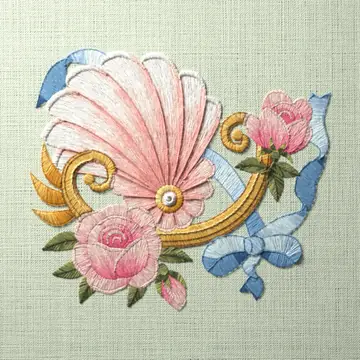
Advanced 3–8 in hoop · 18 colors
Rococo shell and ribbon with roses
New to hand embroidery? Starting hand embroidery, step by step