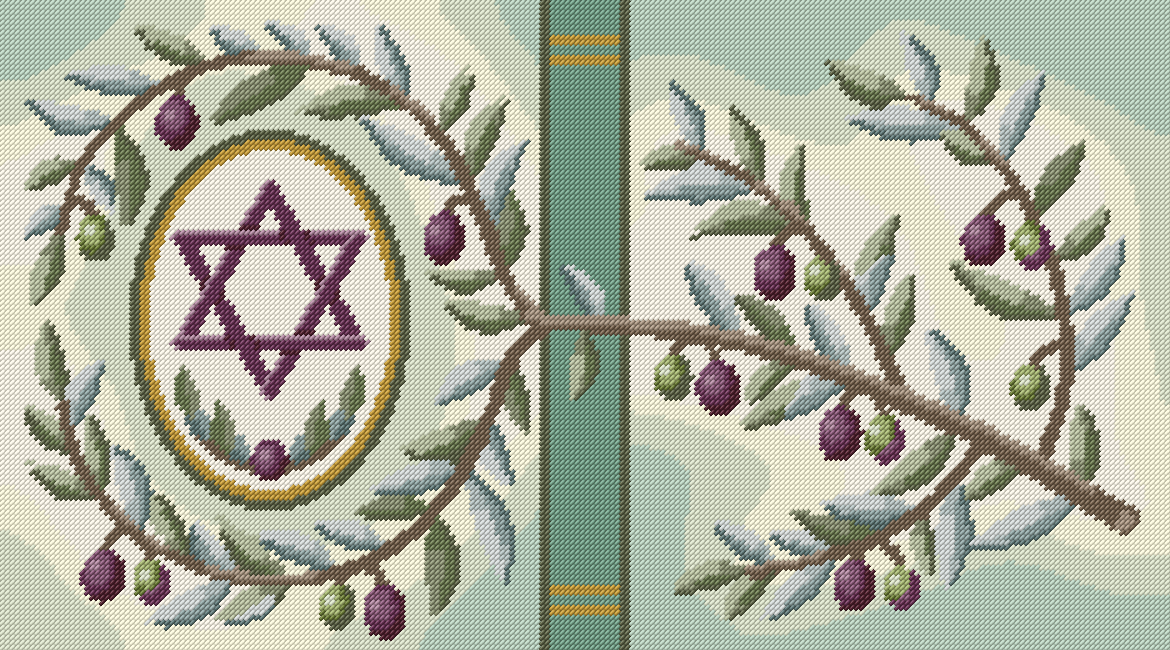
Siddur cover with olive leaves needlepoint pattern
Advanced, 18 × 10 in on 13 mesh, 22 colors
Download free PDFPDFYou may sell what you make from it by hand, in small quantities. The PDF itself is not to be sold or shared. Selling, classes and kits: the rules
Your PDF is ready: look in your downloads. Open the PDF (opens in a new tab)
Next: How to start · How to make a book cover
What you need
- Canvas: blank mono canvas, 13 mesh (13 threads to the inch), cut 22.5 in wide × 14.5 in high
- Needle: blunt tapestry, size 20. Also masking tape for the cut edges, and small scissors
- Thread: six-strand floss, 22 colors, about 59 skeins in all (an estimate). Stitch with 7 strands (8 if canvas shows)
- Thread: pearl cotton size 3, 22 colors, about 32 skeins in all (an estimate). Stitch with 1 length. It comes in fewer colors than floss: for one that is not made, take the nearest, or 7 strands of floss
- Thread: tapestry wool, 22 colors, about 46 skeins in all (an estimate). Stitch with 1 length
- Thread: Persian wool, 22 colors, about 38 skeins in all (an estimate). Stitch with 2 strands
Make it a book cover. Cloth to back it, and a flap of cloth for each end that the covers of the book slip into. Measure your own book, spine and all, before you stitch the edge. How to make a book cover
Threads
- DMC 712 Cream 5,784 stitches about 54.8 yards 9 skeins
- DMC 772 Very Light Yellow Green 4,527 stitches about 42.9 yards 8 skeins
- DMC 3823 Ultra Pale Yellow 3,745 stitches about 35.5 yards 6 skeins
- DMC 504 Very Light Blue Green 3,583 stitches about 34 yards 7 skeins
- DMC 520 Dark Fern Green 1,724 stitches about 16.4 yards 3 skeins
- DMC 3790 Ultra Dark Beige Gray 1,619 stitches about 15.4 yards 3 skeins
- DMC 503 Medium Blue Green 1,547 stitches about 14.7 yards 3 skeins
- DMC 928 Very Light Gray Green 1,066 stitches about 10.1 yards 2 skeins
- DMC 524 Very Light Fern Green 948 stitches about 9 yards 2 skeins
- DMC 3363 Medium Pine Green 797 stitches about 7.6 yards 2 skeins
- DMC 3834 Dark Grape 744 stitches about 7.1 yards 2 skeins
- DMC 3768 Dark Gray Green 703 stitches about 6.7 yards 2 skeins
- DMC 522 Fern Green 670 stitches about 6.4 yards 1 skein
- DMC 926 Medium Gray Green 646 stitches about 6.2 yards 1 skein
- DMC 729 Medium Old Gold 500 stitches about 4.8 yards 1 skein
- DMC 927 Light Gray Green 468 stitches about 4.5 yards 1 skein
- DMC 3032 Medium Mocha Brown 418 stitches about 4 yards 1 skein
- DMC 154 Very Dark Grape 267 stitches about 2.6 yards 1 skein
- DMC 3835 Medium Grape 243 stitches about 2.4 yards 1 skein
- DMC 3836 Light Grape 163 stitches about 1.6 yards 1 skein
- DMC 471 Very Light Avocado Green 163 stitches about 1.6 yards 1 skein
- DMC 469 Avocado Green 95 stitches about 0.9 yards 1 skein
Skeins are estimates, with the two extra rows.
Thread colors are approximate screen matches to DMC numbers. Check against real thread before you buy.
How to stitch it
- Each square is one tent stitch, up at 1, down at 2. Lines in continental, right to left, the canvas upside down for the next row; wide areas in basketweave.
- Cut 18 in of thread. Start and end it without a knot left behind.
- Mark the middle of the canvas. It is the outlined square, column 117, row 65 (DMC 3032): start there. Count threads, not holes.
- Go on from it: picture first, background last. Gray squares are on two pages: stitch them once.
- Last, two more rows all round, each stitch in the color it lies beside: the seam hides them.
First time? How to needlepoint, how to read a chart
See the chart on this page
The chart is drawn when this is opened.
It opens in the pattern maker, with your colors and your name on it.
Options
On another mesh
The chart is 234 × 130 stitches: a book cover on 13 mesh canvas.
| Mesh | Stitched size | Canvas to cut |
|---|---|---|
| 10 | 23.4 × 13 in 59.4 × 33 cm | 28 × 17.5 in 71.1 × 44.5 cm |
| 12 | 19.5 × 10.8 in 49.5 × 27.5 cm | 24 × 15.5 in 61 × 39.4 cm |
| 13 | 18 × 10 in 45.7 × 25.4 cm | 22.5 × 14.5 in 57.2 × 36.8 cm |
| 14 | 16.7 × 9.3 in 42.5 × 23.6 cm | 21 × 14 in 53.3 × 35.6 cm |
| 18 | 13 × 7.2 in 33 × 18.3 cm | 17.5 × 11.5 in 44.5 × 29.2 cm |
Mesh is the number of canvas threads to the inch; the row in bold is the mesh this chart is sized for. Canvas to cut is the stitched size, the two extra rows where the finish takes them and 2 in (5.1 cm) of bare canvas on every side, up to the next half inch.
In another thread
The numbers are DMC color numbers. Its pearl cotton has the same numbers as its six-strand cotton, in fewer colors. Persian wool and silk are numbered differently: match those by eye. Which thread suits which mesh
In large print
The same chart in squares of about 6 mm, on 25 pages.
Another stitch
My stitch guide: choose a stitch for every part, with its strands for your mesh.
How the level is set
Advanced. Many colors, or changes every few stitches: best with a canvas or two behind you.
Advanced: 22 colors. Over the whole chart, changes of color are about 4.4 stitches apart. With 10 colors or more, closer than 4.5 apart is Advanced, 4.5 or more is Intermediate, and a design with this many colors is never Beginner.
How the thread is counted
The yards are of thread as it is threaded in the needle: stitched with several strands together, a thread takes that many yards of single strand for every yard counted. For six-strand cotton on 13 mesh, the thread and needle chart gives 7 or 8 strands.
An estimate. The length of thread one stitch uses on the front and back of the canvas, times the number of stitches, plus 30 percent for starting, ending and the tail left in the needle. Each count is estimated as basketweave or continental and rounded up to a tenth of a yard. The 30 percent is this site's own choice. The thread calculator works the same estimate for any count and mesh.
What you may do with it
You may sell what you make from it by hand, in small quantities. The PDF itself is not to be sold or shared. Selling, classes and kits: the rules
More patterns like this
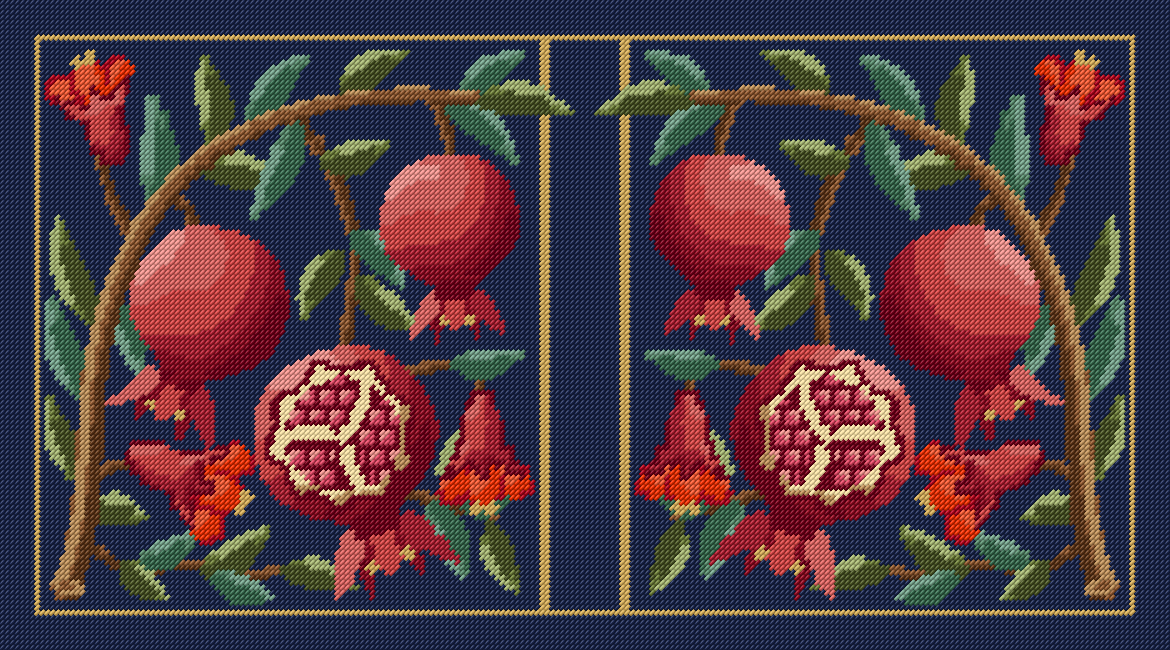
Siddur cover with pomegranates on navy
Advanced 18 × 10 in
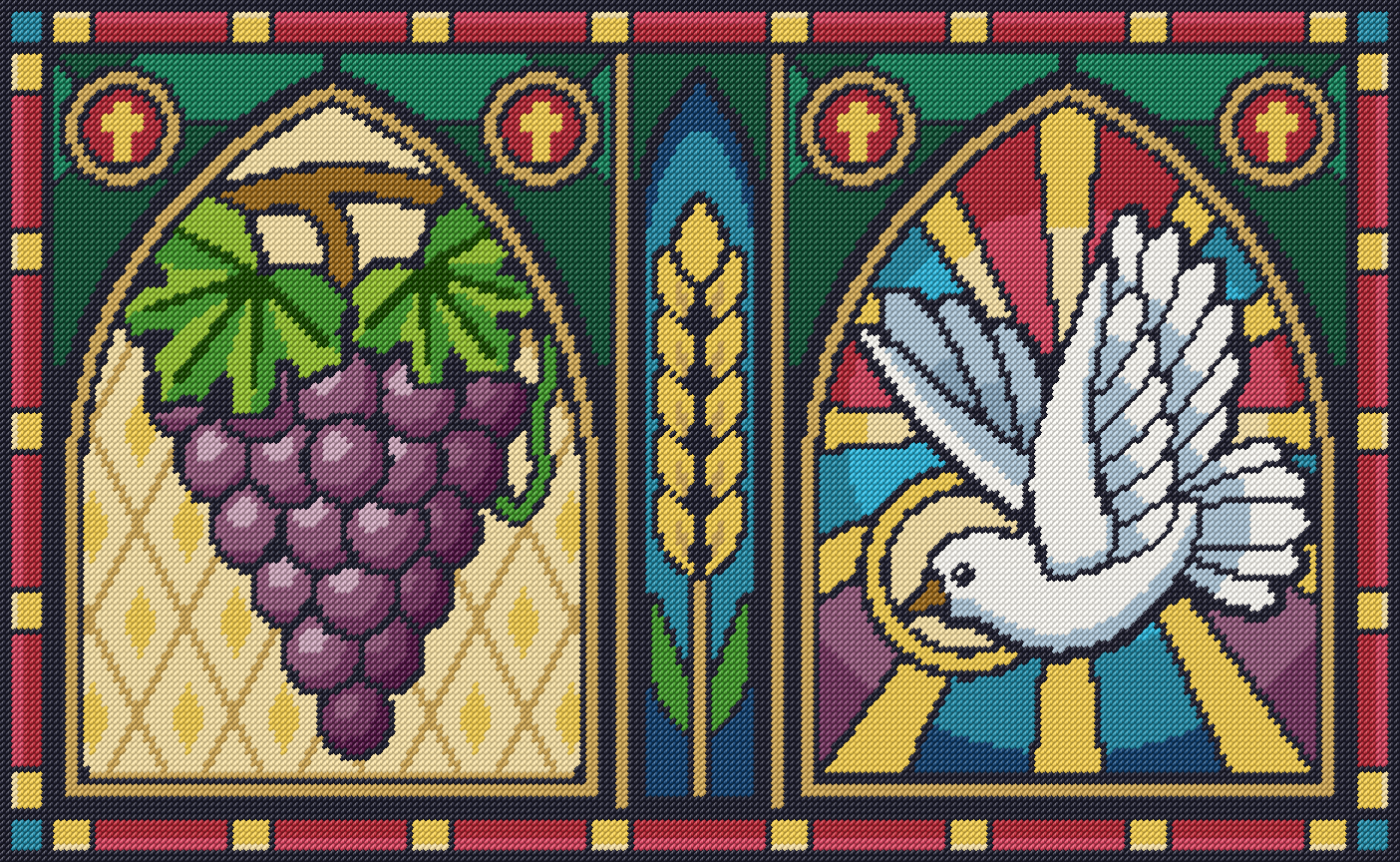
Stained glass dove Bible cover
Advanced 18 × 11.1 in
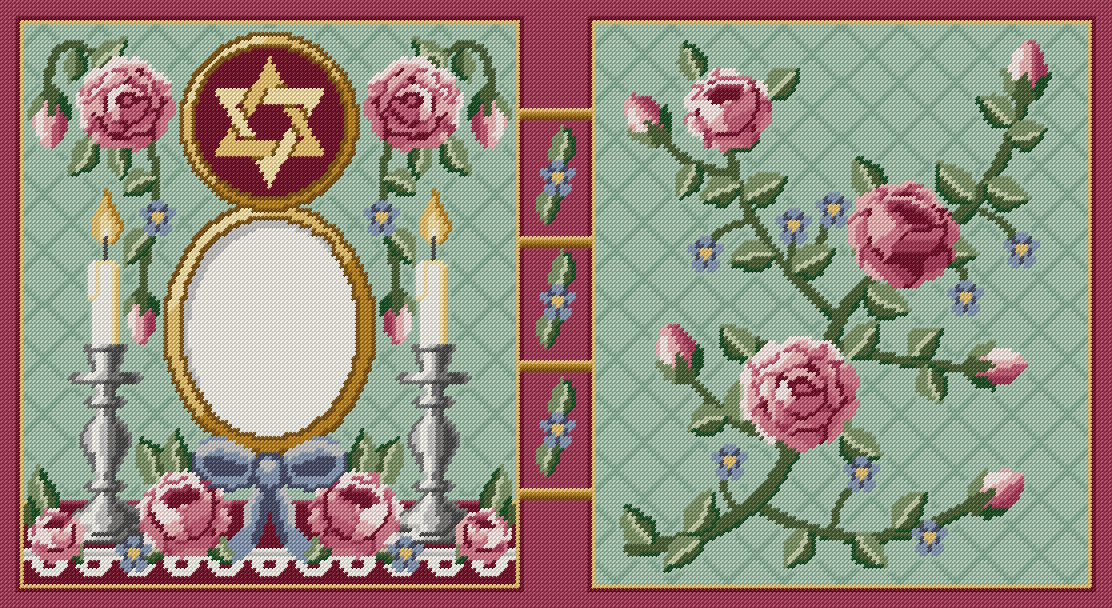
Orthodox bat mitzvah girl's siddur cover
Advanced 15.4 × 8.4 in
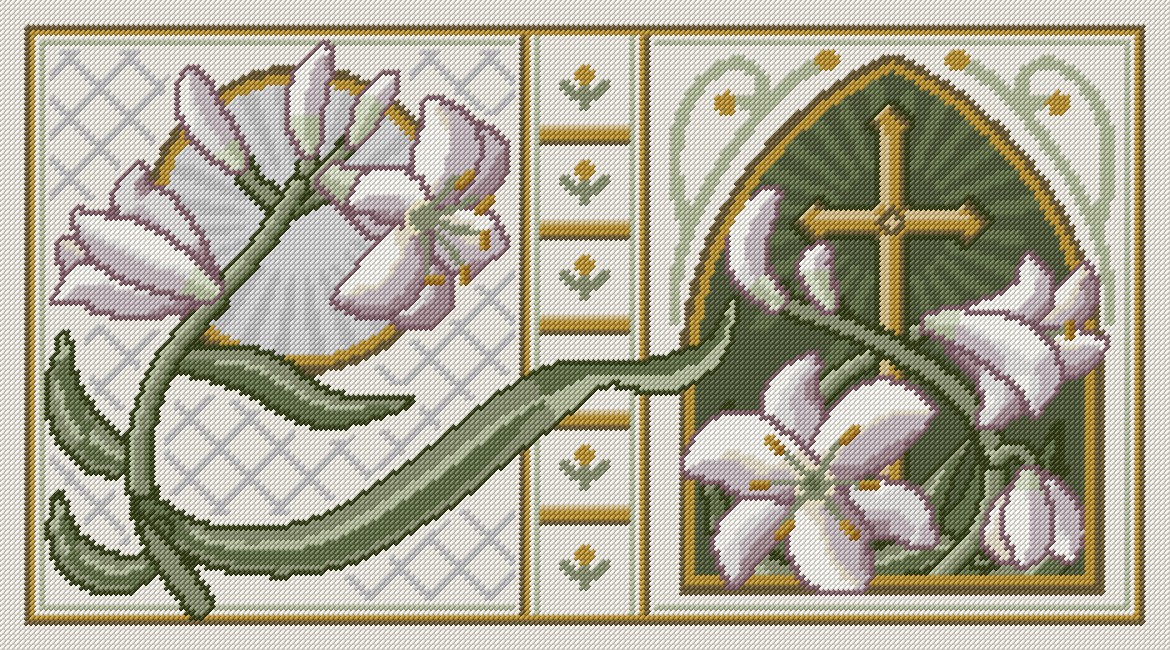
White lily Bible cover
Advanced 18 × 10 in
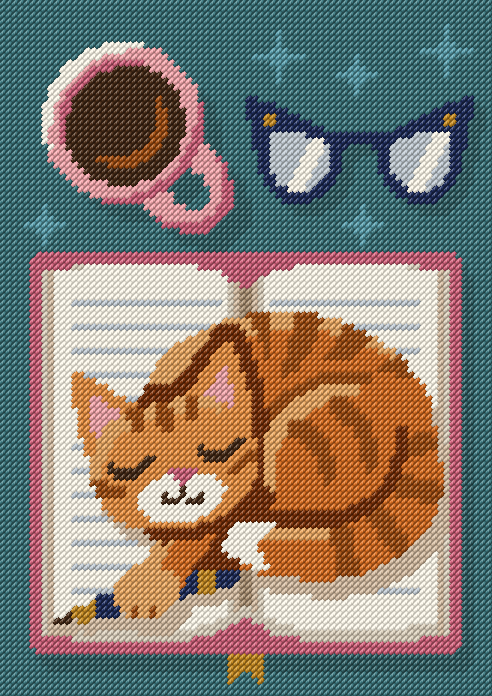
Sleeping cat notebook cover
Advanced 5.9 × 8.3 in
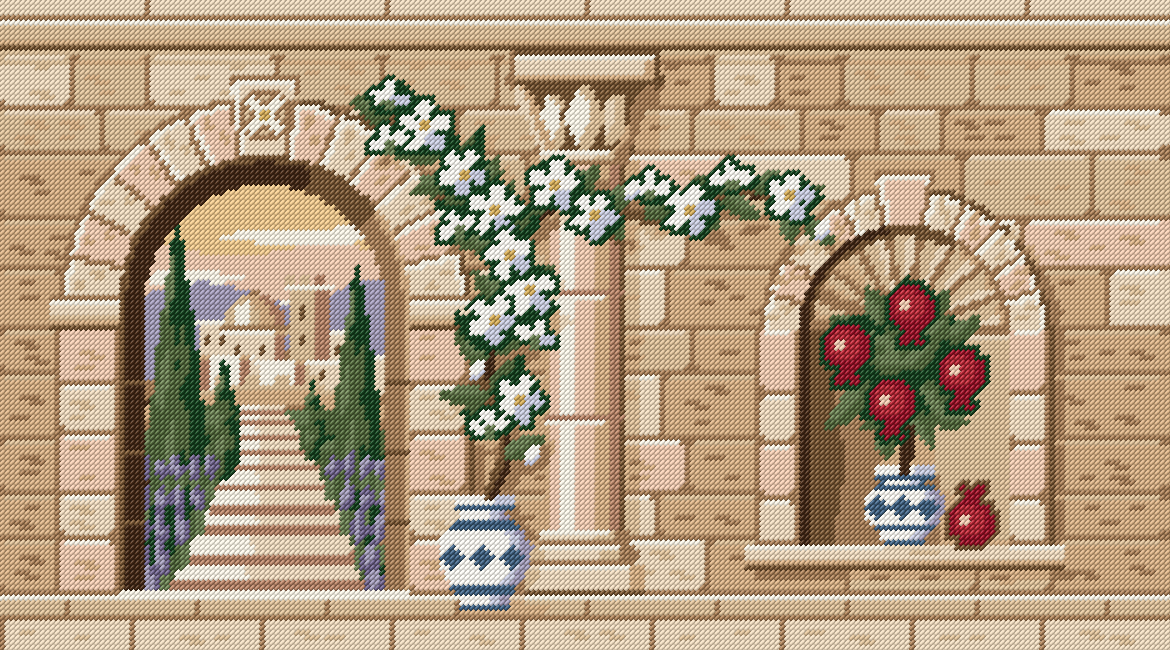
Siddur cover, Jerusalem stone arch
Advanced 18 × 10 in
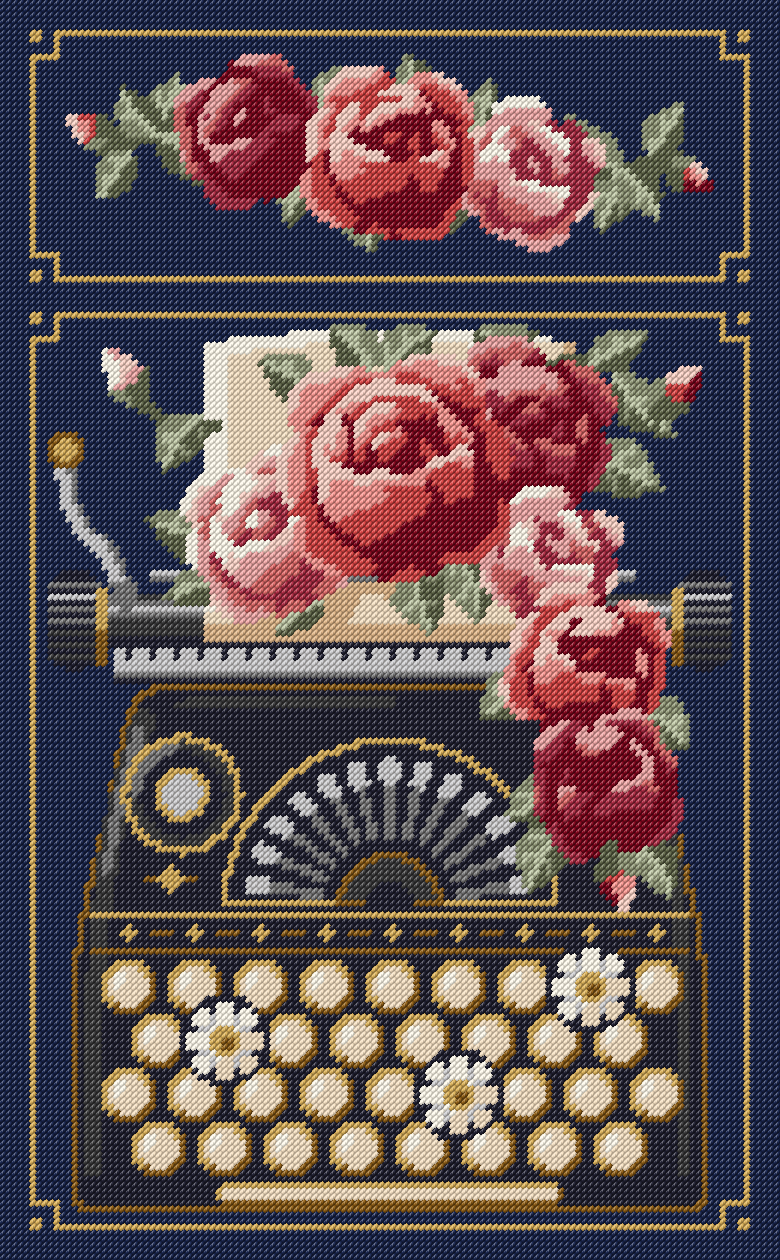
Typewriter cover with roses
Advanced 13 × 21 in
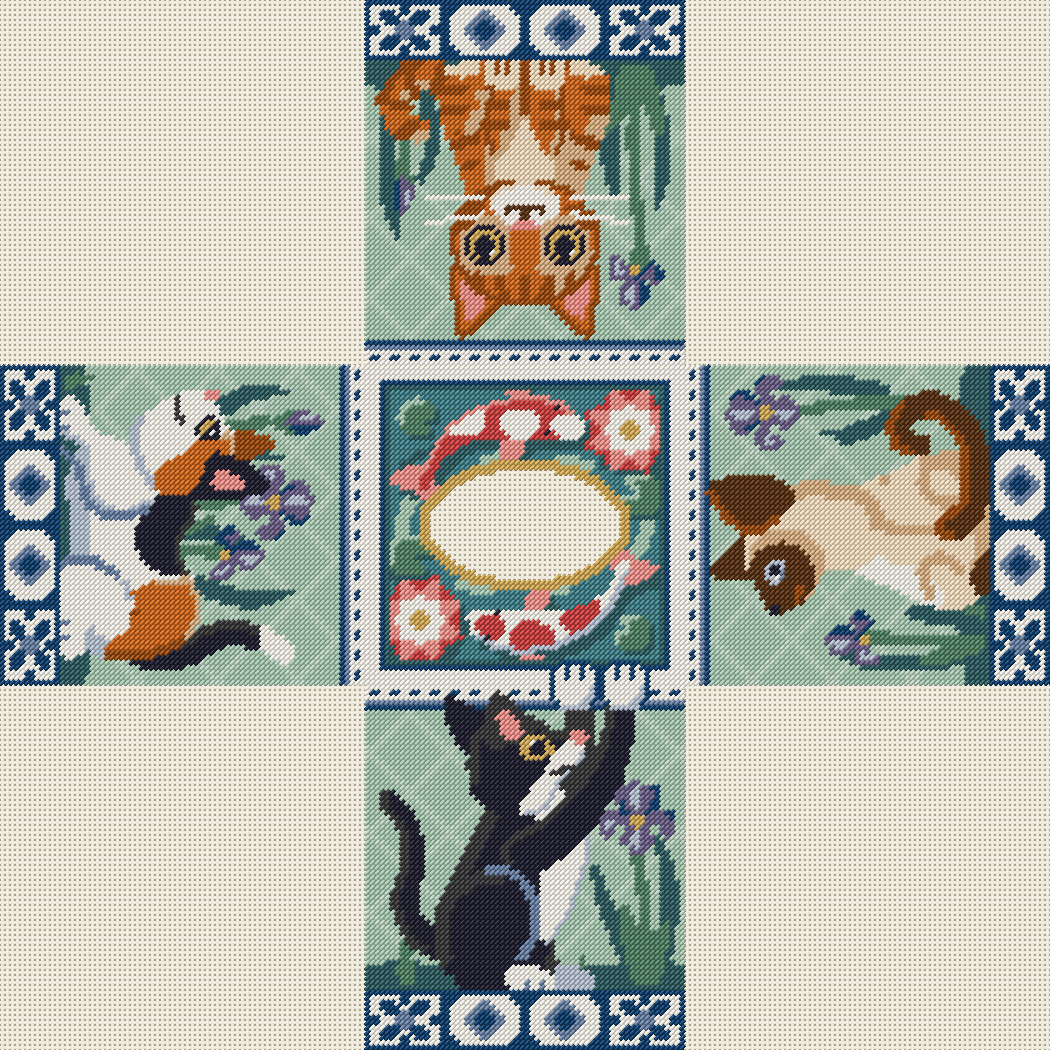
Cats tissue box cover with a koi pond
Advanced 16.2 × 16.2 in
About this pattern
An olive bough with silver and green leaves and plum and green olives parts around a gold-edged oval that holds a purple six-pointed star over two olive sprigs. The ground is ivory, washed with straw, celadon and aqua, with a sage spine.