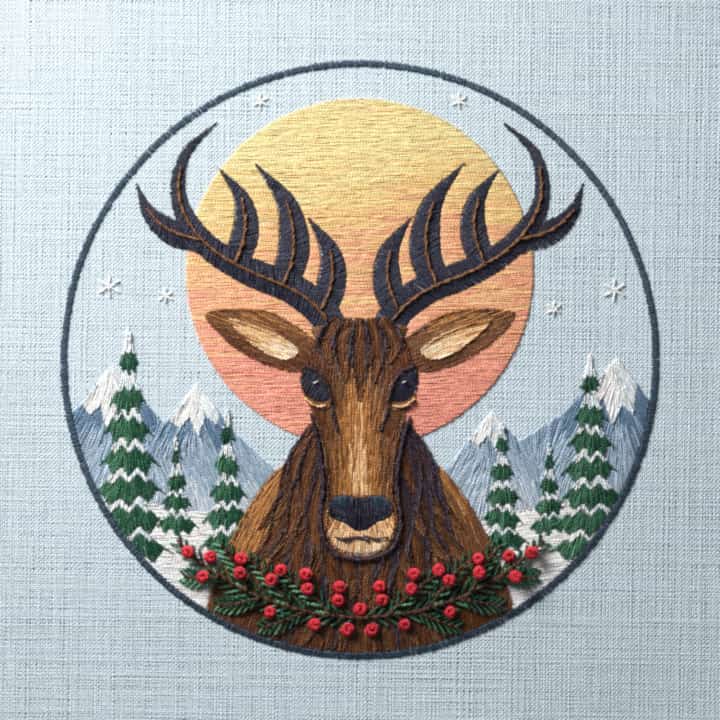
Elk in the snow with tribal antlers hand embroidery pattern
Advanced · 22 colors · 6 kinds of stitch
Download free PDFPDF, US Letter · 115 KBFor your own stitching, gifts and handmade pieces you sell. Do not resell or share this PDF. What you may do, in full
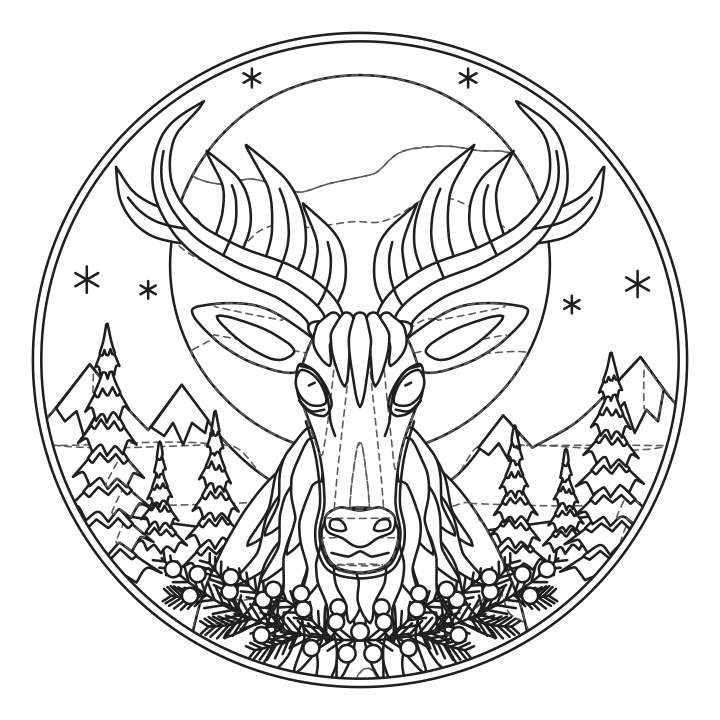
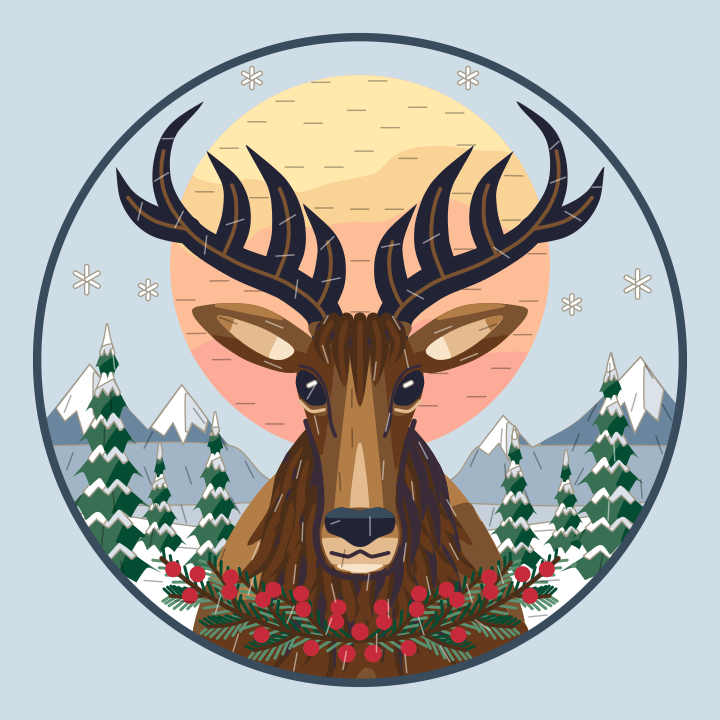
A bull elk stands in a snowy valley and looks straight at you. His antlers are the bold part: a matched pair of black satin stitch blades in the tribal manner, with one brown stem stitch line branching through each, set against a big winter sun in level long and short stitch from coral to pale gold. His face and his dark ruff of flame-shaped locks are shaded in long and short stitch, with split stitch along the eyelids. Snow-capped peaks and snow-laden spruces stand on either side. A swag of spruce in straight stitches, set with French knot winterberries, closes the foot of the picture, and a satin stitch rim runs all the way round. The sky is bare pale blue cloth. In the picture of where the colors go, the fine lines show which way the stitches lie.
Size and details
Advanced. Uses long and short stitch over much of the design, 22 colors and a great deal of stitching.
22 colors of floss and 6 kinds of stitch:
- Long and short stitch
- Satin stitch
- Stem stitch
- Split stitch
- Straight stitch
- French knot
- Which stitch goes where
| Hoop | Inches | Centimeters | Satin stitch up to |
|---|---|---|---|
| 3 in (8 cm) | 2 × 2 in | 5.1 × 5.1 cm | 1/8 in (3 mm) |
| 4 in (10 cm) | 3 × 3 in | 7.6 × 7.6 cm | 3/16 in (5 mm) |
| 5 in (13 cm) | 4 × 4 in | 10.2 × 10.2 cm | 1/4 in (6 mm) |
| 6 in (15 cm) | 5 × 5 in | 12.7 × 12.7 cm | 5/16 in (8 mm) |
| 8 in (20 cm) | 7 × 7 in | 17.8 × 17.8 cm | 7/16 in (11 mm) |
- In a 3 or 4 inch hoop the French knots are drawn smaller than about 2 mm (a little over 1/16 in). Use one strand of floss for them there, or choose a larger hoop.
The pattern is drawn inside a circle about half an inch (1.3 cm) smaller all around than the hoop.
What you need
- DMC 3825 Pale PumpkinSun (dark)
- DMC 3341 ApricotSun (darkest)
- DMC 3855 Light Autumn GoldSun (light)
- DMC 745 Light Pale YellowSun (lightest)
- DMC 3752 Very Light Antique BlueMountains (light)
- DMC 931 Medium Antique BlueMountains (dark)
- DMC 932 Light Antique BlueMountains (middle)
- DMC B5200 Snow WhiteSnow field, snow on the boughs and mountain snow (lighter), snowflakes and eye lights
- DMC 3753 Ultra Very Light Antique BlueSnow on the boughs, mountain snow and snow field (darker)
- DMC 501 Dark Blue GreenSpruce boughs (middle)
- DMC 500 Very Dark Blue GreenSpruce sprays (middle), spruce boughs (dark)
- DMC 502 Blue GreenSpruce sprays and spruce boughs (light)
- DMC 435 Very Light BrownShoulders, face and ears (light), muzzle and inner ears (dark)
- DMC 801 Dark Coffee BrownRuff and forelock (light), shoulders and face (darkest), ears (dark)
- DMC 433 Medium BrownFace and shoulders (dark), ears (middle), antler lines and 2 more parts
- DMC 437 Light TanInner ears (middle), face and shoulders (lightest), muzzle (light), eyelids (lighter)
- DMC 898 Very Dark Coffee BrownRuff and forelock (middle), spruce sprays (dark)
- DMC 3371 Black BrownRuff and forelock (dark), jaw shadow and mouth, eyelids (darker)
- DMC 739 Ultra Very Light TanInner ears (light), muzzle (lightest)
- DMC 310 BlackAntlers, eyes and nostrils, nose (darker)
- DMC 3750 Very Dark Antique BlueRim, nose (lighter)
- DMC 321 RedWinterberries
Skeins: 2 for sun (dark), 2 for mountains (light) and 2 for snow field, snow on the boughs and mountain snow (lighter), snowflakes and eye lights; one of each other color. An estimate for the largest size, the 8 inch hoop: the length of each line and the area of each filled shape, a fifth added for tails and ends, a tenth of every 8 m (8.7 yd) skein kept spare.
The floss is six-strand cotton; the stitch guide says how many strands to use. You also need a hoop, an embroidery needle (a size 7 to 9 suits two or three strands) and plain cotton or linen fabric. To frame the piece in its hoop, cut a square 3 inches (8 cm) wider than the hoop: a 9 inch (23 cm) square for a 6 inch hoop.
When it is stitched, how to finish a hoop shows how to back it for the wall.
Stitch guide
- Put the pattern on the fabric (how to transfer a pattern) and the fabric in the hoop.
- Stitch the filled parts first, what lies behind before what lies in front of it.
- Then stitch the lines: stems, veins and outlines over the edges of the filled parts.
- Keep the knots for the end, so that the hoop and your hand do not flatten them.
Start each thread with a small knot on the back or one of the knotless starts, and end it by running the needle under the backs of a few stitches (starting and ending a thread). Use the strands this list gives, also where a page about a stitch names another number.
- Long and short stitch 1 strandSun, mountains, mountain snow, snow field, spruce boughs, snow on the boughs, shoulders, ruff, ears, inner ears, face, muzzle, forelock
- Satin stitch 2 strandsAntlers, eyes, antler burrs, nose, nostrils, rim
- Stem stitch 2 to 4 strandsAntler lines, jaw shadow, eyelids, mouth, spruce sprays
- Split stitch 2 strandsEyelids
- Straight stitch 1 to 3 strandsEye lights, spruce sprays, snowflakes
- French knot 3 strands, two wrapsWinterberries
Getting it onto your fabric
The PDF holds the pattern twice at actual size: once as drawn, and once mirrored for an iron-on transfer pen. Print it at 100% with scaling off and check the one-inch square (25.4 mm) with a ruler before you trace. How to transfer a pattern explains tracing, carbon paper and the other ways. The files are under Downloads.
Downloads
- Download free PDF PDF, US Letter, 3 pages, for a 6 inch (15 cm) hoop
- Download free PDF, A4 PDF, A4, 3 pages, for a 6 inch (15 cm) hoop
More patterns like this
Advanced 3–8 in hoop · 16 colors
Honoring our elders
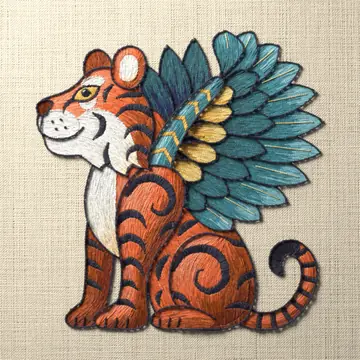
Advanced 3–8 in hoop · 16 colors
Winged tiger with tribal stripes
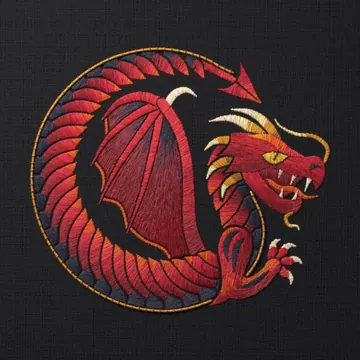
Advanced 3–8 in hoop · 14 colors
Tribal dragon in red and black
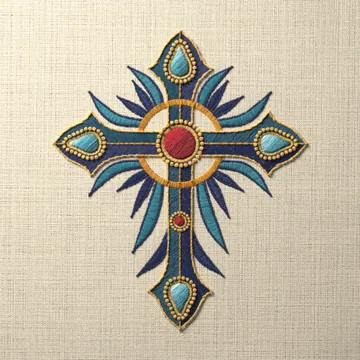
Advanced 3–8 in hoop · 14 colors
Large tribal cross with raised stones
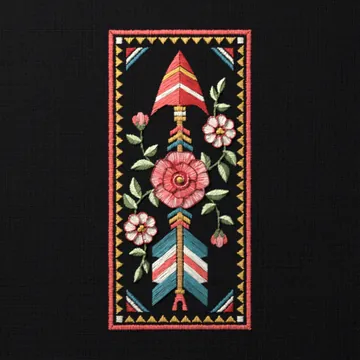
Advanced 3–8 in hoop · 14 colors
Floral tribal arrow bookmark
Advanced 3–8 in hoop · 13 colors
Small tribal unicorn and crescent moon
Intermediate 3–8 in hoop · 8 colors
Tribal sea turtle riding a wave
Easy 3–8 in hoop · 4 colors
Easy continuous tribal border
New to hand embroidery? Starting hand embroidery, step by step