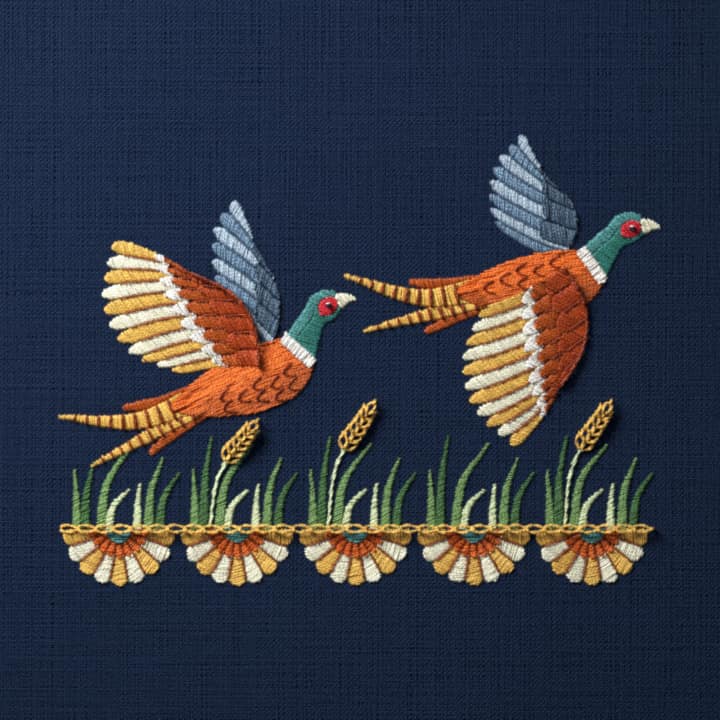
Pheasants in flight border for a hem hand embroidery pattern
Advanced · 18 colors · 4.4 × 3.3 in · 9 kinds of stitch
Download free PDFPDFPrints on US Letter and A4You may sell what you make from it by hand, in small quantities. The PDF itself is not to be sold or shared. Selling, classes and kits: the rules
Each near wing is one fan of gold and cream satin stitch feathers parted by split stitch lines, with white tipped coverts in copper.
Size and details
Advanced. Uses long and short stitch, satin stitch over about a quarter of the cloth in a 6 inch hoop, 18 colors and a great deal of stitching.
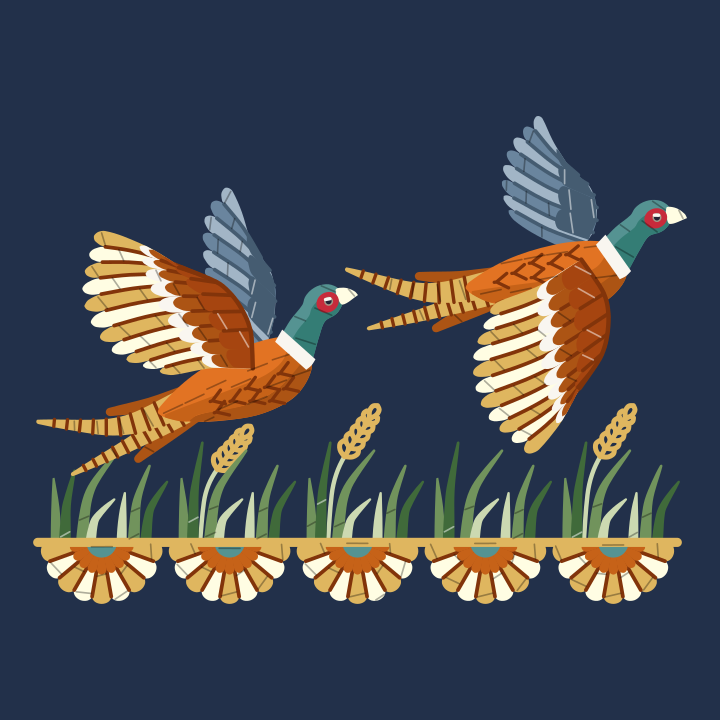
The far wings are dusty blue so they stay behind. Bodies are long and short stitch with fly stitch scales, and the gold tails are satin stitch with straight stitch bars. Grass blades are satin stitch, seed heads are lazy daisy stitch on stem stitch stalks, and a chain stitch line carries five satin stitch fans along the hem. The grass and fans keep an even step, so the strip can be set end to end. It is drawn for navy linen. In the picture of where the colors go, the fine lines show which way the stitches lie.
| Hoop | Inches | Centimeters | Satin stitch up to |
|---|---|---|---|
| 3 in (8 cm) | 1.7 × 1.3 in | 4.3 × 3.3 cm | 1/16 in (1.6 mm) |
| 4 in (10 cm) | 2.6 × 2 in | 6.6 × 5.1 cm | 1/8 in (3 mm) |
| 5 in (13 cm) | 3.5 × 2.6 in | 8.9 × 6.6 cm | 3/16 in (5 mm) |
| 6 in (15 cm) | 4.4 × 3.3 in | 11.2 × 8.4 cm | 3/16 in (5 mm) |
| 8 in (20 cm) | 6.1 × 4.6 in | 15.5 × 11.7 cm | 5/16 in (8 mm) |
- In a 3 or 4 inch hoop the French knots are drawn smaller than about 2 mm (a little over 1/16 in). Use one strand of floss for them there, or choose a larger hoop.
- In a 3, 4 or 5 inch hoop the shortest lazy daisy loops are drawn smaller than about 2 mm (a little over 1/16 in). Use one strand of floss for them there, or choose a larger hoop.
What you need
- Fabric
- Plain cotton or linen in navy, cut 9 in (23 cm) square. On white cloth its palest threads do not show: choose other colors under Options. A pencil line does not show on it: see how to transfer a pattern to dark fabric.
- Needle
- Embroidery needle, size 9 for 1 strand, size 7 for 2 or 3 (a lower number is a thicker needle).
- Floss
- 18 colors of six-strand cotton, listed below. DMC is a brand: another brand in a like color will do.
- Marker
- A pen or a sheet that suits the fabric: how to transfer a pattern says which.
On clothes. Wash and dry the garment first. Denim and twill need no backing and take a sharp needle, embroidery or chenille; T-shirts, sweatshirts and other knits need a backing that sticks or irons on. How to embroider on clothes has every step, and the placement chart says where a design goes.
Floss
- 1DMC 3347 Medium Yellow GreenGrass (middle)
- 2DMC 3346 Hunter GreenGrass (dark)
- 3DMC 3348 Light Yellow GreenGrass (light), grass stalks
- 4DMC 3820 Dark StrawNear wing (darker), hem fans (middle), tail (lighter), ground line and seed heads
- 5DMC 931 Medium Antique BlueFar wing (middle)
- 6DMC 932 Light Antique BlueFar wing (light)
- 7DMC 930 Dark Antique BlueFeather lines (lighter), far wing (dark)
- 8DMC 920 Medium CopperWing coverts (middle), tail (darker), body (dark)
- 9DMC 918 Dark Red CopperFeather lines (darker), tail bars, body scales and wing edge
- 10DMC 922 Light CopperBody (light)
- 11DMC 921 CopperHem fans (dark), body (middle)
- 12DMC 3848 Medium Teal GreenHead and neck (lighter), fan hearts
- 13DMC 3847 Dark Teal GreenHead and neck (darker)
- 14DMC 3865 Winter WhiteWing coverts (light), collar and eye light
- 15DMC 3823 Ultra Pale YellowNear wing (lighter), hem fans (light), beak
- 16DMC 321 RedCheek
- 17DMC 310 BlackEye
- 18DMC 919 Red CopperWing coverts (dark)
Skeins: one of each color is enough. An estimate for the 6 inch hoop, from the length of each line and the area of each filled shape, with a fifth added for tails.
How to stitch it
- New to hand embroidery? Start here.
- Print at 100%, trace the pattern onto the fabric, and put it in the hoop: inner ring under, drawing up, tight as a drum.
- Floss is six strands. Cut 18 inches (45 cm), pull out the number given one at a time, and lay them together.
- Begin with no knot on the back where it is seen and washed, as on a towel, a napkin or clothes; for a piece in a hoop a small knot is fine. End each thread by whipping it around the backs of four or five stitches, with one small hitch.
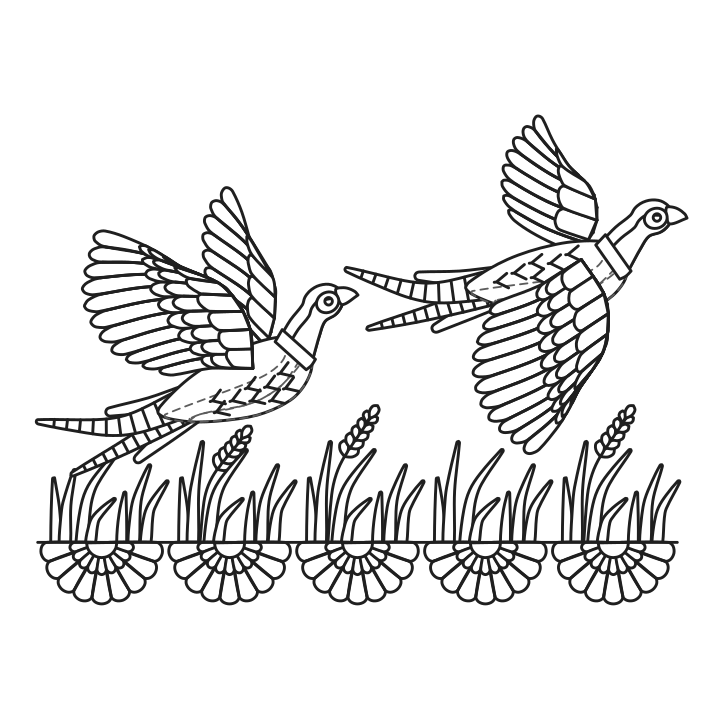
- Each small ring is one French knot. Each small loop is one lazy daisy: come up at its point. A fine broken line inside a shape is where two shades meet: trace it, do not stitch it.
- A number under “Where colors go” is a color of the list. The fine lines on the colors show which way the stitches lie.
Stitch in this order
Filled parts from the back of the picture forward, then lines, loops and knots. Where a stitch page names another number of strands, use the number here.
- Satin stitch 2 strandsGrass, far wing, tail, head and neck, collar, beak, cheek, near wing, wing coverts, hem fans, fan hearts
- Long and short stitch 1 strandBody
- Stem stitch 2 strandsGrass stalks, wing edge
- Split stitch 1 strandFeather lines
- Straight stitch2 or 3 strands: tail bars1 strand: eye light
- Fly stitch 1 strandBody scales
- Chain stitch 2 strandsGround line
- Lazy daisy stitch 2 strandsSeed heads
- French knot 1 strand, two wrapsEye
When it is done, take off any lines that still show. A guide to this kind of work: Stitches for fur, hair and feathers.
More patterns like this
Advanced prints 3–14 in · 23 colors
Ringneck pheasant in the snow
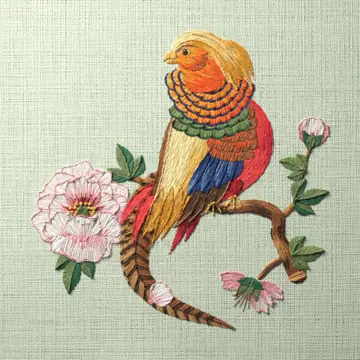
Advanced prints 3–14 in · 22 colors
Golden pheasant with peonies
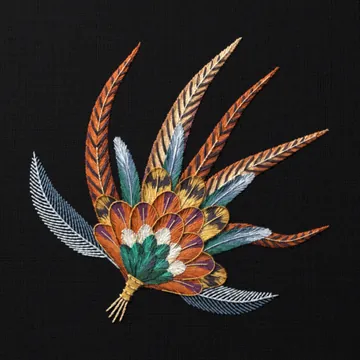
Advanced prints 3–14 in · 18 colors
Pheasant feathers for a black dress
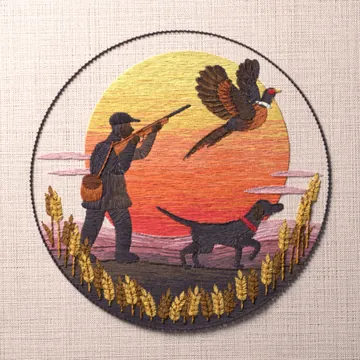
Advanced prints 3–14 in · 19 colors
Hunter silhouette with pheasant
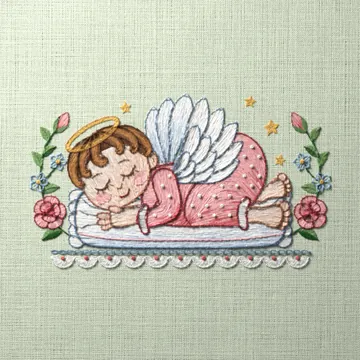
Advanced 3–8 in hoop · 18 colors
Sleeping baby angel pillowcase border
Advanced 3–8 in hoop · 18 colors
Racehorses border
Advanced 3–8 in hoop · 18 colors
Grazing sheep border
Advanced 3–8 in hoop · 16 colors
Medieval cloak trim with pearl knots
New to hand embroidery? Starting hand embroidery, step by step