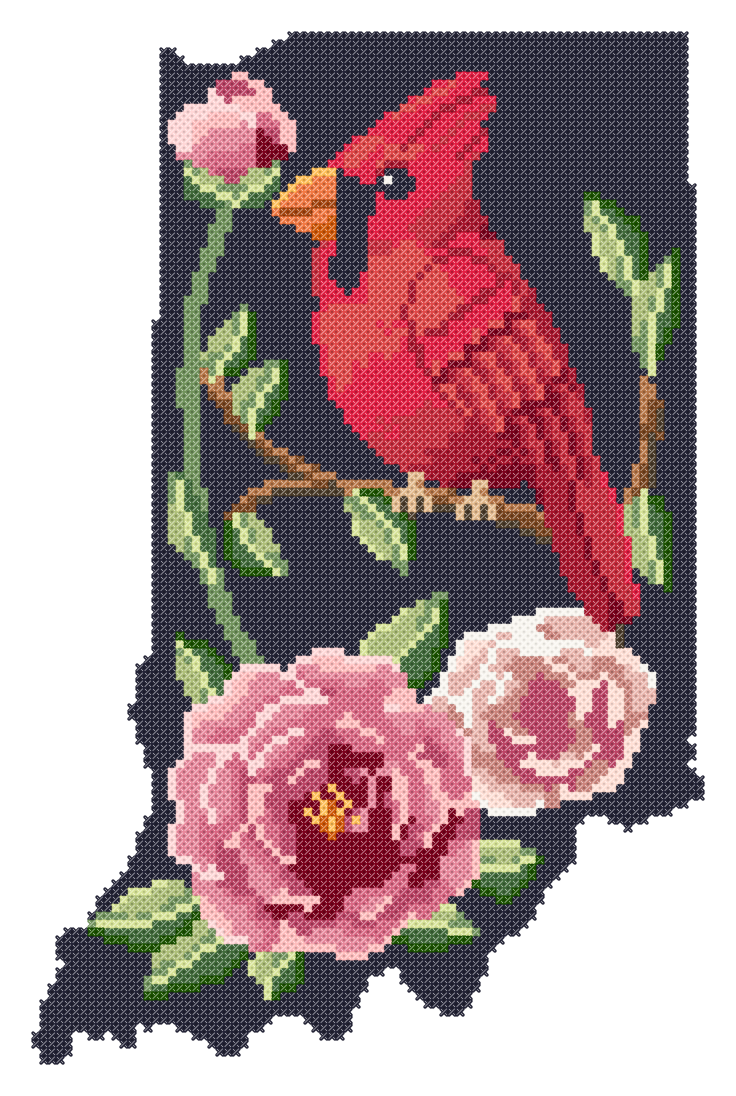
Advanced 8,028 stitches 6 × 9.2 in · 28 colors
Cross stitch, 82 × 124 stitches, 24 colors, advanced
It comes out 10.3 × 15.5 in, with 3 in of fabric to spare on every side.
It comes out 7.5 × 11.3 in, with 3 in of fabric to spare on every side.
It comes out 5.9 × 8.9 in, with 3 in of fabric to spare on every side.
It comes out 5.1 × 7.8 in, with 3 in of fabric to spare on every side.
It comes out 4.6 × 6.9 in, with 3 in of fabric to spare on every side.
It comes out 4.1 × 6.2 in, with 3 in of fabric to spare on every side.
It comes out 3.7 × 5.6 in, with 3 in of fabric to spare on every side.
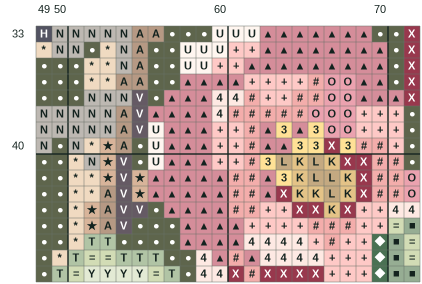
| Symbol | Thread | Stitches | Skeins |
|---|---|---|---|
| ● | DMC 934 Black Avocado Green | 2,817 | 6422222 |
| X | DMC 814 Dark Garnet | 605 | 2111111 |
| ▲ | DMC 3831 Dark Raspberry | 461 | 1 |
| + | DMC 352 Light Coral | 379 | 1 |
| ■ | DMC 3346 Hunter Green | 360 | 1 |
| O | DMC 3832 Medium Raspberry | 311 | 1 |
| ◆ | DMC 890 Ultra Dark Pistachio Green | 234 | 1 |
| = | DMC 471 Very Light Avocado Green | 229 | 1 |
| ★ | DMC 435 Very Light Brown | 218 | 1 |
| # | DMC 351 Coral | 214 | 1 |
| A | DMC 433 Medium Brown | 198 | 1 |
| * | DMC 437 Light Tan | 193 | 1 |
| T | DMC 3347 Medium Yellow Green | 178 | 111111a scrap |
| H | DMC 310 Black | 155 | 11111a scrapa scrap |
| V | DMC 3371 Black Brown | 145 | 1111a scrapa scrapa scrap |
| 4 | DMC 353 Peach | 131 | 1111a scrapa scrapa scrap |
| N | DMC 646 Dark Beaver Gray | 107 | 11a scrapa scrapa scrapa scrapa scrap |
| U | DMC 3770 Very Light Tawny | 104 | 11a scrapa scrapa scrapa scrapa scrap |
| E | DMC 739 Ultra Very Light Tan | 72 | 11a scrapa scrapa scrapa scrapa scrap |
| 7 | DMC 738 Very Light Tan | 68 | 11a scrapa scrapa scrapa scrapa scrap |
| K | DMC 783 Medium Topaz | 67 | 11a scrapa scrapa scrapa scrapa scrap |
| Y | DMC 3348 Light Yellow Green | 60 | 11a scrapa scrapa scrapa scrapa scrap |
| 3 | DMC 725 Medium Light Topaz | 54 | 1a scrapa scrapa scrapa scrapa scrapa scrap |
| L | DMC 780 Ultra Very Dark Topaz | 17 | a scrap |
Skeins are an estimate for 8-count with four strands11-count with three strands14-count with two strands16-count with two strands18-count with two strands20-count with two strands22-count with two strands: 29 skeins and a little of one color25 skeins and a little of 2 colors17 skeins and a little of 8 colors17 skeins and a little of 8 colors15 skeins and a little of 10 colors14 skeins and a little of 11 colors13 skeins and a little of 12 colors. A scrap: under 18 in (46 cm) of whole, six-strand floss. Leftovers will do. How it is worked out
Suggested DMC colors. Screen colors are approximate. A number opens a search for that thread on Amazon, in a new tab. Floss Field is not affiliated with DMC or Amazon.
The outline of Alabama as Victorian wool-work on black-green with a garnet edge: a camellia limb climbs from Mobile to the northeast corner with three great rose, coral and shell camellias, two buds and glossy leaves, and a yellowhammer clings to it, gold flashing under its tail; one petal and one leaf spill over the border. Full crosses only.
In the picture: alabama, state map, camellias, yellowhammer, northern flicker
Advanced 8,028 stitches 6 × 9.2 in · 28 colors
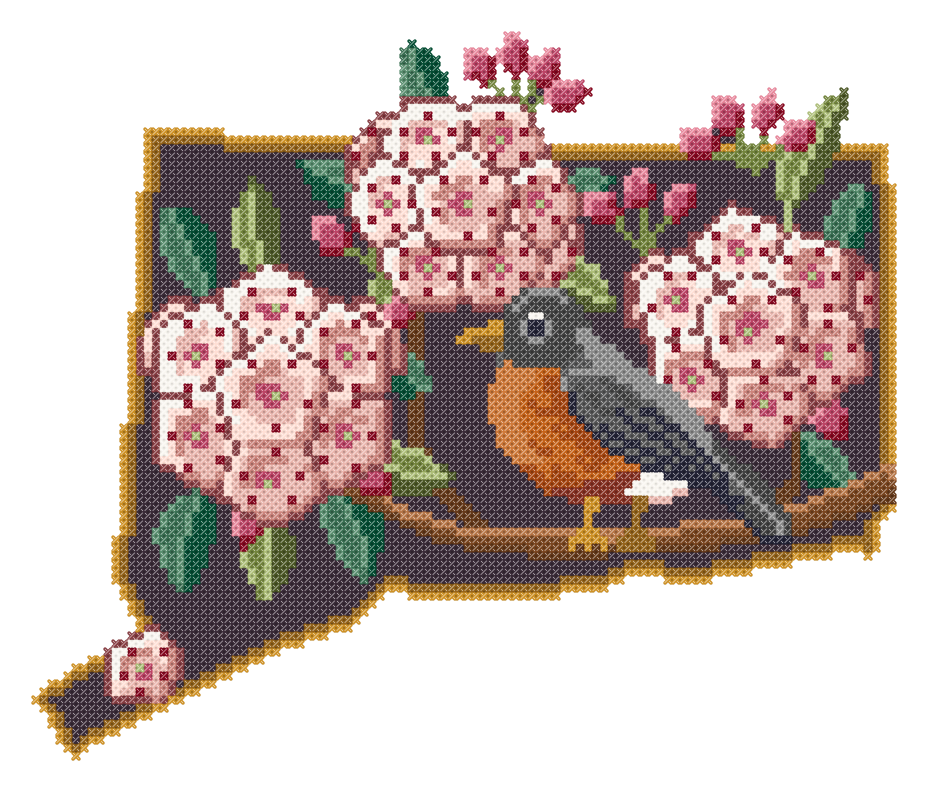
Advanced 6,028 stitches 7.7 × 6.5 in · 28 colors
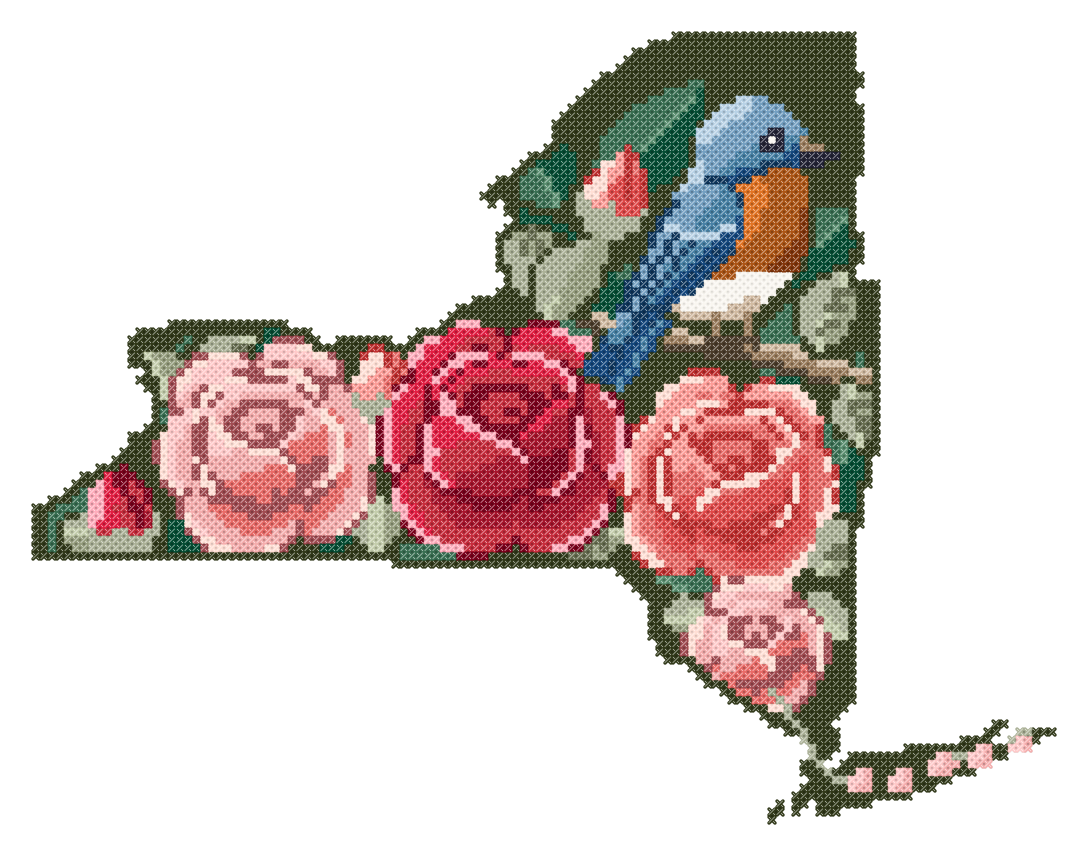
Advanced 5,011 stitches 9.1 × 7.1 in · 34 colors
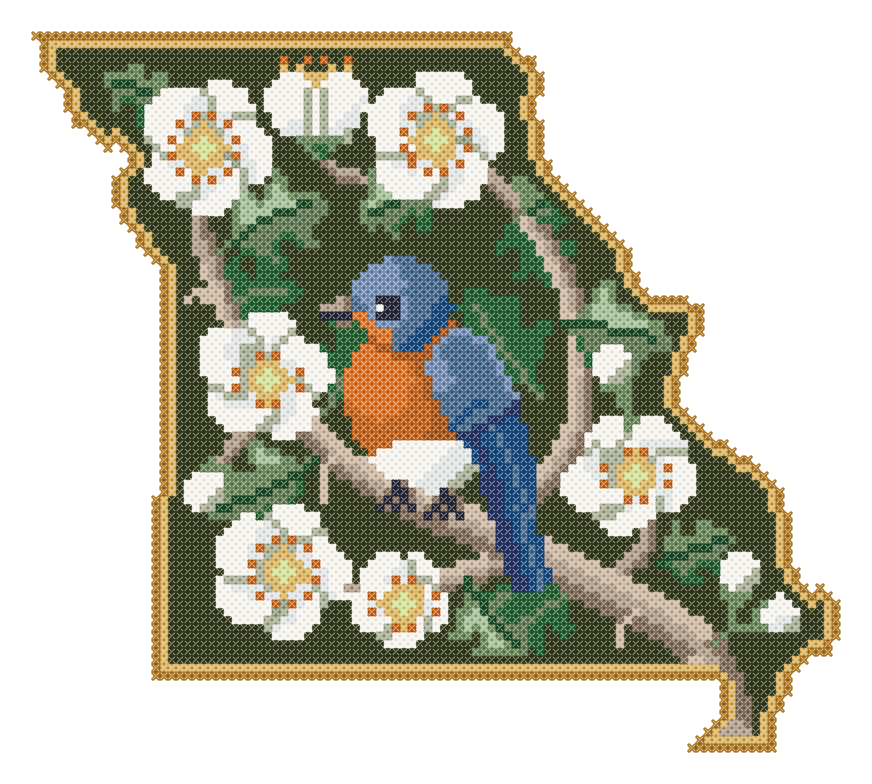
Intermediate 5,631 stitches 7.2 × 6.4 in · 24 colors
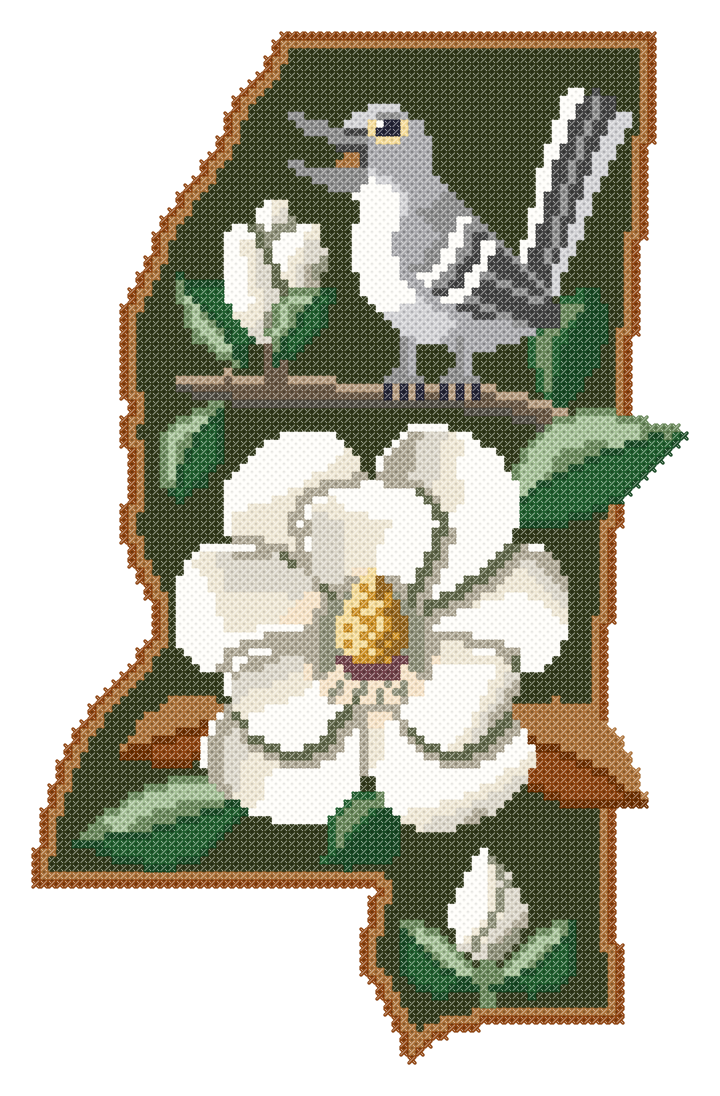
Advanced 7,252 stitches 5.9 × 9.2 in · 27 colors
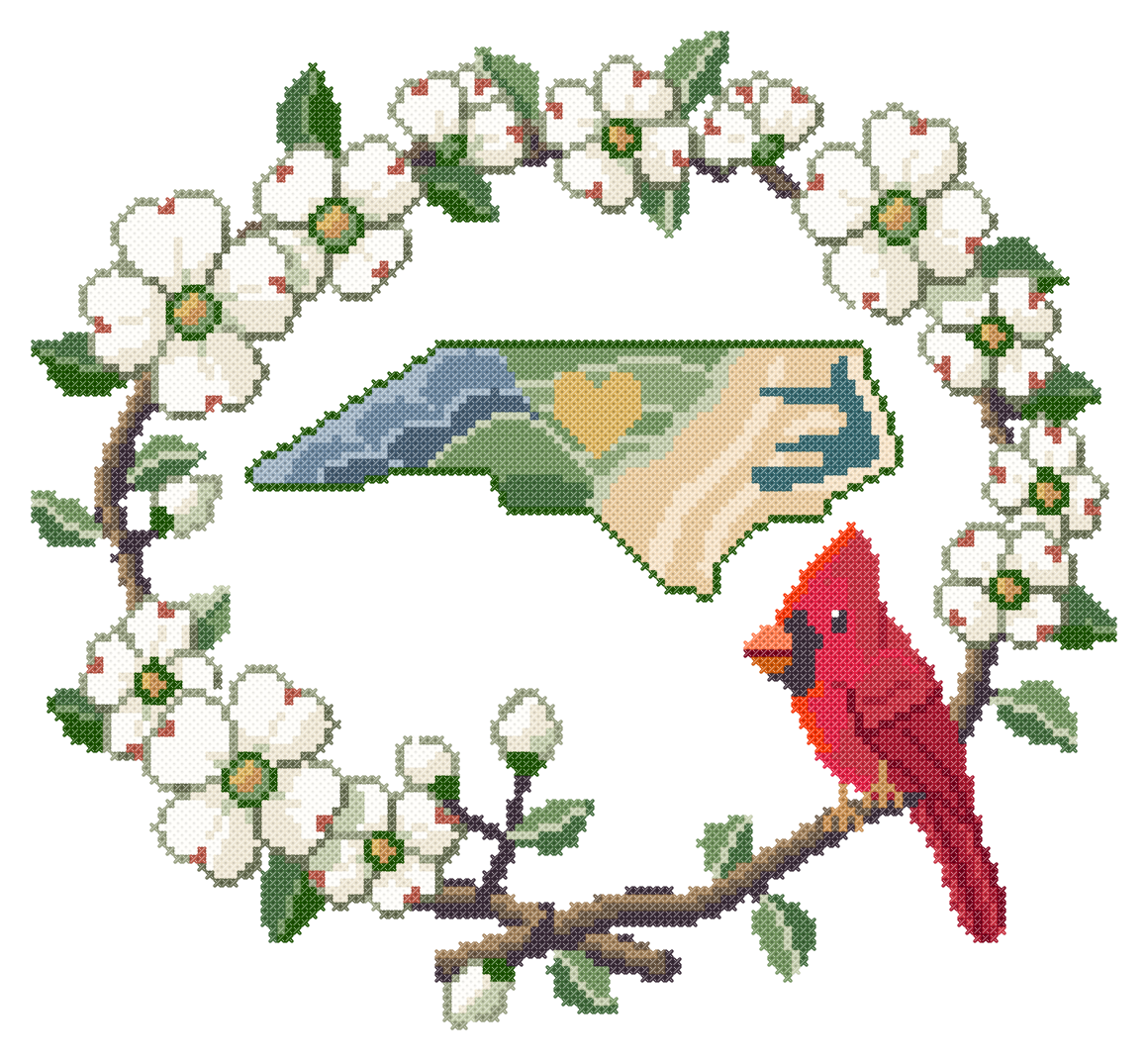
Advanced 7,534 stitches 9.8 × 9 in · 28 colors
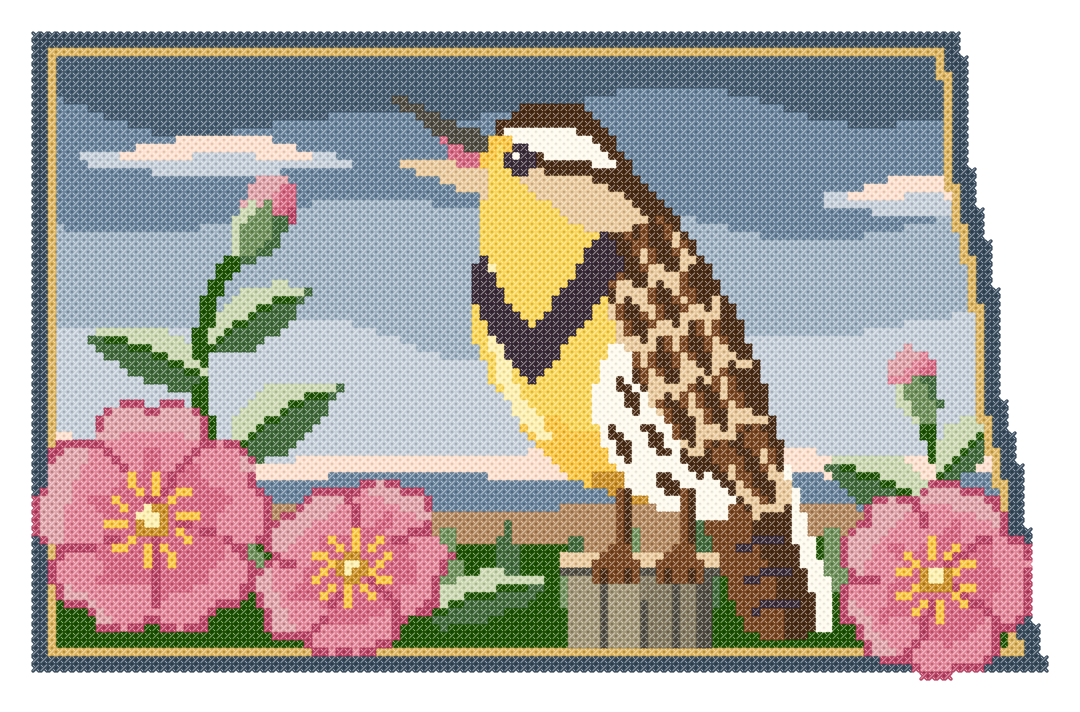
Advanced 9,700 stitches 9.1 × 5.8 in · 28 colors
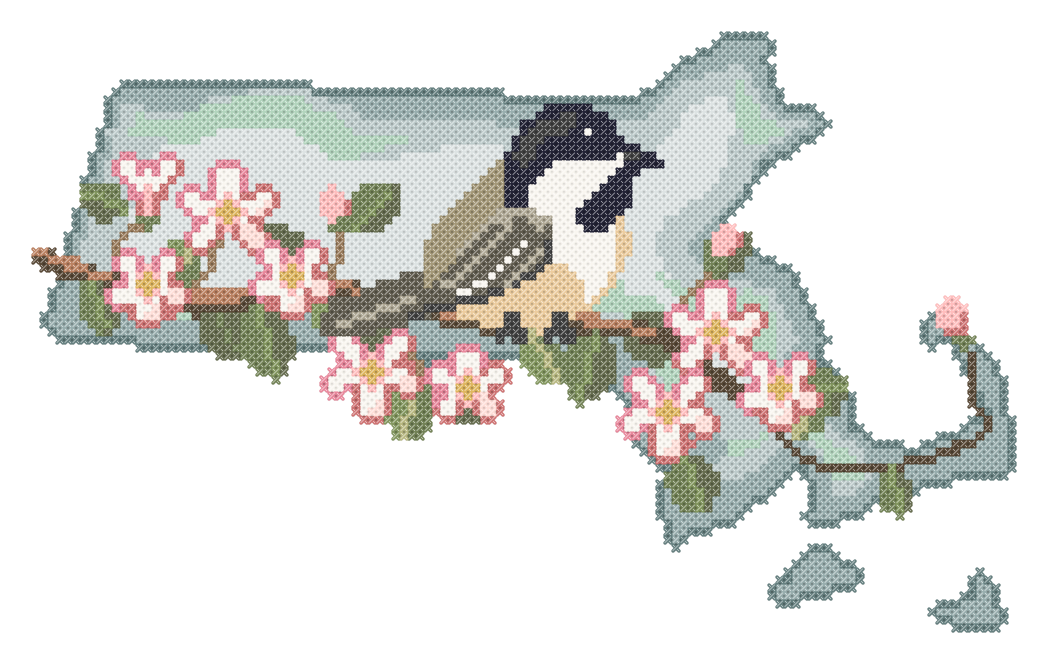
Intermediate 4,208 stitches 8.8 × 5.4 in · 24 colors
New to cross stitch? How to cross stitch
Count is the number of squares to the inch: 14-count fabric has 14, and a higher count makes the same design smaller. DMC is the thread maker whose color numbers most charts use.