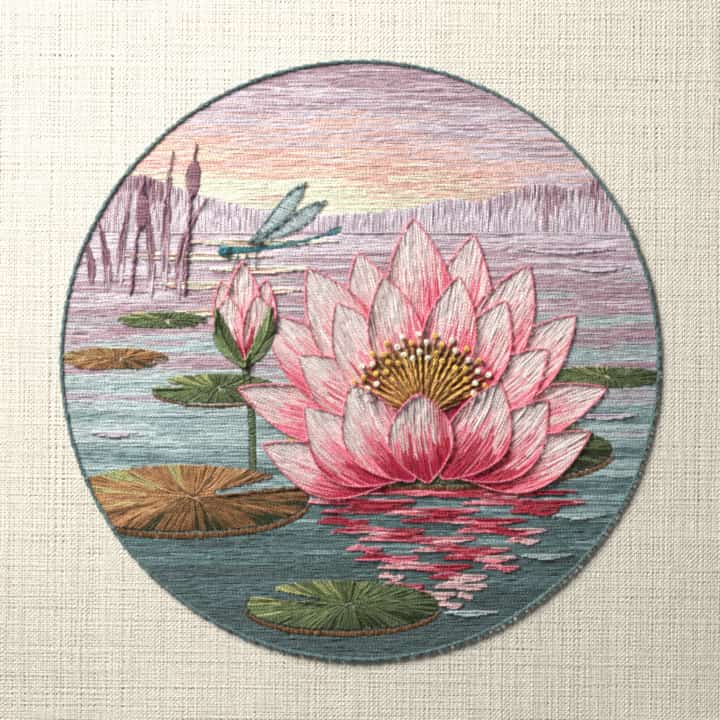
Pink water lily on a pond at dawn hand embroidery pattern
Advanced · 22 colors · 7 kinds of stitch
Download free PDFPDF, US Letter · 117 KBFor your own stitching, gifts and handmade pieces you sell. Do not resell or share this PDF. What you may do, in full
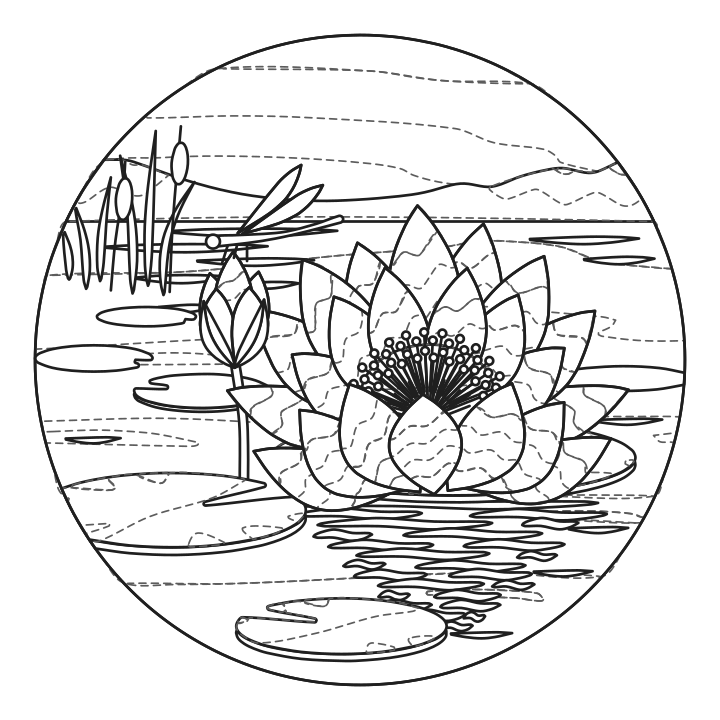
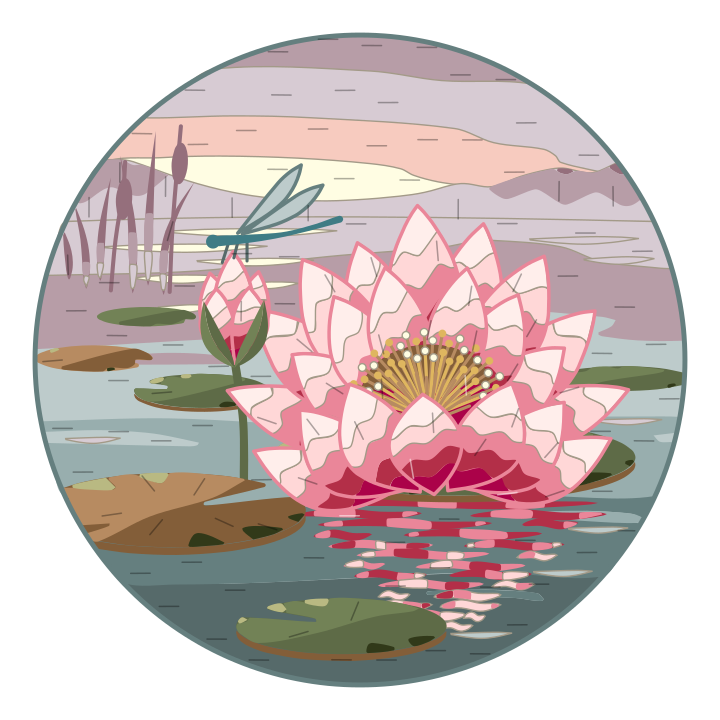
One large pink water lily floats on a pond at dawn, deep raspberry where the petals spring and nearly white at their points. Below it a rosy reflection lies on the water in broken bars, and pads lead back to lilac reeds in the mist. Sky, water, pads and petals are long and short stitch, laid level in the sky and water and along each petal in the flower, with split stitch on the petal edges. The stamens are straight stitches tipped with French knots. A damselfly in satin stitch rests on the half open bud, and a stem stitch line goes all the way round. In the picture of where the colors go, the fine lines show which way the stitches lie.
Size and details
Advanced. Uses long and short stitch over much of the design, dozens of French knots, 22 colors and a great deal of stitching.
22 colors of floss and 7 kinds of stitch:
- Long and short stitch
- Stem stitch
- Satin stitch
- Split stitch
- Straight stitch
- French knot
- Fishbone stitch
- Which stitch goes where
| Hoop | Inches | Centimeters | Satin stitch up to |
|---|---|---|---|
| 3 in (8 cm) | 1.9 × 1.9 in | 4.8 × 4.8 cm | 1/16 in (1.6 mm) |
| 4 in (10 cm) | 2.8 × 2.8 in | 7.1 × 7.1 cm | 1/16 in (1.6 mm) |
| 5 in (13 cm) | 3.8 × 3.8 in | 9.7 × 9.7 cm | 1/8 in (3 mm) |
| 6 in (15 cm) | 4.7 × 4.7 in | 11.9 × 11.9 cm | 1/8 in (3 mm) |
| 8 in (20 cm) | 6.6 × 6.6 in | 16.8 × 16.8 cm | 3/16 in (5 mm) |
- In a 3 or 4 inch hoop the French knots are drawn smaller than about 2 mm (a little over 1/16 in). Use one strand of floss for them there, or choose a larger hoop.
The pattern is drawn inside a circle about half an inch (1.3 cm) smaller all around than the hoop.
What you need
- DMC 754 Light PeachSky (light)
- DMC 3042 Light Antique VioletWater (middle dark), sky (darkest), far bank and reeds (middle)
- DMC 3743 Very Light Antique VioletWater (lightest), far bank (light), sky (dark) and 3 more parts
- DMC 3823 Ultra Pale YellowSky (lightest), light on the water and anthers (lighter)
- DMC 3041 Medium Antique VioletReeds and far bank (dark), cattails
- DMC 927 Light Gray GreenWater (light), damselfly wings (lighter), ripples (darker)
- DMC 924 Very Dark Gray GreenWater (darkest), damselfly legs
- DMC 3768 Dark Gray GreenWater (dark), rim, damselfly wings (darker)
- DMC 926 Medium Gray GreenWater (middle light)
- DMC 3363 Medium Pine GreenLily pads (middle light), bud sepals (lighter)
- DMC 3362 Dark Pine GreenLily pads (middle dark), bud stem, bud sepals (darker)
- DMC 3828 Hazelnut BrownLily pads (light), stamens (darker)
- DMC 934 Black Avocado GreenLily pads (darkest)
- DMC 869 Very Dark Hazelnut BrownLily pads (dark), pad undersides, lily heart (lighter)
- DMC 3013 Light Khaki GreenLily pads (lightest)
- DMC 3831 Dark RaspberryPetals, reflection and bud (dark)
- DMC 3833 Light RaspberryPetals, bud and reflection (middle), petal edges
- DMC 963 Ultra Very Light Dusty RosePetals, reflection and bud (light)
- DMC 150 Ultra Very Dark Dusty RosePetals and bud (darkest), lily heart (darker)
- DMC 819 Light Baby PinkPetals and bud (lightest)
- DMC 3820 Dark StrawStamens (lighter), anthers (darker)
- DMC 3809 Very Dark TurquoiseDamselfly
Skeins: 3 for water (light), damselfly wings (lighter), ripples (darker) and 3 for petals, bud and reflection (middle), petal edges; one of each other color. An estimate for the largest size, the 8 inch hoop: the length of each line and the area of each filled shape, a fifth added for tails and ends, a tenth of every 8 m (8.7 yd) skein kept spare.
The floss is six-strand cotton; the stitch guide says how many strands to use. You also need a hoop, an embroidery needle (a size 7 to 9 suits two or three strands) and plain cotton or linen fabric. To frame the piece in its hoop, cut a square 3 inches (8 cm) wider than the hoop: a 9 inch (23 cm) square for a 6 inch hoop.
When it is stitched, how to finish a hoop shows how to back it for the wall.
Stitch guide
- Put the pattern on the fabric (how to transfer a pattern) and the fabric in the hoop.
- Stitch the filled parts first, what lies behind before what lies in front of it.
- Then stitch the lines: stems, veins and outlines over the edges of the filled parts.
- Keep the knots for the end, so that the hoop and your hand do not flatten them.
Start each thread with a small knot on the back or one of the knotless starts, and end it by running the needle under the backs of a few stitches (starting and ending a thread). Use the strands this list gives, also where a page about a stitch names another number.
- Long and short stitch 1 strandSky, far bank, water, light on the water, reeds, lily pads, reflection, ripples, petals, lily heart, bud
- Stem stitch 2 to 3 strandsReeds, rim
- Satin stitch 2 strandsCattails, pad undersides, bud stem, damselfly, damselfly wings
- Split stitch 1 strandPetal edges, damselfly wings
- Straight stitch 1 to 2 strandsStamens, damselfly legs
- French knot 1 to 2 strands, two wrapsAnthers, damselfly
- Fishbone stitch 2 strandsBud sepals
Getting it onto your fabric
The PDF holds the pattern twice at actual size: once as drawn, and once mirrored for an iron-on transfer pen. Print it at 100% with scaling off and check the one-inch square (25.4 mm) with a ruler before you trace. How to transfer a pattern explains tracing, carbon paper and the other ways. The files are under Downloads.
Downloads
- Download free PDF PDF, US Letter, 3 pages, for a 6 inch (15 cm) hoop
- Download free PDF, A4 PDF, A4, 3 pages, for a 6 inch (15 cm) hoop
More patterns like this
Advanced 3–8 in hoop · 24 colors
Coneflower coaster
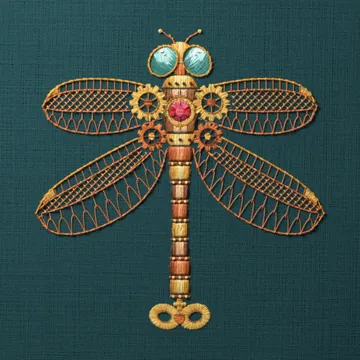
Advanced 3–8 in hoop · 18 colors
Steampunk dragonfly with gears
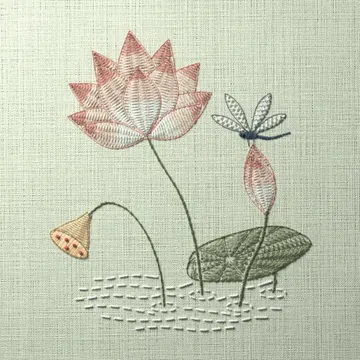
Intermediate 3–8 in hoop · 10 colors
Lotus pond in kantha and shadow work
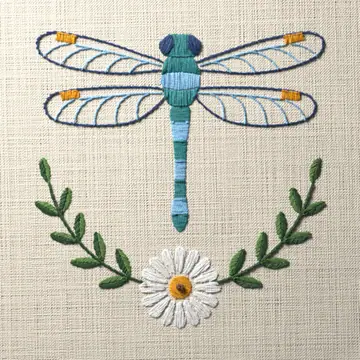
Intermediate 3–8 in hoop · 8 colors
Dragonfly over daisy crescent
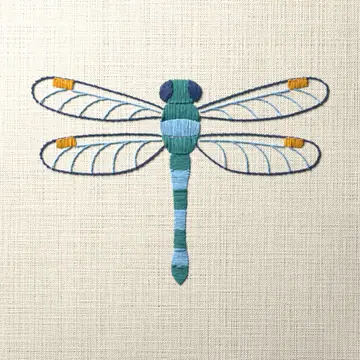
Intermediate 3–8 in hoop · 4 colors
Dragonfly from above
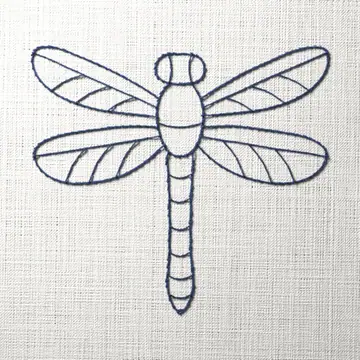
Beginner 3–8 in hoop · 1 color
Bluework dragonfly with veined wings
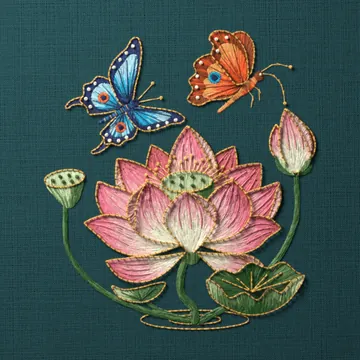
Advanced 3–8 in hoop · 23 colors
Butterflies over lotus flowers
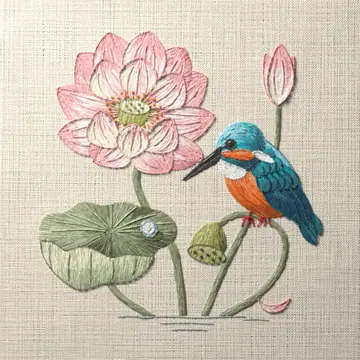
Advanced 3–8 in hoop · 24 colors
Vietnamese silk style lotus and bird
New to hand embroidery? Starting hand embroidery, step by step