Candlestick telephone phone case panel hand embroidery pattern
Advanced · 13 colors · 2.7 × 4.8 in · 7 kinds of stitch
Download free PDFPDFPrints on US Letter and A4You may sell what you make from it by hand, in small quantities. The PDF itself is not to be sold or shared. Selling, classes and kits: the rules
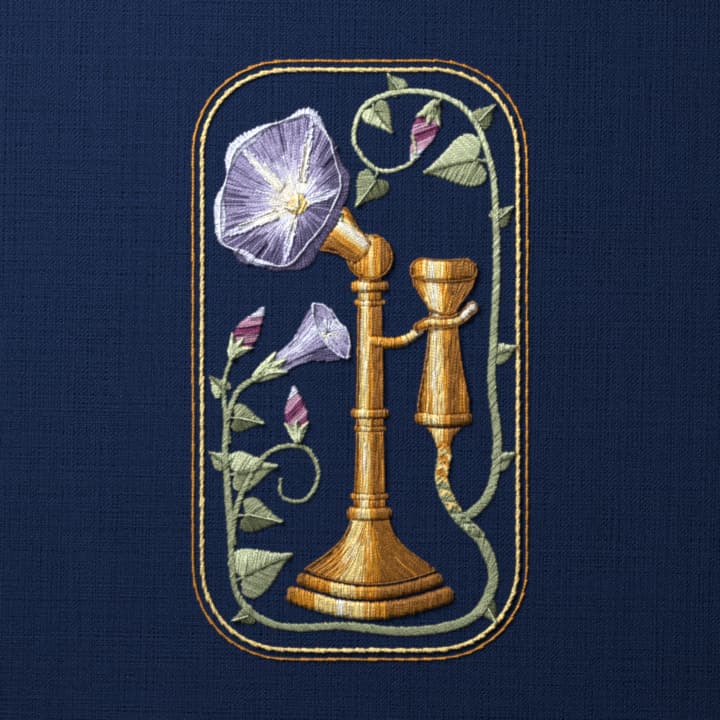
A brass candlestick telephone stands in a tall round-cornered frame, its receiver hanging from the side hook and its mouthpiece a wide-open morning glory with a glowing cream throat. The cord loosens into a whiplash vine with sage heart leaves, furled plum buds and one half-open flower.
Size and details
Advanced. Uses long and short stitch, padded satin stitch, 13 colors and a great deal of stitching; from a 6 inch hoop up the widest satin stitches are long.
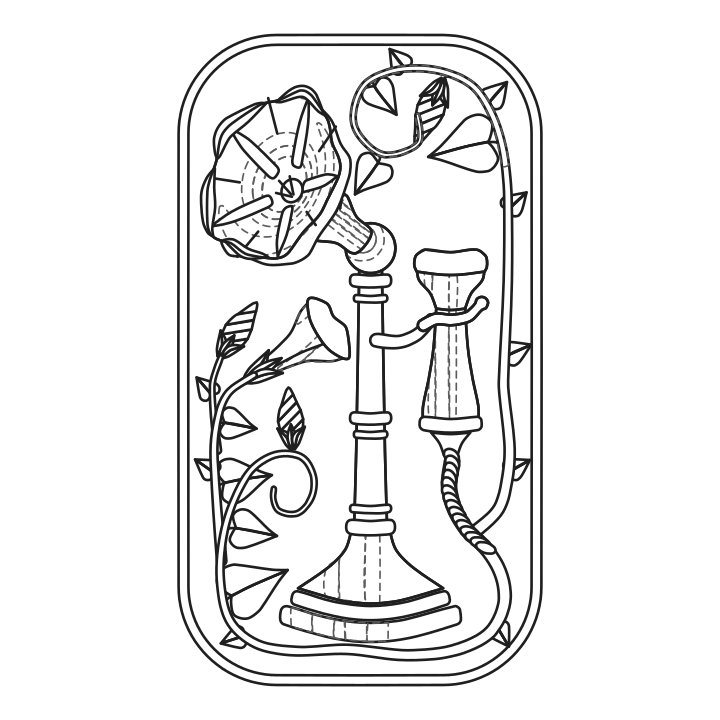
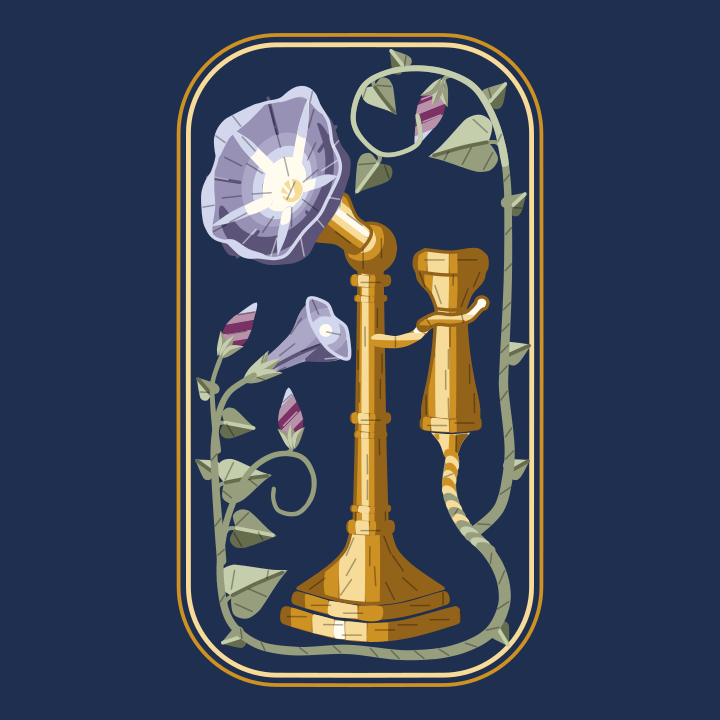
Two gold lines of stem stitch close the panel on all four sides. The rims, rings and hook are padded satin stitch, the column, receiver and petals long and short stitch, the leaves and vines satin stitch. It is drawn for indigo linen. In the picture of where the colors go, the fine lines show which way the stitches lie.
| Hoop | Inches | Centimeters | Satin stitch up to |
|---|---|---|---|
| 3 in (8 cm) | 1.1 × 1.9 in | 2.8 × 4.8 cm | 1/8 in (3 mm) |
| 4 in (10 cm) | 1.6 × 2.9 in | 4.1 × 7.4 cm | 3/16 in (5 mm) |
| 5 in (13 cm) | 2.2 × 3.8 in | 5.6 × 9.7 cm | 5/16 in (8 mm) |
| 6 in (15 cm) | 2.7 × 4.8 in | 6.9 × 12.2 cm | 3/8 in (10 mm) |
| 8 in (20 cm) | 3.8 × 6.7 in | 9.7 × 17 cm | 1/2 in (13 mm) |
- In an 8 inch hoop the widest satin stitch shape is 1/2 in (13 mm) across. Satin stitches longer than about 12 mm (just under 1/2 in) tend to work loose: divide the shape into sections, or work it in long and short stitch.
What you need
- Fabric
- Plain cotton or linen in indigo, cut 9 in (23 cm) square. On white cloth its palest threads do not show: choose other colors under Options. A pencil line does not show on it: see how to transfer a pattern to dark fabric.
- Needle
- Embroidery needle, size 9 for 1 strand, size 7 for 2 or 3 (a lower number is a thicker needle).
- Floss
- 13 colors of six-strand cotton, listed below. DMC is a brand: another brand in a like color will do.
- Marker
- A pen or a sheet that suits the fabric: how to transfer a pattern says which.
Floss
- 1DMC 783 Medium TopazFrame (darker), column, receiver and base (middle), base rim (dark) and 8 more parts
- 2DMC 3822 Light StrawFrame (lighter), receiver, column, base, base rim and hook (light) and 8 more parts
- 3DMC 522 Fern GreenVines and bud cups (darker), heart leaves (middle) and 3 more parts
- 4DMC 524 Very Light Fern GreenHeart leaves and twisted cord (light), vines, bud cups, leaf veins and sepals (lighter)
- 5DMC 520 Dark Fern GreenHeart leaves (dark), leaf veins (darker)
- 6DMC 34 Dark FuchsiaFurled buds (dark)
- 7DMC 3836 Light GrapeFurled buds (middle)
- 8DMC 3747 Very Light Blue VioletFlower edge and turned rim, star rays (darker), flower tube (light) and 3 more parts
- 9DMC 340 Medium Blue VioletHalf open flower, morning glory and flower tube (middle)
- 10DMC 333 Very Dark Blue VioletFlower back and flower creases, morning glory (darkest) and 2 more parts
- 11DMC 155 Medium Dark Blue VioletMorning glory, flower tube and half open flower (dark)
- 12DMC 712 CreamMorning glory, hook and mouthpiece cup (lightest), star rays (lighter) and 4 more parts
- 13DMC 780 Ultra Very Dark TopazBrass edges, receiver, base and column (dark), base rim (darkest) and 7 more parts
Skeins: one of each color is enough. An estimate for the 6 inch hoop, from the length of each line and the area of each filled shape, with a fifth added for tails.
How to stitch it
- New to hand embroidery? Start here.
- Print at 100%, trace the pattern onto the fabric, and put it in the hoop: inner ring under, drawing up, tight as a drum.
- Floss is six strands. Cut 18 inches (45 cm), pull out the number given one at a time, and lay them together.
- Inside a filled shape start with two or three tiny stitches, which the filling covers. Start a line with a small knot on the back. End each thread by running the needle under the backs of a few stitches.
- A fine broken line inside a shape is where two shades meet: trace it, do not stitch it.
- A number under “Where colors go” is a color of the list. The fine lines on the colors show which way the stitches lie.
Stitch in this order
Filled parts from the back of the picture forward, then lines. Where a stitch page names another number of strands, use the number here.
- Satin stitch 2 strandsHeart leaves, furled buds, vines, column rings, receiver foot, twisted cord, throat, turned rim
- Fishbone stitch 2 strandsBud cups, sepals
- Long and short stitch 1 strandHalf open flower, base, column, receiver, flower tube, flower back, morning glory, star rays
- Padded satin stitch 2 strandsBase rim, column rings, hook, receiver cap, receiver rim, knuckle, mouthpiece cup
- Stem stitch1 or 3 strands: frame2 strands: leaf stalks1 strand: leaf veins, flower seams
- Split stitch 1 strandFlower edge, brass edges, flower creases
- Straight stitch 2 strandsStamens
When it is done, take off any lines that still show and finish the hoop.
More patterns like this
Advanced prints 3–14 in · 22 colors
Vintage rotary telephone with roses
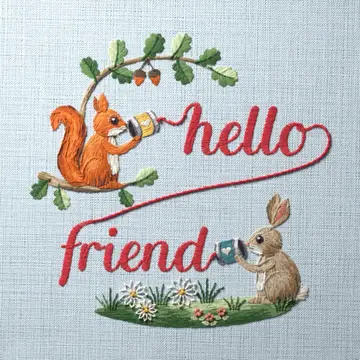
Advanced prints 3–14 in · 24 colors
Hello friend
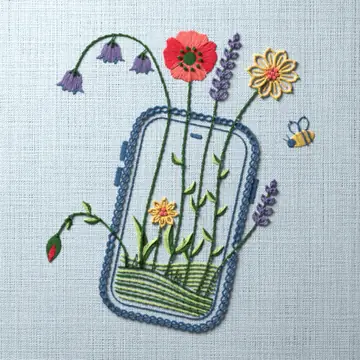
Easy 3–8 in hoop · 7 colors
Easy cell phone with wildflowers
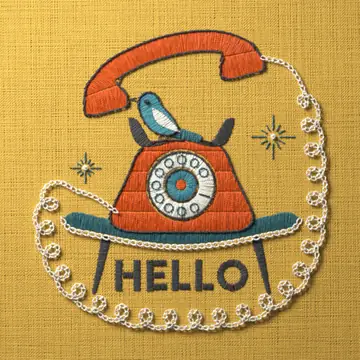
Easy prints 3–14 in · 5 colors
Hello
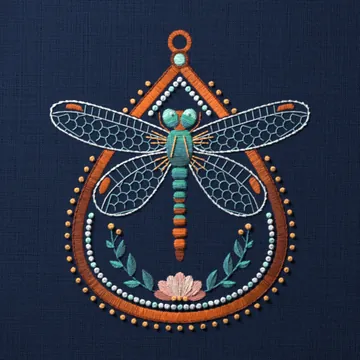
Advanced 3–8 in hoop · 14 colors
Beaded dragonfly pendant
Advanced 3–8 in hoop · 15 colors
Red bird on a rose
Advanced 3–8 in hoop · 15 colors
Long neck dinosaur eating leaves
Advanced 3–8 in hoop · 16 colors
Tiger lilies in an Art Nouveau panel
New to hand embroidery? Starting hand embroidery, step by step