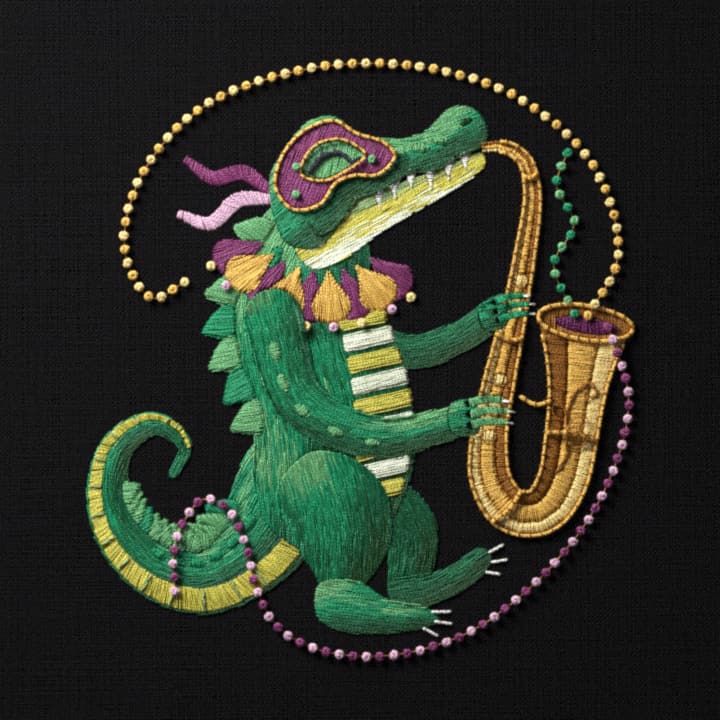
Mardi Gras alligator with saxophone hand embroidery pattern
Advanced · 16 colors · 4.3 × 4.7 in · 10 kinds of stitch
Download free PDFPDFPrints on US Letter and A4You may sell what you make from it by hand, in small quantities. The PDF itself is not to be sold or shared. Selling, classes and kits: the rules
He leans back, shuts his eyes behind a purple mask and plays, and the beads swing out of the horn like the tune itself.
Size and details
Advanced. Uses long and short stitch over much of the design, padded satin stitch, couching, more than a hundred French knots, satin stitch over about a sixth of the cloth in a 6 inch hoop, 16 colors and a great deal of stitching; from a 5 inch hoop up some of the satin stitches are long.
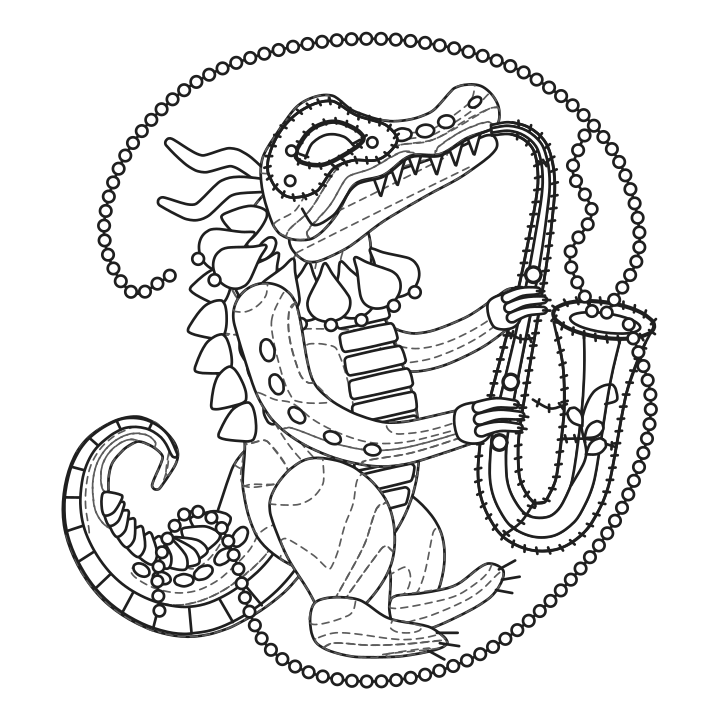
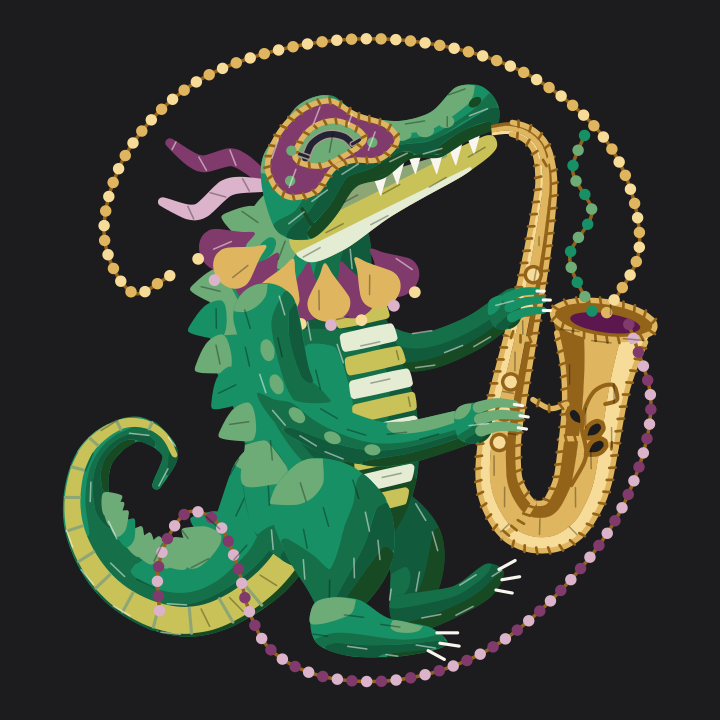
The scutes, belly bands, collar, mask and saxophone are padded satin stitch, so they stand up from the cloth. Couching lays the gold edge round the horn and the mask. The hide is long and short stitch in five greens, and every bead is a French knot on a back stitch string. His shut eye is stem stitch, and lazy daisy leaves climb the bell. In the picture of where the colors go, the fine lines show which way the stitches lie.
| Hoop | Inches | Centimeters | Satin stitch up to |
|---|---|---|---|
| 3 in (8 cm) | 1.7 × 1.9 in | 4.3 × 4.8 cm | 3/16 in (5 mm) |
| 4 in (10 cm) | 2.6 × 2.8 in | 6.6 × 7.1 cm | 1/4 in (6 mm) |
| 5 in (13 cm) | 3.4 × 3.8 in | 8.6 × 9.7 cm | 3/8 in (10 mm) |
| 6 in (15 cm) | 4.3 × 4.7 in | 10.9 × 11.9 cm | 7/16 in (11 mm) |
| 8 in (20 cm) | 6 × 6.6 in | 15.2 × 16.8 cm | 5/8 in (16 mm) |
- In an 8 inch hoop the widest satin stitch shape is 5/8 in (16 mm) across. Satin stitches longer than about 12 mm (just under 1/2 in) tend to work loose: divide the shape into sections, or work it in long and short stitch.
- In a 3, 4 or 5 inch hoop the French knots are drawn smaller than about 2 mm (a little over 1/16 in). Use one strand of floss for them there, or choose a larger hoop.
- In a 3 inch hoop the shortest lazy daisy loops are drawn smaller than about 2 mm (a little over 1/16 in). Use one strand of floss for them there, or choose a larger hoop.
What you need
- Fabric
- Plain cotton or linen in black, cut 9 in (23 cm) square. On white cloth its palest threads do not show: choose other colors under Options. A pencil line does not show on it: see how to transfer a pattern to dark fabric.
- Needle
- Embroidery needle, size 9 for 1 strand, size 7 for 2 or 3, size 3 for 4 or 5 (a lower number is a thicker needle).
- Floss
- 16 colors of six-strand cotton, listed below. DMC is a brand: another brand in a like color will do.
- Marker
- A pen or a sheet that suits the fabric: how to transfer a pattern says which.
Floss
- 1DMC 3818 Ultra Very Dark Emerald GreenBody, legs, arms, tail, feet, head and hands (dark)
- 2DMC 890 Ultra Dark Pistachio GreenBody, tail, legs, arms, head, feet and hands (darkest), smile and nostril
- 3DMC 909 Very Dark Emerald GreenBody, tail, arms, legs, head, feet and hands (middle)
- 4DMC 3865 Winter WhiteTeeth and claws
- 5DMC 911 Medium Emerald GreenTail, head, arms, body, legs, feet and hands (light), scutes (darker) and 2 more parts
- 6DMC 913 Medium Nile GreenScutes (lighter), body, head, tail, legs and arms (lightest), eyelid and 5 more parts
- 7DMC 16 Light ChartreuseBelly (darker), lower jaw (middle)
- 8DMC 989 Forest GreenLower jaw (dark), belly bands
- 9DMC 772 Very Light Yellow GreenBelly (lighter), lower jaw (light)
- 10DMC 552 Medium VioletCollar and mask ribbons (darker), mask, beads (darkest)
- 11DMC 3822 Light StrawSaxophone (light), beads (lightest), keys, collar bells (lighter)
- 12DMC 3820 Dark StrawSaxophone (middle), gold edge and collar (lighter) and 3 more parts
- 13DMC 554 Light VioletBeads (light), mask ribbons (lighter), collar bells (darker)
- 14DMC 310 BlackShut eye and lashes
- 15DMC 780 Ultra Very Dark TopazBead strings, saxophone (dark), gold edge (darker) and 6 more parts
- 16DMC 550 Very Dark VioletHorn mouth (darker)
Skeins: one of each color is enough. An estimate for the 6 inch hoop, from the length of each line and the area of each filled shape, with a fifth added for tails.
How to stitch it
- New to hand embroidery? Start here.
- Print at 100%, trace the pattern onto the fabric, and put it in the hoop: inner ring under, drawing up, tight as a drum.
- Floss is six strands. Cut 18 inches (45 cm), pull out the number given one at a time, and lay them together.
- Inside a filled shape start with two or three tiny stitches, which the filling covers. Start a line with a small knot on the back. End each thread by running the needle under the backs of a few stitches.
- Each small ring is one French knot. Each small loop is one lazy daisy: come up at its point. A fine broken line inside a shape is where two shades meet: trace it, do not stitch it.
- A number under “Where colors go” is a color of the list. The fine lines on the colors show which way the stitches lie.
Stitch in this order
Filled parts from the back of the picture forward, then lines, loops and knots. Where a stitch page names another number of strands, use the number here.
- Long and short stitch 1 strandLegs, feet, arms, tail, body, lower jaw, head, hands
- Satin stitch2 strands: belly, mask ribbons, eyelid, horn mouth, fingers1 strand: teeth, nostril
- Padded satin stitch 2 strandsBelly, scutes, collar, mask, saxophone, keys
- Straight stitch2 or 3 strands: claws2 strands: belly bands, lashes
- Split stitch 2 strandsSmile
- Stem stitch5 strands: shut eye2 strands: bell scroll
- Couching5 strands: gold rings4 or 5 strands: gold edge3 or 4 strands: mask edge
- Back stitch 1 strandKey edges, bead strings
- Lazy daisy stitch 1 strandBell leaves
- French knot 2 strands, two wrapsCollar bells, mask jewels, beads
When it is done, take off any lines that still show and finish the hoop.
More patterns like this
Advanced 3–8 in hoop · 12 colors
Alligator with its mouth open and a bird
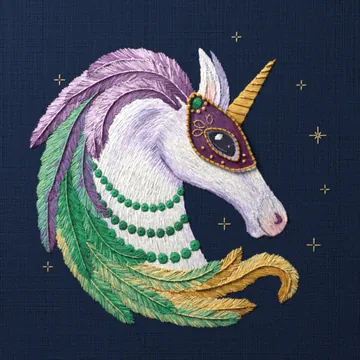
Advanced prints 3–14 in · 23 colors
Unicorn in a Mardi Gras mask
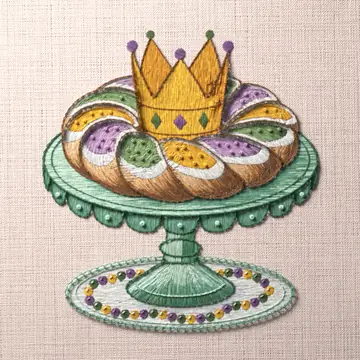
Advanced 3–8 in hoop · 16 colors
Vintage king cake on a stand
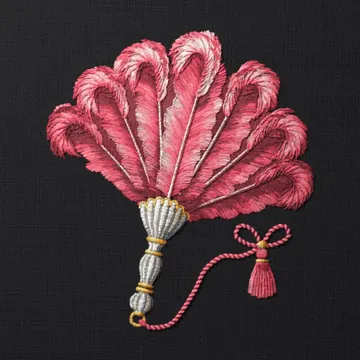
Advanced 3–8 in hoop · 19 colors
Seven plume fan with handle
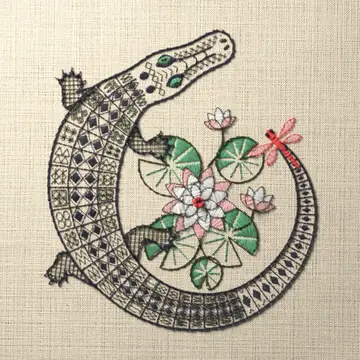
Intermediate prints 3–14 in · 6 colors
Florida alligator among water lilies
Advanced prints 3–14 in · 20 colors
Harlequin diamond medallion
Advanced 3–8 in hoop · 20 colors
Mardi Gras elephant, duck and giraffe
Easy prints 3–14 in · 7 colors
Easy jester hat and mask
New to hand embroidery? Starting hand embroidery, step by step