Chevron mini stocking needlepoint pattern
Beginner, 4 × 6 in on 18 mesh, 3 colors
Colors: Red and whiteChange
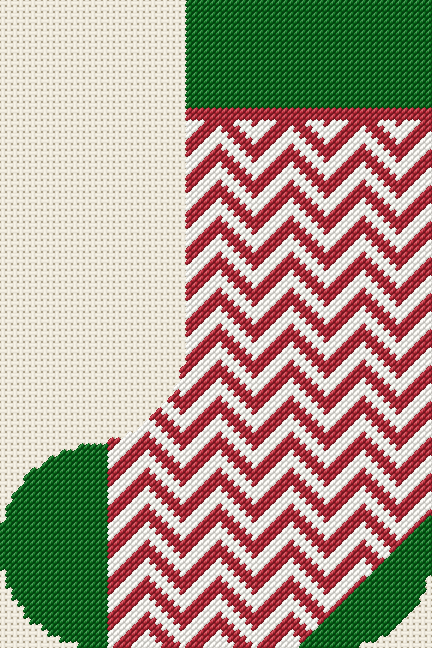
Download free PDFPDFPrints on US Letter and A4You may sell what you make from it by hand, in small quantities. The PDF itself is not to be sold or shared. Selling, classes and kits: the rulesNew to it? Next: how to start
Your PDF is ready: look in your downloads. Open the PDF (opens in a new tab)
Next: How to start · How to finish a stocking
What you need
- Canvas: blank mono canvas, 18 mesh (18 threads to the inch), cut 8.5 in wide × 10.5 in high
- Needle: blunt tapestry, size 22. Also masking tape for the cut edges, and small scissors
- Thread: six-strand floss, 3 colors, about 6 skeins in all (an estimate). Stitch with 4 strands (5 or 6 if canvas shows)
- Thread: pearl cotton size 5, 3 colors, about 3 skeins in all (an estimate). Stitch with 1 length
- Thread: Persian wool, 3 colors, about 3 skeins in all (an estimate). Stitch with 1 strand
Make it a stocking. A finisher, who backs and lines it (ask months before Christmas), or backing, lining, cord and a loop to sew it up yourself. How to finish a stocking, How to make a stocking, start to finish
Make it yours
Put a name on it
What you type stays on this page.
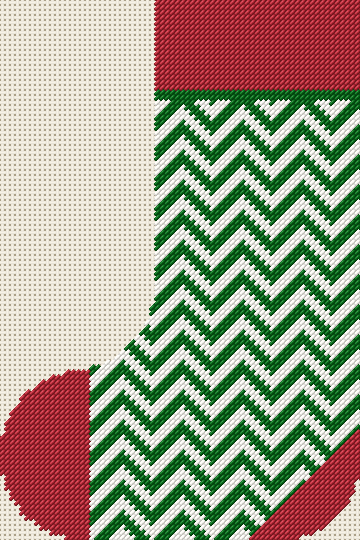
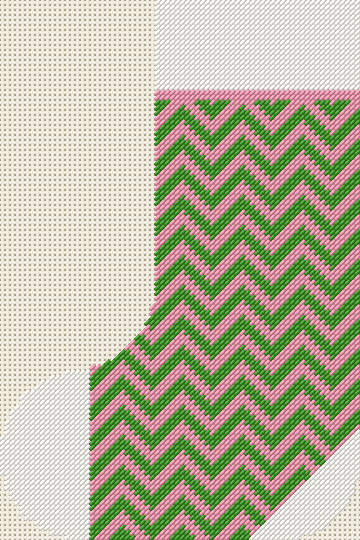
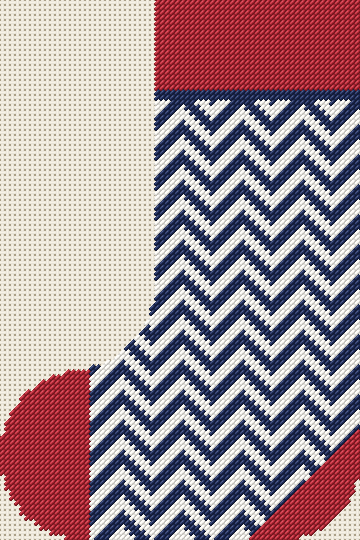
Threads
Red and white
- DMC 321 Red 2,008 stitches about 13.8 yards 2 skeins
- DMC BLANC White 1,934 stitches about 13.3 yards 2 skeins
- DMC 700 Bright Green 1,428 stitches about 9.8 yards 2 skeins
Skeins are estimates, with the two extra rows.
Green and white
- DMC 700 Bright Green 2,008 stitches about 13.8 yards 2 skeins
- DMC BLANC White 1,934 stitches about 13.3 yards 2 skeins
- DMC 321 Red 1,428 stitches about 9.8 yards 2 skeins
Skeins are estimates, with the two extra rows.
Pink and green
- DMC 603 Cranberry 2,008 stitches about 13.8 yards 2 skeins
- DMC 702 Kelly Green 1,934 stitches about 13.3 yards 2 skeins
- DMC BLANC White 1,428 stitches about 9.8 yards 2 skeins
Skeins are estimates, with the two extra rows.
Navy and white
- DMC 823 Dark Navy Blue 2,008 stitches about 13.8 yards 2 skeins
- DMC BLANC White 1,934 stitches about 13.3 yards 2 skeins
- DMC 321 Red 1,428 stitches about 9.8 yards 2 skeins
Skeins are estimates, with the two extra rows.
Thread colors are approximate screen matches to DMC numbers. Check against real thread before you buy.
How to stitch it
- Each square is one tent stitch, up at 1, down at 2. Lines in continental, right to left, the canvas upside down for the next row; wide areas in basketweave.
- Cut 18 in of thread. Start and end it without a knot left behind.
- Mark the crossing 2 in from the top and right edges of the canvas. It is the outlined square, top right of page 2, column 72, row 1: start there. Count threads, not holes.
- The name first, then downward, background as you go. Gray squares are on two pages: stitch them once. Empty squares stay bare.
- Last, two more rows all round, each stitch in the color it lies beside: the seam hides them. Ask your finisher first.
First time? How to needlepoint, how to read a chart
See the chart on this page
The chart is drawn when this is opened.
It opens in the pattern maker, with your colors and your name on it.
Options
On another mesh
The chart is 72 × 108 stitches at its widest and tallest: a mini stocking on 18 mesh canvas, with 5,370 stitches inside its outline.
| Mesh | Stitched size | Canvas to cut |
|---|---|---|
| 10 | 7.2 × 10.8 in 18.3 × 27.4 cm | 12 × 15.5 in 30.5 × 39.4 cm |
| 12 | 6 × 9 in 15.2 × 22.9 cm | 10.5 × 13.5 in 26.7 × 34.3 cm |
| 13 | 5.5 × 8.3 in 14.1 × 21.1 cm | 10 × 13 in 25.4 × 33 cm |
| 14 | 5.1 × 7.7 in 13.1 × 19.6 cm | 9.5 × 12 in 24.1 × 30.5 cm |
| 18 | 4 × 6 in 10.2 × 15.2 cm | 8.5 × 10.5 in 21.6 × 26.7 cm |
Mesh is the number of canvas threads to the inch; the row in bold is the mesh this chart is sized for. Canvas to cut is the stitched size, the two extra rows where the finish takes them and 2 in (5.1 cm) of bare canvas on every side, up to the next half inch.
The cuff is 2.3 in (5.8 cm) across at the top on 18 mesh. Sewn up, the stocking is the size of its chart: the seam takes the two rows outside it.
In another thread
The numbers are DMC color numbers, which its six-strand cotton and its pearl cotton share. Persian wool and silk are numbered differently: match those by eye. Which thread suits which mesh
On plastic canvas
On plastic canvas: 5.1 × 7.7 in on 14 mesh, 7.2 × 10.8 in on 10 and 10.3 × 15.4 in on 7, from one sheet (on 7, a large one of 13½ × 22½ in). Take worsted yarn and a size 16 needle on 7 mesh; sport yarn or 12 strands of floss and a size 18 needle on 10; 6 strands of floss and a size 22 needle on 14. Yarn is matched to the list by eye. How to stitch a chart on plastic canvas
In large print
The same chart in squares of about 6 mm, on 7 pages.
A name by hand
The plain part of the cuff is 41 stitches across and 18 down: room for about 4 letters 10 stitches high or 8 letters 5 high. On the chart it is columns 32 to 72 and rows 1 to 18, and its middle is column 52: center the name there, where the file to print marks it. Of this chart's threads, White (DMC BLANC) shows best on Bright Green (DMC 700). Three alphabets to copy are in the lettering guide, with a name worked out on a cuff; draw yours first on squared paper for 18 mesh.
How the level is set
Beginner. Few colors and long stretches of one: a good first piece.
Beginner: 3 colors. Most of the chart is the same small piece of pattern repeated, so it only has to be learned once. With up to 7 colors, that is Beginner, and with more it is Intermediate.
How the thread is counted
The yards are of thread as it is threaded in the needle: stitched with several strands together, a thread takes that many yards of single strand for every yard counted. For six-strand cotton on 18 mesh, the thread and needle chart gives 4 to 6 strands.
An estimate. The length of thread one stitch uses on the front and back of the canvas, times the number of stitches, plus 30 percent for starting, ending and the tail left in the needle. Each count is estimated as basketweave or continental and rounded up to a tenth of a yard. The 30 percent is this site's own choice. The thread calculator works the same estimate for any count and mesh.
What you may do with it
You may sell what you make from it by hand, in small quantities. The PDF itself is not to be sold or shared. Selling, classes and kits: the rules
More patterns like this
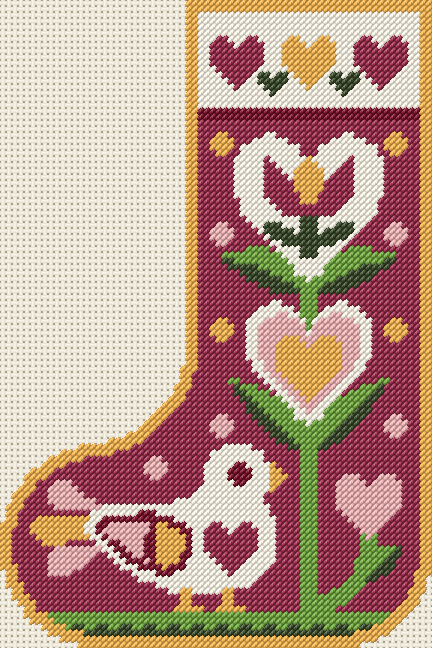
Hearts mini stocking, folk art
Beginner 4 × 6 in 7 colors
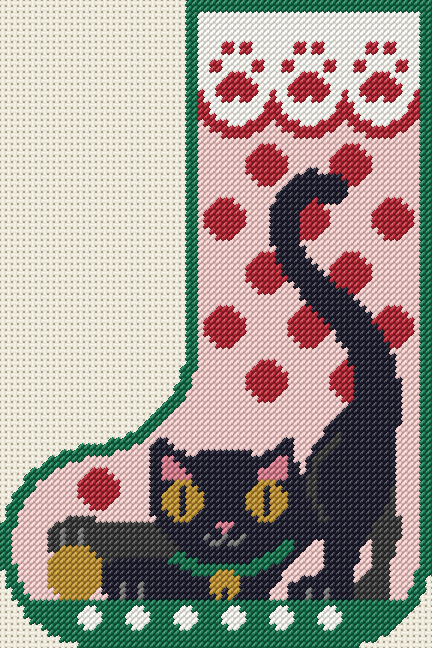
Polka dot mini stocking with black cat
Intermediate 4 × 6 in 9 colors
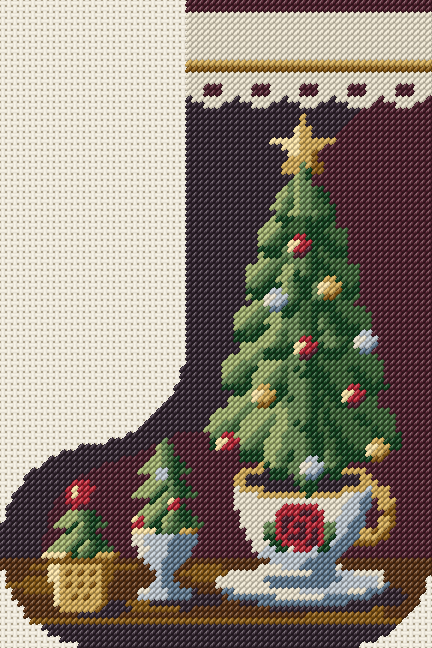
Little trees in teacups mini stocking
Advanced 4 × 6 in 14 colors
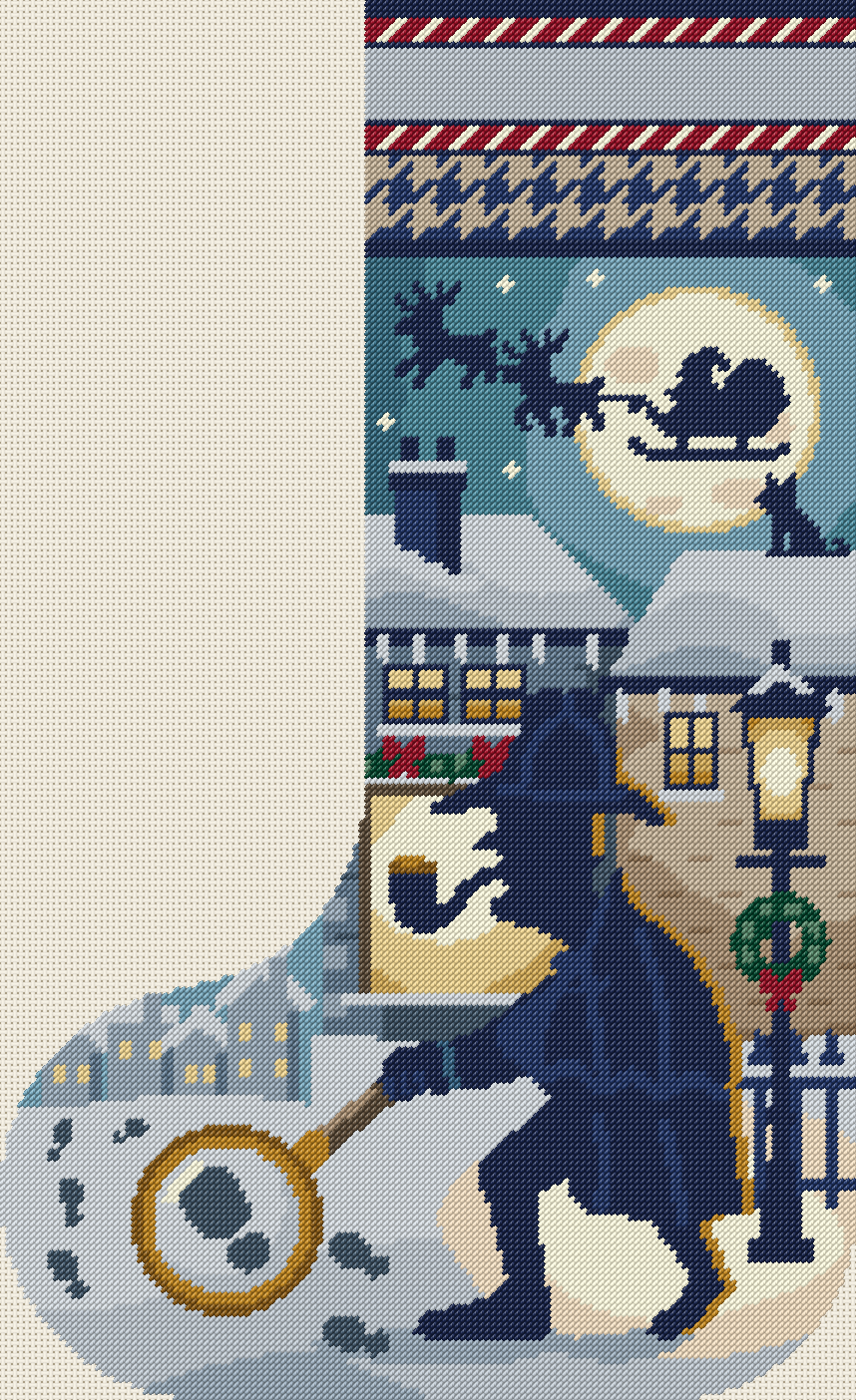
Victorian detective stocking
Intermediate 11 × 18 in 24 colors
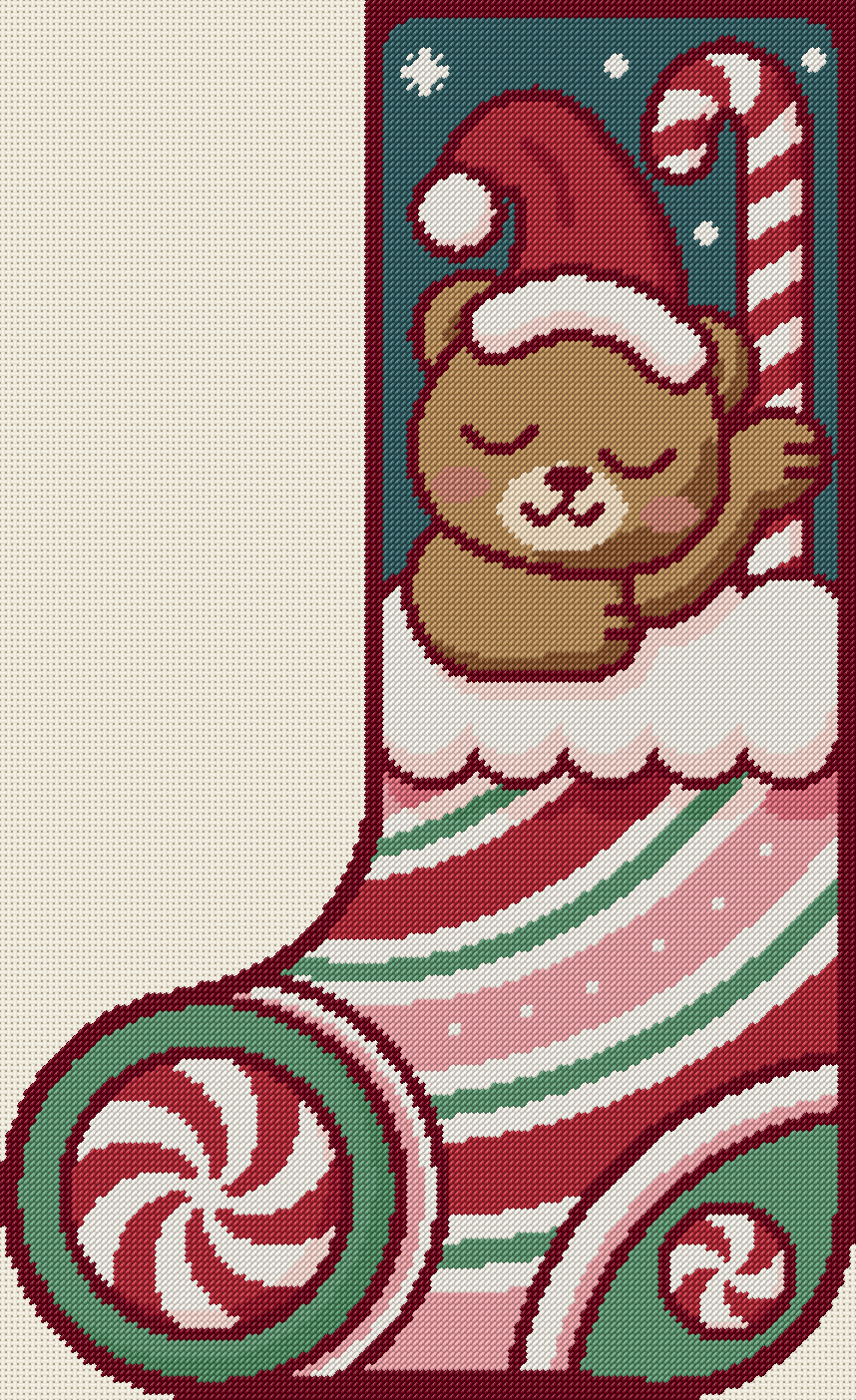
Candy stripe Christmas stocking
Intermediate 11 × 18 in 14 colors
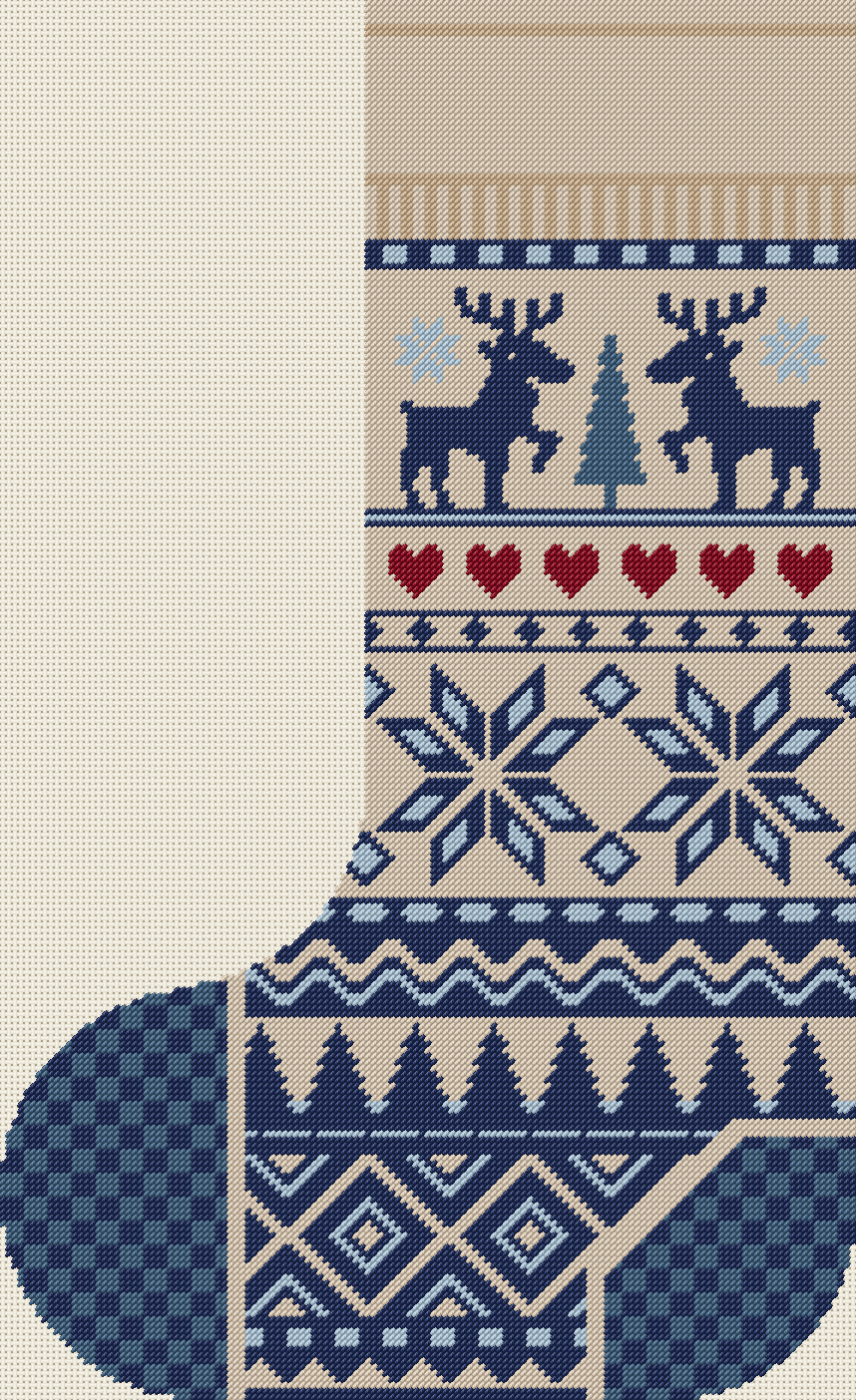
Nordic geometric Christmas stocking
Easy 11 × 18 in 6 colors
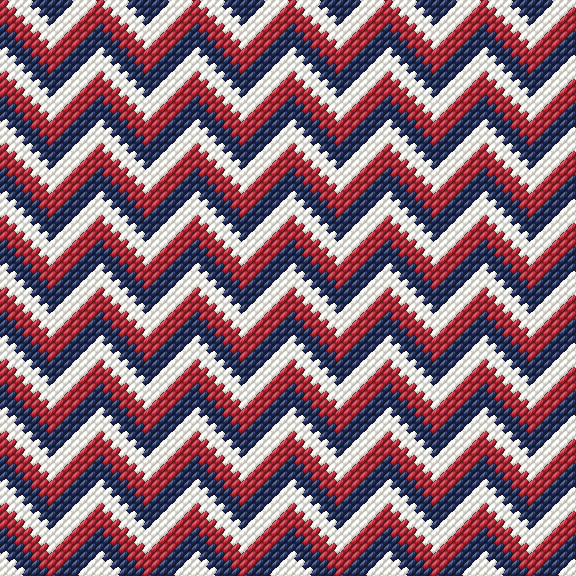
Three color chevron
Beginner 4 × 4 in 3 colors
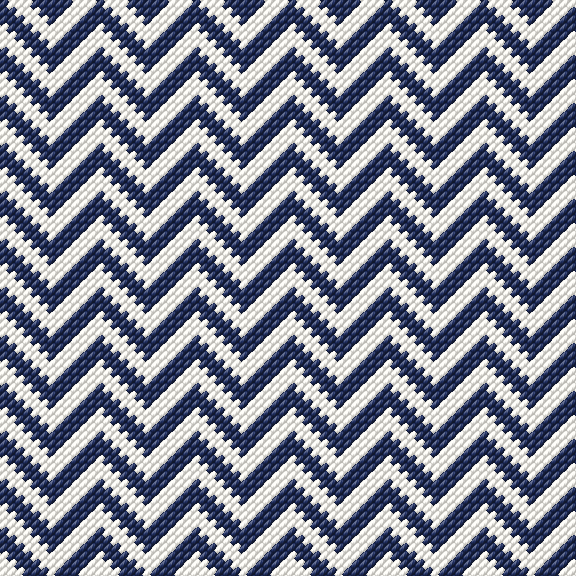
Classic chevron
Beginner 4 × 4 in 2 colors
About this pattern
A small stocking with its toe pointing left has red and white zigzag bands, three stitches thick, running across its leg and foot. The cuff, heel and toe are solid green.