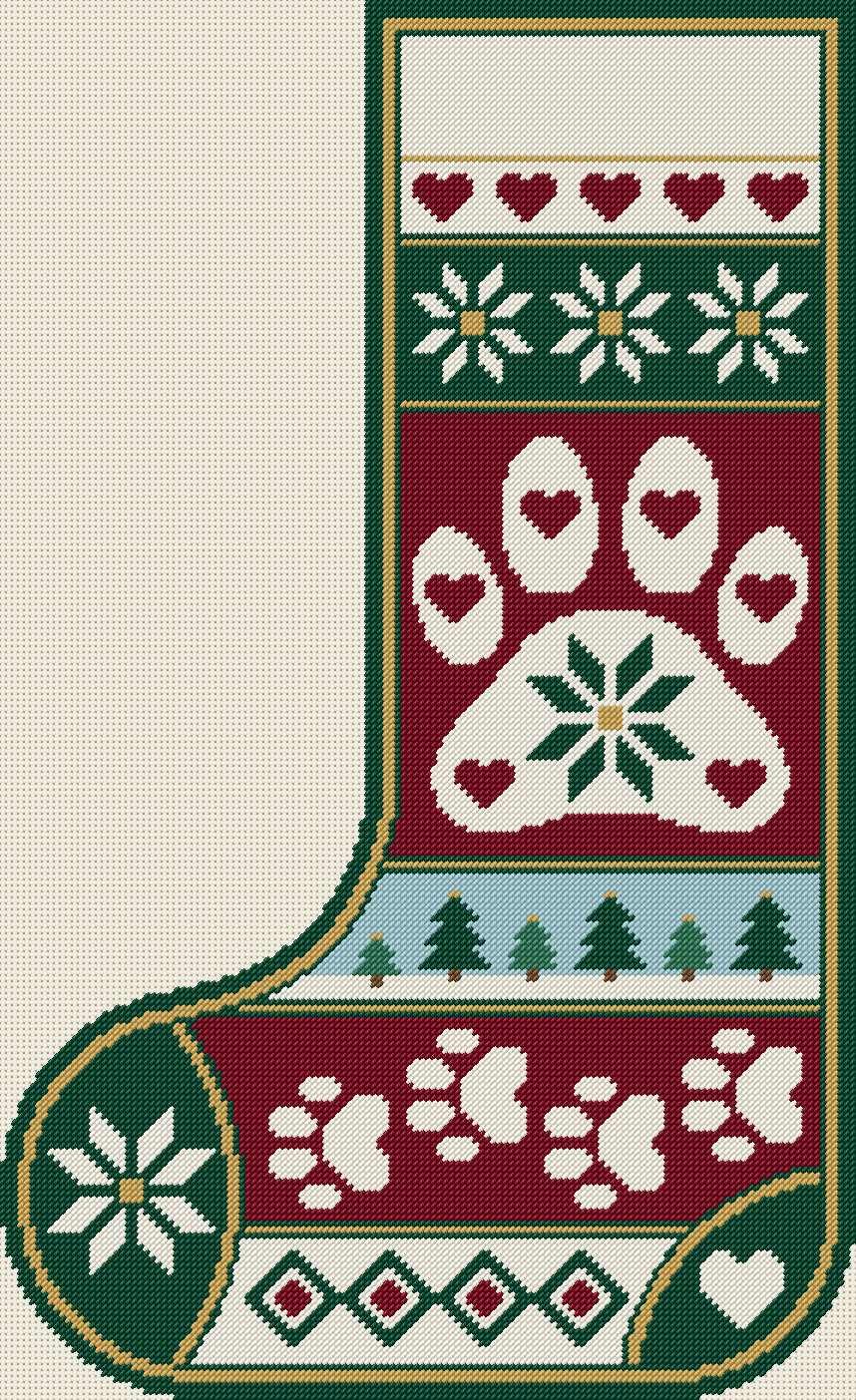
Folk art paw print Christmas stocking needlepoint pattern
Easy, 11 × 18 in on 13 mesh, 7 colors
Download free PDFPDFYou may sell what you make from it by hand, in small quantities. The PDF itself is not to be sold or shared. Selling, classes and kits: the rulesNew to it? Next: how to start
Your PDF is ready: look in your downloads. Open the PDF (opens in a new tab)
Next: How to start · How to finish a stocking
What you need
- Canvas: blank mono canvas, 13 mesh (13 threads to the inch), cut 15.5 in wide × 22.5 in high
- Needle: blunt tapestry, size 20. Also masking tape for the cut edges, and small scissors
- Thread: six-strand floss, 7 colors, about 40 skeins in all (an estimate). Stitch with 7 strands (8 if canvas shows)
- Thread: pearl cotton size 3, 7 colors, about 19 skeins in all (an estimate). Stitch with 1 length. It comes in fewer colors than floss: for one that is not made, take the nearest, or 7 strands of floss
- Thread: tapestry wool, 7 colors, about 31 skeins in all (an estimate). Stitch with 1 length
- Thread: Persian wool, 7 colors, about 23 skeins in all (an estimate). Stitch with 2 strands
Make it a stocking. A finisher, who backs and lines it (ask months before Christmas), or backing, lining, cord and a loop to sew it up yourself. How to finish a stocking, How to make a stocking, start to finish
Make it yours
Put a name on it
What you type stays on this page.
Threads
- DMC 712 Cream 7,345 stitches about 69.6 yards 11 skeins
- DMC 500 Very Dark Blue Green 7,082 stitches about 67.1 yards 13 skeins
- DMC 815 Medium Garnet 5,299 stitches about 50.2 yards 8 skeins
- DMC 3820 Dark Straw 2,114 stitches about 20.1 yards 4 skeins
- DMC 3761 Light Sky Blue 938 stitches about 8.9 yards 2 skeins
- DMC 505 Jade Green 118 stitches about 1.2 yards 1 skein
- DMC 433 Medium Brown 24 stitches about 0.3 yards 1 skein
Skeins are estimates, with the two extra rows.
Thread colors are approximate screen matches to DMC numbers. Check against real thread before you buy.
How to stitch it
- Each square is one tent stitch, up at 1, down at 2. Lines in continental, right to left, the canvas upside down for the next row; wide areas in basketweave.
- Cut 18 in of thread. Start and end it without a knot left behind.
- Mark the crossing 2 in from the top and right edges of the canvas. It is the outlined square, top right of page 2, column 143, row 1 (DMC 500): start there. Count threads, not holes.
- The name first, where you put one on it, then downward, background as you go. Gray squares are on two pages: stitch them once. Empty squares stay bare.
- Last, two more rows all round in DMC 500: the seam hides them. Ask your finisher first.
First time? How to needlepoint, how to read a chart
See the chart on this page
The chart is drawn when this is opened.
It opens in the pattern maker, with your colors and your name on it.
Options
On another mesh
The chart is 143 × 234 stitches at its widest and tallest: a Christmas stocking on 13 mesh canvas, with 22,920 stitches inside its outline.
| Mesh | Stitched size | Canvas to cut |
|---|---|---|
| 10 | 14.3 × 23.4 in 36.3 × 59.4 cm | 19 × 28 in 48.3 × 71.1 cm |
| 12 | 11.9 × 19.5 in 30.3 × 49.5 cm | 16.5 × 24 in 41.9 × 61 cm |
| 13 | 11 × 18 in 27.9 × 45.7 cm | 15.5 × 22.5 in 39.4 × 57.2 cm |
| 14 | 10.2 × 16.7 in 25.9 × 42.5 cm | 14.5 × 21 in 36.8 × 53.3 cm |
| 18 | 7.9 × 13 in 20.2 × 33 cm | 12.5 × 17.5 in 31.8 × 44.5 cm |
Mesh is the number of canvas threads to the inch; the row in bold is the mesh this chart is sized for. Canvas to cut is the stitched size, the two extra rows where the finish takes them and 2 in (5.1 cm) of bare canvas on every side, up to the next half inch.
The cuff is 6.3 in (16 cm) across at the top on 13 mesh. Sewn up, the stocking is the size of its chart: the seam takes the two rows outside it.
In another thread
The numbers are DMC color numbers. Its pearl cotton has the same numbers as its six-strand cotton, in fewer colors. Persian wool and silk are numbered differently: match those by eye. Which thread suits which mesh
In large print
The same chart in squares of about 6 mm, on 21 pages.
A name by hand
The plain part of the cuff is 70 stitches across and 20 down: room for about 5 letters 13 stitches high, 7 letters 10 high or 14 letters 5 high. On the chart it is columns 68 to 137 and rows 7 to 26, and its middle is between columns 102 and 103: center the name there, where the file to print marks it. Of this chart's threads, Medium Garnet (DMC 815) shows best on Cream (DMC 712). Three alphabets to copy are in the lettering guide, with a name worked out on a cuff; draw yours first on squared paper for 13 mesh.
Another stitch
My stitch guide: choose a stitch for every part, with its strands for your mesh.
How the level is set
Easy. Few colors and long stretches of one, in a piece with many stitches: easy to count, and long for a first piece. 22,920 stitches in all.
Easy: 7 colors. Over the whole chart, changes of color are about 6 stitches apart. With up to 7 colors, 3.5 or more apart is Beginner and closer is Intermediate. It has 22,920 stitches, and over 12,000 is long for a first canvas, so it is Easy and not Beginner.
How the thread is counted
The yards are of thread as it is threaded in the needle: stitched with several strands together, a thread takes that many yards of single strand for every yard counted. For six-strand cotton on 13 mesh, the thread and needle chart gives 7 or 8 strands.
An estimate. The length of thread one stitch uses on the front and back of the canvas, times the number of stitches, plus 30 percent for starting, ending and the tail left in the needle. Each count is estimated as basketweave or continental and rounded up to a tenth of a yard. The 30 percent is this site's own choice. The thread calculator works the same estimate for any count and mesh.
What you may do with it
You may sell what you make from it by hand, in small quantities. The PDF itself is not to be sold or shared. Selling, classes and kits: the rules
More patterns like this
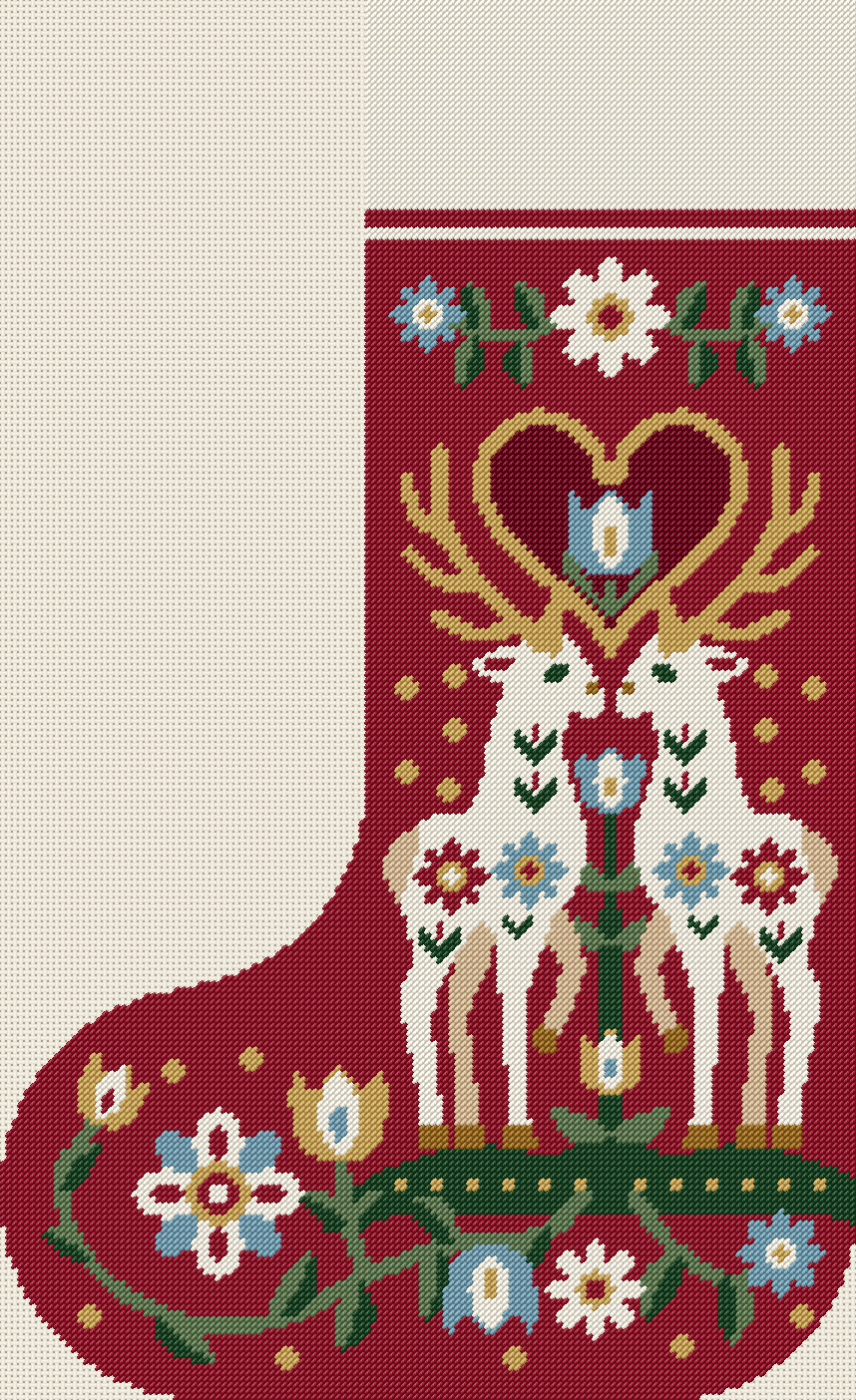
Folk art deer Christmas stocking
Intermediate 11 × 18 in
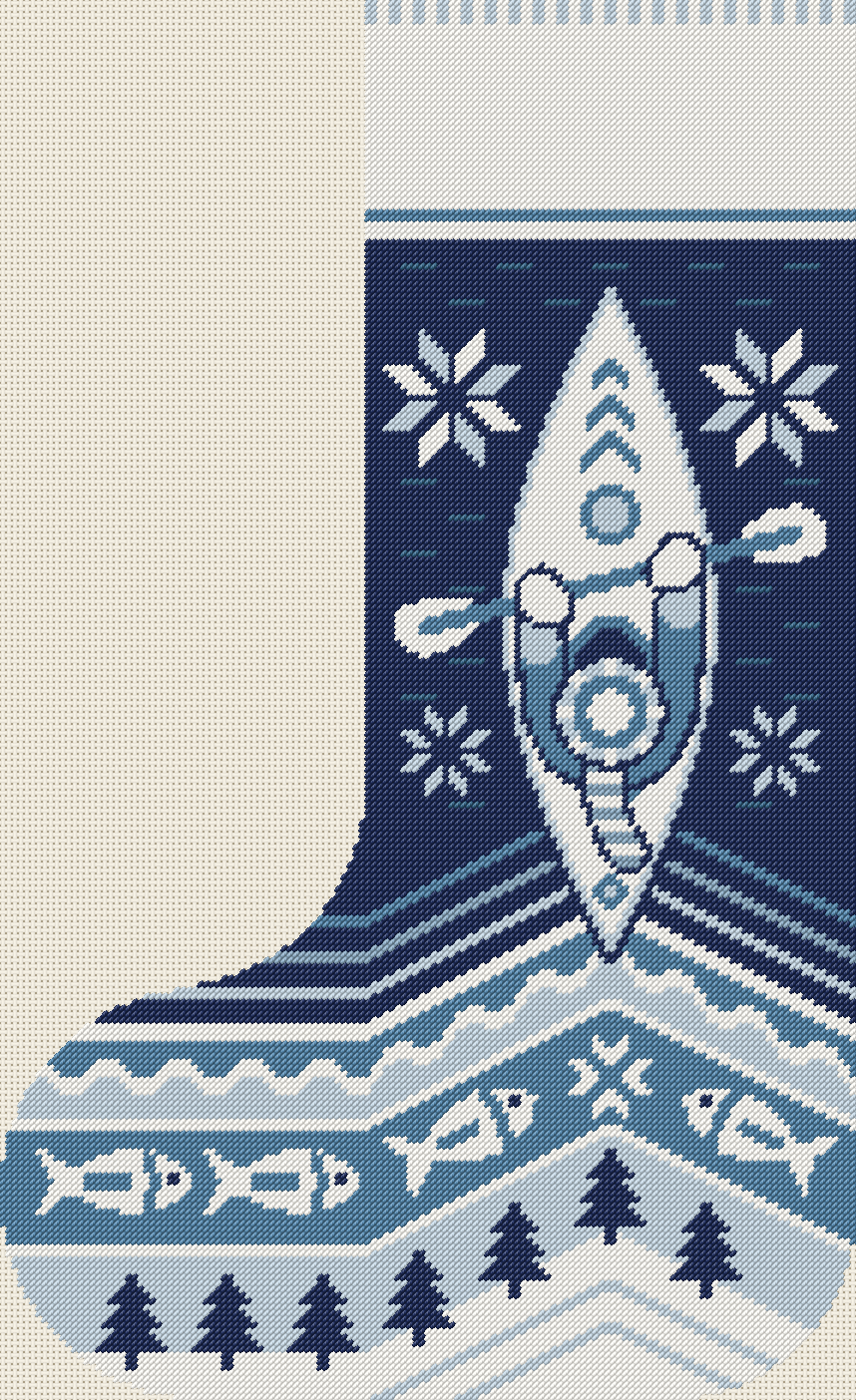
Blue and white kayak Christmas stocking
Easy 11 × 18 in
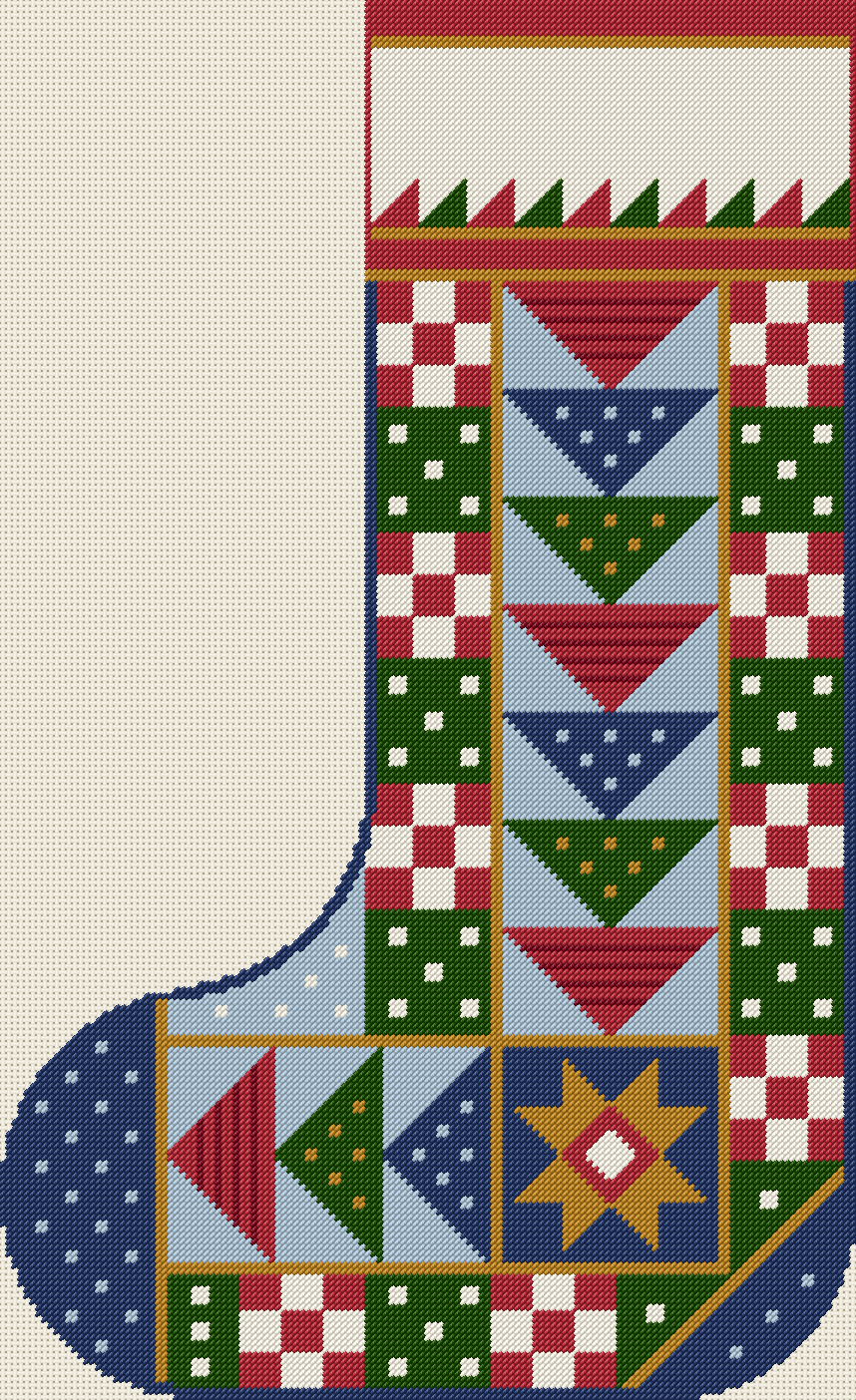
Flying geese quilt Christmas stocking
Easy 11 × 18 in
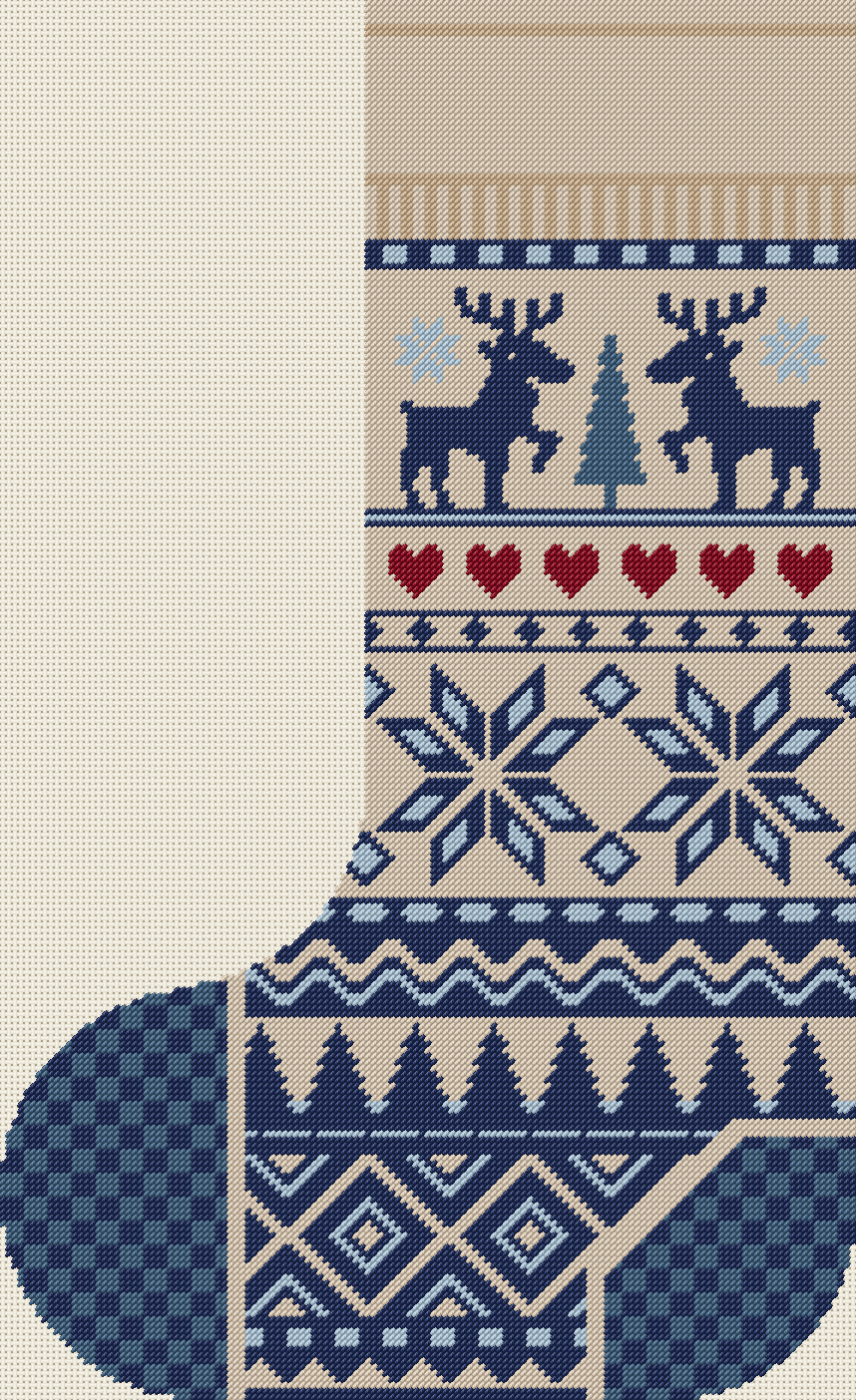
Nordic geometric Christmas stocking
Easy 11 × 18 in
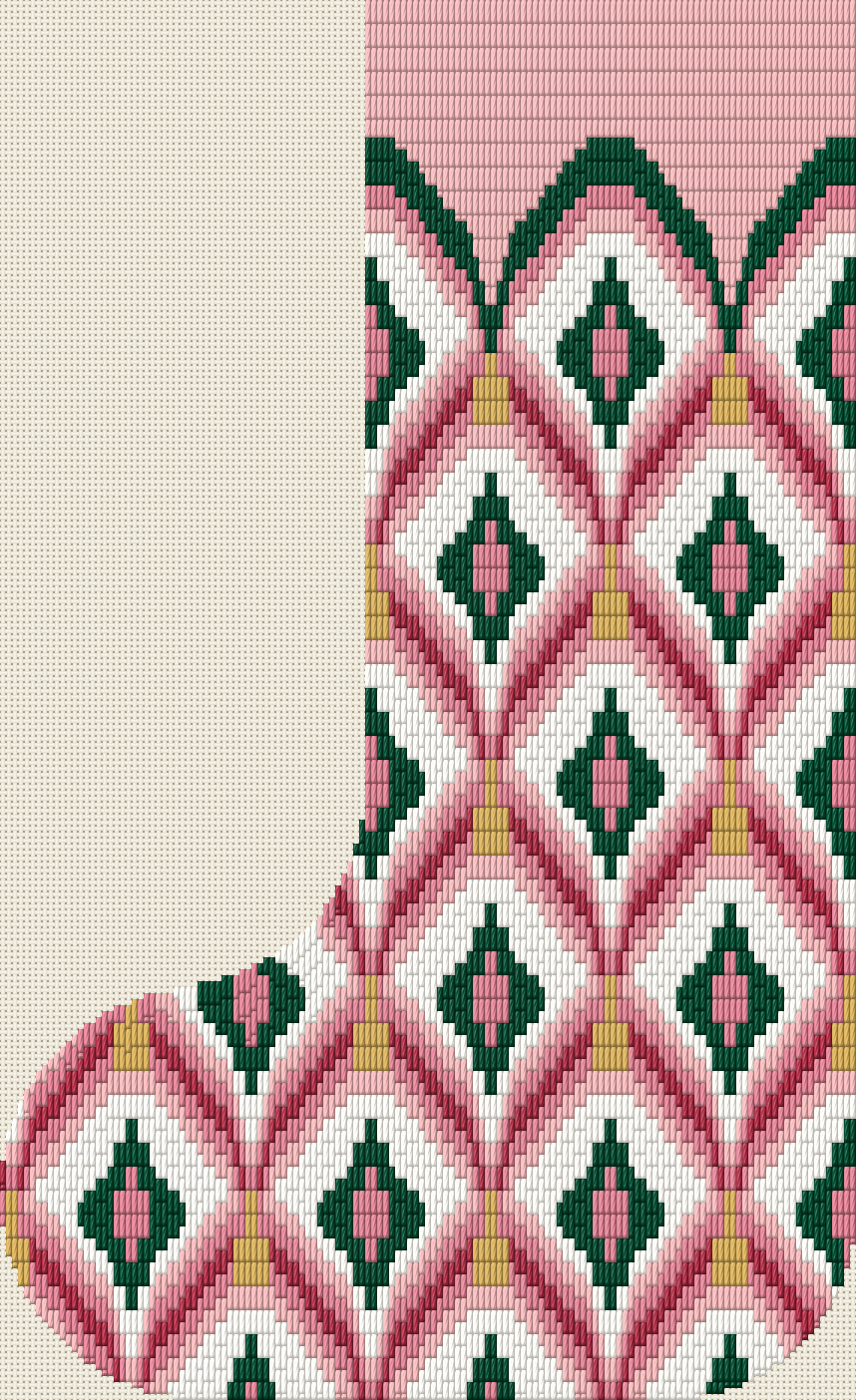
Pink bargello Christmas stocking
Intermediate 11 × 18 in
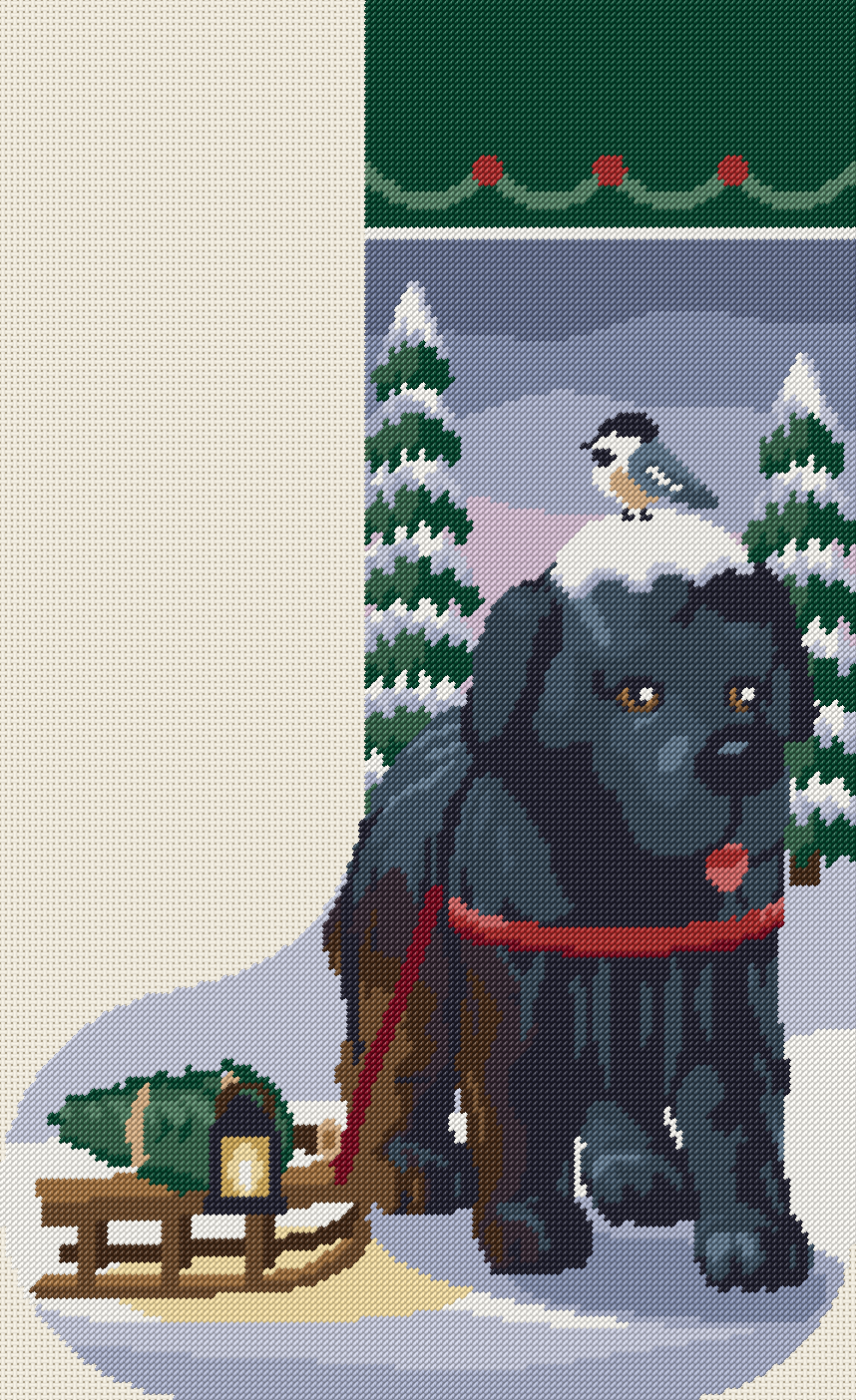
Newfoundland dog Christmas stocking
Intermediate 11 × 18 in
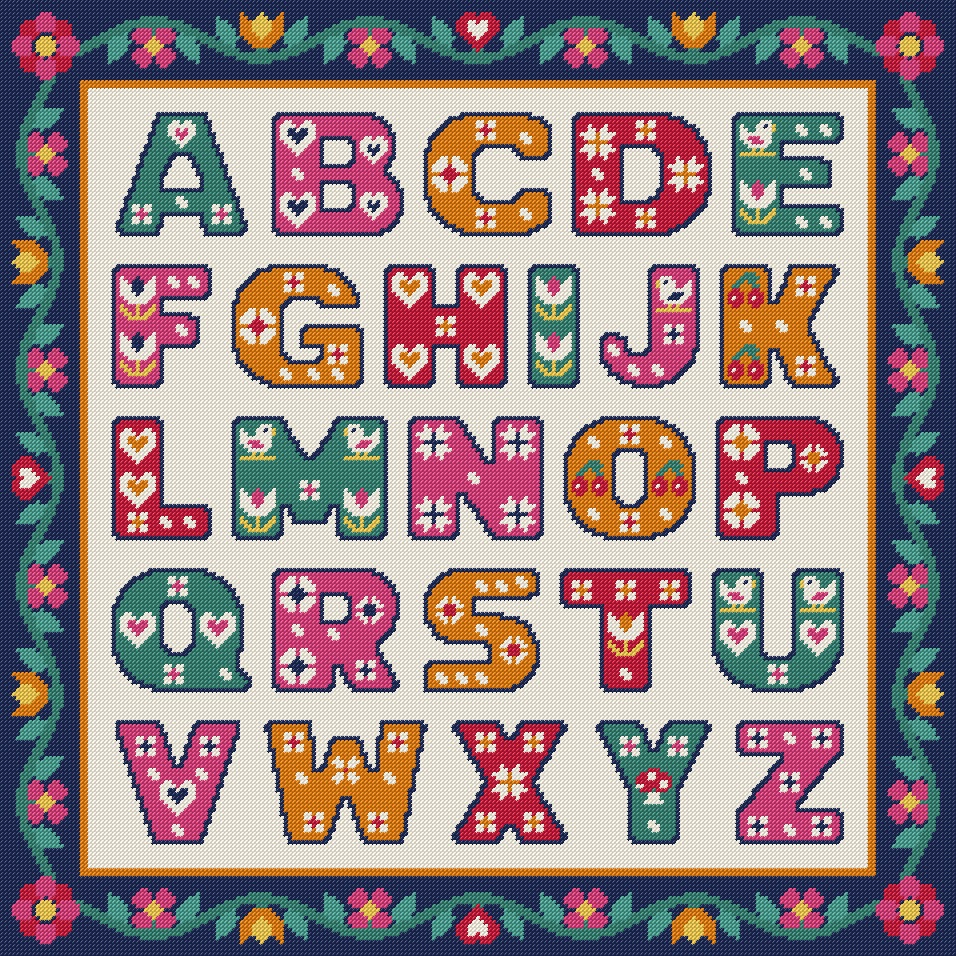
Folk alphabet in red, orange and teal
Intermediate 18.4 × 18.4 in
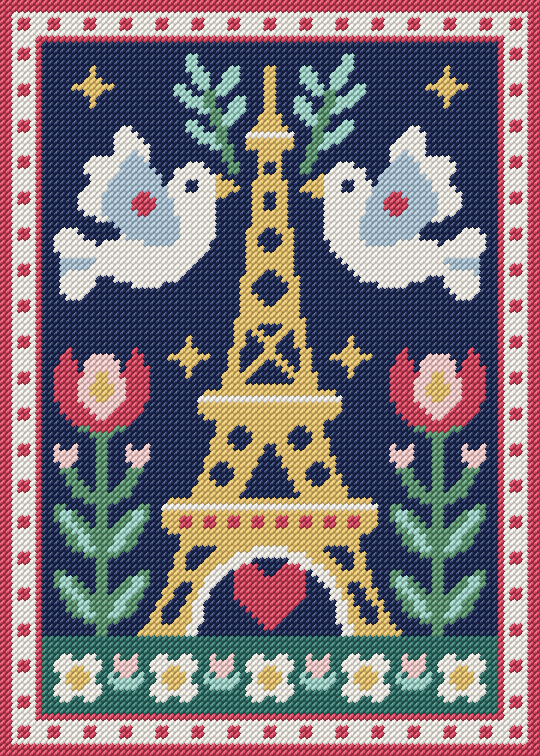
Folk art Eiffel Tower with doves
Intermediate 5 × 7 in
About this pattern
A big cream paw print with a green snowflake in its pad and a red heart in every toe fills a stocking, above firs in snow and a trail of paws. The ground is cranberry red, with a cream cuff, green heel and toe, and a green and gold edge.