Bedtime story mouse tucked in a book hand embroidery pattern
Advanced · 22 colors · 4.5 × 4.1 in · 9 kinds of stitch
Download free PDFPDFPrints on US Letter and A4You may sell what you make from it by hand, in small quantities. The PDF itself is not to be sold or shared. Selling, classes and kits: the rules
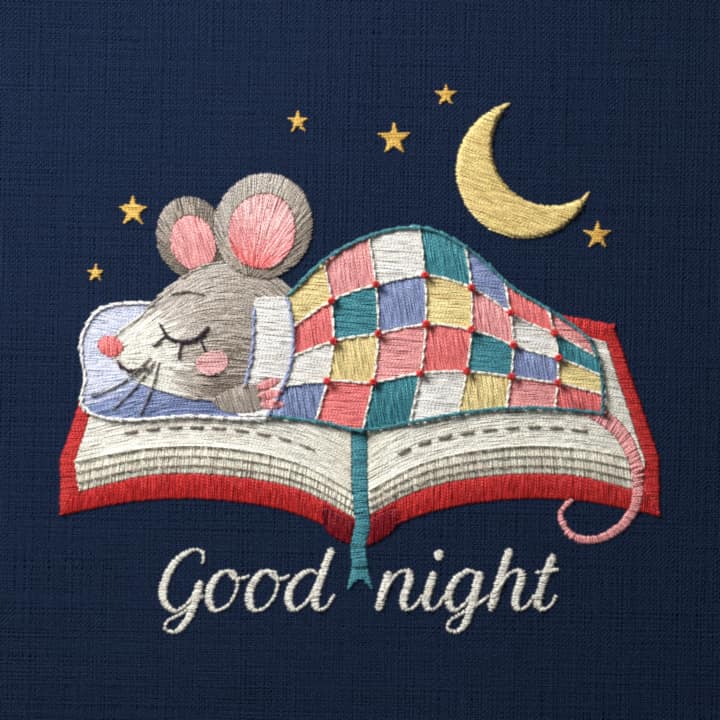
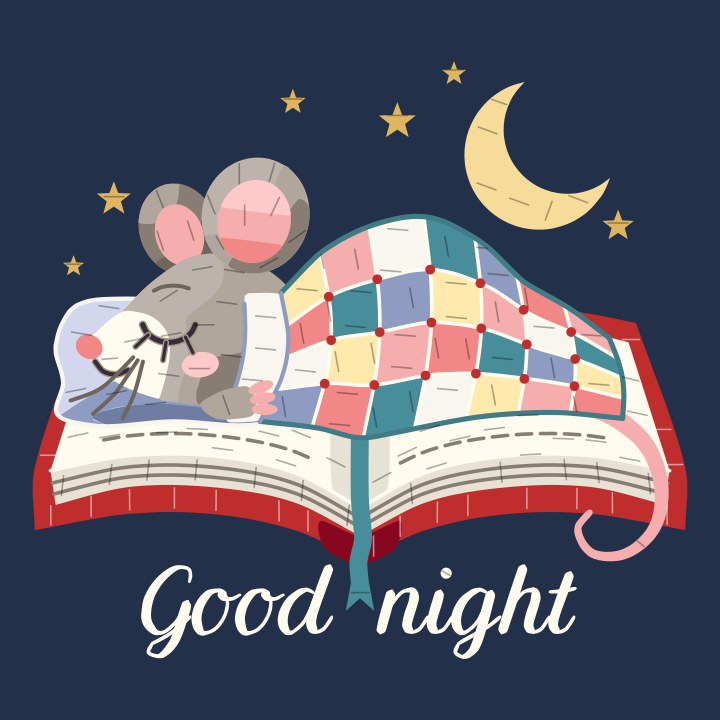
An open storybook is the bed. A gray mouse lies along it with its nose on a blue pillow, one paw over the turned-down sheet and a long pink tail slipping out past the pages.
Size and details
Advanced. Uses long and short stitch over much of the design, padded satin stitch, satin stitch over about a quarter of the cloth in a 6 inch hoop, 22 colors and a great deal of stitching; from a 6 inch hoop up some of the satin stitches are long.
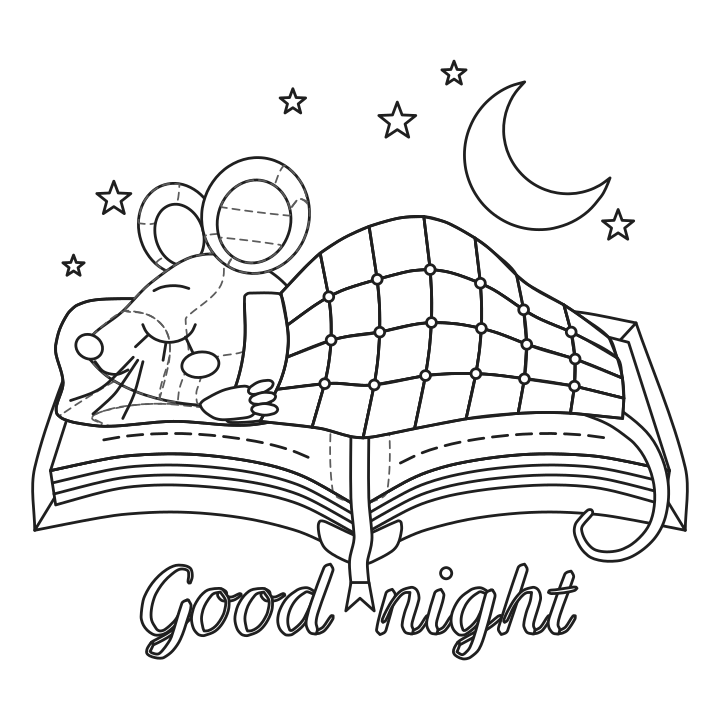
The head, the ears, the pillow and the pages are long and short stitch, and the quilt patches, the red cover, the tail and the ribbon are satin stitch. Back stitch seams and red French knots tie the quilt, and running stitch makes the line of story on each page. The moon is padded satin stitch, and Good night is satin stitch on either side of the ribbon. It is drawn for navy linen. In the picture of where the colors go, the fine lines show which way the stitches lie.
| Hoop | Inches | Centimeters | Satin stitch up to |
|---|---|---|---|
| 3 in (8 cm) | 1.8 × 1.7 in | 4.6 × 4.3 cm | 3/16 in (5 mm) |
| 4 in (10 cm) | 2.7 × 2.5 in | 6.9 × 6.4 cm | 1/4 in (6 mm) |
| 5 in (13 cm) | 3.6 × 3.3 in | 9.1 × 8.4 cm | 5/16 in (8 mm) |
| 6 in (15 cm) | 4.5 × 4.1 in | 11.4 × 10.4 cm | 7/16 in (11 mm) |
| 8 in (20 cm) | 6.3 × 5.8 in | 16 × 14.7 cm | 9/16 in (14 mm) |
- In an 8 inch hoop the widest satin stitch shape is 9/16 in (14 mm) across. Satin stitches longer than about 12 mm (just under 1/2 in) tend to work loose: divide the shape into sections, or work it in long and short stitch.
- In a 3, 4 or 5 inch hoop the French knots are drawn smaller than about 2 mm (a little over 1/16 in). Use one strand of floss for them there, or choose a larger hoop.
What you need
- Fabric
- Plain cotton or linen in navy, cut 9 in (23 cm) square. On white cloth its palest threads do not show: choose other colors under Options. A pencil line does not show on it: see how to transfer a pattern to dark fabric.
- Needle
- Embroidery needle, size 9 for 1 strand, size 7 for 2 or 3 (a lower number is a thicker needle).
- Floss
- 22 colors of six-strand cotton, listed below. DMC is a brand: another brand in a like color will do.
- Marker
- A pen or a sheet that suits the fabric: how to transfer a pattern says which.
Floss
- 1DMC 347 Very Dark SalmonCover and quilt ties
- 2DMC 815 Medium GarnetSpine
- 3DMC 822 Light Beige GrayPage edges, pages (middle)
- 4DMC 646 Dark Beaver GrayEars and head (dark), page edge lines and story lines
- 5DMC 712 CreamPages (light), letters, quilt seams and page rims, head (lightest)
- 6DMC 644 Medium Beige GrayPages (dark)
- 7DMC 3810 Dark TurquoiseQuilt (darkest), ribbon
- 8DMC 3747 Very Light Blue VioletPillow (light)
- 9DMC 793 Medium Cornflower BluePillow (dark)
- 10DMC 794 Light Cornflower BluePillow (middle), quilt (dark), sheet edge
- 11DMC 3865 Winter WhiteQuilt (lightest), sheet and pillow piping
- 12DMC 645 Very Dark Beaver GrayEars and head (darkest), whiskers and brow
- 13DMC 647 Medium Beaver GrayHead (middle), ears (light), paws
- 14DMC 760 SalmonQuilt (middle light), inner ears (middle), tail and fingers
- 15DMC 648 Light Beaver GrayEars (lightest), head (light)
- 16DMC 3712 Medium SalmonQuilt (middle dark), inner ears (dark), nose
- 17DMC 761 Light SalmonInner ears (light), cheek
- 18DMC 3371 Black BrownEyelid, lashes and mouth
- 19DMC 745 Light Pale YellowQuilt (light)
- 20DMC 3809 Very Dark TurquoiseQuilt edge
- 21DMC 3822 Light StrawMoon
- 22DMC 3820 Dark StrawStars
Skeins: one of each color is enough. An estimate for the 6 inch hoop, from the length of each line and the area of each filled shape, with a fifth added for tails.
How to stitch it
- New to hand embroidery? Start here.
- Print at 100%, trace the pattern onto the fabric, and put it in the hoop: inner ring under, drawing up, tight as a drum.
- Floss is six strands. Cut 18 inches (45 cm), pull out the number given one at a time, and lay them together.
- Inside a filled shape start with two or three tiny stitches, which the filling covers. Start a line with a small knot on the back. End each thread by running the needle under the backs of a few stitches.
- Each small ring is one French knot. A dashed line is running stitch. A fine broken line inside a shape is where two shades meet: trace it, do not stitch it.
- A number under “Where colors go” is a color of the list. The fine lines on the colors show which way the stitches lie.
Stitch in this order
Filled parts from the back of the picture forward, then lines and knots. Where a stitch page names another number of strands, use the number here.
- Satin stitch 2 strandsCover, spine, page edges, ribbon, inner ears, nose, cheek, tail, quilt, sheet, paws, fingers, letters, stars
- Long and short stitch 1 strandPages, pillow, ears, head, inner ears
- Padded satin stitch 2 strandsMoon
- Back stitch2 strands: quilt seams1 strand: page edge lines
- Split stitch 1 strandPage rims
- Running stitch 2 strandsStory lines
- Stem stitch3 strands: eyelid, quilt edge2 strands: pillow piping, mouth, sheet edge1 strand: brow, whiskers
- Straight stitch 2 strandsLashes
- French knot 2 strands, two wrapsQuilt ties
When it is done, take off any lines that still show and finish the hoop. A guide to this kind of work: Stitches for fur, hair and feathers.
More patterns like this
Advanced prints 3–14 in · 24 colors
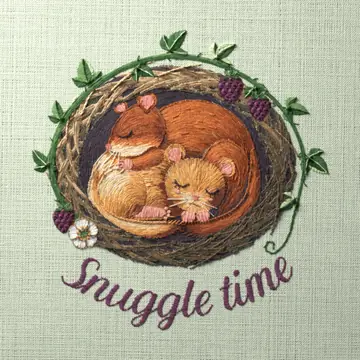
Snuggle time
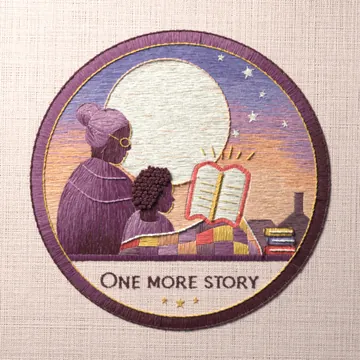
Advanced prints 3–14 in · 14 colors
One more story at the window
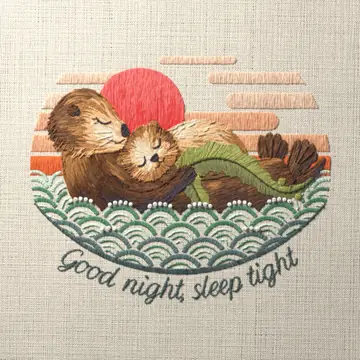
Advanced 3–8 in hoop · 20 colors
Kiss goodnight otter and pup
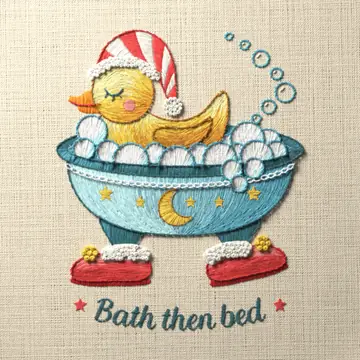
Advanced 3–8 in hoop · 16 colors
Bath then bed, tub in slippers
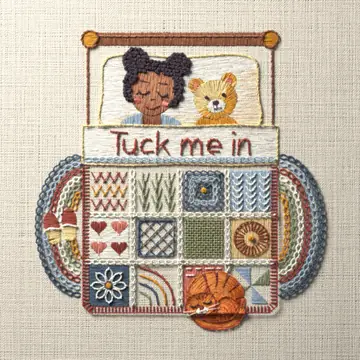
Advanced 3–8 in hoop · 15 colors
Tuck me in patchwork bed
Advanced 3–8 in hoop · 5 colors
Good night moonflowers in whitework
Advanced prints 3–14 in · 23 colors
Sweet dreams with a moth and moon phases
Advanced 3–8 in hoop · 23 colors
Off to the land of Nod with a bookshelf
New to hand embroidery? Starting hand embroidery, step by step